More Fifth-Grade Aphorisms

I explained the origin of these proverbs in this post. Here are a few more, in case you need a chuckle today.

A fool and his money . . . is a bad idea.
A friend in need . . . calls for help.
Don’t count your chickens . . . count your friends.
What’s good for the goose . . . is bad for the moose.
Those who live in glass houses . . . have too many windows.

(This one was obviously misread:) Give him an inch . . . and he’ll scratch it.
All work and no play . . . isn’t the way.
Don’t count your chickens . . . as your children.
A friend in need . . . needs help.
A bird in the hand . . . pecks.

Give him an inch . . . and he’ll leave you alone.
When the cat’s away . . . the dog can sleep.
A man’s home is . . . where he lives.
A fool and his money . . . can buy some honey.
When a door closes . . . it’s shut.

Don’t count your chickens . . . wrong.
A bird in the hand . . . tickles.
Do as I say . . . and go to sleep.
The best things in life . . . are family and friends.
The road to a friend’s house . . . is Park Avenue.

A bird in the hand . . . is a bad idea.
Give him and inch and . . . he’ll grow.
A friend in need is . . . worth helping.
Those who live in glass houses . . . can be seen.

And perhaps my personal favorite: When the cat’s away . . . the litter box is clean.

Fifth-Grade Aphorisms

And now for a little whimsy.

As the school year winds down each year, teachers in some districts have to submit grades while school is still in session. They are left with the challenge of keeping their students occupied with academic-related activities those last few days even though they don’t “count.” My teacher-daughter likes to give her elementary language arts students a list of incomplete aphorisms to complete. If they know the saying, fine; if not, they’re to think up something logical to finish the statement.

While the proverbs are common in the adult world, fifth-graders might not always be familiar with them. I had the privilege of reading through some of their worksheets recently.  The responses were often hilarious while simultaneously being clever and pithy in their simple “truthiness.” She gave me permission to share some of them here.

All work and no play . . . can bore you to death.
All that glitters . . . is shiny.
Do as I say . . . and you will be safe.
A man’s home is . . . where his guns are.
Absence makes the heart . . . empty.
Do unto others as . . . you would do to yourself.
Don’t count your chickens . . . by their feathers but by their heads.

Give a man an inch and . . . he’ll walk all over you.
Good fences make . . . safe sheep.
The grass is greener . . . when it rains.
Beggars can’t be . . . givers.
Let sleeping dogs . . . sleep or they will be cranky.
Money is the root of . . . success.
No news is . . . true.

The bigger they are . . . the better.
Every cloud has . . . water.
When a door closes . . . go through the back door.
Enough is as good as . . . too much.
Those who live in glass houses . . . can be seen easily.
Out of the frying pan . . . onto the plate.
What’s good for the goose is . . . laying eggs.

The pen is mightier than . . . iron bars.
A bird in the hand . . . can peck you.
Don’t put all your eggs . . . in the coop.
Early to bed, early to rise . . . makes a man energized.
A friend in need . . . will be with you forever.
Too many cooks . . . eat all the leftovers.
When the cat’s away . . . the dog comes to stay.

You can catch more flies with . . . nets than with jars.
The grass is greener . . . because of chlorophyll.
Money is the root . . . of the tree.
A rolling stone . . . does not stop.
A bird in the hand . . . will make a mess.
All work and no play . . . will make you tired.
You can catch more flies . . . with frogs.

Our Grand Road Trip, Part Three: Wyoming

Our Grand Road Trip, Part Three: Wyoming

Oh, Wyoming! We had no idea what staggering wonders you hold within your borders. Yes, there are the Grand Tetons. Yes, there is Yellowstone (whose size alone is utterly incomprehensible—and which will get more coverage in another post, I promise). But there is so much more.

We left Yellowstone at deep dusk with fifty miles to go before we reached Cody, our destination for the night.
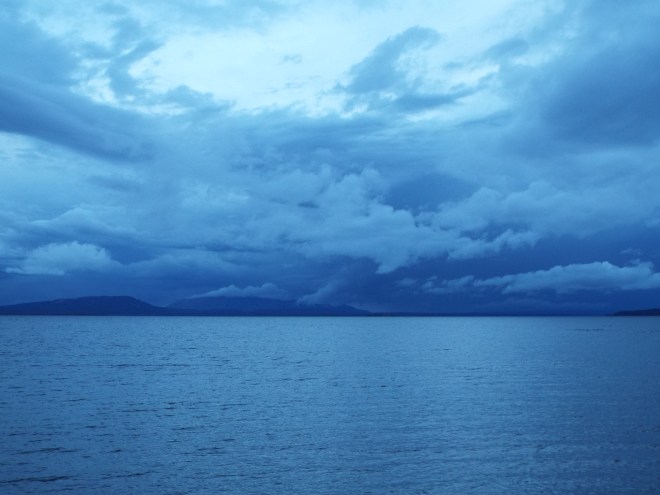
Yellowstone Lake at dusk

We didn’t know Cody was named for Buffalo Bill or that he was its founder back in 1896. It was just a convenient stopping point. Neither did we know the road we were traveling has been called the fifty most beautiful miles in America—by none other than Teddy Roosevelt. We’ll have to take his word for it; we could barely see a thing in the foggy dark. But we saw enough to believe that a daytime trip through the wilderness of the Shoshone National Forest in the Wapiti Valley with the Shoshone River running alongside the road might be almost too beautiful to bear.

In the morning light, we realized Cody itself might have given us a fun day of adventure, but we had many miles to go before we could rest our heads on pillows that night—Wyoming is one big state! Along the way we passed Thermopolis, which lays claim to the world’s largest mineral hot springs. Wish we’d had time for one of its promised free soaks, courtesy of Hot Springs State Park.
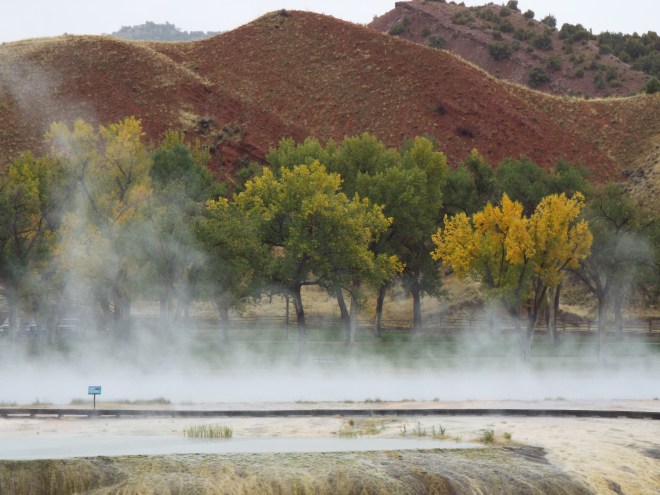
Steam rising from Thermopolis’ hot springs
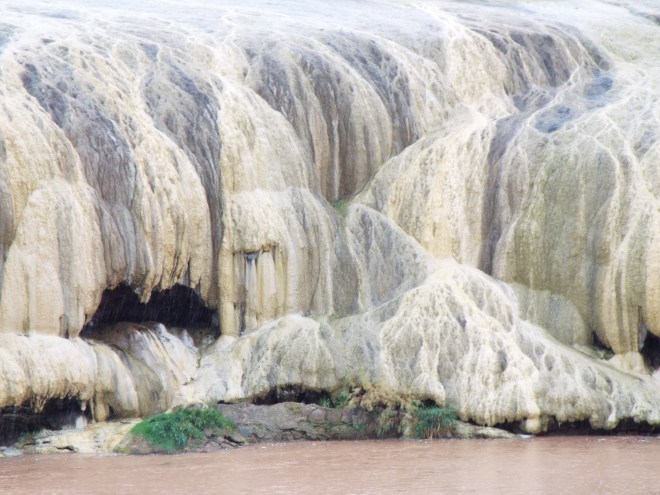
Hot Springs mineral deposits.

And then it happened. We were already in it before we realized we were actually inside a canyon, heading for its floor. We were floored as we drove into and out of Wind River Canyon, which was full of signs like this first one we saw, each pointing out a little slice of geologic time.
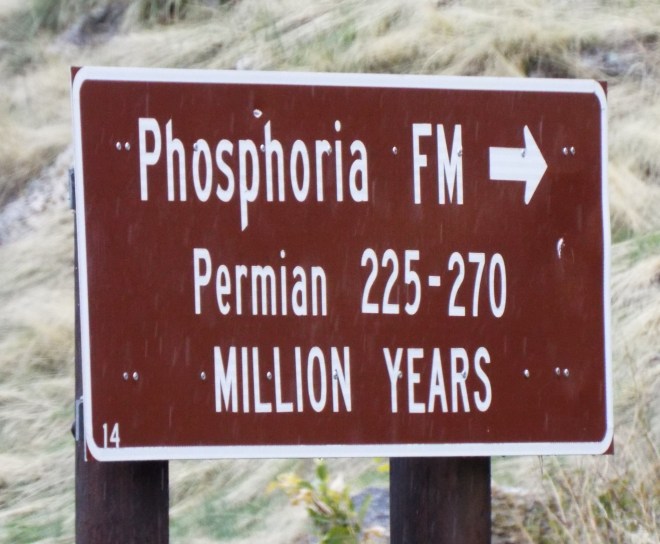
Phosphoria Formation from the Permian Period

These signs accompanied us all the way to the canyon floor’s Precambrian era, 2500 feet deep and 2.5 to 3 billion years into prehistory. We were time traveling, y’all!

And another cool thing: as we entered the canyon from its north end, the river’s name changed—from the Wind to the Bighorn. The spot where the change occurs has its own name: Wedding of the Waters. Don’t you just love it? The river, of course, flows through the bottom of the canyon walls. When we entered the canyon from above, it was far, far below us. As we descended, it seemed to rise until we were almost level with it. The canyon with its high rock walls, rapidly flowing river, and railroad running on a narrow ledge between the river and the canyon wall caught us completely off guard. And it became one of the two biggest highlights (other than family, of course) of our entire trip. All in thirty-four miles. They say you can drive it in forty minutes if you don’t stop. But of course we did. We wanted to savor it—both the scenery and the sheer awesomeness of the experience.

Honestly, I don’t know how we ever got to our next destination, the little town of Douglas, population 6,120. Just as with Cody, we’d planned to spend the night in Douglas only because the timing was right to get us where we wanted to go the next day. But Douglas was full of its own treats.

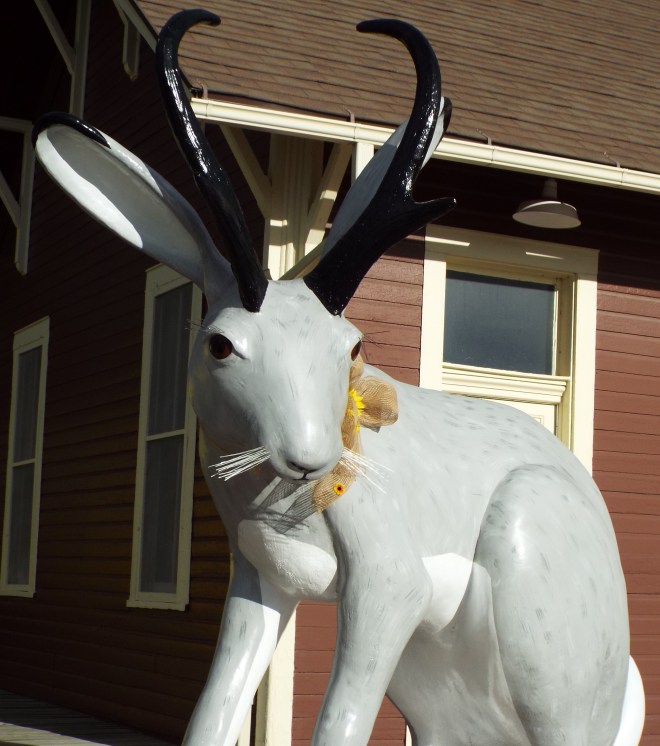
Douglas: home of the jackalope. You know, that mythical half-rabbit, half antelope creature you grew up hearing about? Well, Douglas is where it all started. Legends abound. Like its ability to mimic human voices, or that it mates only when lightning flashes, or its fondness for whiskey. The Chamber of Commerce even dispenses licenses for hunting the rare creature, legal only from midnight to 2:00 am on June 31st. Douglas is full of history. Established in 1867 when Fort Fetterman was built just ten miles away, named for Stephen A. Douglas (Lincoln’s presidential opponent),  a World War II prisoner of war camp that held 5,000 German and Italian soldiers, and home to both the Wyoming Pioneer Memorial Museum and the Wyoming State Fair.Our Douglas lodging was the charming Hotel LaBonte, currently on the National Register of Historic Places. It’s hard not to let your imagination run wild when you stand in the lobby. The place reeks of ranchers, cattle barons, and railroad tycoons.Just as it was closing time, we dropped in on what may be the world’s friendliest Chamber of Commerce where the helpful staff told us about what turned out to be the other biggest highlight of our trip: the Oregon Trail Ruts and Register Cliff, part of the Oregon National Historic Trail. We’d been planning on turning in early, but it didn’t take a nanosecond for us to change our plans and take off for Guernsey, just twenty miles away.
The whole of the Oregon Trail was over 2,000 miles long, beginning in Independence, Missouri, and ending in Oregon’s Willamette Valley. From there, pioneers chose between settling down or spreading out, going either north or south. Most heavily used from 1841-1869, almost half a million people traveled it.

The routes varied somewhat from one wagon train to another, but not here. Because of the topography, almost all of the nearly 500,000 westward-heading folks traveled this very same path near Guernsey with their horses and wagons or their handcarts. Not just to Oregon—this passage was part of the Mormon, California, and Santa Fe Trails, too. In places, their feet, wheels, and hooves wore the sandstone rock down to a depth of five or six feet, still visible today. Imagine!

See the top of these rocks? That’s the level the first pioneers traveled. Four hundred thousand plus people with their horses and wagons and carts wore the rock down this much.

Just a couple of miles away is a place called Register Cliff. Think of it as a pioneer version of a hotel and its accompanying ledger. The sandstone cliff, in those times a day’s journey from their previous night’s stay at Fort Laramie, provided some degree of shelter as well as a place where people could chisel their names and date of arrival. Maybe it was a message to relatives and friends coming in a later caravan. Or maybe it was a way of recording for the ages, “Look, I made it this far!”
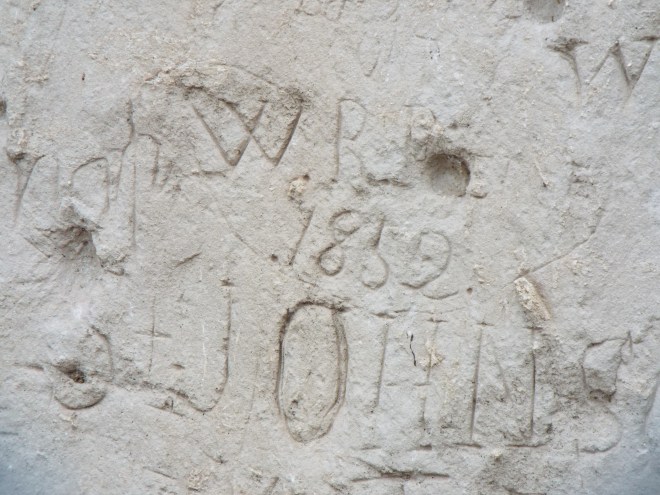
What were their fates?

Now, I’ve just got to take a minute here to tell you this was a deeply spiritual experience for me. I felt that I was on sacred ground. Not that it’s personal—my ancestors traveled no farther west than east Tennessee in their search for land and a brighter tomorrow. But they did cross the Atlantic in dangerously rickety boats to face the unknown, knowing they’d never see beloved faces and familiar places again. And some of them did trek across the mountains from Pennsylvania to Virginia to Tennessee to western North Carolina in a time when roads were scarce and hazards were plenty. That particular history and struggle is part of me and I feel it deep in the core of my being. So, seeing these ruts and the names of some of the people who made them moved me.

The Oregon Ruts and Register Cliff touched me in a way I cannot express. If you get a chance, you really should see them. Give yourself time to study the signage, time to examine the names faintly etched into the rock. Time to “see” these people. Time to think on things. Things bigger than yourself. Here is a place where you can immerse yourself in the story, a story of heroism and hope. And a place where you can actually touch history.

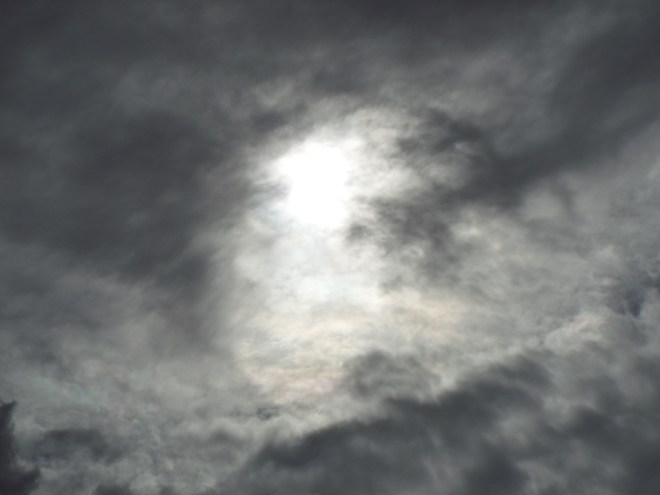
Oh, by the way, those clouds that were missing earlier in our trip? We found ’em.Wyoming, you stirred my soul and stole my heart.
(More of Our Grand Road Trip still to come. Stay tuned.  Want to read about our trip from the beginning? Start here.)
Our Grand Road Trip, Part Two: South Dakota, Montana, Idaho

Our Grand Road Trip, Part Two: South Dakota, Montana, Idaho

In my last travel blog post, we traveled to Louisville, through Illinois, across Minnesota and into South Dakota’s Badlands. Today we’ll visit more of South Dakota and three states farther west.

Here’s where our journey started to take a serendipitous turn. Over and over we found ourselves in the midst of something unexpected. And that unexpectedness never failed to wow us. Just the idea of falling into so much amazingness almost entirely by accident was enough to take our breath away.

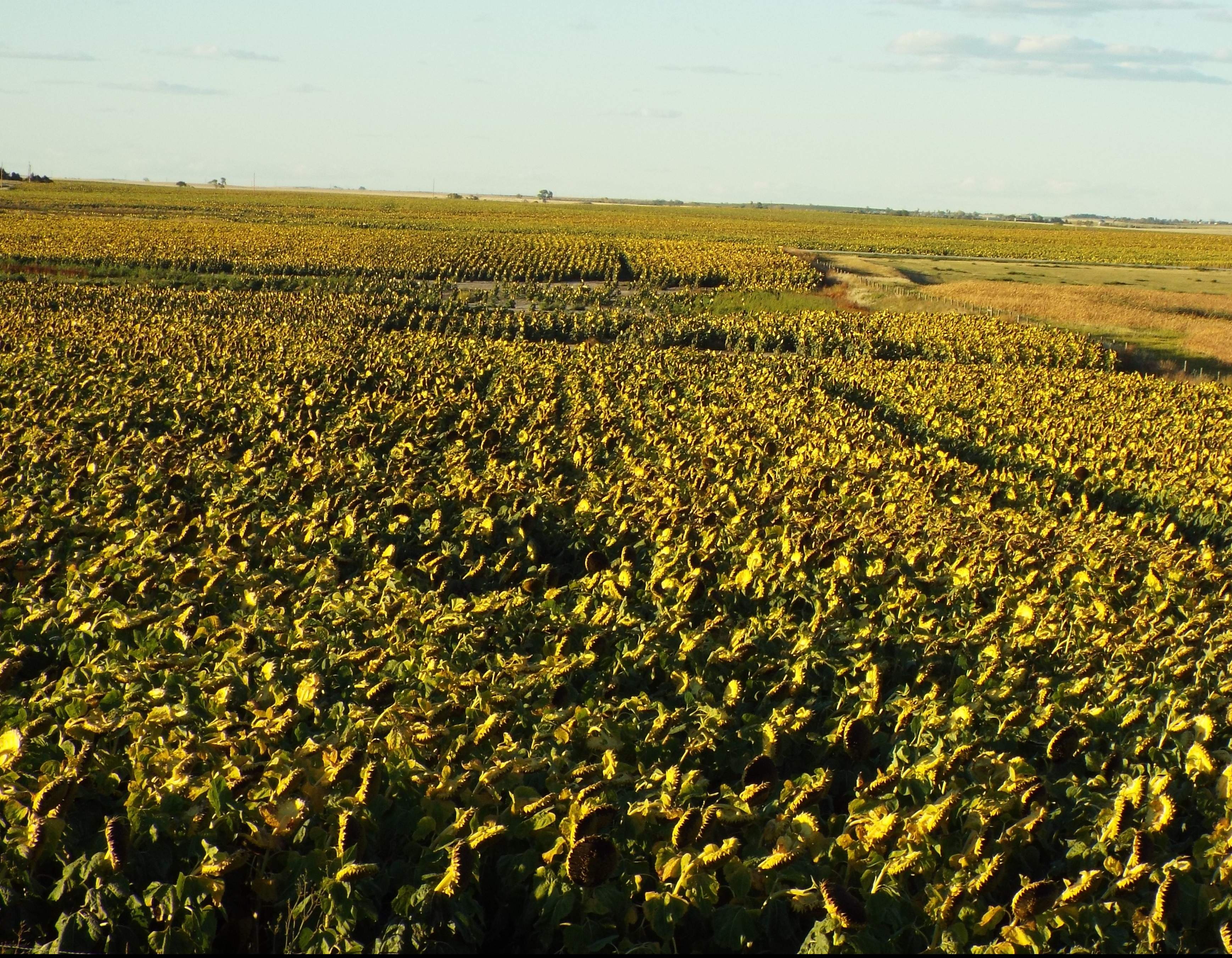
We’d almost become inured to the massive fields of corn and soybeans when we spotted something a little different. Ever wondered where all the sunflower seed you buy for your songbirds comes from? Well, we found out. They were well past flowering—wouldn’t that have been something to see—but the seeds were still busy preparing for their destiny.

DSCF1665

As far as the eye can see and then some

On our way across South Dakota we pulled in at a rest area that turned into a happy surprise. How many rest stops do you know that house a museum? Yeah, that’s what I thought. But just off Interstate 90 near Chamberlain, that’s exactly what we found with the Lewis and Clark Interpretive and Keelboat Center. We were excited to be standing on ground where Lewis and Clark’s Corps of Discovery explorers set up camp. They picked quite the spot—a bucolic bluff overlooking the scenic Missouri River. (We’d soon discover that much of our journey passed along the Lewis and Clark Trail—another unexpected treat.)

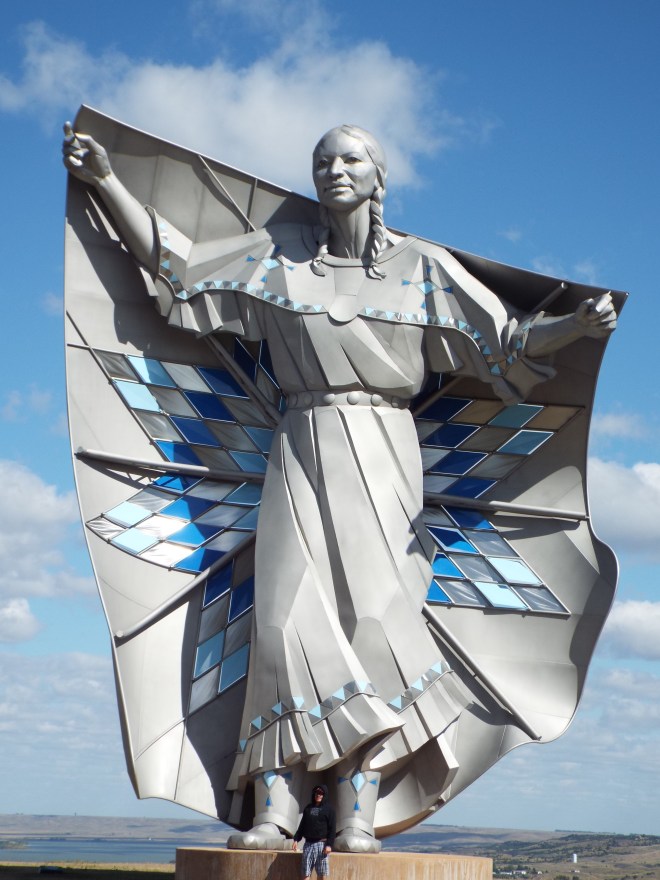
That was only the beginning of the excitement we felt at this rest area. Just days before our arrival, the fifty-foot tall, stainless steel sculpture named Dignity had been installed. Dignity, with outstretched arms holding a multi-hued blue-star quilt, was designed by South Dakota artist Dale Lamphere to honor the culture of the state’s indigenous Lakota and Dakota peoples. He used several Lakota models from fourteen to fifty-five years of age to give the statue a universal feel.

She was magnificent!

Gives me chills, even now

This was a stop we had not planned, knew nothing about. We certainly didn’t anticipate spending well over an hour there, but it was worth a late arrival in the Black Hills that evening to experience this moment.

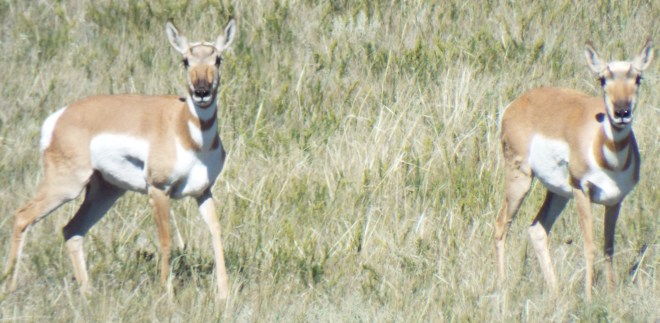
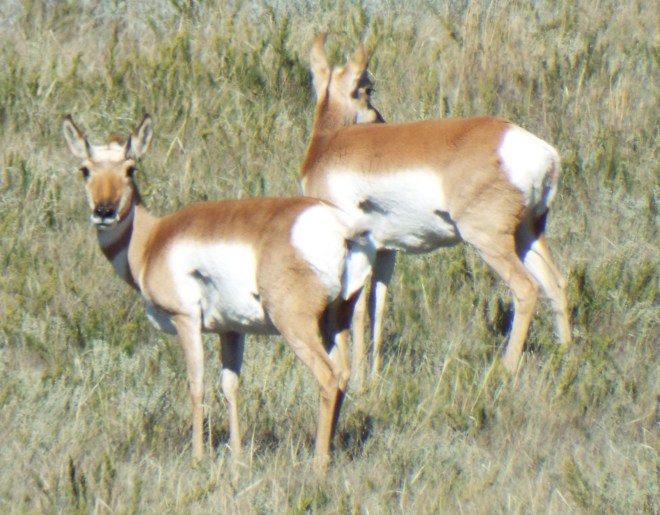
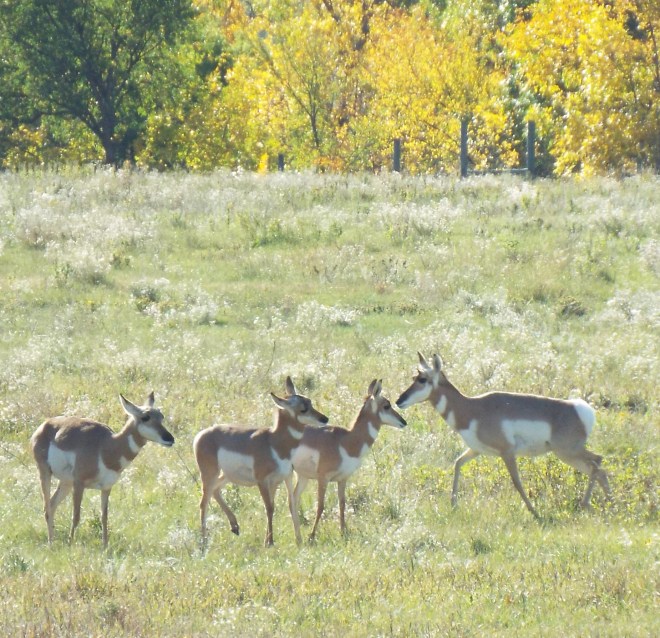
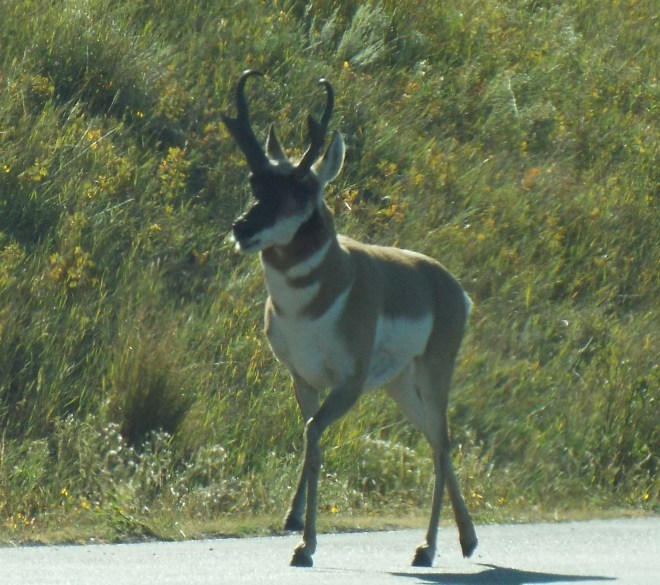
Then came the pronghorn antelopes. They appeared from nowhere, then they were everywhere, sometimes outnumbering the cattle whose pastures they shared with apparent impunity—a real peaceable kingdom. I couldn’t get enough of them: their stature, their gracefulness, their markings.

Where the antelope play

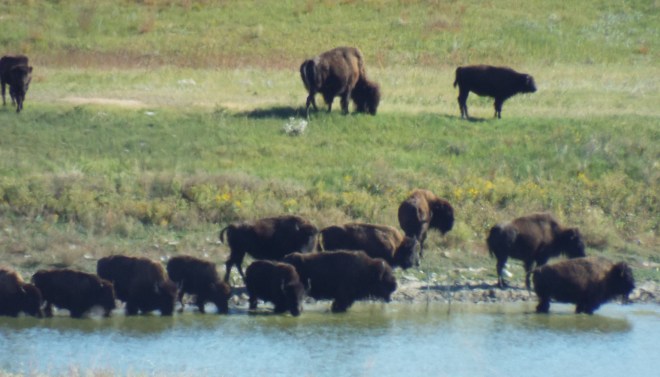
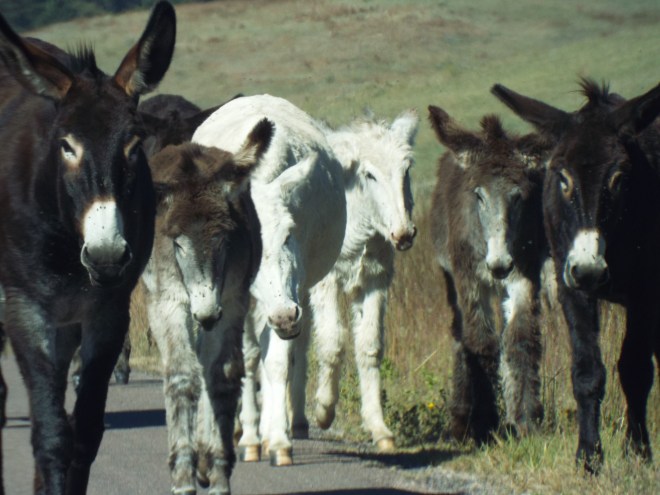
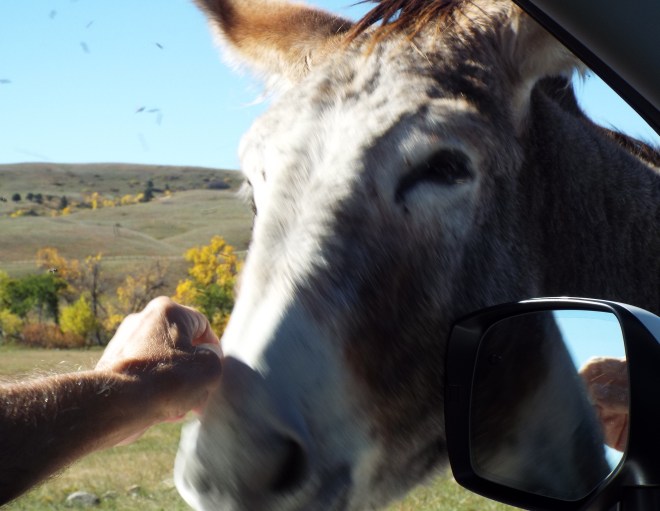
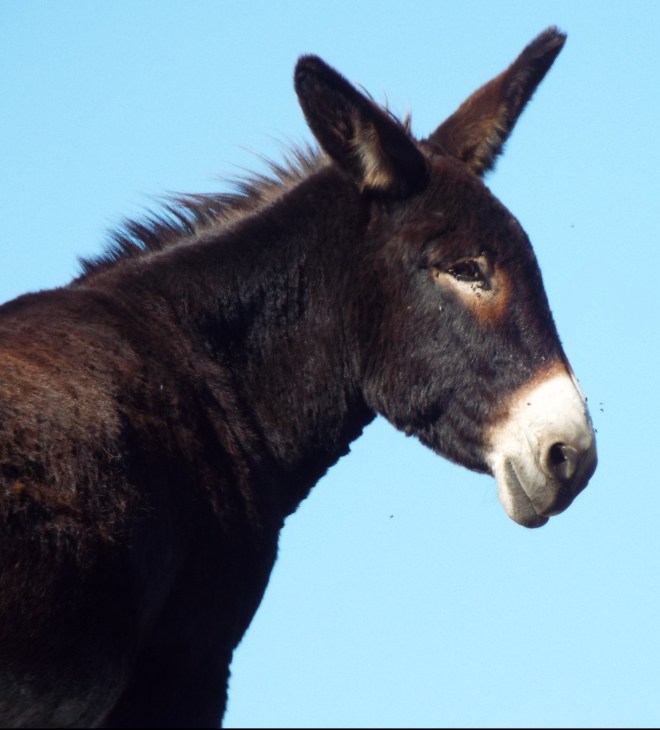
DSCF1738 - CopyWe really didn’t know what to expect in the Black Hills, other than that we’d see Mount Rushmore and hopefully a few bison or other wildlife blocking our path somewhere or other. Were we ever in for a treat! Driving the Loop Road in Custer State Park, not only did we get close-up (as close as is safe) views of the bison; we got real up close and personal with some pretty brazen donkeys.

Where the buffalo roam

I thought they looked like a bunch of teenage hoodlums up to no good or maybe a gang of gunslingers itching for a fight.

The Gnome makes a friend. (But this guy would be happier if that hand held an apple!)

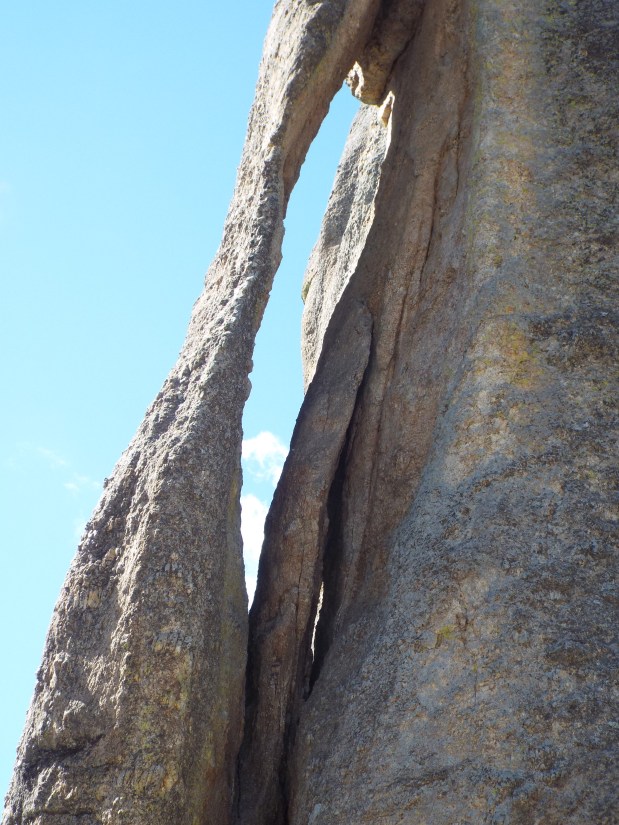
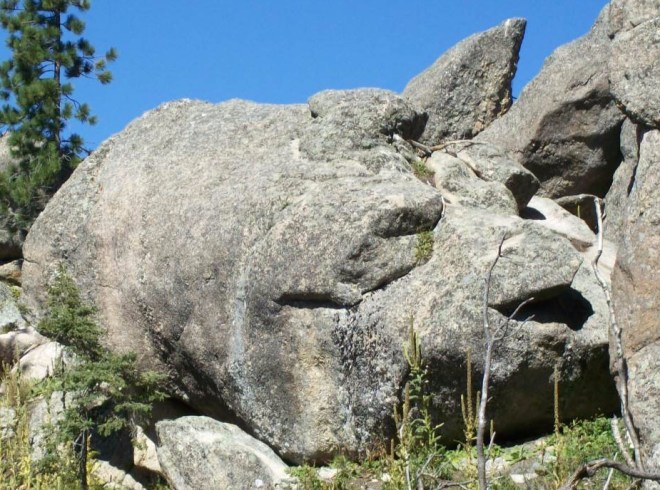
It was the many unusual and massive rock formations, though, that captured our imagination. Sort of like finding cloud pictures in the sky. We’re definitely returning for a longer stay, probably right smack in Custer State Park. What do you see in these images?
As we crossed into Montana, we understood the state’s Big Sky moniker (though South Dakota and Minnesota could vie for that title as well, in my book). We couldn’t pass up a day trip to Glacier National Park where we went up, up, up the Going-to-the-Sun Road. How romantic a name is that? And such an astonishing engineering feat, especially given that it was built in the early 20th century.

I really wish we could have spent more time in the park. Like so much else on this whirlwind trip, it only got a lick and a promise, but even that was pretty amazing. Yet, it was again the unexpected that really got to us. Driving to Glacier meant passing Flathead Lake in the Confederated Salish and Kootenai Tribes Flathead Reservation. With over 185 miles of shoreline, it’s huge! On the way up, we oohed and aahed over the lake’s crystal blue surface glistening in the sun. Our return coincided with twilight, giving us an equally dramatic perspective.

Leaving our final “cousin destination” in western Montana, we opted for a more southerly route home so we could see more new-to-us parts of the country—a very good idea, it turned out. One of the many unexpected and spectacular sights we encountered was Mt. Borah. Located in the Challis National Forest in eastern Custer County, Mt. Borah is Idaho’s highest mountain. Though it was only rainy down where we were, way up at 12, 667 feet above sea level, snow was beginning to cover the peaks.We stopped to learn about the 6.9 magnitude earthquake that shook the mountain in 1983, raising the peak about a foot and lowering the valley floor by eight feet. We could even see the quake’s scar on the side of the mountain. (All very intriguing, but absolutely as close as I ever want to get to an earthquake!)

And then we came to Wyoming. Now, there’s a big state! And it graced us with so many unexpected wonders that it deserves an entry of its own.

Until next time . . .

Signs of Spring

Signs of Spring

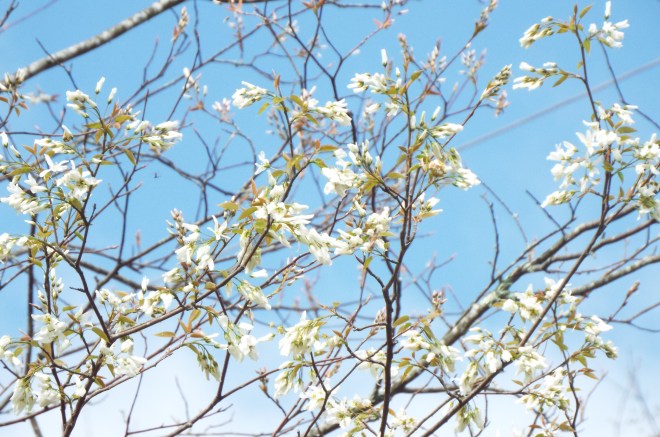
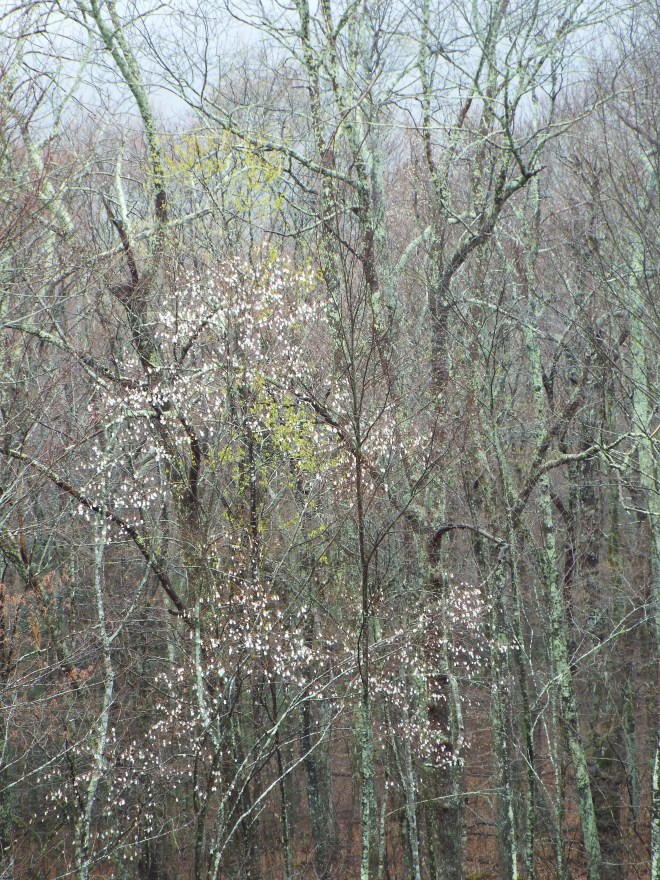
In these parts, it’s a sure sign of spring when the white, pink-tinged flowers of the native serviceberry trees come into bloom. Those delicate blossoms burst open in our corner of the world a couple of weeks ago. Everywhere. All at once.

dscf8265.jpg

Almost as dainty as snowflakes

So even though almost everything else is bare and we were immediately plunged into yet another cold snap (so often our mountain springtime fate), it’s comforting that the serviceberry knows spring is here.

See how bare all the other trees are?

There are more than two dozen species of the serviceberry tree. Most all are native to the U. S., and they grow in practically every state. Depending on where you live, you may know them by another name. Maybe shadbush, juneberry, shadblow, or their Native American name, saskatoon. In the east, it’s just plain serviceberry, or sarvisberry in our southern mountain dialect.

There are lots of stories about how the serviceberry came by its name. The one I’m particularly fond of says that back in the day, the tree came into flower just as the roads in the Appalachian mountains became passable enough that a circuit-riding preacher could finally travel this way again to hold service—or sarvis. Time for marrying and burying to resume. That explanation may be a bit fanciful, but isn’t it a lovely notion?

There’s more to the serviceberry than its early blooms or the tales associated with it. A member of the rose family, the serviceberry is a good landscaping choice with its pretty spring flowers and its striking fall foliage. In the summer, the tree bears berries that turn from red to purplish-blue as summer wears on. Bird love them. So do humans who’ve had the good fortune to discover them (and the good luck to beat the birds to them). The ripe berries both look and taste a lot like blueberries and are eaten raw or used for jelly- and pie-making. They can be added to breads, dried like raisins, or turned into juice or syrup. Like blueberries, they’re also highly nutritious.

Most of the serviceberries around here are natives, twenty to sixty feet tall. With their upward-stretching limbs, it’s hard to get at those berries. But you can purchase shrub-sized ones, which makes berry collecting ever so much easier. We have a young serviceberry down our road (courtesy of the birds, no doubt), so we’ve been able to sample some berries. Delicious!

If you see a serviceberry in bloom, make a note of it. Then check back in July or so for some tasty—and free—eating. You won’t be sorry.

Early Days on the Diagonal Bonus Blog: A Look Back

Early Days on the Diagonal Bonus Blog: A Look Back

(If you’re just joining this series, it will all make more sense if you start with the first one and work your way forward.)

Our house is far from perfect, but there’s something better than perfection in knowing we did it ourselves. That’s what brings us joy every single day. And things certainly haven’t always gone as planned. But then, do they ever? As I’ve previously mentioned, before we ever “finished” our building project, it was time for some serious renovation and rehab work. We’re still in that mode. This time around, we’re thankful we can work at a slower pace, taking on projects when they fit the rest of our plans.

I’ve been thinking a bit lately about what advice I’d give my younger self—or anyone else thinking about doing something similar. What have I learned from our experience? What would I do differently if I had it to do over?  What did we get just right the first time?  I tried to narrow my thoughts to ten worthy points, but I just couldn’t do it. Guess I learned more than I realized. So, here, from my 38 year perch of experience, are twelve bits of wisdom for diy homebuilding newbies.

1. Do your homework. Learn about the area as well as local building codes. If possible, you might even want to rent a place nearby for awhile to give yourself time to search out the perfect location and to become familiar with your new community—to make sure it’s a good fit.

2. Seek out like-minded folks. It can get lonely out there. The idea of homesteading used to be all about going it alone. These days, folks have learned that community makes a lot more sense. Never underestimate the benefit of a support system or the value of experience.

3. Make friends with your neighbors. You’ll likely be living with them for a long, long time. The folks down the road may have an overabundance of apples, and you may have extra downed trees they could use for firewood. Maybe someone would mentor you in exchange for some of the honey your bees produce. Besides, these people are your “first responders.” They’ll be there in time of need. 

4. This is no time for the it’s-better-to-beg-forgiveness-than-to-ask-permission philosophy. If your community has a building code, the people who manage it take it seriously, and you’re not likely to get forgiveness after the fact. Be clear and open about your plans, and be 100% certain that you hear what’s actually said, not just what you want to hear. It’d be a real shame to have to walk away from something you’ve put your heart, soul, and financial investment into because of a misunderstanding over the rules, but it happens. Don’t let it happen to you.

5. Be flexible. If there’s one thing you can count on it’s that things won’t go as planned. When they don’t, smile and find a workaround. 

6. Have someone knowledgeable check your plans for common sense. Did you forget to include a closet? Would it make more sense, from a plumbing point of view, to relocate your bathroom? 

7. Be willing to compromise. And don’t beat yourself up over it. I once heard an experienced modern homesteader respond to a question about homesteading purity this way: “Everybody makes compromises. The few who don’t—or can’t—die alone and lonely.” As I recalled times we found it necessary to choose expediency over perfection, I realized he made a good point. 

8. Don’t underestimate how much it’s going to cost or how long it’s going to take. (Actually, just assume you’ll do both and be ready to adjust.)

9. If you can possibly manage it, stay out of debt. If it’s too late, get out as soon as you can. See how much that mortgage is really costing by the time you’ve paid it off with interest. Credit card debt is even worse. Do the math. You may decide it’s worth the sacrifice of going without while you whittle down your debt.

10. Look to the future. When you’re thirty, climbing stairs several times a day may not be a big deal, but you’re embarking on a once-in-a-lifetime experience; you may want to stay here forever. What happens when your knees give out? Or when an elderly parent needs to move in? Easier to put a bedroom and bath on the first floor now. (Ask me how I know.)

11. Just do it! Dive into your big adventure with all the gusto you’ve got. If you hesitate, you might miss something phenomenal.

12. Be patient—with yourself, with your family, with your grand project. And remember to laugh—a lot!

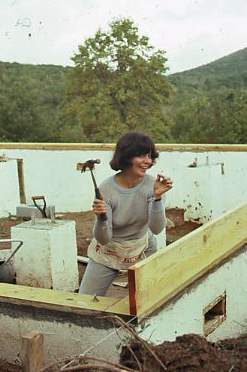
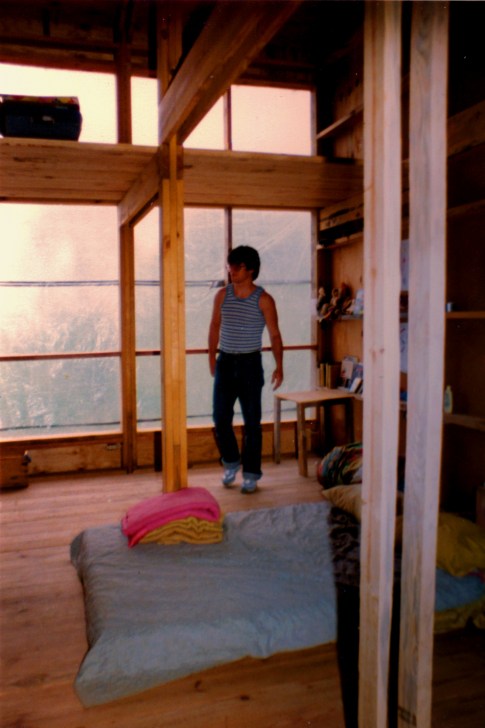
More than once I’ve looked at these old pictures in wonder, trying to conjure up the young whippersnappers who thought they could move to a strange place, camp in the wild, and—with no experience—build their  home themselves. Sometimes I even think I can see them, if ever so faintly. This series has been a fun trip down memory lane. Hope you’ve enjoyed it, too. I’m happy to say that after thirty-eight years of living on the diagonal, we’re still here and not planning to go anywhere anytime soon.

Here are some last looks.

pict0039

Against the sky

pict0019

We were always struck by what we saw as a Japanese style of artistry and simplicity in the bones of our house.

img012

A well-deserved nap

img011

Catnap times two

img028_edited-1

Hamming it up for the camera

pict0027

Section of first floor ceiling

And then there’s this heart-stoppingly gorgeous view of the nearby valley shrouded in clouds. It would be worth living here if only for sights like this.

pict0068

Cloud-hidden, Whereabouts Unknown

Becoming a Home–and a Construction Zone: Early Days on the Diagonal, Part 8

Becoming a Home–and a Construction Zone: Early Days on the Diagonal, Part 8

(If you’re just tuning in the Early Days on the Diagonal series, you may want to start here and work your way forward.)

Not surprisingly, December just keeps getting colder. As far as temperatures go, life in our shed isn’t much different from sleeping on the ground. Not much construction work gets done—we spend most of our time trying to keep warm. Finally, on December 20th, when at 1:00 pm the thermometer reads 5°, all our water and canned foods are frozen solid, and the temperature keeps dropping, we know we can’t keep this up.

pict00631.jpg

Within two hours we find a furnished one-bedroom apartment in town. Temporarily, we leave behind a lonely-looking but imposing 2 1/2 story structure—shingled and, for the most part, enclosed.

We also face the reality of a drastically low bank account. If we want to finish the house, we have to find paying work. Consequently, we have barely any time to work on the house. Vicious cycle.

Nonetheless, we continue our building efforts on weekends, and by mid-April, after nearly four months in town, we move back to our land, this time directly into the shell of our house. It, too, is only covered with blackboard—for the moment—but we do have doors. No glass in our twenty-three window openings, so we’re still very exposed to the elements.

Once again we turn to plastic, but this time with a protective layer of landscape shade cloth and rows of strapping to protect the plastic from the rain and whipping winds. This combo does nothing to abate either the cold or noise, though. We wince every time the fierce wind blows and beats noisily against the plastic.

Naturally, a cold front moves in the same time day we do and temperatures drop to the twenties. Our little space heater can’t compete. At least we’re warm when we snuggle under the electric blankets the Gnome’s parents have provided.

img003_edited

Looking into kitchen area. Horizontal girts make perfect narrow shelves.

In May our phone is installed. Now we have access to the outside world. With no stairs yet, our access to the second floor is a ladder. Neither do we yet have running water; we’re still pretty much camping.

By the end of June, all the studs for our few interior walls are in place. We’re also beginning to put up exterior siding. With the height of the house and no scaffolding, this means even more ladder-climbing. It’s a slow process.

img006_edited

Upstairs with loft above. Look carefully and you can see some of the horizontal plastic strapping protecting our plastic-covered window openings.

The glass for our windows arrives in August. After installing them, we finish most of the exterior siding. We wait for lumber prices to drop before buying the rest. We also install our tub, toilet, and bathroom and kitchen sinks, but it will be a full year after we’ve moved back up here before we complete all the plumbing work and get running water. Since we’re dependent on an electric pump, getting water is also dependent on having electricity. The Gnome’s electrician dad does a walkthrough to assure us we’re doing it right. April 24th, 1981, the day we’ve completed our wiring and water is finally running to all our indoor fixtures, is a red-letter day for sure!

Our home’s far from finished—for instance, we’ve only now finished nailing down the subflooring that’s been sitting on joists for a year—but we finally bring all our belongings home from the storage unit where they’ve been sitting for eighteen months. It gives the place a homey feel.

Punkin and Cuddlebug’s extracurricular activities keep us so busy that work on the house slows to barely a crawl. Living in an unfinished house means working around people, furniture, and stacks of unpacked boxes, slowing things down even more.

img005_edited

Lumber gets stored inside to protect it from the weather.

It will be another five years before we have a kitchen counter and cabinets, and still another before we get around to painting our interior walls, build a closet, and finish the exterior siding.

img002_edited

Before we had a closet

In truth, we will never get finished. When we once again have time—and money—to finish the job, the house will be begging for some serious rehab and remodeling. But that’s another story for another time. Meanwhile, stay tuned for a bonus segment of Early Days on the Diagonal.

finished-house

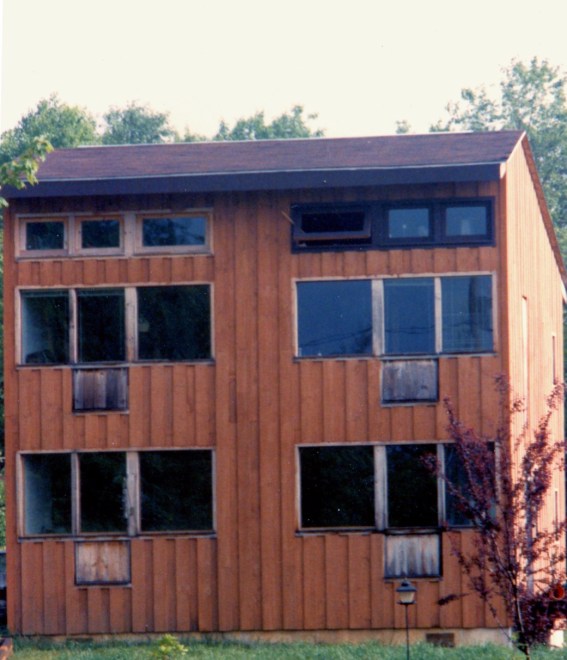
Except for painting the window trim (we’d started, upper right) and vent openings below windows, this is as finished as it gets until thirty years or so hence. But we did it all by ourselves, y’all!

Moving on Up: Early Days on the Diagonal, Part 7

Moving on Up: Early Days on the Diagonal, Part 7

(This is the seventh in an eight-part series about our early attempts at modern homesteading. If you’re just tuning in, you may want to start back at the first one and work your way forward.)

We’re using a post-and-beam construction technique. It’s the easy way to go for the open floor plan we’re set on. After putting in floor joists, we begin work on our posts. Lifting them into place is a struggle—each post is made up of three 2×6 boards that are ten feet long, weighing almost 150 pounds each. That’s a lot for the two of us to manage without proper equipment. As physical as the work is, it’s not enough to keep us warm on fall days.

img068

The first post has been successfully raised.

On October 5, as we begin the fourth month of our adventure, we raise the last of the twenty first-floor posts. The same day we’re surprised to look out over the field and spot our first snowfall of the season; leaves are just now beginning to change color.


Beam-lifting turns out to be another feat requiring engineering creativity. Eleven-foot lengths of built up 2×10’s are even heavier than the posts and have to be lifted eight feet up to attach to the posts. Relying on ladders makes us nervous as we fit and nail beams and posts together.


With the beams in place, we can install the tongue-and-groove upstairs floor, which will also serve as the downstairs ceiling. We don’t have a floor downstairs yet, but one upstairs is necessary to get on with the next steps. My parents lend helping hands again.


img009_edited_2

Our nearest neighbor and his dog come to watch when the septic tank and water reservoir are installed in late October.

Back in the shed, it’s gotten pretty chilly. We have a small electric space heater, but with an open doorway and our flimsy structure, it heats the rest of the county, too. Just for the sake of warmth, we usually dress for the next day before we hop into our sleeping bags each night.

The fall colors are enchanting. Clouds drift by, creating fascinating patterns of light and shadow on the mountains, Nature’s kaleidoscope. It’s so mesmerizing often we find it hard to focus on work.

Second floor posts and beams go up, followed by beams to support the ceiling and roof. To work on these, we lay a 2×10 board across the lower beams as a precarious scaffold of sorts.


After adding upstairs ceiling boards, we close in the structure with plywood and blackboard—hanging precariously around the sides, under the bottom, and over the top to do so—all because we lack scaffolds and sufficiently long ladders.

img014_edited-1

We rig up a pulley system to pull plywood and blackboard into position, then nail it in place from inside.

pict0053.jpg

We have to stay ahead of the weather, so my parents come for one last weekend of feverish work adding roof rafters, insulation, and plywood to support our shingles.

house-12_20_1979_edited

We add plywood to the front center for structural stability and begin framing for glass.

By golly, it’s actually beginning to look like a house.

(Stay tuned for the next episode of Early Days on the Diagonal.)

Electricity and Wind: Early Days on the Diagonal, Part 6

Electricity and Wind: Early Days on the Diagonal, Part 6

(This is the sixth in an eight-part series. If you haven’t been following the journey, you may want to start back at the beginning and work your way forward.)

As idyllic as our wild life can be, we welcome the August arrival of electricity. The electric cooperative has to run power up the mountain to put in our temporary pole. We can only operate one or two items at a time, but that’s a big improvement over hand saws and drills.

img020

We have a road put in, a necessity for getting deliveries of building materials, our water reservoir and septic tank. An added bonus—no more walking in and out with groceries, laundry, and those heavy five-gallon water containers.

pict0062

Building the road is one of the few things we don’t do ourselves.


Summertime’s a damp season up here, but this year it’s been extreme, raining nearly every day. We need it relatively dry to finish digging these trenches or the walls could fall in. There’s nothing to do but wait—impatiently—for things to dry up.

Out of the blue, we experience David, our first hurricane in the mountains. The Gnome and I lie awake all night listening to the wind blow across the mountains. Each time it does, we hear it roaring through the trees for at least five minutes before it finally reaches us. When it does hit, it hits with a fury, tearing at our plastic walls. They weren’t meant for this kind of abuse. When we’re not making a futile effort at sleep, we’re outside in the driving rain and wind furiously nailing up strips of scrap lumber to try to hold whatever remains of the plastic in place.


At about 5:00 am we’re too exhausted to care much anymore—which is just as well since the plastic roof caves in. The kiddles slept through it all.

img014

After a nightlong battering, our black plastic “roof” caves in, dousing everything.

After the kids leave for school, we buy supplies and put on a real roof with plywood and asphalt rolls. Within days we get reports that a second hurricane is following David’s path. We rush into town for blackboard to replace the plastic walls.

In retrospect, 2017: Well, obviously, we should have invested more into this structure.  It would have come in handy later, too, as an outbuilding.

Other than to adhere the first course of concrete block to the footings, we forego the traditional mortar in favor of fiberglass reinforced bonding cement. The snow-white mixture with its shard-like fibers bears a remarkable resemblance to shredded coconut and has us craving for macaroons.


We have to keep our heads covered while we’re mixing so our hair doesn’t bond to our scalps. As usual, we improvise, using old t-shirts as makeshift hats.

Building the foundation has been nervewracking. For all the how-to books on home construction, we’ve been able to find absolutely no guidance on this critical first step. Even the extensive building code offers no direction. We have a great reference book titled From the Ground Up. We wish in vain for a From the Ground Down manual.

In retrospect, 2017: We did okay—the house is still standing.


                                      The kids like to help when they get home from school.

(Stay tuned for Part 7 of Early Days on the Diagonal.).

Daily Life: Early Days on the Diagonal, Part 5

Daily Life: Early Days on the Diagonal, Part 5

(If this is your first time visiting the Early Days series, may I suggest you start here and work your way forward?)

Everyday life is a wee bit different when you have neither electricity nor running water, but we’re finding our way. To get water for our daily needs, we fill two five-gallon containers every couple of days from an enclosed spring with an overflow spout by the side of the state maintained road about three-quarters of a mile away.

Sometimes, we take sponge baths, and sometimes we take advantage of the almost daily rain for a brief shower. (Brr-r-r!) When we feel especially in need of a good cleansing, we trek deep into the woods for an exhilarating 40-degree creek bath. Our secret site is decorated with rhododendron flowers and boasts a convenient mountain laurel towel rack. We always leave with a strange sensation of lightheadedness, especially when we wash our hair in that cold, cold water.


On occasion, we take a trip to town for a dip in the county pool preceded by a real shower with hot, running water. It’s the only time we feel really and truly clean. Eventually, these trips become a twice-weekly routine that provides us with a time for family play as well as some good exercise. Not that we don’t get plenty with all the digging and tree-cutting, but this feels different—and a lot more fun.

We spend evenings and rainy afternoons (plenty of those) reading stories aloud from our stash of books from the county library. We especially enjoy Ramona and Clifford the Big Red Dog books. Other favorites are That Quail, Robert and the iconic raccoon tale, Rascal. We’re also fascinated by Eric Sloane’s Diary of an Early American Farm Boy, a pioneer-days real-life story that seems to parallel our own experiences at the moment. When we’re not reading, we pass the time creating themed crossword puzzles for each other to complete.

One of the joys of building our house ourselves is getting to be out in nature and getting to know our little corner of paradise on an intimate basis. As we dig, we find all sorts of interesting creatures: a golden-eyed spade-footed toad, black and red salamanders, and shrews that can’t seem to stay out of the holes.

Each morning brings an untold number and variety of spiderwebs, with dewdrops making them sparkle in the sun. The geometric masterpieces can be found on fences, in trees, and just about anywhere else one can imagine. I stalk these works of natural art with camera poised.


Now that we’re out here in the country so far away from city lights, we can really appreciate the night sky. In August, we ‘re treated to the Perseid meteor showers. We’ve never seen anything like it.

Mid-August heralds the beginning of the school year, which always coincides with the blooming of the touch-me-nots (or jewelweed) that line the long gravel drive to our house. Afternoon walks from the bus stop are always slow because our children can’t resist stopping to pop every seed pod they spy.

What a delightful surprise it is to discover wild blueberry and blackberry plants on our land. It’s a charmed life we’re living.

(More of the Early Days on the Diagonal series coming next week. Stay tuned.)