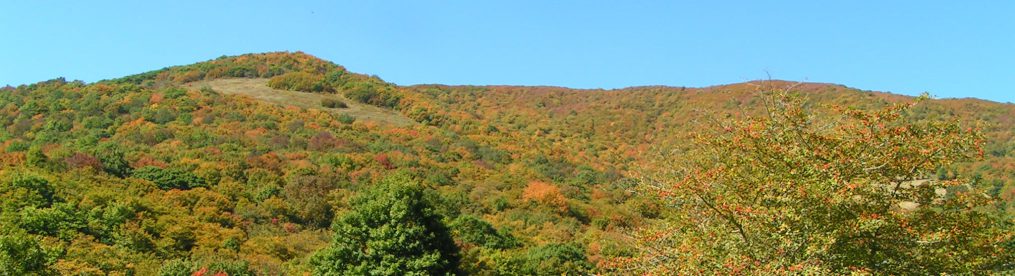
I’m not sure our hearts could have taken much more of Wyoming’s wild wonders, so it’s a good thing our next day’s travel took us to Colorado, where we were greeted with this sign:
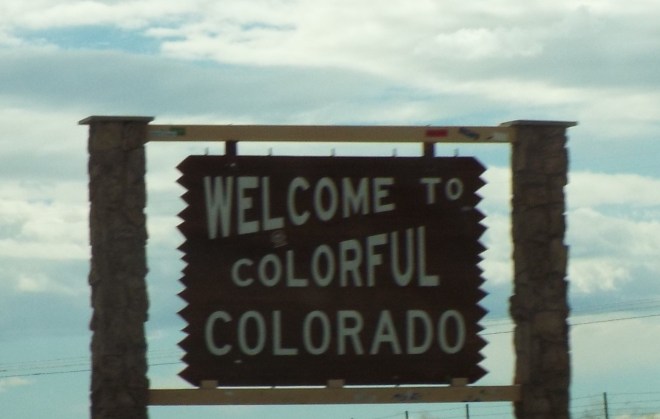
I think maybe it’s a double entendre.


We’d spent a little time in Denver before, so this time we only drove through on our way to Pueblo. I’d had my heart set on seeing Pueblo for one reason: the Arkansas River. I knew we’d be crossing that river later in the state where you’d expect it to be—Arkansas—and it seemed so right to see it here in Colorado, too, on the very same trip. (It doesn’t take much to make me happy.) As soon as we checked in to our airbnb, we headed downtown to Pueblo’s Historic Arkansas Riverwalk. I’m glad we did.


The 32-acre waterfront area is sophisticated, yet welcoming. It’s artistic and calming. Just the place for a late afternoon stroll.
The next day we made it to Taos, New Mexico. Along the way, we were stunned by the sight of Blanca Peak. Here we were at a flat-as-could-be 7,000′ elevation, and almost right next to us, soaring out of the earth like a phoenix, was this mountain that rose to another 7,000+ feet. Just like its name, it was white. We were mesmerized. And we may well have missed it had we not missed our turn. More serendipity.


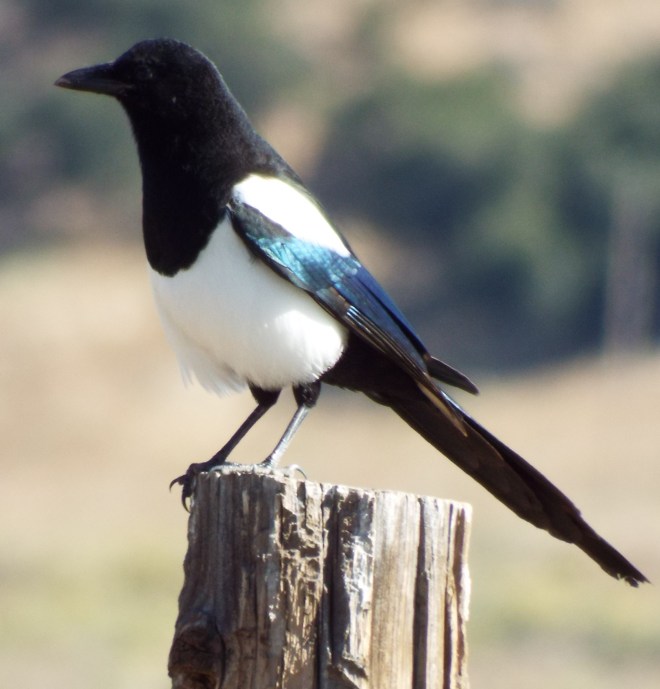
While we were admiring the majestic mountain, this incredibly beautiful magpie gave us an audience. Magpies had been flirting with us since South Dakota, but were never still long enough for us to get a good look at their striking iridescence. We don’t have magpies at home and we reveled in the opportunity to observe one up close.
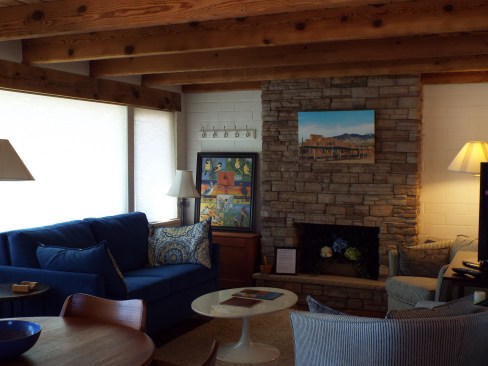
 We stayed just outside of Taos in another airbnb, appropriately enough a casita. It would have been an ideal place to chill out for a few days with a good book and a few glasses of our favorite beverage had we not wanted to see what Taos had to offer.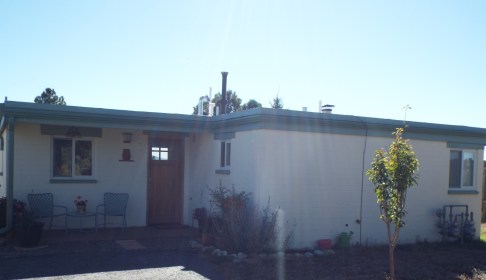
 Courtesy of our airbnb host, we were in for another bit of serendipity (by this time, we were almost expecting such moments)—the Rio Grande River and Gorge. We had no idea the Rio Grande was this far north. It was an awesome sight.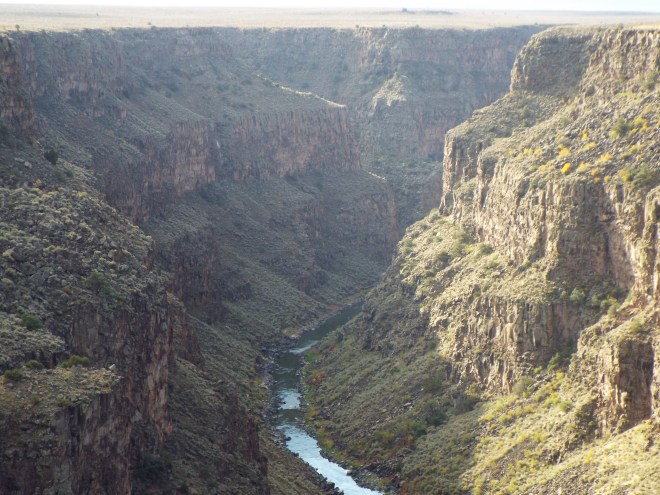
A chilling one, too.

Ten of these call boxes were situated strategically along the length of the bridge.
And then this happened: a couple approached us to take their picture. Turns out this is where he’d proposed a year ago, shortly before she was in a serious accident causing a brain injury and memory loss. They were on a mission to relive and record those lost moments. We clicked the camera’s button as he knelt on one knee above that vast canyon. They were deliriously happy. After we’d walked off the bridge to get a view of it from some distance away, we could still hear her laughter. Lots of warm fuzzies that day.
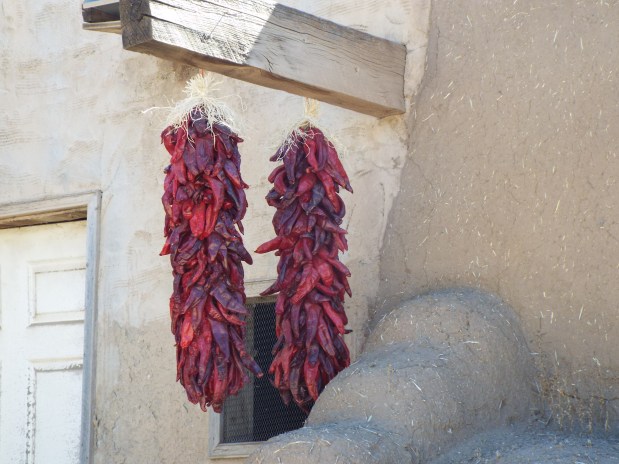
We knew Taos began life as an artists’ colony and remains a haven for artists, but we were surprised to discover how tiny it is. With a population of 5716, it’s even smaller than Douglas, WY, where we’d been just two days before. Naturally, the shops are heavily focused on art, and outdoor sculptures are common. But in my view, Taos’ best feature is its architecture. A big fan of Pueblo/Spanish/Mission architecture, I was excited to see so much of it. It must be a challenge for local leaders to hold true to the town’s origins and avoid turning it into a garish strip, like some places I know. They even have an ordinance to protect the night sky. Good for them.
The post office is adobe, banks and grocery stores are adobe, the churches are adobe.


Even McDonald’s is adobe.
We left Taos and New Mexico for the panhandle of Texas and a little stretch of Route 66. I’m a child of the ’60s and a fan of that decade’s TV series featuring the iconic highway, so I had to get me some Route 66 kicks!
Old Route 66, what little there remains of it, is filled with all sorts of quirky kitschiness. Our destination was Cadillac Ranch, just outside of Amarillo. What a hoot!


We especially liked this: As we left Cadillac Ranch, we decided to travel a few miles farther on Route 66. For the most part desolated and decaying, it still has a few unexpected treats, one of which is the Devil’s Rope Museum in McLean, TX.
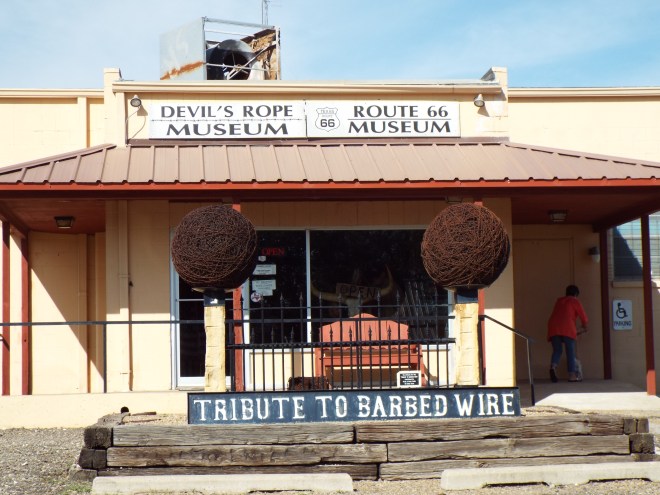 We had a little time; we decided to stop. As we walked up the steps, a woman leaving looked at us and said, “It’s surprisingly interesting.” She was right. The museum (free, by the way) features collections from barbed wire collectors (yes, that’s a thing all across the country, as well as everything related to barbed wire—tools, salesman samples, sculpture, and a library filled with patent information.


In addition, the museum displays Route 66 memorabilia,

Who’s old enough to remember these?
and it contains a poignant Dust Bowl photo exhibit. It’s worth a stop. Really.
In Oklahoma, we stopped in Elk City to visit a superb museum complex: a Blacksmith Museum, the Old Town Museum, the National Route 66 Museum,


and the Farm and Ranch Museum. All for one low price—just $5.00 for adults. Well worth it.
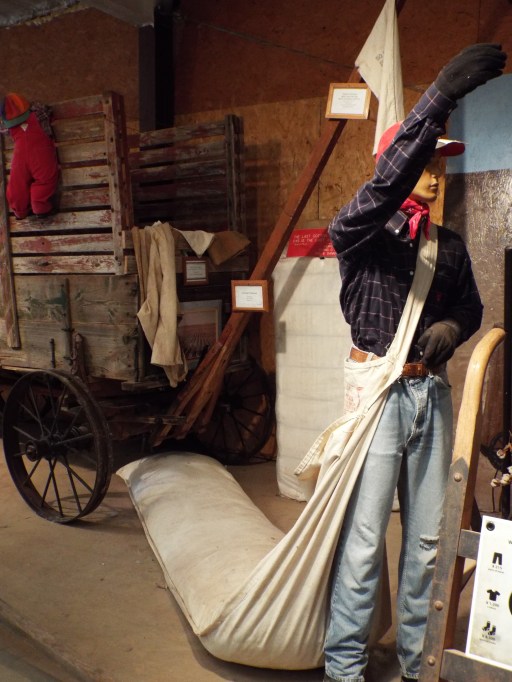
This exhibit put me in mind of my father’s boyhood. His father’s too. (You can read all about it in my book, Boyhood Daze and Other Stories: Growing Up Happy During the Great Depression.
After twenty-some days on the road and home getting closer with every mile, it was hard to think of the remainder of our trip as anything more than the fastest way to get home. We still had three days to go, though, and we wanted to make the best of it. We’d planned one last big stop: Little Rock, Arkansas. After all, we had to get another look at the Arkansas River.


And we got to visit our first Presidential Library. The Clinton Presidential Library and Museum kept us fascinated for hours. We decided it would be a good idea to visit as many of these libraries (all privately funded, by the way) as possible. Apparently, lots of people do that; the gift shop sold “passports” with space for stamps from each library one visits.
We zipped through Tennessee. Though there are lots of things we’ve not yet seen and done in our neighboring state, it’s just a border away and easy enough to visit another time. As the landscape grew more familiar, we became even more anxious to get home, to see how our garden had fared during our absence. Surprisingly well, it turned out. We still had crops to harvest.
We learned so much on our big fall adventure. Perhaps the biggest lesson of all was that serendipity is what it’s all about. My advice? Give yourself some extra time and space when you travel. Keep your eyes open. Look for the little things, the unexpected. You never know what surprises will be waiting. Savor it all.
(Want to read about our road trip from the beginning? Start here. And stay tuned for episodes detailing our time in National Parks and more.

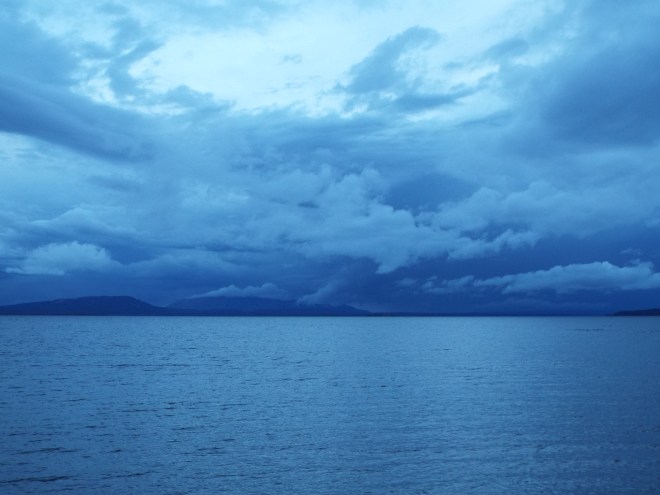
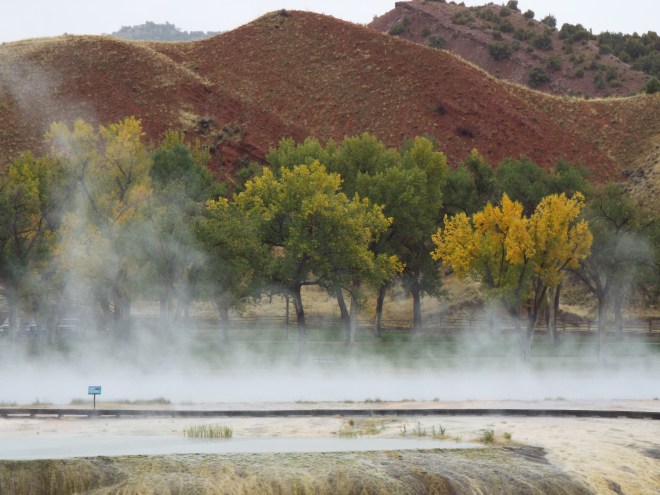
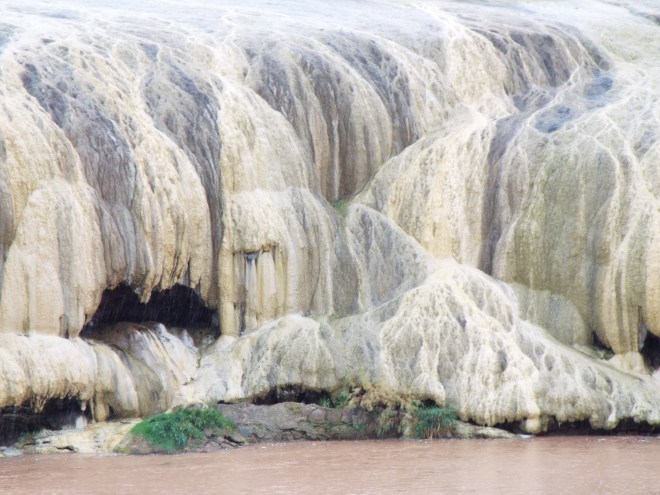


 The canyon with its high rock walls, rapidly flowing river, and railroad running on a narrow ledge between the river and the canyon wall caught us completely off guard. And it became one of the two biggest highlights (other than family, of course) of our entire trip. All in thirty-four miles. They say you can drive it in forty minutes if you don’t stop. But of course we did. We wanted to savor it—both the scenery and the sheer awesomeness of the experience.
 Douglas is full of history. Established in 1867 when Fort Fetterman was built just ten miles away, named for Stephen A. Douglas (Lincoln’s presidential opponent), a World War II prisoner of war camp that held 5,000 German and Italian soldiers, and home to both the Wyoming Pioneer Memorial Museum and the Wyoming State Fair.
 Our Douglas lodging was the charming Hotel LaBonte, currently on the National Register of Historic Places. It’s hard not to let your imagination run wild when you stand in the lobby. The place reeks of ranchers, cattle barons, and railroad tycoons.
 Just as it was closing time, we dropped in on what may be the world’s friendliest Chamber of Commerce where the helpful staff told us about what turned out to be the other biggest highlight of our trip: the Oregon Trail Ruts and Register Cliff, part of the Oregon National Historic Trail. We’d been planning on turning in early, but it didn’t take a nanosecond for us to change our plans and take off for Guernsey, just twenty miles away.
 Just a couple of miles away is a place called Register Cliff. Think of it as a pioneer version of a hotel and its accompanying ledger. The sandstone cliff, in those times a day’s journey from their previous night’s stay at Fort Laramie, provided some degree of shelter as well as a place where people could chisel their names and date of arrival. Maybe it was a message to relatives and friends coming in a later caravan. Or maybe it was a way of recording for the ages, “Look, I made it this far!”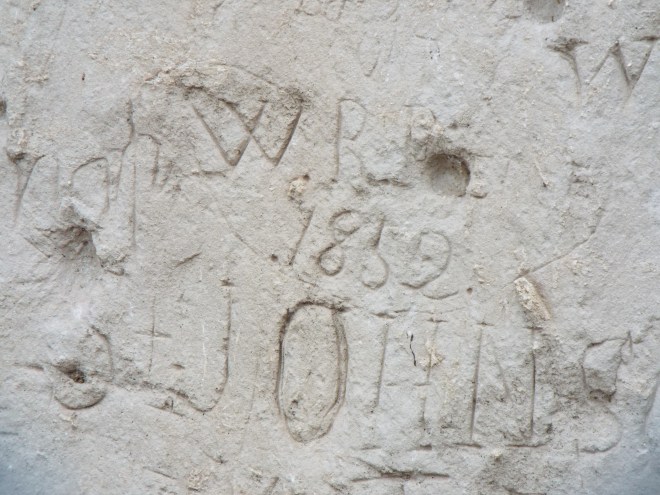

 Wyoming, you stirred my soul and stole my heart.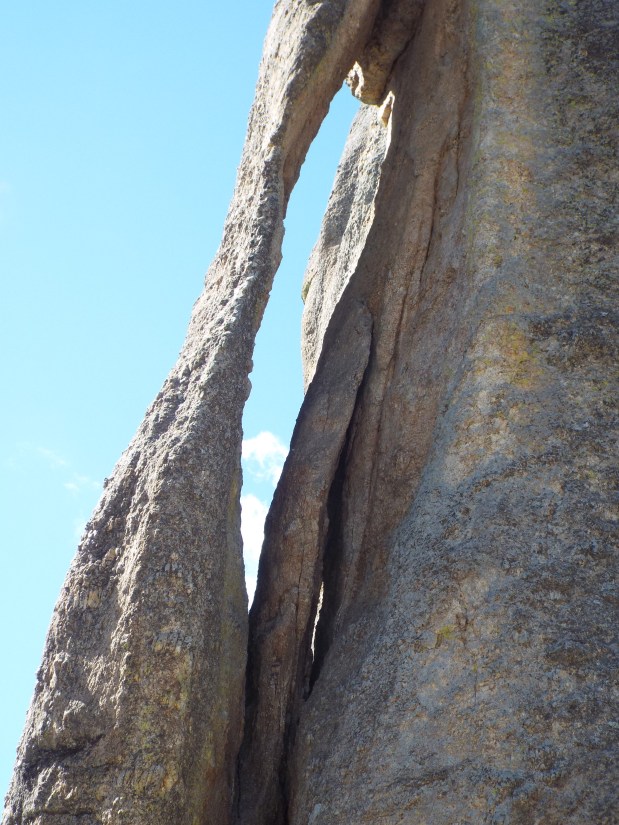



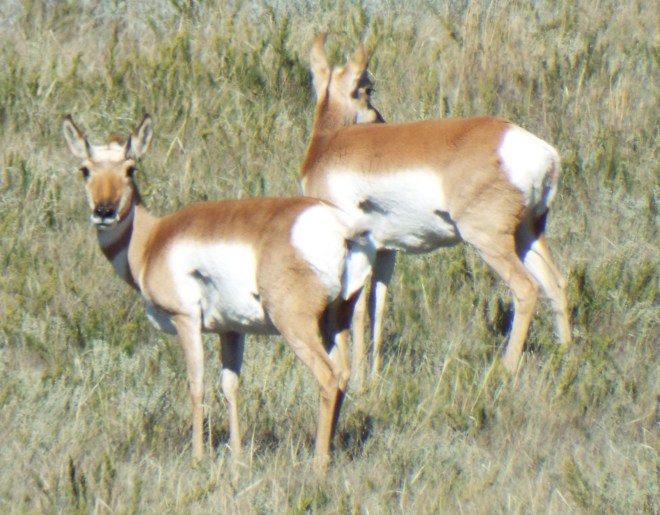
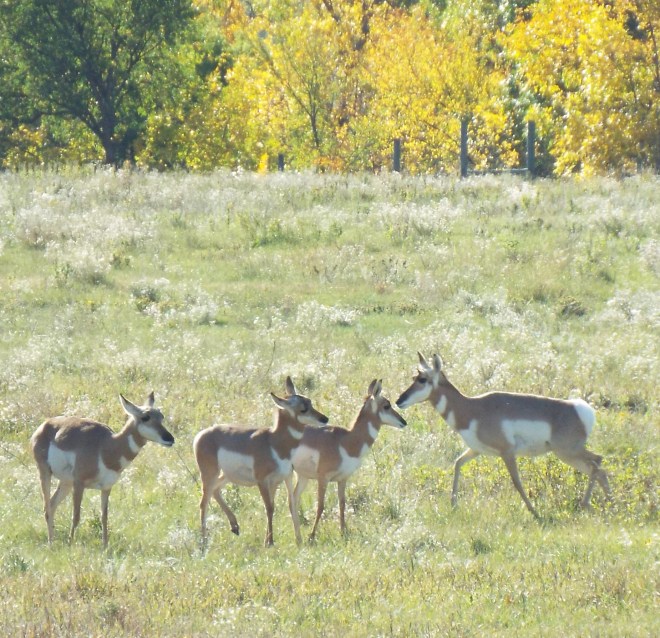
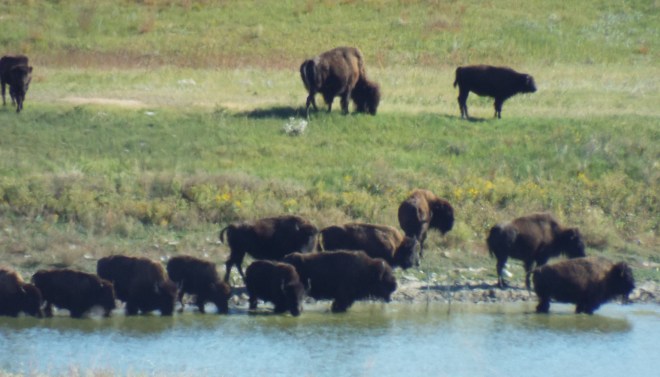
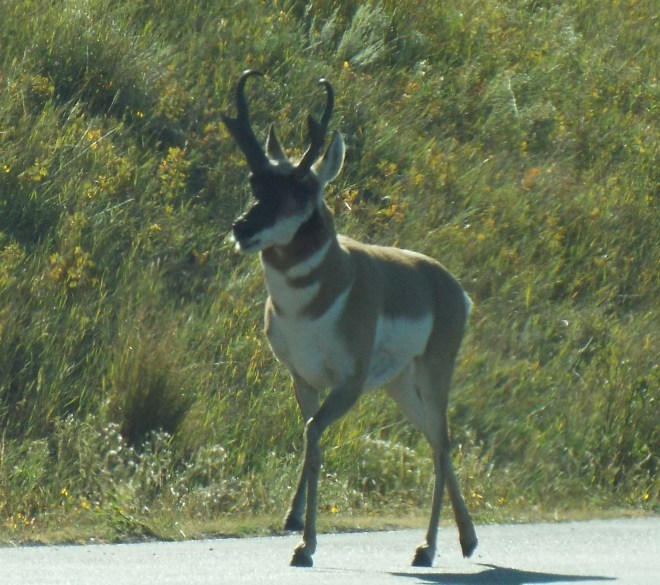 We really didn’t know what to expect in the Black Hills, other than that we’d see Mount Rushmore and hopefully a few bison or other wildlife blocking our path somewhere or other. Were we ever in for a treat! Driving the Loop Road in Custer State Park, not only did we get close-up (as close as is safe) views of the bison; we got real up close and personal with some pretty brazen donkeys.

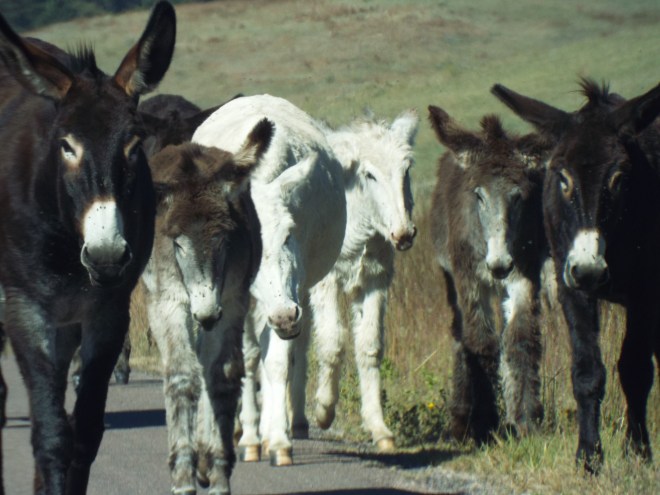
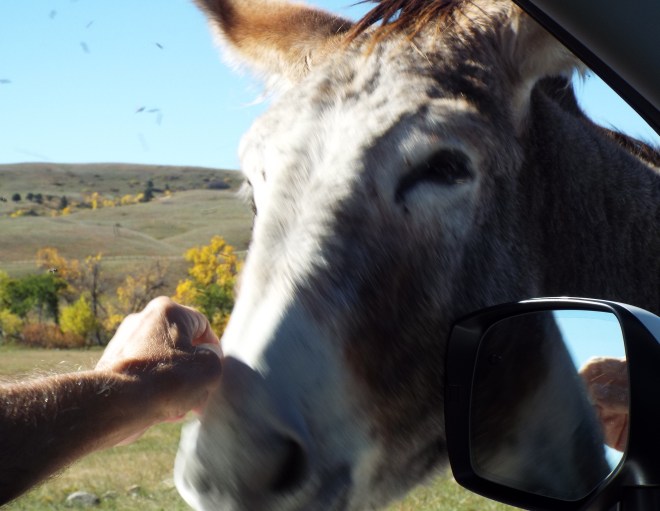
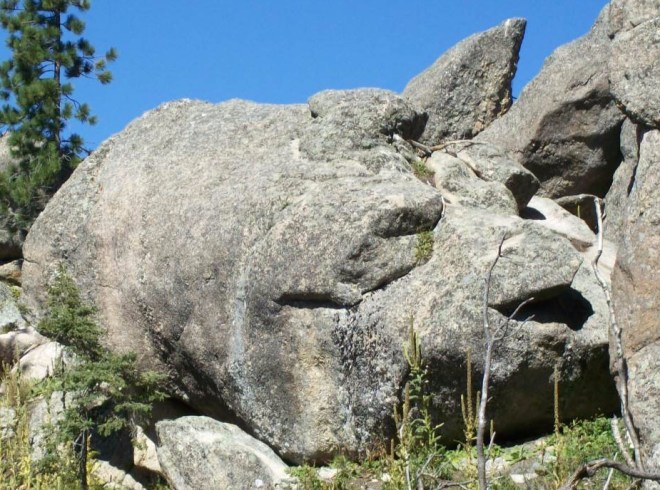
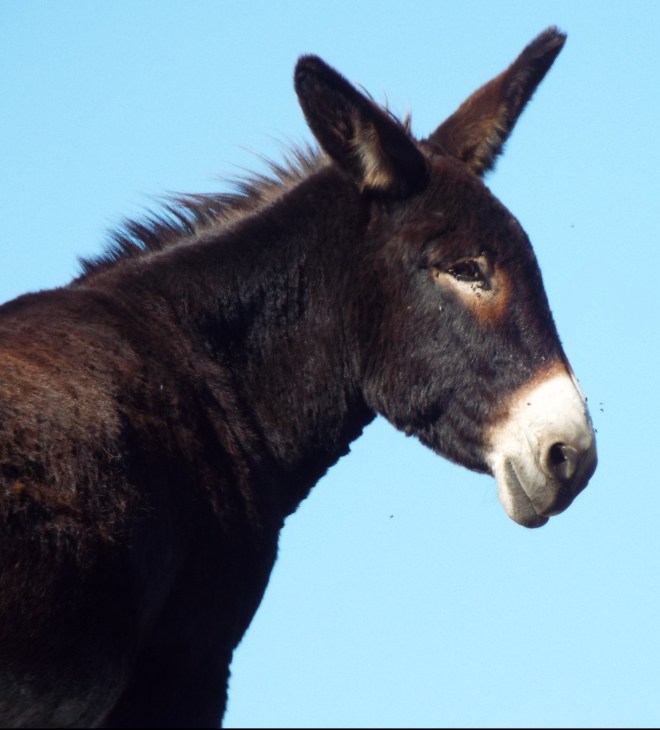 It was the many unusual and massive rock formations, though, that captured our imagination. Sort of like finding cloud pictures in the sky. We’re definitely returning for a longer stay, probably right smack in Custer State Park. What do you see in these images?


 Leaving our final “cousin destination” in western Montana, we opted for a more southerly route home so we could see more new-to-us parts of the country—a very good idea, it turned out. One of the many unexpected and spectacular sights we encountered was Mt. Borah. Located in the Challis National Forest in eastern Custer County, Mt. Borah is Idaho’s highest mountain. Though it was only rainy down where we were, way up at 12, 667 feet above sea level, snow was beginning to cover the peaks.
 We stopped to learn about the 6.9 magnitude earthquake that shook the mountain in 1983, raising the peak about a foot and lowering the valley floor by eight feet. We could even see the quake’s scar on the side of the mountain. (All very intriguing, but absolutely as close as I ever want to get to an earthquake!)


 Living on the Diagonal