The Grand Road Trip, Part I: Kentucky to South Dakota

The Grand Road Trip, Part I: Kentucky to South Dakota

The Gnome and I have never been big travelers. It’s not that we don’t enjoy seeing more of the world—it’s just that we’re always so busy with can’t-wait projects around here. (Not to mention the many years when money for travel was an extravagance we couldn’t consider.)

The past year has been a rare exception. Not only have we traveled more, but circumstances conspired in such a way that we took two major trips in just six months’ time. As I wrote here and here, we recently returned from visiting long-time friends in California. It was quite the trip. But last fall, we headed out on an even bigger journey, a 24-day road trip of more than 6,000 miles (and 4,000 photos—really!)—another long-promised trip both to ourselves and to close-in-heart but far flung cousins and other family.

That trip, too, took us through previously unexplored territory. On our travels, we wound through fifteen states, seven of them new to us. We got to spend time (oh, so little) in Glacier, Grand Teton, Yellowstone, and Badlands National Parks and too many national forests to count.

Of course, the best parts of the trip were the good times we spent with our relatives—not to mention the gourmet meals they prepared for us! They treated us like royalty. But that was family time, private time, so it won’t get any further mention here. But the incredible scenery and the history we encountered along the way was pretty phenomenal too. That I do want to share with the world. And there was so much of it, I realize this story has to be serialized.

First things first. Our driving on Day One ended in Louisville, Kentucky. Louisville will always hold a special place in our hearts. It’s where we moved following our wedding and honeymoon, and we stayed for twelve years. Both of our children were born there. Except for the humid summer heat, we loved everything about Louisville and nothing—except wanting a mountain home nearer our families could have driven us away.

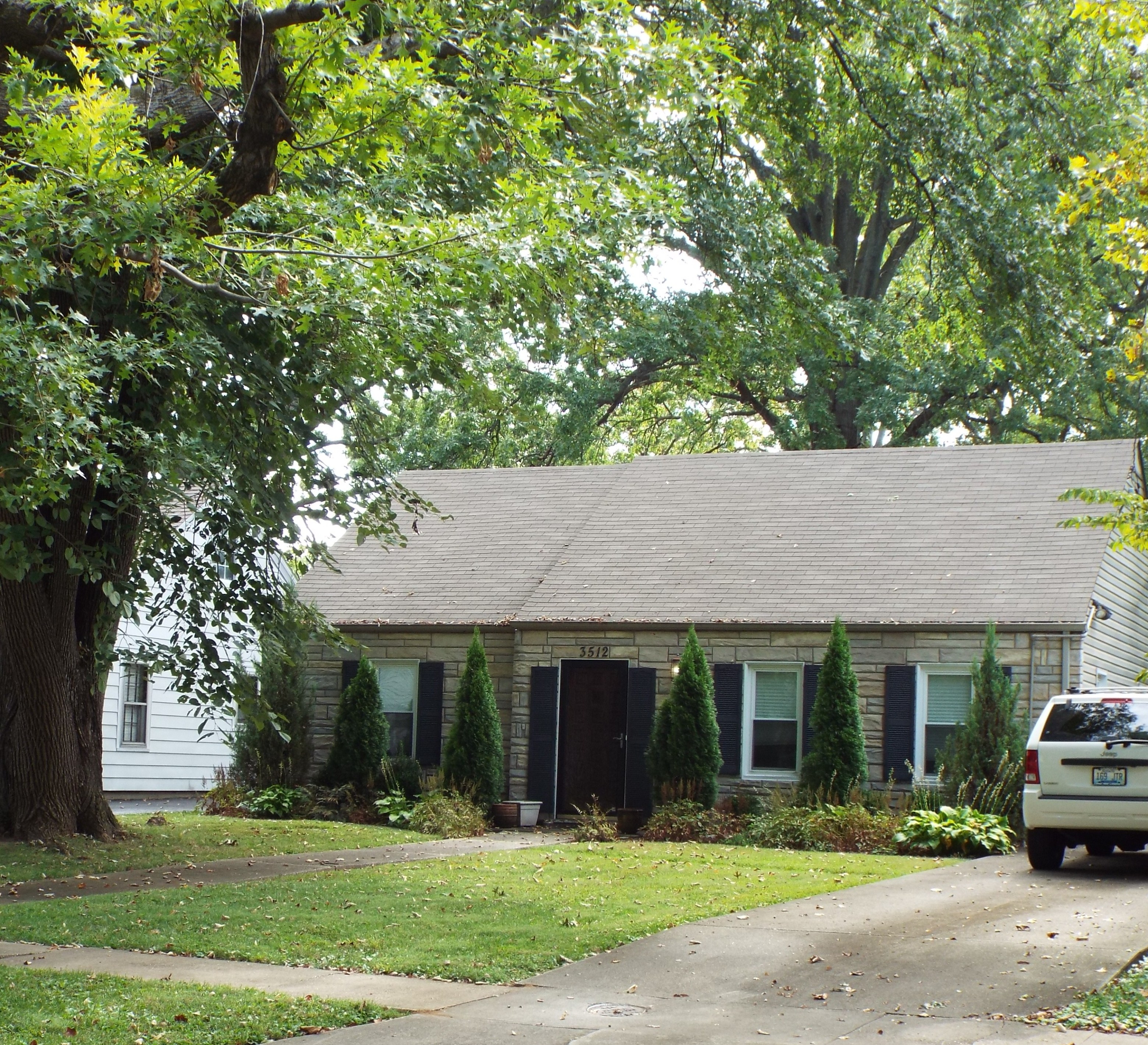
It’s been years since we’d been back, and while much is the same, lots of changes have come to River City since we left, too. Sometimes it was hard to get our bearings, but we had to check out a few of our favorite old haunts. Our first home-of-our-own is still there (minus a couple of special dogwoods), but barely. A church parking lot expansion has taken all but a few houses on that block.We sat on the banks of the Ohio munching on Kingfish Restaurant’s onion rings while the Belle of Louisville graced us with her presence.And then there’s Plehn’s Bakery—A Louisville staple for almost a hundred years and one of our favorite weekend destinations back in the day. We couldn’t say goodbye to Louisville without dropping in for our favorite butter kuchen. I wish they shipped!
We didn’t have time to take in any of Louisville’s many tourist and cultural venues, but it’s chock full of them, from Churchill Downs to the Muhammed Ali Center to Actor’s Theatre. I highly recommend Louisville as a vacation destination. You’d never get bored.

Louisville already had a phenomenal park system (eighteen parks and six parkways designed by the father of American landscape design, Frederick Law Olmstead). Now, the city has added 85 acres of waterfront green space and walking paths. A great place for family frolicking. The mighty Ohio itself has become a haven for paddlers. We were delighted to discover that the old Big Four railroad bridge has been transformed into a walking bridge that will take you across the state line into Indiana. It’s clearly a popular walking and cycling spot. Lit up at night, it’s all about romance. We had a terrific view of the bridge from our riverside restaurant terrace. I could have stayed for hours.

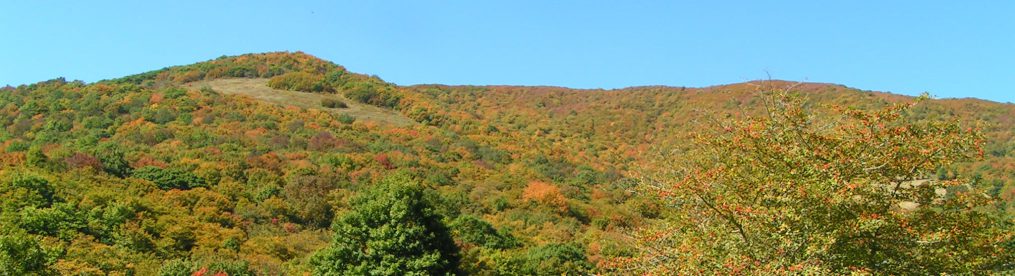
Time has been good to Louisville.From Louisville we traveled across Indiana and up to northwestern Illinois. We know this route, but the dramatic change from flat plains to rolling hills always catches us off guard. When we visited the museum in charming Galena, we learned a little more about the landscape and its history. The Driftless, an area encompassing parts of Wisconsin, Minnesota, Iowa, and Illinois, escaped the flattening effect of glacial ice fields way back when. As a result, the region is graced with millions of bluffs and valleys with elevation changes of up to 1100 feet. Right in America’s heartland. Driving through the pastoral Driftless is not only beautiful, it’s calming. Good for what ails you.Something we hadn’t seen before in our travels through this area was the silver glint of massive wind farms. Wind turbines filled nearby fields and faded into the distance. Far too many to count. Farther than the eye could see. Watching the blades turn while listening to a classical piece on the car radio nearly put me into a hypnotic trance.DSCF1271Of course, we drove past miles and miles of corn. It was higher than the proverbial elephant’s eye. I wondered if any of it was being grown for human consumption.

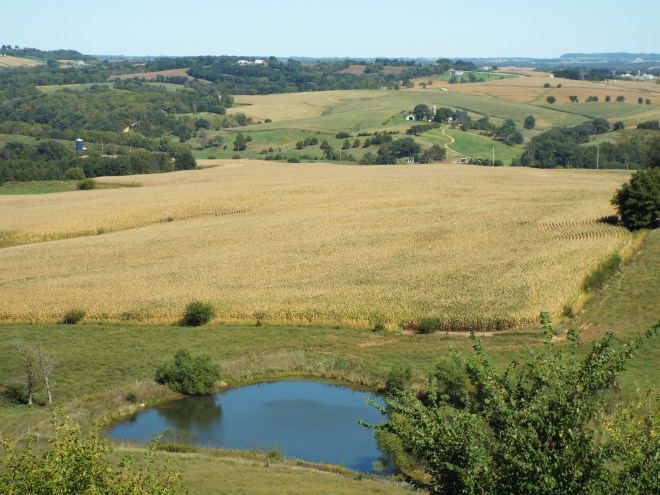
Not a cloud in the sky

After a couple of days in southeastern Minnesota, we traveled across that state on our way to South Dakota and then Montana, passing even more massive wind farms and even more corn. I know people make jokes about how boring the flat landscape of the plains states is, but we found it to be soothing. Three (big) states’ worth of soothing. The thing is that with all that flatness—and fewer and fewer trees along the way—the sky seems to grow ever larger. So much space. So blue. So cloudless. Honestly, we hardly ever saw even the smallest trace of a cloud all the way across those three states.  And the landscape is ever-changing.  I was afraid to blink for fear of missing something. But I’m getting ahead of myself.

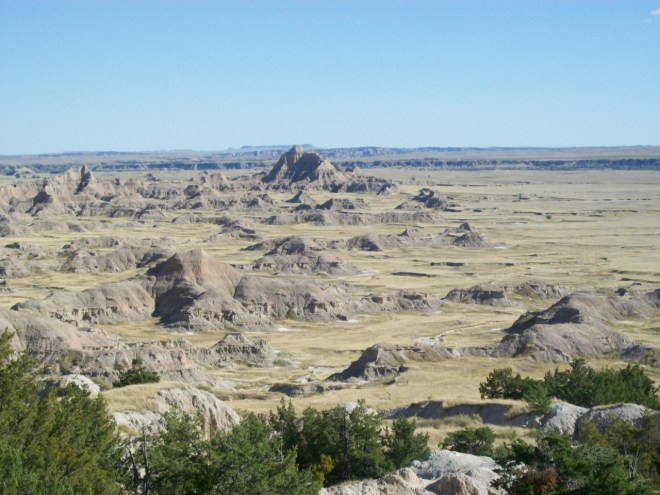
Back to South Dakota—-we had only given ourselves a few hours to spend in the Badlands, but every minute was magnificent, and it took no time for us to know for certain that we’ll be coming back here for an extended stay. We could barely stand upright against the strong wind gusts, and the glaringly bright sun made it impossible to catch the nuanced but striking shades of color in the rock.

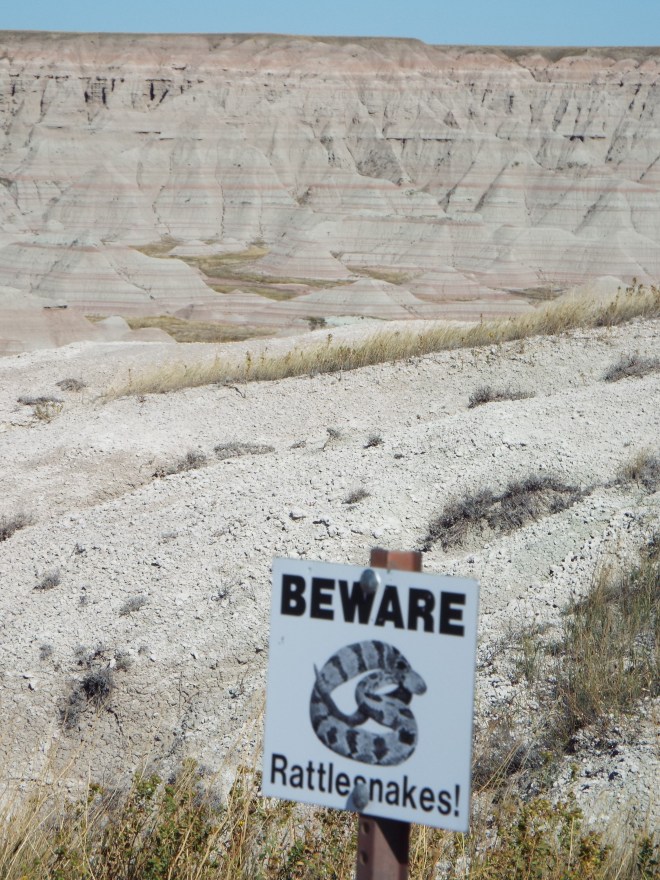
Looking out across the canyons and the vast expanse of land with buttes rising from the plains, we were transported to the movie and TV westerns of our youth, imagining the black-hatted bad guys firing off shots from behind some unknown rock deep in a canyon. It was hard to believe we were looking at something real.This sign kept us on our toes—especially me with my sandal-exposed tootsies.
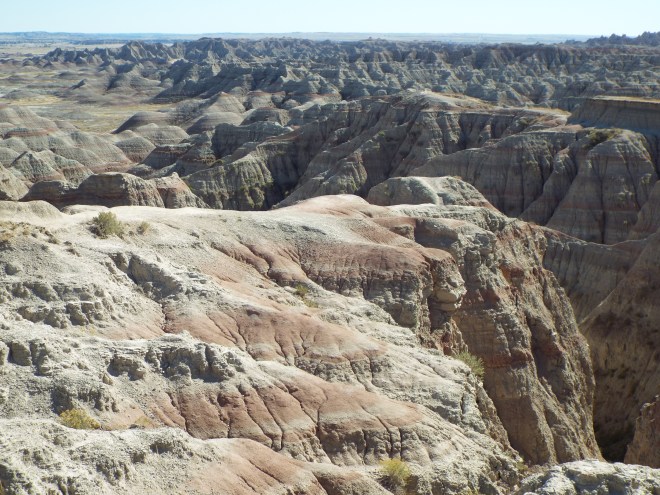
Again, no clouds. Not anywhere.

And our trip was just beginning.

(Stay tuned for Part II of The Grand Road Trip, full of unexpected discoveries. Coming soon.)
California Dreamin’ – Continued

California Dreamin’ – Continued

Last Tuesday’s post tells a bit about our recent trip to California. I won’t repeat it here. Just wanted to share some more photos as promised. (Some pix by the Gnome; some by me–can’t remember whose is whose anymore.)

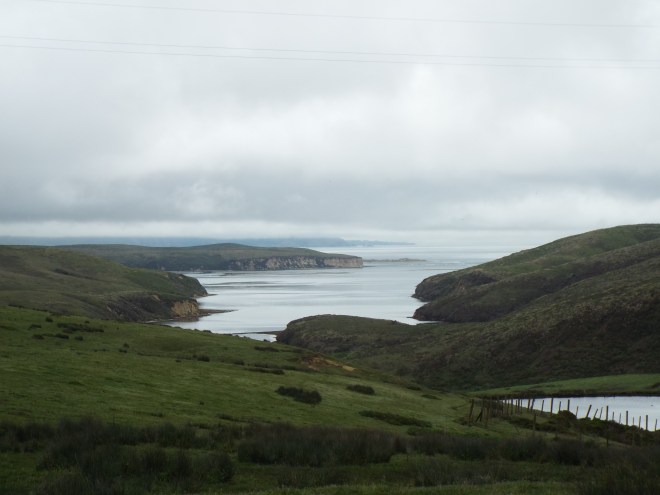
Leaving Pt. Reyes

Pride of Madeira


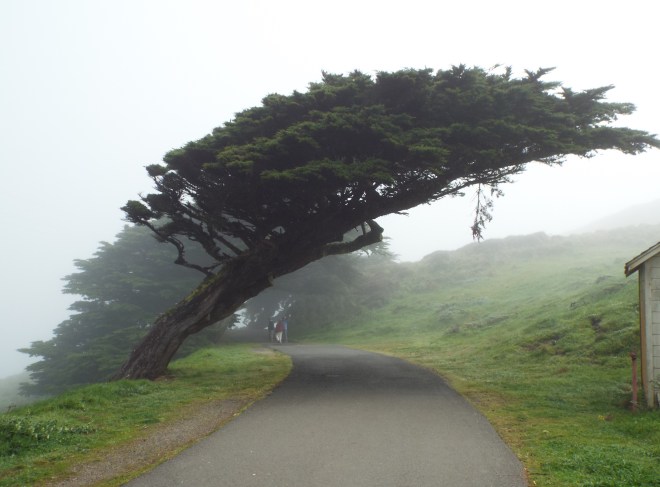
Windblown

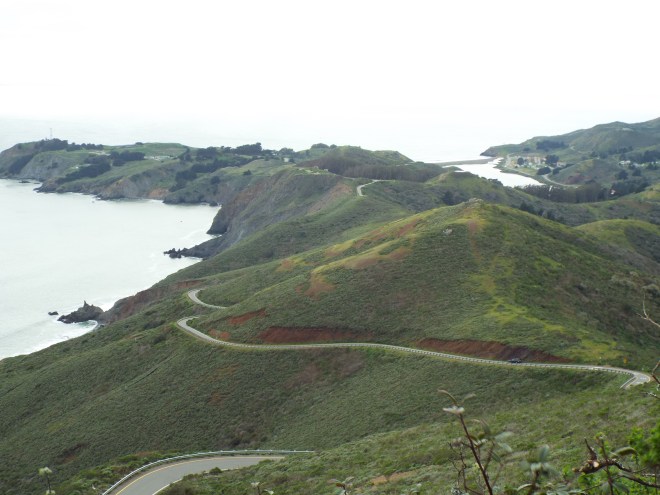
Point Bonita, across the bay from San Francisco

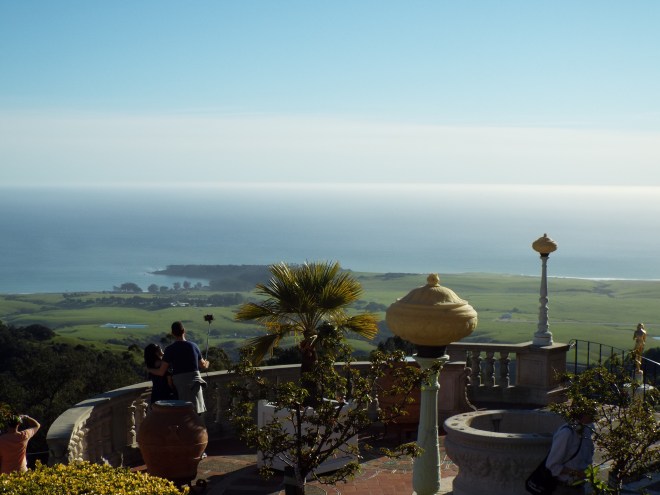
Scene 1 from the Hearst Castle

Scene 2 from the Hearst Castle–the man knew how to find a heck of a view.

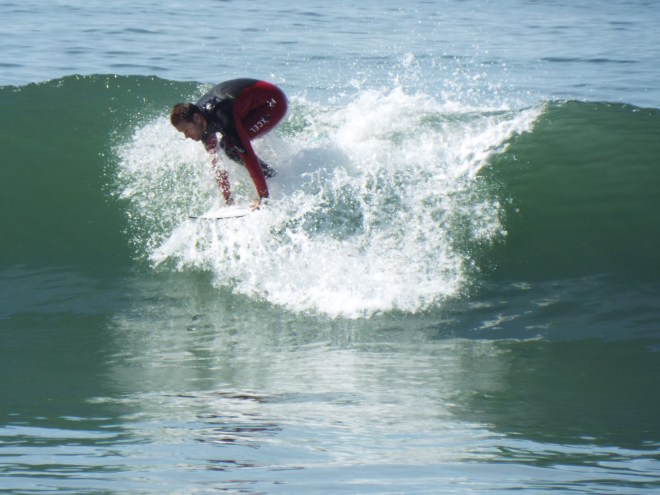
Surfin’

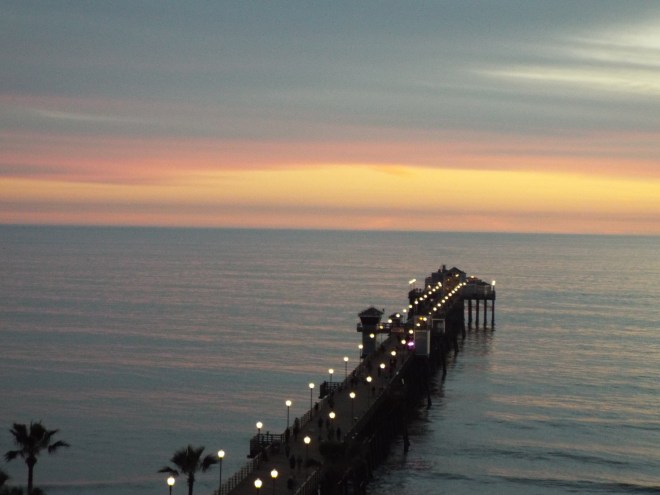
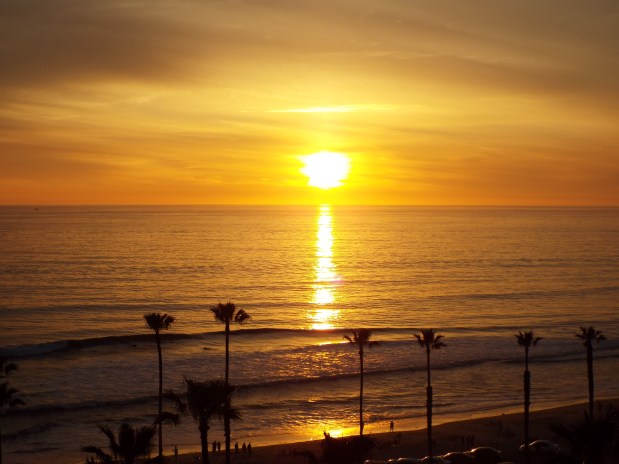
Oceanside Pier at twilight

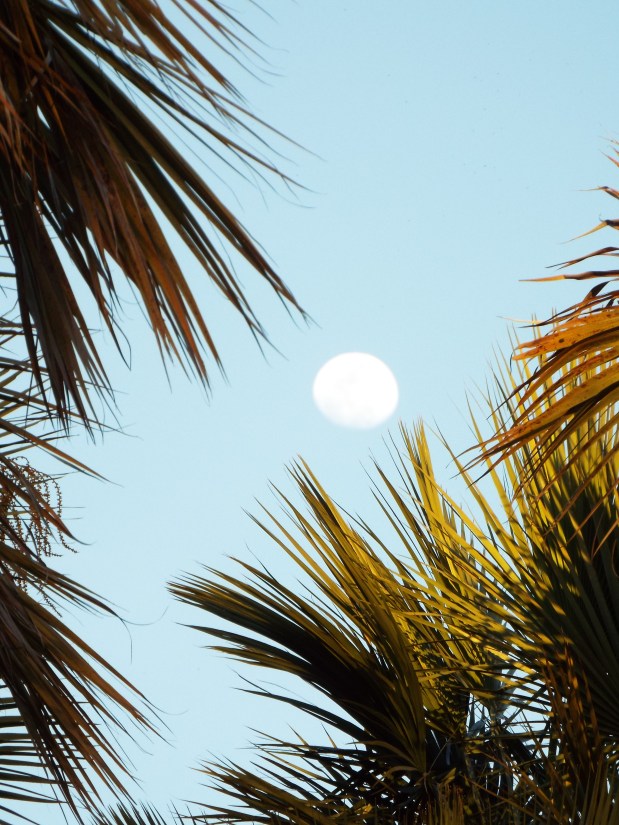
Nearly full moon


So many orange, lemon, and quince trees. How I wanted to reach up and snatch a juicy one.

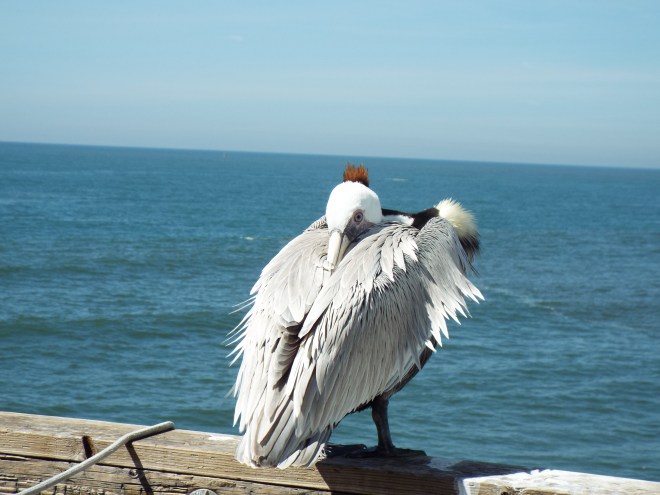
This guy was a real showoff.

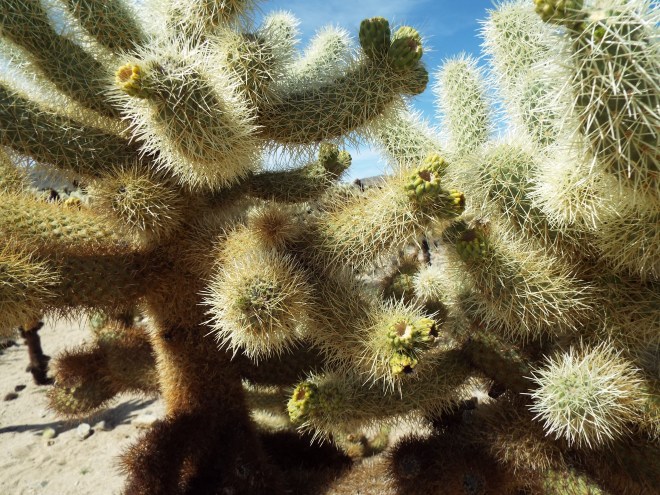
Don’t let this soft-looking Teddy Bear cactus fool you . . .

their spikes can cause serious injury.

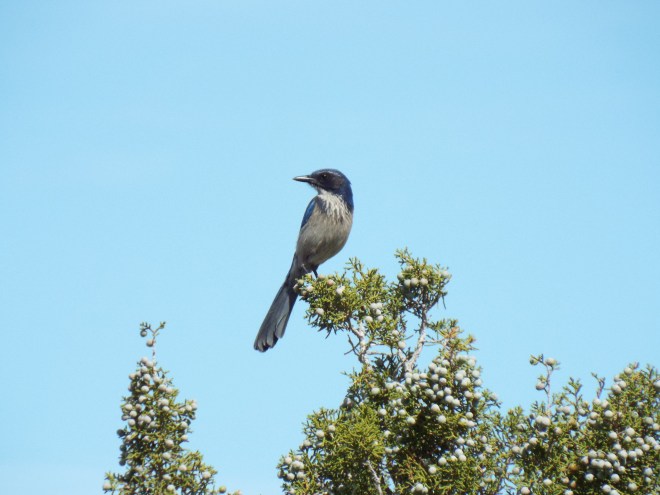
Western jay

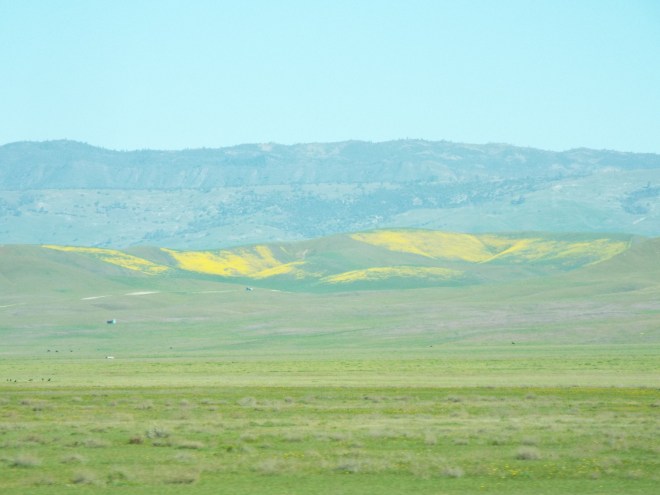
See those big patches of yellow? California’s wildflowers were just beginning to put on their display while we were there, working their way up the mountainsides.


Lizard


San Simeon

Moving on Up: Early Days on the Diagonal, Part 7

Moving on Up: Early Days on the Diagonal, Part 7

(This is the seventh in an eight-part series about our early attempts at modern homesteading. If you’re just tuning in, you may want to start back at the first one and work your way forward.)

We’re using a post-and-beam construction technique. It’s the easy way to go for the open floor plan we’re set on. After putting in floor joists, we begin work on our posts. Lifting them into place is a struggle—each post is made up of three 2×6 boards that are ten feet long, weighing almost 150 pounds each. That’s a lot for the two of us to manage without proper equipment. As physical as the work is, it’s not enough to keep us warm on fall days.

img068

The first post has been successfully raised.

On October 5, as we begin the fourth month of our adventure, we raise the last of the twenty first-floor posts. The same day we’re surprised to look out over the field and spot our first snowfall of the season; leaves are just now beginning to change color.


Beam-lifting turns out to be another feat requiring engineering creativity. Eleven-foot lengths of built up 2×10’s are even heavier than the posts and have to be lifted eight feet up to attach to the posts. Relying on ladders makes us nervous as we fit and nail beams and posts together.


With the beams in place, we can install the tongue-and-groove upstairs floor, which will also serve as the downstairs ceiling. We don’t have a floor downstairs yet, but one upstairs is necessary to get on with the next steps. My parents lend helping hands again.


img009_edited_2

Our nearest neighbor and his dog come to watch when the septic tank and water reservoir are installed in late October.

Back in the shed, it’s gotten pretty chilly. We have a small electric space heater, but with an open doorway and our flimsy structure, it heats the rest of the county, too. Just for the sake of warmth, we usually dress for the next day before we hop into our sleeping bags each night.

The fall colors are enchanting. Clouds drift by, creating fascinating patterns of light and shadow on the mountains, Nature’s kaleidoscope. It’s so mesmerizing often we find it hard to focus on work.

Second floor posts and beams go up, followed by beams to support the ceiling and roof. To work on these, we lay a 2×10 board across the lower beams as a precarious scaffold of sorts.


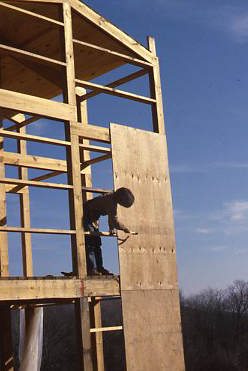
After adding upstairs ceiling boards, we close in the structure with plywood and blackboard—hanging precariously around the sides, under the bottom, and over the top to do so—all because we lack scaffolds and sufficiently long ladders.

img014_edited-1

We rig up a pulley system to pull plywood and blackboard into position, then nail it in place from inside.

pict0053.jpg

We have to stay ahead of the weather, so my parents come for one last weekend of feverish work adding roof rafters, insulation, and plywood to support our shingles.

house-12_20_1979_edited

We add plywood to the front center for structural stability and begin framing for glass.

By golly, it’s actually beginning to look like a house.

(Stay tuned for the next episode of Early Days on the Diagonal.)

California Dreamin’

California Dreamin’

The Gnome and I recently returned from our very first trip to California, where we were guests of dear, decades-old friends. It was phenomenal, and the best part is that even after being in each other’s pockets for nearly every waking hour of our two-week visit, we’re still tight (I hope!).

We visited the south, the north, and in between; we saw the coast and the desert; we went to Indio, Oceanside, San Diego’s Balboa Park, San Simeon, Chico, San Francisco, and Berkeley. We saw three amazing plays, toured museums, rode the cable cars, and spent a few hours at Fisherman’s Wharf. We explored a national park, a national seashore, a national maritime historic park, and a national monument. We marveled at the cacti, animals, palm trees—lots and lots of palm trees, snow-capped mountains, and wildflowers.

We listened to the the sea lions and roamed around Hearst Castle. We drove past hundreds of wind turbines and miles and miles of almond trees; we hiked into a canyon and up a mountain, around a lake, and through the woods; we played Phase 10 and Pandemic (now, that’s a brain strainer). We traveled to Point Reyes (the only foggy day of our journey, so we could barely see its lighthouse), and we stood in hushed awe among the mighty redwoods in Muir Woods.

We had good times with our friends’ very grown up children and their fine partners. We bought groceries together, we cooked together, we ate great food and drank fine wine together, and we shared hours of light banter and deep conversation.

It was a busy couple of weeks. Words can’t do it justice. Neither can photos, but I can’t resist the urge to share. There are far too many to put up on one post, so I’m planning a follow-up in a week or two. (Except for sunsets, photos courtesy of the Gnome)

Juxtaposition

Looking up down in Palm Canyon

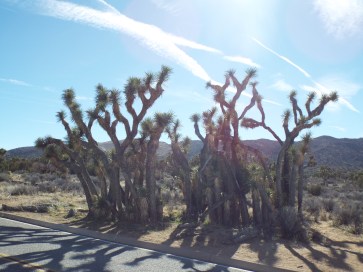
Joshua trees in Joshua Tree National Park

Joshua tree in bloom

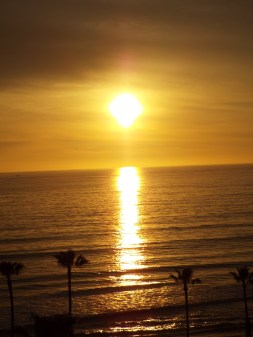
I’ve seen sunrises over the Atlantic, but this was my first Pacific sunset. It did not disappoint!

Another Pacific sunset

Around San Simeon

Pt. Reyes National Seashore on a foggy day

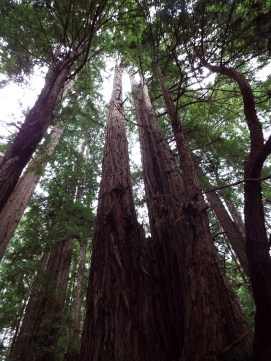
Redwoods at Muir Woods National Monument

Redwoods at Muir Woods National Monument

Golden Gate Bridge

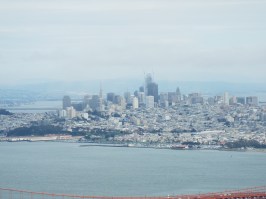
San Francisco from across the bay

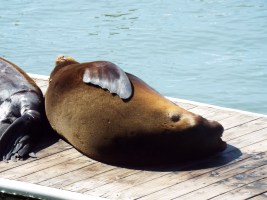
Grabbing some rays

Moon jellies, Aquarium by the Bay

California poppies were popping up everywhere.

It was a kick watching the cable car turntables and the grip operator at work. We were lucky to snag outside seats. We held on tight!


Daily Life: Early Days on the Diagonal, Part 5

Daily Life: Early Days on the Diagonal, Part 5

(If this is your first time visiting the Early Days series, may I suggest you start here and work your way forward?)

Everyday life is a wee bit different when you have neither electricity nor running water, but we’re finding our way. To get water for our daily needs, we fill two five-gallon containers every couple of days from an enclosed spring with an overflow spout by the side of the state maintained road about three-quarters of a mile away.

Sometimes, we take sponge baths, and sometimes we take advantage of the almost daily rain for a brief shower. (Brr-r-r!) When we feel especially in need of a good cleansing, we trek deep into the woods for an exhilarating 40-degree creek bath. Our secret site is decorated with rhododendron flowers and boasts a convenient mountain laurel towel rack. We always leave with a strange sensation of lightheadedness, especially when we wash our hair in that cold, cold water.


On occasion, we take a trip to town for a dip in the county pool preceded by a real shower with hot, running water. It’s the only time we feel really and truly clean. Eventually, these trips become a twice-weekly routine that provides us with a time for family play as well as some good exercise. Not that we don’t get plenty with all the digging and tree-cutting, but this feels different—and a lot more fun.

We spend evenings and rainy afternoons (plenty of those) reading stories aloud from our stash of books from the county library. We especially enjoy Ramona and Clifford the Big Red Dog books. Other favorites are That Quail, Robert and the iconic raccoon tale, Rascal. We’re also fascinated by Eric Sloane’s Diary of an Early American Farm Boy, a pioneer-days real-life story that seems to parallel our own experiences at the moment. When we’re not reading, we pass the time creating themed crossword puzzles for each other to complete.

One of the joys of building our house ourselves is getting to be out in nature and getting to know our little corner of paradise on an intimate basis. As we dig, we find all sorts of interesting creatures: a golden-eyed spade-footed toad, black and red salamanders, and shrews that can’t seem to stay out of the holes.

Each morning brings an untold number and variety of spiderwebs, with dewdrops making them sparkle in the sun. The geometric masterpieces can be found on fences, in trees, and just about anywhere else one can imagine. I stalk these works of natural art with camera poised.


Now that we’re out here in the country so far away from city lights, we can really appreciate the night sky. In August, we ‘re treated to the Perseid meteor showers. We’ve never seen anything like it.

Mid-August heralds the beginning of the school year, which always coincides with the blooming of the touch-me-nots (or jewelweed) that line the long gravel drive to our house. Afternoon walks from the bus stop are always slow because our children can’t resist stopping to pop every seed pod they spy.

What a delightful surprise it is to discover wild blueberry and blackberry plants on our land. It’s a charmed life we’re living.

(More of the Early Days on the Diagonal series coming next week. Stay tuned.)

Getting to the Nitty Gritty: Early Days on the Diagonal, Part 4

Getting to the Nitty Gritty: Early Days on the Diagonal, Part 4

(If you’re just now joining this conversation, you may want to start here and work your way forward.)

It’s now been two weeks since we moved here. Now that we’re settled in the shed, things are happening faster. As I continue to chop trees, sling weeds, and shovel clay and gravel, the Gnome swelters in the shed poring over reference books and drawing house plans. We want every detail to be just so—we’ve read horror stories about inspectors who give newbie builders a hard time, so we expect to be unduly scrutinized. The whole building thing is the Gnome’s forte, but we decide I need to get better versed in this area, too, so we can jointly think through design issues.

In retrospect, 2017: Glad we figured this out back then. The second opinion/sounding board role has been essential through the years. We now laughingly say that my job, whenever the Gnome is tackling a big project, is to say, “Isn’t there a simpler way?”

We want large fixed-glass windows across the south-facing side of the house to provide passive solar heat. A local company will make insulated glass panels to our specifications. Our reference books tell us it will be no problem to mount, cushion, caulk, and trim them ourselves.

In retrospect, 2017: Big mistake. Silicone caulking didn’t do the trick; our windows weren’t water- and airtight. Nor did we accommodate for natural expansion and contraction. Within months, several of our big glass panels cracked. We lived with them—unhappily—for years.

A long week later and our plans are finally ready. We nervously deliver them to the building inspector. He approves our permit on the spot, no questions asked.

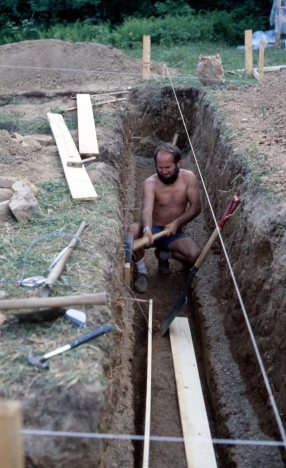
We start work right away, first measuring our footprint, then digging trenches for the foundation. Before long, the dirt is flying. Literally—we’re digging with only shovels and muscle power. This is more like it!


Cuddlebug digs digging, but it’s a challenge when the holes become as deep as he is tall.

img036

Building forms for our very carefully dug footings.

It’s pretty smooth sailing till we get to the third corner and find nothing but rock. There’s just enough wiggle that we don’t dare incorporate the rock into the foundation. It takes days and a big dose of creativity to break it up and leverage out the biggest pieces. The Gnome demonstrates Archimedes’ physics lesson: “Give me a lever long enough and a fulcrum on which to place it, and I shall move the world.” We feel like we’ve moved the world by the time we get the trench cleared.


We’ve been here exactly one month when my parents come up for a weekend of help. Cuddlebug and Punkin make miniature dams and ponds in the creek while the men dig out the nearby spring that we hope will provide our water supply.


They’ve determined, none too scientifically, that the spring should easily produce enough water to meet our future plumbing needs. That’s great news—there’s something about the idea of getting our water from a spring that feels natural and pure.

In retrospect, 2017: After 38 years, our spring’s still doing its job. It’s never run dry. On the other hand, we’ve had to repair or replace more pumps than we can remember, some due to lightning, some . . . well, we don’t rightly know. We do know it’s no fun to find yourself soaped up in the shower when suddenly there’s no water. Because we’re hardcore do-it-yourselfers, this often means a week or so without water while we figure out and fix the problem. Having gone much longer without running water and survived it, at least we know we can do it again.

(Stay tuned for next week’s Early Years on the Diagonal adventure.)

Early Days on the Diagonal: Part One

Early Days on the Diagonal: Part One

(The first of an eight-part series on our first steps toward modern homesteading.)

It had been building for years, this desire to make a bold move. The mountains had long ago wrangled a home in my heart, and they weren’t moving out. I yearned to make my physical home in the mountains, too. The Gnome’s long-term fascination with architecture was just itching for some creative expression.

We both imagined a bucolic life in the country, away from little houses all in a row where bedrooms were so close to the neighbors’ living rooms that they could hear every snore. We were two introverts leaning hard into recluse territory. The Gnome wanted to give our children an outdoor life, and he wanted to play in the dirt and build things. Me? I’m my mother’s daughter: I needed some elbow room, a place where no one was likely to drop in to borrow sugar or gossip over coffee. I dreamed of the freedom to roam the land, to run around outdoors naked if I wanted to (which makes me my father’s daughter, too).

So it was really no big surprise that in early 1979 we decided to make all our dreams come true at once. The only surprise was how long it took. But we’re not innately risk-takers. It was a slow, labored journey to convince ourselves we could make such a big change in our lives.

Once we got ourselves on the change bandwagon, the big question was where. Ultimately, we settled on western North Carolina, much closer to family than our current twelve and sixteen hour drives from our home in Louisville, KY, but still far enough to maintain our independence. The Gnome recalled a summer science camp he attended at a mountain college. That sounded like a good beginning point.

In April, we took a week’s vacation to look for land. Our good friends marveled at our daring—to leave secure jobs with no prospects, to take on a major designing and building effort with only books for guides, to move where we knew no one and had no support system. Yet, more than one of them admitted some envy and a secret wish to do something similar.

The local realtor who specialized in rural land took us all over the place, but nothing satisfied. Too steep, too near the highway, too close to neighbors. We were feeling pretty let down. It had never occurred to us that we might be unable to find anything suitable during our one-week window of opportunity.

We were ecstatic when Realtor John remembered one more piece of property. It met all our needs. At almost ten acres, half woods and half open meadow, we could count on privacy. The place was about a third of a mile from the graveled state-maintained road.

img001_edited_2

Portion of the meadow. In April, Spring’s still waiting in the wings.

Not a house to be seen. Exactly as we’d imagined. We had just enough time to sign on the dotted line before heading back home to prepare for the biggest move of our lives.


All manner of mosses, mushrooms, and lichens awaited us in our woods-to-be.

img005_edited_2

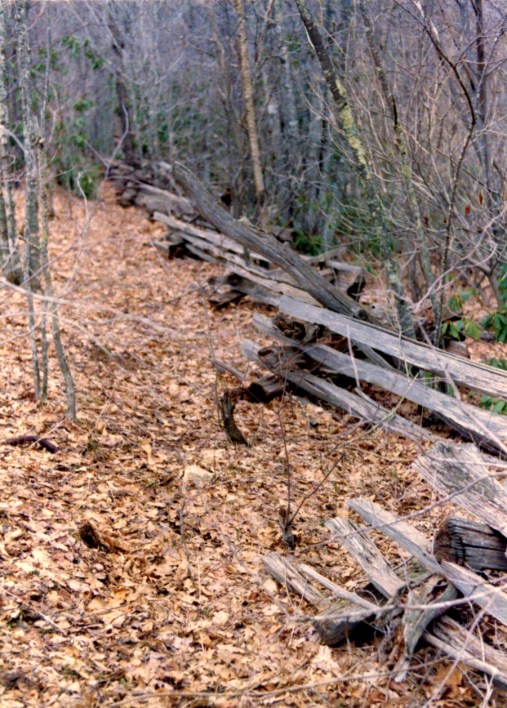
The locust rail fence along our eastern boundary captivated us.

dscf0061

We were delighted to find this creek on our property.

(Stay tuned for the next installment of Early Days on the Diagonal.)

Trees

Trees

“I think that I shall never see a poem as lovely as a tree.” —Joyce Kilmer, “Trees”

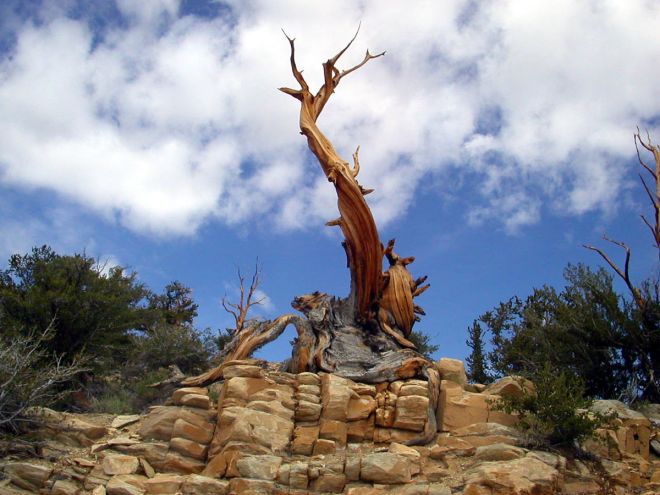
It may not the be one of the world’s great poems, but the sentiment rings true. Poems are just . . . well, poems. But trees! Trees are magnificent. The oldest known non-clonal living tree is a Great Basin bristlecone pine. At more tan 5,000 years old, it resides in California.

oldest-bristlecone-public-domain-mark-wilson

It may not look it, but this 5,000 year-old bristlecone is still living. (Public domain photo by Mark Wilson.)
As old as many bristlecones are, they’re not all that tall, ranging from 16 to 49 feet. The award for tallest tree goes to one of those gargantuan redwoods we grew up learning about. There’s a Coast Redwood, also in California, that’s just twenty feet shy of being 400 feet tall.

Then there’s the General Sherman giant sequoia in—you guessed it—California, the largest known living tree by volume, at more than 52,000 cubic feet. A wild fig tree located in Mpumalanga, South Africa has roots that go down 400 feet—that’s a deeper root system than the above-ground height of the General Sherman.

Honors for the tree with the largest diameter (38.1 feet) go to El Arbol del Tule, a cypress in Oaxaca, Mexico. Its circumference is a whopping 137+ feet. It would take about 25 adults standing in a circle, arms outstretched, fingertips touching, to reach around that tree. To put that in perspective, it would only take 18 of those same people to encircle our home, with its 24 x 26´ footprint.

About those clonal trees. If you’re like me, you’ve never heard of clonal and non-clonal trees, so here’s a lesson in a nutshell, so to speak. A non-clonal tree is an individual tree, just like you and I are individual people. A clonal tree, though, is a colony of genetically identical trees. The individual trees originate vegetatively from a single ancestor instead of sexually. So, when we talk about the age of a clonal colony, we’re really talking about the root system. Since the entire colony is part of a single root system, the whole is considered in determining age and weight. Pando, a colony of single Quaking Aspen located in Utah’s Fishlake National Forest, is at least 80,000 years old (by some estimates as much as 1,000,000 years old) and weighs an estimated 6,000 tons, making it both the world’s oldest known clonal tree and its heaviest known organism.

pando-public-domain

Pondo Quaking Aspen colony, Fishlake National Forest, Utah (Public domain photo, US Government)

These are the exceptions, of course, and there’s more to trees than their age or size or weight. Trees provide shelter and food. They cool us with their shade. When they’re downed, they provide heat in stoves and fireplaces. And let’s not forget that they absorb carbon dioxide and provide life-sustaining oxygen for us humans. Remember those 18 people surrounding my home? An acre of trees produces enough oxygen to let them breathe for an entire year.

See? I wasn’t exaggerating when I said trees are magnificent. Yes, poems are just words. Trees are the real poetry.

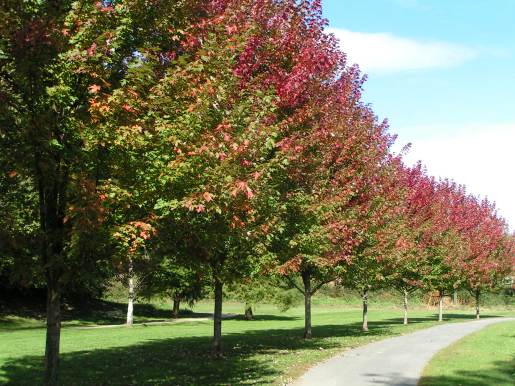
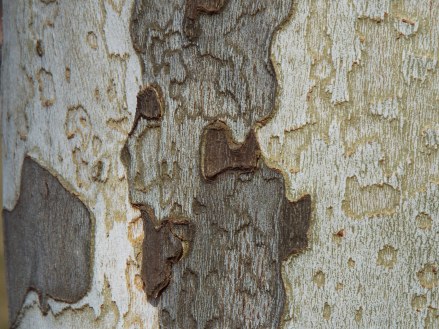
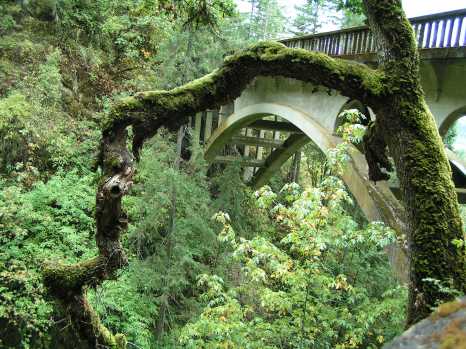
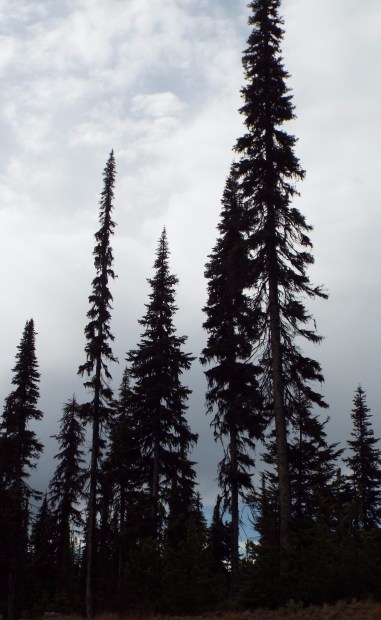
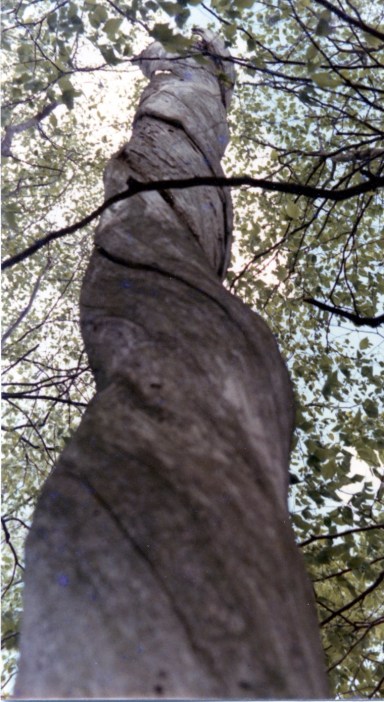
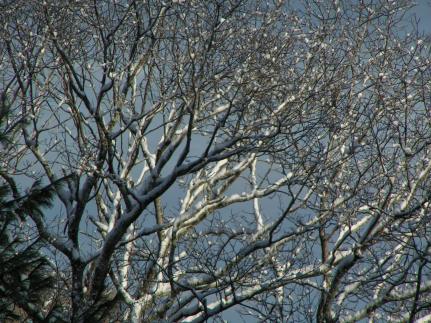
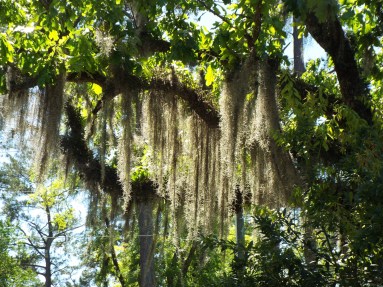
Here’s some tree poetry in photographs (all photos taken by the Gnome or the Crone).

fall-tree

MINOLTA DIGITAL CAMERA

dscf4257

MINOLTA DIGITAL CAMERAdscf3057


dscf4048

img003_edited_2

MINOLTA DIGITAL CAMERA

dscf0366

(Note: The statistics referenced above came various crosschecked online sources. Occasionally, there’s some contradictory information out there, but the point remains the same.)

Found Art

A few weeks ago, I shared some found poetry on this page. That’s when you pull words or phrases out of newspapers or other documents to form their own story in verse. Today’s post is short on words but full of another find—found art. I’ll tell  where it was found at the end. Bonus points if you figure it out before you get there. (No peeking!)
Group I:

MINOLTA DIGITAL CAMERA

MINOLTA DIGITAL CAMERA

MINOLTA DIGITAL CAMERA

Group II:

MINOLTA DIGITAL CAMERA

MINOLTA DIGITAL CAMERA

MINOLTA DIGITAL CAMERA

Group III:

MINOLTA DIGITAL CAMERA

MINOLTA DIGITAL CAMERA

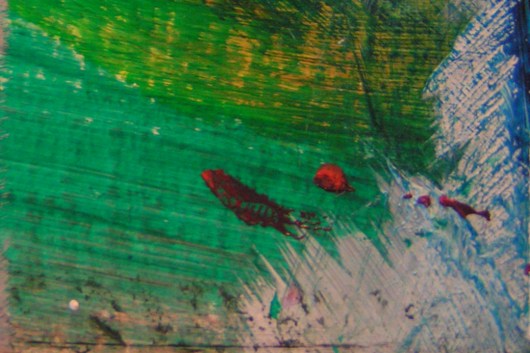
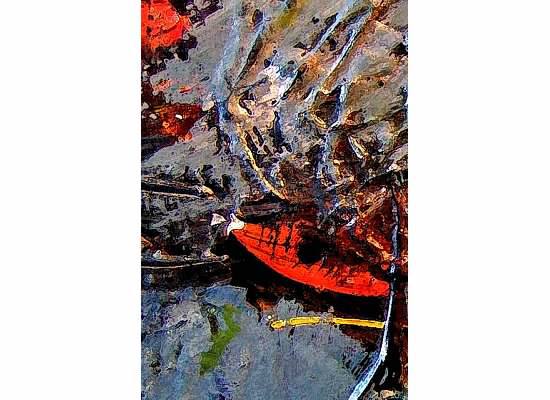
found-art-boatfound-art-ghosts

Anyone?

The Gnome gets credit for finding all this art and photographing it. Actually, he had two sources.  But both come from the same event: what we call Grandparents’ Camp. That’s when we host our grandchildren for a week of pure fun. Every year, the number one item on each of their lists is painting. The Gnome took a closer look at what might pass the rest of us unnoticed. (That’s the way he is. It’s one of the reasons I love him so.) And this is what he found.
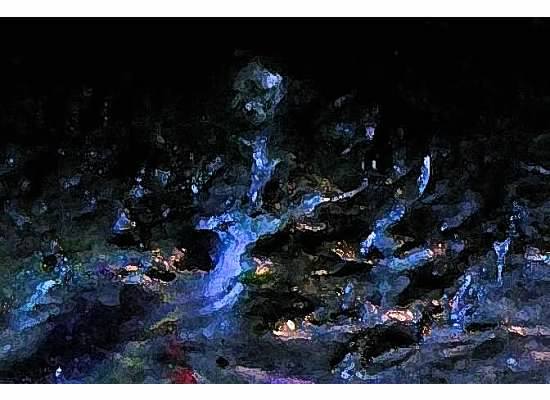
The art you see in Group I came from a piece of foam board that supports canvas panels on an easel, usually with binder clips or painter’s tape. What you see above is nothing more than where the artists’ strokes have extended beyond their work of art and onto the foam board.

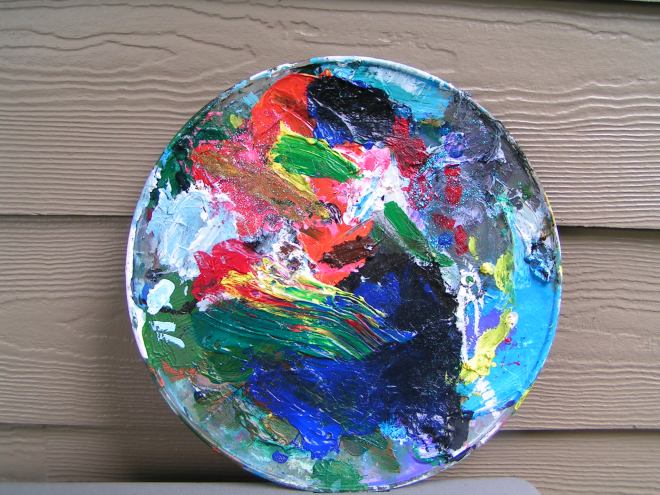
The art you see in Groups II and III came from a palette that in a former life was a plastic fruit platter from the grocery store. (It’s all about recycling here on the diagonal.) And next summer as more painting takes place, we’ll have a whole new selection of found art.  Pretty cool, huh?
MINOLTA DIGITAL CAMERA

Look closely. Can you find any of the art the Gnome discovered?

A Love Story: The Beginning

The place: Furman University dining hall

The time: February 1, 1965, sophomore year; registration day for second semester classes

The scene: a group of friends sharing a long table at lunch. I’m facing the wall of glass that looks out onto the lake and its iconic swans.

My friend and future roommate has just come rushing to the table, practically dragging a guy we’d never seen before along with her. Jan wants to introduce us to this fellow she’s just discovered walking across campus. They are old childhood buddies. She’s bursting with excitement to have found him here, he having just transferred from the University of South Carolina. She’s eager for him to make fast friends and happily settle in to his new life as a Furman student.

* * *

Yes, this was the first time I laid eyes on The Gnome. His eyes twinkled and even then his lips curved into that amiably mischievous smile he’s so well known for. For the next year, our paths crossed in classroom building hallways or in the student center, where we usually stopped for a lighthearted chat. Sometimes we visited in the dining hall when he spotted our little group at a table. How did he approach us? Patty was the key. Whenever he saw Patty, he made his way over to give her a pat on the head saying something like, “Pat, pat, Patty.” She always smiled, but, oh, that little joke must have worn thin.

We’d known each other just over a year when he finally asked me out. As soon as word leaked that we we had a date, Jan and Martha (another of his childhood friends), both so protective of his feelings, started in on me.

“Don’t you hurt him.”

“He’s a sensitive soul.”

“You’d better not break his heart.”

Or words to that effect.

And here I thought it was just a date, a mere basketball game. They had me freaked—I nearly called it off. But I stuck it out. Besides, what was with them? He didn’t strike me as being particularly delicate, and, as far as I knew, I’d never done any heart breaking.

Even though it was a nail-biter of a game and Furman lost to the Citadel by a mere two points, we had a fine time and everything went just great—until evening’s end. Sitting in his car in the circular drive in front of the women’s dorm, we were saying all those nice, if awkward, things two people say when a first date is nearing its end. Then he told me he had a gift for me. Warning bells went off. They turned into ear-piercing alarm bells when he pulled out a little blue velvet box.

My heart leapt into my throat. Oh my gosh! What have I gotten myself into? I should have canceled, I should have canceled, I should have canceled!

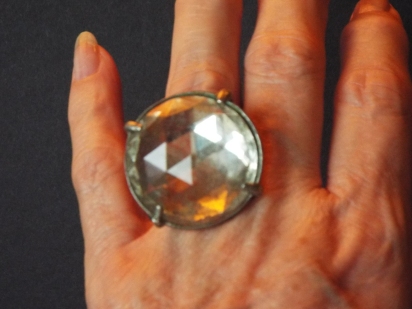
But I’d forgotten the mischief that was always dancing at the edge of those green eyes. He opened the box to show me a gaudy adjustable ring featuring a huge—and I do mean huge—chunk of glass. There was a little card inside that read, “Hope Diamond.”

I was so relieved that it didn’t occur to me to be insulted at the implication.

dscf5413

The Hope Diamond 51 years later

It was never stated, but we were a steady couple after that. My dorm sign-out sheet (now, there’s a story!) shows that I only went out with two other people following that February 12th basketball game, and both of those occasions were within the next five days. Chances are those dates had been made well in advance of my first date with the Gnome.

By early in our senior year, a future together seemed like a fait accompli. Without any formal declarations, we’d begun talking about where we’d live, children, things like that. So, when December 2nd rolled around and he took me to Ye Olde Fireplace, the swanky steak restaurant where all Furman couples went for special occasions … well, yes, this time I was thinking about a ring. Even more so when, after dinner, we headed to the top of Paris Mountain, that popular, romantic peak that overlooked the city and its night lights. Surely this was the moment.

Then came the bombshell. With a serious look on his face and an ominously somber tone in his voice, he said, “Carole, I have a confession.” Uh-oh.

“I haven’t been completely honest with you about our relationship, and I have to confess something.” This time my heart thudded into the pit of my stomach.

“Remember our first date?” he asked. “That ring I gave you—it wasn’t a real diamond.”

(Pause)

“But this one is.”

dscf5419

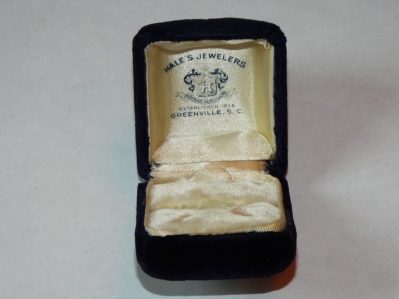
Yes, of course I still have the ring box!

Well, you can’t say I didn’t know what I was getting into.