Getting to the Nitty Gritty: Early Days on the Diagonal, Part 4

Getting to the Nitty Gritty: Early Days on the Diagonal, Part 4

(If you’re just now joining this conversation, you may want to start here and work your way forward.)

It’s now been two weeks since we moved here. Now that we’re settled in the shed, things are happening faster. As I continue to chop trees, sling weeds, and shovel clay and gravel, the Gnome swelters in the shed poring over reference books and drawing house plans. We want every detail to be just so—we’ve read horror stories about inspectors who give newbie builders a hard time, so we expect to be unduly scrutinized. The whole building thing is the Gnome’s forte, but we decide I need to get better versed in this area, too, so we can jointly think through design issues.

In retrospect, 2017: Glad we figured this out back then. The second opinion/sounding board role has been essential through the years. We now laughingly say that my job, whenever the Gnome is tackling a big project, is to say, “Isn’t there a simpler way?”

We want large fixed-glass windows across the south-facing side of the house to provide passive solar heat. A local company will make insulated glass panels to our specifications. Our reference books tell us it will be no problem to mount, cushion, caulk, and trim them ourselves.

In retrospect, 2017: Big mistake. Silicone caulking didn’t do the trick; our windows weren’t water- and airtight. Nor did we accommodate for natural expansion and contraction. Within months, several of our big glass panels cracked. We lived with them—unhappily—for years.

A long week later and our plans are finally ready. We nervously deliver them to the building inspector. He approves our permit on the spot, no questions asked.

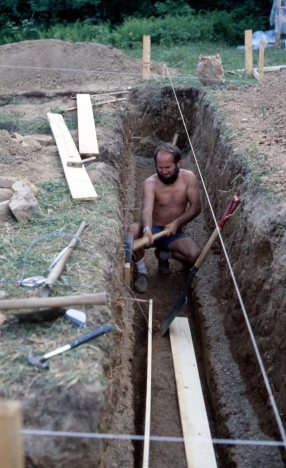
We start work right away, first measuring our footprint, then digging trenches for the foundation. Before long, the dirt is flying. Literally—we’re digging with only shovels and muscle power. This is more like it!


Cuddlebug digs digging, but it’s a challenge when the holes become as deep as he is tall.
img036

Building forms for our very carefully dug footings.

It’s pretty smooth sailing till we get to the third corner and find nothing but rock. There’s just enough wiggle that we don’t dare incorporate the rock into the foundation. It takes days and a big dose of creativity to break it up and leverage out the biggest pieces. The Gnome demonstrates Archimedes’ physics lesson: “Give me a lever long enough and a fulcrum on which to place it, and I shall move the world.” We feel like we’ve moved the world by the time we get the trench cleared.


We’ve been here exactly one month when my parents come up for a weekend of help. Cuddlebug and Punkin make miniature dams and ponds in the creek while the men dig out the nearby spring that we hope will provide our water supply.


They’ve determined, none too scientifically, that the spring should easily produce enough water to meet our future plumbing needs. That’s great news—there’s something about the idea of getting our water from a spring that feels natural and pure.

In retrospect, 2017: After 38 years, our spring’s still doing its job. It’s never run dry. On the other hand, we’ve had to repair or replace more pumps than we can remember, some due to lightning, some . . . well, we don’t rightly know. We do know it’s no fun to find yourself soaped up in the shower when suddenly there’s no water. Because we’re hardcore do-it-yourselfers, this often means a week or so without water while we figure out and fix the problem. Having gone much longer without running water and survived it, at least we know we can do it again.

(Stay tuned for next week’s Early Years on the Diagonal adventure.)

Early Days on the Diagonal: Part One

Early Days on the Diagonal: Part One

(The first of an eight-part series on our first steps toward modern homesteading.)

It had been building for years, this desire to make a bold move. The mountains had long ago wrangled a home in my heart, and they weren’t moving out. I yearned to make my physical home in the mountains, too. The Gnome’s long-term fascination with architecture was just itching for some creative expression.

We both imagined a bucolic life in the country, away from little houses all in a row where bedrooms were so close to the neighbors’ living rooms that they could hear every snore. We were two introverts leaning hard into recluse territory. The Gnome wanted to give our children an outdoor life, and he wanted to play in the dirt and build things. Me? I’m my mother’s daughter: I needed some elbow room, a place where no one was likely to drop in to borrow sugar or gossip over coffee. I dreamed of the freedom to roam the land, to run around outdoors naked if I wanted to (which makes me my father’s daughter, too).

So it was really no big surprise that in early 1979 we decided to make all our dreams come true at once. The only surprise was how long it took. But we’re not innately risk-takers. It was a slow, labored journey to convince ourselves we could make such a big change in our lives.

Once we got ourselves on the change bandwagon, the big question was where. Ultimately, we settled on western North Carolina, much closer to family than our current twelve and sixteen hour drives from our home in Louisville, KY, but still far enough to maintain our independence. The Gnome recalled a summer science camp he attended at a mountain college. That sounded like a good beginning point.

In April, we took a week’s vacation to look for land. Our good friends marveled at our daring—to leave secure jobs with no prospects, to take on a major designing and building effort with only books for guides, to move where we knew no one and had no support system. Yet, more than one of them admitted some envy and a secret wish to do something similar.

The local realtor who specialized in rural land took us all over the place, but nothing satisfied. Too steep, too near the highway, too close to neighbors. We were feeling pretty let down. It had never occurred to us that we might be unable to find anything suitable during our one-week window of opportunity.

We were ecstatic when Realtor John remembered one more piece of property. It met all our needs. At almost ten acres, half woods and half open meadow, we could count on privacy. The place was about a third of a mile from the graveled state-maintained road.

img001_edited_2

Portion of the meadow. In April, Spring’s still waiting in the wings.

Not a house to be seen. Exactly as we’d imagined. We had just enough time to sign on the dotted line before heading back home to prepare for the biggest move of our lives.


All manner of mosses, mushrooms, and lichens awaited us in our woods-to-be.

img005_edited_2

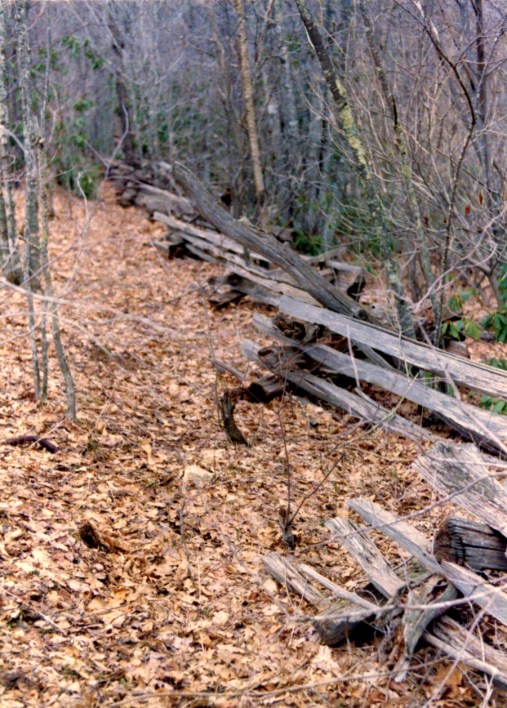
The locust rail fence along our eastern boundary captivated us.

dscf0061

We were delighted to find this creek on our property.

(Stay tuned for the next installment of Early Days on the Diagonal.)

Trees

Trees

“I think that I shall never see a poem as lovely as a tree.” —Joyce Kilmer, “Trees”

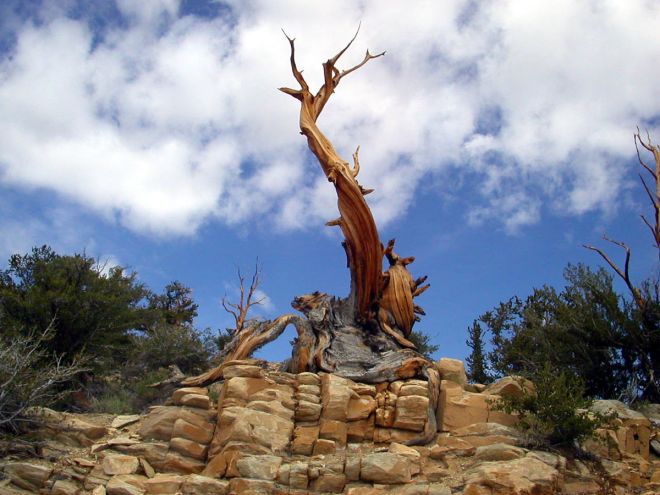
It may not the be one of the world’s great poems, but the sentiment rings true. Poems are just . . . well, poems. But trees! Trees are magnificent. The oldest known non-clonal living tree is a Great Basin bristlecone pine. At more tan 5,000 years old, it resides in California.

oldest-bristlecone-public-domain-mark-wilson

It may not look it, but this 5,000 year-old bristlecone is still living. (Public domain photo by Mark Wilson.)

As old as many bristlecones are, they’re not all that tall, ranging from 16 to 49 feet. The award for tallest tree goes to one of those gargantuan redwoods we grew up learning about. There’s a Coast Redwood, also in California, that’s just twenty feet shy of being 400 feet tall.

Then there’s the General Sherman giant sequoia in—you guessed it—California, the largest known living tree by volume, at more than 52,000 cubic feet. A wild fig tree located in Mpumalanga, South Africa has roots that go down 400 feet—that’s a deeper root system than the above-ground height of the General Sherman.

Honors for the tree with the largest diameter (38.1 feet) go to El Arbol del Tule, a cypress in Oaxaca, Mexico. Its circumference is a whopping 137+ feet. It would take about 25 adults standing in a circle, arms outstretched, fingertips touching, to reach around that tree. To put that in perspective, it would only take 18 of those same people to encircle our home, with its 24 x 26´ footprint.

About those clonal trees. If you’re like me, you’ve never heard of clonal and non-clonal trees, so here’s a lesson in a nutshell, so to speak. A non-clonal tree is an individual tree, just like you and I are individual people. A clonal tree, though, is a colony of genetically identical trees. The individual trees originate vegetatively from a single ancestor instead of sexually. So, when we talk about the age of a clonal colony, we’re really talking about the root system. Since the entire colony is part of a single root system, the whole is considered in determining age and weight. Pando, a colony of single Quaking Aspen located in Utah’s Fishlake National Forest, is at least 80,000 years old (by some estimates as much as 1,000,000 years old) and weighs an estimated 6,000 tons, making it both the world’s oldest known clonal tree and its heaviest known organism.

pando-public-domain

Pondo Quaking Aspen colony, Fishlake National Forest, Utah (Public domain photo, US Government)

These are the exceptions, of course, and there’s more to trees than their age or size or weight. Trees provide shelter and food. They cool us with their shade. When they’re downed, they provide heat in stoves and fireplaces. And let’s not forget that they absorb carbon dioxide and provide life-sustaining oxygen for us humans. Remember those 18 people surrounding my home? An acre of trees produces enough oxygen to let them breathe for an entire year.

See? I wasn’t exaggerating when I said trees are magnificent. Yes, poems are just words. Trees are the real poetry.

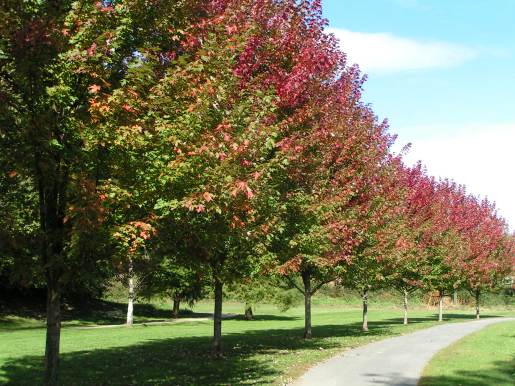
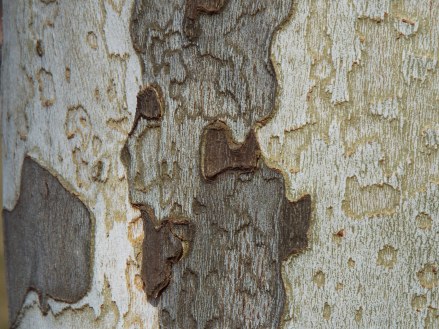
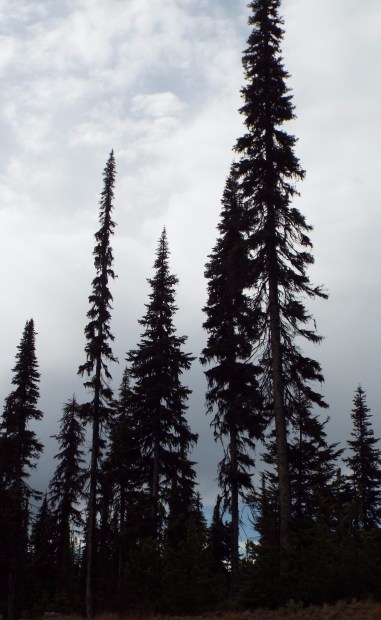
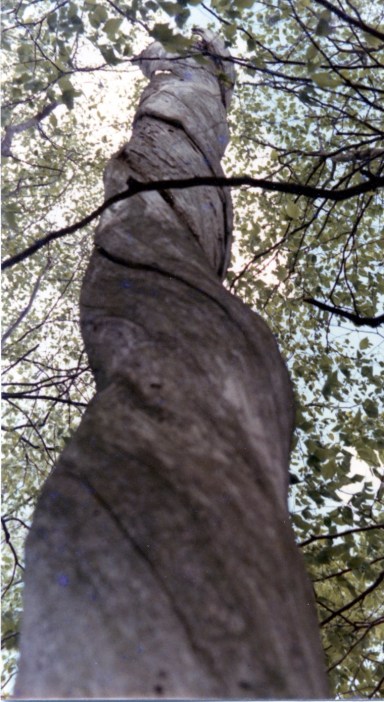
Here’s some tree poetry in photographs (all photos taken by the Gnome or the Crone).

fall-tree

MINOLTA DIGITAL CAMERA

dscf4257

MINOLTA DIGITAL CAMERAdscf3057


dscf4048

img003_edited_2

MINOLTA DIGITAL CAMERA

dscf0366

(Note: The statistics referenced above came various crosschecked online sources. Occasionally, there’s some contradictory information out there, but the point remains the same.)

Found Art

A few weeks ago, I shared some found poetry on this page. That’s when you pull words or phrases out of newspapers or other documents to form their own story in verse. Today’s post is short on words but full of another find—found art. I’ll tell  where it was found at the end. Bonus points if you figure it out before you get there. (No peeking!)

Group I:

MINOLTA DIGITAL CAMERA

MINOLTA DIGITAL CAMERA

MINOLTA DIGITAL CAMERA

Group II:

MINOLTA DIGITAL CAMERA

MINOLTA DIGITAL CAMERA

MINOLTA DIGITAL CAMERA

Group III:

MINOLTA DIGITAL CAMERA

MINOLTA DIGITAL CAMERA

found-art-boatfound-art-ghosts

Anyone?

The Gnome gets credit for finding all this art and photographing it. Actually, he had two sources.  But both come from the same event: what we call Grandparents’ Camp. That’s when we host our grandchildren for a week of pure fun. Every year, the number one item on each of their lists is painting. The Gnome took a closer look at what might pass the rest of us unnoticed. (That’s the way he is. It’s one of the reasons I love him so.) And this is what he found.
The art you see in Group I came from a piece of foam board that supports canvas panels on an easel, usually with binder clips or painter’s tape. What you see above is nothing more than where the artists’ strokes have extended beyond their work of art and onto the foam board.

The art you see in Groups II and III came from a palette that in a former life was a plastic fruit platter from the grocery store. (It’s all about recycling here on the diagonal.) And next summer as more painting takes place, we’ll have a whole new selection of found art.  Pretty cool, huh?

MINOLTA DIGITAL CAMERA

Look closely. Can you find any of the art the Gnome discovered?

Cream of Pumpkin Soup with Cinnamon Croutons (Yum! Yum!)

Several folks have asked that I write more about our experiences related to moving here, hand-building our home, and trying to live more sustainably. I’m tackling that project, but it’s a big one. In the meantime, how about I leave you with our favorite pumpkin soup recipe?

We’re pumpkin fools around here. It all started a few years ago when I was browsing through a seed catalog and my eyes fell upon these words: Baby Pam pumpkin. Pam’s my mother’s name. That’s all it takes for me to become infatuated with a plant—a name that rings my chimes. (I’d be terrible betting on the horses!) The Baby Pams were great eating pumpkins, but awfully small, maybe softball size. It was always guesswork figuring out how many we needed to, say, bake a pie, and too often we found we hadn’t cooked up enough of the vitamin-rich orange flesh.

But the lure of pumpkin growing had gotten under our skins. With their bright colors, huge leaves and sprawling vines, we were hooked. And there was this plus–pumpkins store well, which means good eating well into winter with no up front preserving effort. All you need is a cool, dark place. A basement or unheated closet will do.

Catalog pages were filled with colorful displays–so many varieties. We got carried away with the weird-looking pumpkins: the green ones, the white ones, the ones with warts. Most of those were more for decorating than eating. We thought the grandkids might enjoy using them at Halloween. But they never did particularly well in our garden.

After that experiment, we read about Long Pie pumpkins, also called Nantucket Pie.

fall-harvest2

Various pumpkins and other winter squash from our garden

An heirloom variety, the Long Pie is known for its sweetness, and it has very little of the stringiness pumpkins are known for. If you were to see it in the garden, though, you might think it was a zucchini on steroids with its elongated shape and dark green skin which rarely fully ripens to a deep orange until it’s in storage. Since trying our first Long Pie, we’ve never so much as looked at another pumpkin variety.

MINOLTA DIGITAL CAMERA

Long Pie Pumpkin

But the problem with Long Pies, if you can call it a problem, is that they are both prolific and pretty good-sized. On average, they weigh five to eight pounds apiece—we’ve had some quite a bit heavier. One is always enough for a pie. In fact, whenever we’ve roasted and pureed a Long Pie, we’ve usually had extra to put in the freezer for some unknown future use. The last year we kept a record of such things, we harvested more than 250 pounds of Long Pies. That’s a lot of pumpkin. And just how many pumpkin pies can two people eat, anyway? (The Gnome says, “A LOT!”)

So we began looking for other ways to use pumpkin. We’ve substituted it for sweet potatoes, we’ve made pumpkin bread, pumpkin muffins, pumpkin chili, pumpkin risotto—all delicious, by the way. But our favorite alternate use for pumpkin has got to be this cream of pumpkin soup, especially on chilly winter nights. The cream makes this dish extra smooth and rich. Add the cinnamon croutons and it’s a standout.

Of course, you don’t have to grow your own pumpkin to make this pie, nor even buy it fresh (though if you do, you’ll need to roast and puree the pumpkin first.) A can of pureed pumpkin will do fine. Just be sure you don’t accidentally buy pumpkin pie mix.

Unfortunately, I don’t know where I found the recipe for this soup, and I hate not giving recognition. I’ve searched my cookbooks, recipe cards, and online favorites, all to no avail. I found one that’s awfully close, though, from Judith N. over at the Food Network website. Since I can’t find the exact recipe I use, why don’t I just go ahead and give her credit?

CREAM OF PUMPKIN SOUP (approximately six servings)

Croutons

3 tablespoons butter or margarine, softened
1 tablespoon brown sugar
1/4 teaspoon ground cinnamon
4 slices whole wheat bread

Soup

1 cup chopped onion
2 tablespoons butter or margarine, melted
4 cups homemade or 2 cans veggie broth (chicken, if you prefer)
2 cups fresh pumpkin puree (or one 15.5 oz can)
1 teaspoon salt
1/4 teaspoon ground cinnamon
1/8 teaspoon ground ginger
1/8 teaspoon ground black pepper
1 cup heavy whipping cream

Preheat oven to 400 degrees F (200 degrees C).

For the croutons, combine butter, brown sugar, and cinnamon in a small bowl and mix well. Spread this mixture evenly over one side of each bread slice. Place bread, buttered side up, on a baking sheet. Bake until bread is crisp and topping is bubbly, about 10 minutes. (You may want to do this step ahead of time to give the croutons time to crisp up as they cool.) Cut each slice of bread into bite-sized pieces.

Saute onion in butter in a saucepan (one that will comfortably accommodate eight or ten cups) until tender. Add half the broth and stir well. Bring to a boil. Cover, reduce heat, and simmer 15 minutes.

If you have an immersion blender, use it to process the mixture until it’s smooth. Otherwise, transfer to your blender or food processor for blending. (When it comes to outfitting the kitchen, I’m kind of a minimalist, but an immersion blender is a wonderful tool to have on hand. It works like a charm, saves on dirty dishes, takes up very little real estate, is easy to clean, and is relatively inexpensive. So glad I finally learned about this device.)

In the saucepan, combine blended mixture with remaining ingredients and stir well. Bring to a boil; cover, reduce heat, and simmer 10 minutes, stirring occasionally.

When the soup is cooked, you have a choice. You can add the cup of whipping cream to the entire mixture and warm, being sure not to boil the soup or scorch the cream, but it’s much prettier to dip the steaming soup into serving bowls and swirl the cream directly into each bowl, approximately 2-3 tablespoons per bowl. Top each serving with cinnamon croutons, and call everyone to the table for some super deliciousness.

(Disclaimer: No chefs live here. But with a great big garden, we’ve discovered lots of terrific recipes–mostly simple to make and without exotic ingredients. I enjoy sharing our finds with others just as much as I enjoy being on the receiving end. I do try to be clear, accurate, and thorough, though. And I can promise that all the recipes I put on my blog have been rigorously taste-tested right here at Living on the Diagonal and have received the Gnome’s seal of approval.)

Two Love Poems for February

I’m over in my dad’s hometown this weekend for a book signing for my book, Boyhood Daze and Other Stories (wish me luck). Meanwhile, since it’s the month of chocolate, flowers, and valentines, I thought I’d leave you with these two small tributes to love.

Two Love Poems for February

I.

Enough?

If he loves her too much
to tell her
he doesn’t love her enough,
perhaps
he loves her enough
after all.

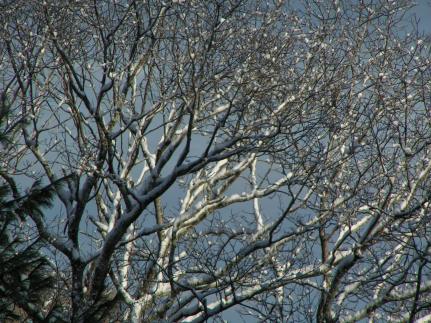
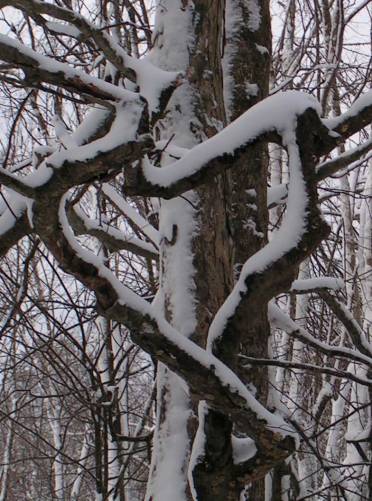
Snow-covered entwined branches

II.

Just How Much

When you have children
of your own
that’s when you’ll know.

That’s when you’ll know
just how much
I
love
you.