(The end of this reprise of our 2018 trip to Nova Scotia comes to a close with this post. But stay tuned for a couple of extras coming soon. To ‘travel’ virtually with us from the beginning, click here.)
Bittersweet is the best that can be said for what was to be our last day in Nova Scotia. To ensure as much time as possible in Cape Breton, we had planned this to be a long travel day. It would take us practically to the border with New Brunswick, in the tiny rural community of Joggins. So tiny that AAA couldn’t find it to map out this portion of our trip. So tiny even a number of Nova Scotians didn’t recognize the name. Yet Joggins is home to yet another UNESCO World Heritage site. The Joggins Fossil Cliffs contain the most complete fossil record of life during the Coal Age, 300 million years ago. That’s a full hundred million years before the dinosaurs, so these fossils, preserved in the very place they lived, are the dinosaurs’ ancestors. Some of the fossils found here are giant insects. According to the Joggins Fossil Cliffs website, this is the only place on earth where you can view these rare plant and animal fossils in situ. Well, I was impressed!

The tide is out at Joggins Fossil Cliffs. It will rise by an astounding 43 feet at high tide, cutting off access to the beach area.

See the tiny person in the middle foreground. You must walk down many, many steps from the top of the cliffs to reach the beach, something like 75, as I recall. That’s about six or seven stories! But we did it.

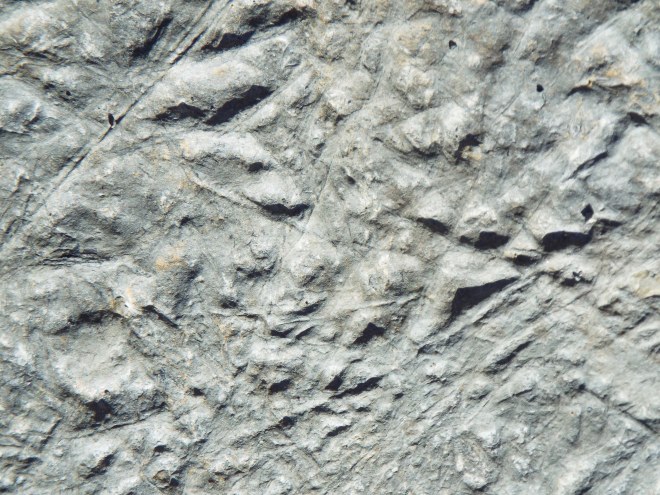


Giant insect?
We stayed the night at a true bed and breakfast inn, though we’d found it through Airbnb. We were joined by a young couple driving from Halifax to be with family for Canada’s Thanksgiving weekend. The four of us enjoyed a visit in the living room where we shared our respective’ backgrounds and learned a bit about cultural similarities and differences while enjoying some of our host’s homemade wine. Not only does Bridget own and run the B&B and make wine, but she’s also begun a business manufacturing buckwheat pillows—and she’s a former international professional singer, besides. (And her breakfast was fabulous!)

Crab Apple Inn, Joggins, Nova Scotia
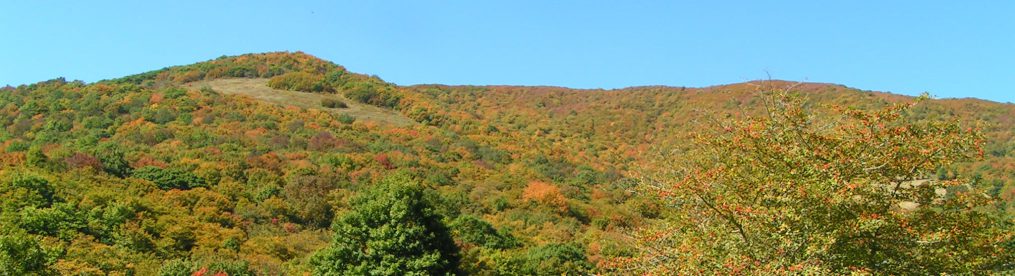
The next day saw us driving across New Brunswick and into Maine. Though the leaves had only just begun changing color in Nova Scotia, they were really showing off in New Brunswick.


Not be the sharpest photos ever taken, but hey . . .

we were going 110! (in kilometers, of course)
Crossing the border back into the States was harrowing—at least the waiting was. We’d read that we needed to itemize all our purchases and have them and all receipts readily available for inspection, so we’d spent a long couple of evenings getting our documentation and souvenirs organized. Though we’d practically sailed into Canada (no lines and only a single benign question by the border agent), we waited here for close to forty-five minutes. Plenty of time for us to begin feeling guilty for merely imagined offenses. Cameras were watching from every angle. We tried to look innocent and nonchalant. Did that make us look like crooks instead? Our unease only increased when the border patrol unlocked and entered the RV in line in front of us.
Finally, it was our turn. We were asked the nature of our visit, if we’d enjoyed our stay, and whether we’d purchased anything other than souvenirs, personal gifts, and incidentals. That was it. A lot of worry for nothing.
In Maine, we made a little detour to stay in Seal Harbor, right at an entrance to Acadia National Park, a place I’ve always yearned to visit. Was it exhaustion as we were nearing the end of our travels? Was it being surrounded by so many leaf-peekers and their vehicles after so much Nova Scotia tranquility? Whatever the reason, we were underwhelmed. It was the only disappointment of our twenty-five-day journey, but it was about to be made up for in a big way!
We made one last detour before the big push to get home. When we’d come across an Airbnb listing in the small village of Newbury, Vermont, we added a day to our itinerary just so we could take it in. Everything about our host, her home, her village seemed so iconically New England.
And so it turned out to be. The home we stayed in is almost two hundred years old on a street of similarly aged residences, mostly modest clapboard homes with gabled fronts. Most of the village’s structures were built either between 1790 and 1860 or in the ten years following a devastating fire in 1913.
Not every residential neighborhood is on a town’s Main Street, which, in this case, is also Vermont Highway 5. Never was there a quieter thoroughfare. Between the residences is the core of the village, the Village Common, a large green space for public use. The village hall, village school, and Methodist Church sit on one edge of the Common. The entire village, flanked by the Connecticut River, is a historic district.
Simply idyllic. Just our style.
Linda, our host, is a professional photographer. She works in black and white, uses old cameras with actual film, and has her own darkroom. Like the Gnome, she collects cameras. (I told her she should count them before we left–wink, wink.)
She was kind enough to take us on a walking tour of her charming village the next morning. We passed the Village Common, the school, the church, the post office, the village hall, the public library. We stopped for chats with other morning strollers. We talked about the village’s history and Vermont’s fabled town meetings. We took in the village store (the oldest country store in Vermont) for a steaming cup of coffee and yummy homemade cinnamon rolls, then sat on the steps to chow down. We dropped in at the bank to study old black and white pictures of the fire.
The bank is closed on Saturdays, but our host has a key. (It seems that the few villagers who lock their doors share their keys with the neighbors.) Linda loves her hometown and its history, and it shows.
Unfortunately, sometime between our return home and getting to this point in my travel diary, the last two hundred or so photos mysteriously disappeared from our camera. I had to resort to Google to find a couple of photos to share.

Newbury Village Store. Photo credit: redjar [CC BY-SA 2.0 (https://creativecommons.org/licenses/by-sa/2.0)%5D, via Wikimedia Commons

Tenney Public Library, Newbury Village, VT. Photo credit: Magicpiano [CC BY-SA 3.0 (https://creativecommons.org/licenses/by-sa/3.0)%5D, from Wikimedia Commons
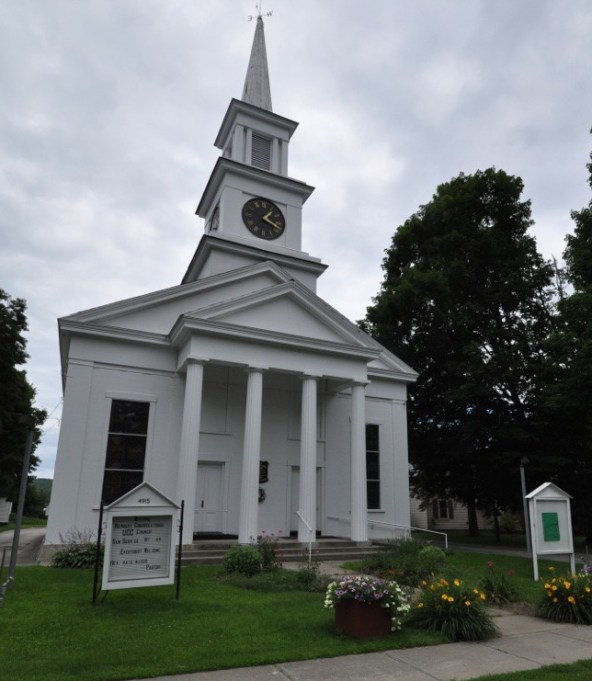
Newbury Village UCC Church. Photo credit: wikimedia.org/wikipedia/commons/5/56/NewburyVT_UCCChurch.jpg
Just because our travels are over, don’t think I’m through writing about Nova Scotia, There are still a couple of reflective posts (and, of course, photos), so I hope you’ll come back to see what they are.


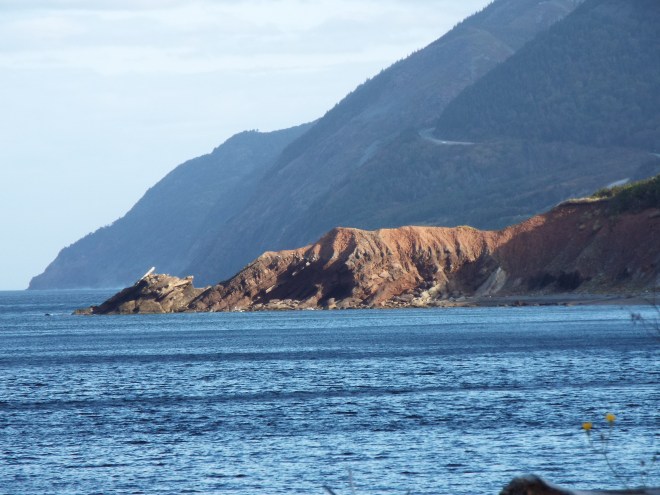

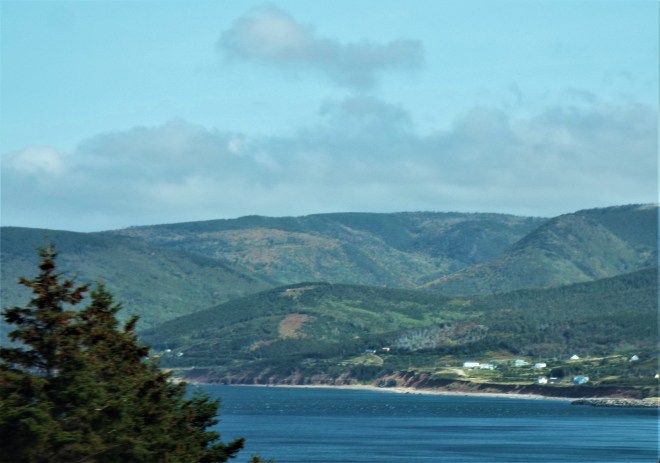


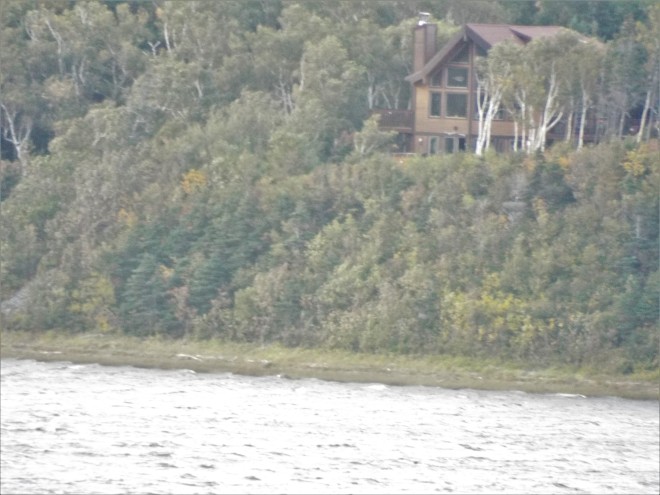 Our charmed, and charming, hosts had found themselves one of the most perfect places on earth to live. Not only is their home on the edge of the Chéticamp River (which they often kayak, lucky ducks!), but on the opposite side of the river is the majestic park itself. From their huge living room windows, they can also see where the river empties into the Atlantic Ocean. Where else could you get that kind of view? It was a good way to end our trip around the park.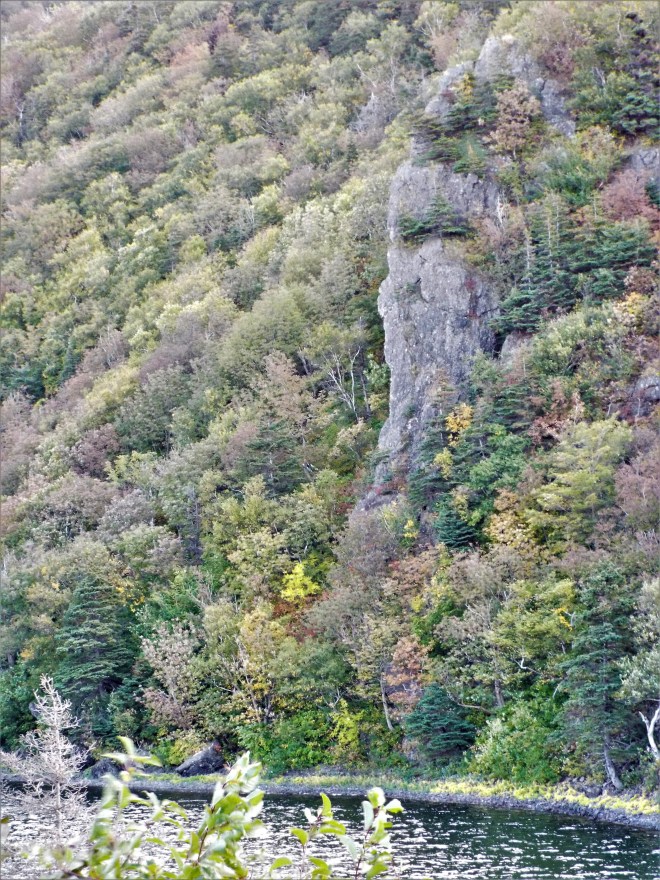
 This spit of land is all that separates the river from the ocean, also seen from our hosts’ living room window. How cool is that?!
 Living on the Diagonal