Good Times

Good Times

I couldn’t wait for Daddy to get home from work each day. I was all set to beg him to take me outside for my favorite three-year-old activity. No doubt, Mother tried to put me off at least long enough for her hello kiss or for him to change clothes and sit down for a few minutes’ rest.

But I must have prevailed more often than not because my fond memories include Daddy still in his gray dress pants, long-sleeved white shirt, and wide, maroon-flowered tie crouching with me underneath our house—our white, wood-frame house that sat about three feet off the ground atop brick pillars—tormenting strange-looking insects while we swirled skinny sticks in their narrow, cone-shaped holes chanting in unison, “Doodlebug, doodlebug, come out of your hole; your house is on fire and your children will burn.” If our taunts worked, we’d find a doodlebug attached to the stick when we pulled it out.

Doodlebugs are actually bristly, grayish-brown, larval-stage antlions who prey on ants. In the sandy soil of the eastern South Carolina home of my childhood, they caught their quarry by digging shallow pits in the soil where they’d lie in wait for an unsuspecting ant to drop in—literally—for a tasty meal.

The doodlebug moniker apparently derives from the curlicue trails antlions “draw” in the sand (much like the meaningless doodles Daddy typically made with his pencil and scratch pad when he was on the telephone) as they search for the perfect spot to dig their traps.

Of course, I didn’t know any of this way back when. All I knew was that I making a little magic with the man in my life, and I was enchanted.

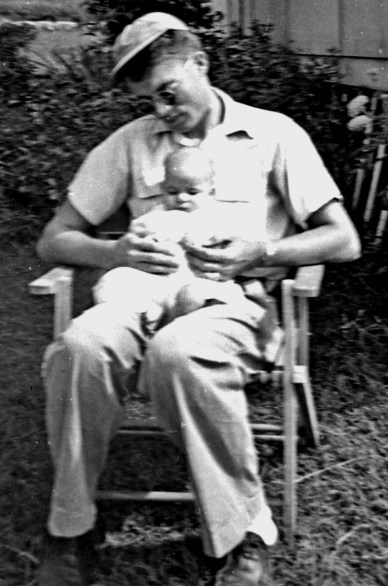
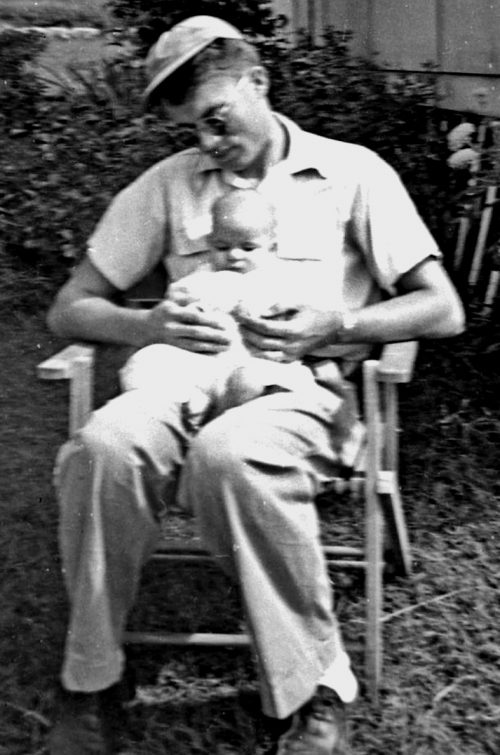
Daddy and me a couple of years before he taught me the doodlebug game


At the Car Wash

There was a time in my life (several, actually) when money was really tight. So tight that sometimes the only way to purchase groceries was with a credit card. So tight that the Gnome and I foraged wild cherries and asparagus in the nearby city park and dug day lily tubers from our back yard to sauté for supper.

Then came the day I lost a five dollar bill. I panicked. I cried. I called everywhere I’d been that day. I searched high and low—the depths of my handbag, my pockets, under the floor mats of the car, across the parking lot. That five dollars was a lifeline; the idea of it having disappeared in a poof like a magician’s cheap trick made me physically ill. I’m glad to say I finally found it—tucked in a hard-to-see spot between my car’s front seat and the door post.

So, a drive-through car wash, though it cost less than a dollar in those days, was a rare luxury. As I sat quietly watching the soapy froth dance on the windshield and those big, blue brushes caress the car’s skin, I felt as if I were receiving a massage. Not that I’d ever experienced a professional massage, but it seemed like how a massage might feel. I reveled in it.

I drove through a car wash the other day. No magic this time, just a plain old car wash. But every time I think about those car washes of leaner times, my lips spontaneously curve into a Madonna-like smile and I sense my shoulders relaxing.

Our Grand Road Trip: National Parks (and more)

In my previous blog posts about our big road trip last fall (start here to catch up), I focused mainly on the unexpected things that happened-. They came upon us with such frequency and regularity that they became the grand theme of our grand trip. But—and this is a big but—we’d incorporated a lot of standard vacationey activities into our travels, and they were grand, too.

We visited four national parks and found ourselves in the midst of several national forests and other national landmarks, especially fitting since 2016 was the 150th anniversary of the National Park System. Each one was spectacular and not one of our visits was long enough to properly take in the splendor. Even so, we were fully engulfed in the joy of the experience, and now we know where we want to spend more time in the future.

I’ve already written about—and posted lots of photos of—The  Badlands. Our reluctance at leaving there was matched only by our anticipation of visiting The Black Hills National Forest, just a couple of hours away. The Black Hills are full of tourist opportunities, including Wind Cave National Park and Jewel Cave National Monument. Unfortunately, we couldn’t figure out a way to make room in our tight schedule for either of those sites. (But as I’ve written before, we’ll be back!)

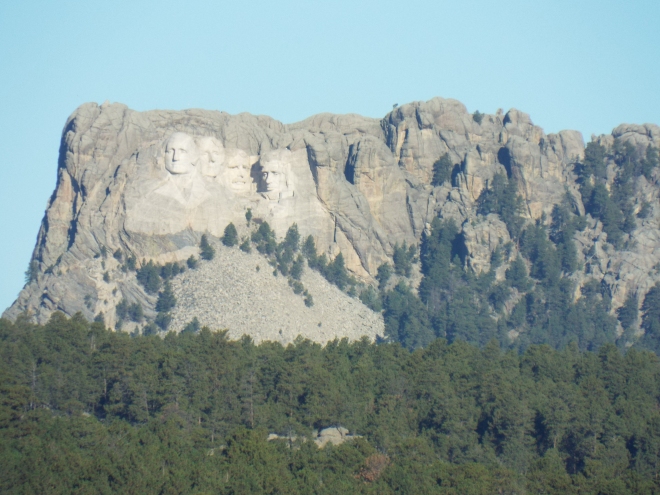
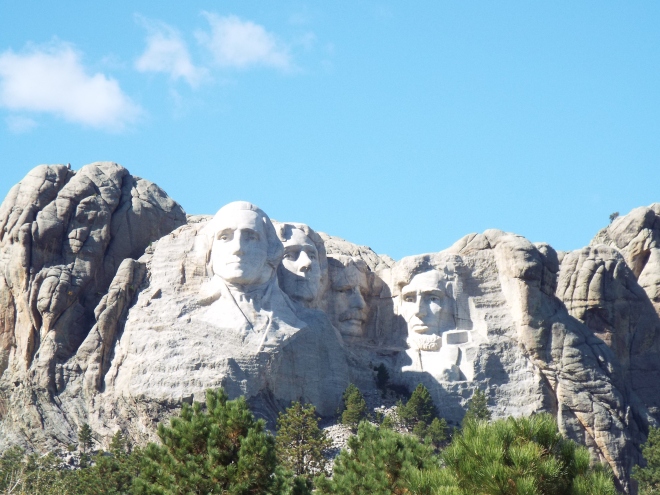
Mt. Rushmore National Memorial is clearly the most iconic and recognizable tourist site in the the Black Hills. Its size alone is dramatic. The mountain’s presidential stone-carved faces can be seen from miles away and from many different perspectives, but to really get a sense of the size of the thing, you may want to visit the memorial itself, which also has a number of ranger talks. Entry and ranger talks are free, but there’s a $10 parking fee ($5 for seniors).

DSCF1705

From a distance

DSCF2096

Closer

DSCF1684

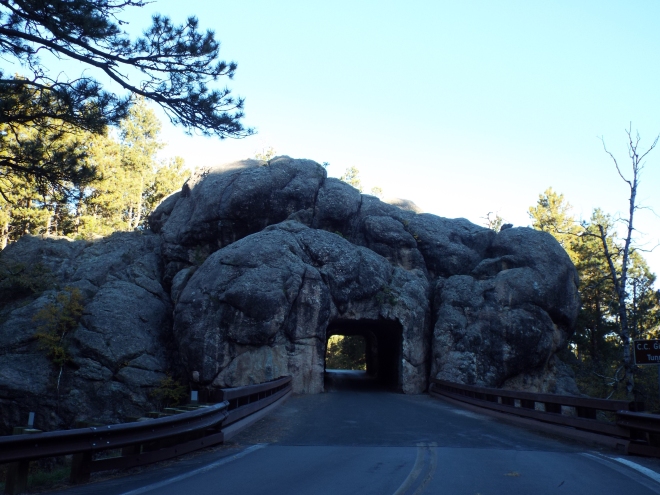
One of the most striking views of Mt. Rushmore came unexpectedly as we were emerging from one of these wee tunnels, the edges of the tunnel acting as a frame for a magnificent portrait.

The forest shares a border with Custer State Park, a unique experience all its own. It’s a fairly long drive from Keystone, the nearest town, to get to the park. Though the scenery along the way is fantastic, the park proper is where the fun really begins. Next time, we’ll plan on renting a cabin inside the park boundaries—and taking all our food and necessary supplies. That way we won’t waste precious time getting to and from. In the park is the eighteen-mile Wildlife Loop Road you can drive in hopes of close-up encounters with wildlife like bison, donkeys, prairie dogs, and big horned sheep, as well as the the fourteen-mile Needles Highway. I promise, you don’t want to miss either of these spectacular drives.

Between the Badlands and the Black Hills, there’s enough to keep you gobsmacked for a full two-week vacation, even without stopping at the many commercial tourist attractions along the way, though you can certainly check those out, too.

(You can see more Black Hills and Custer pictures here.

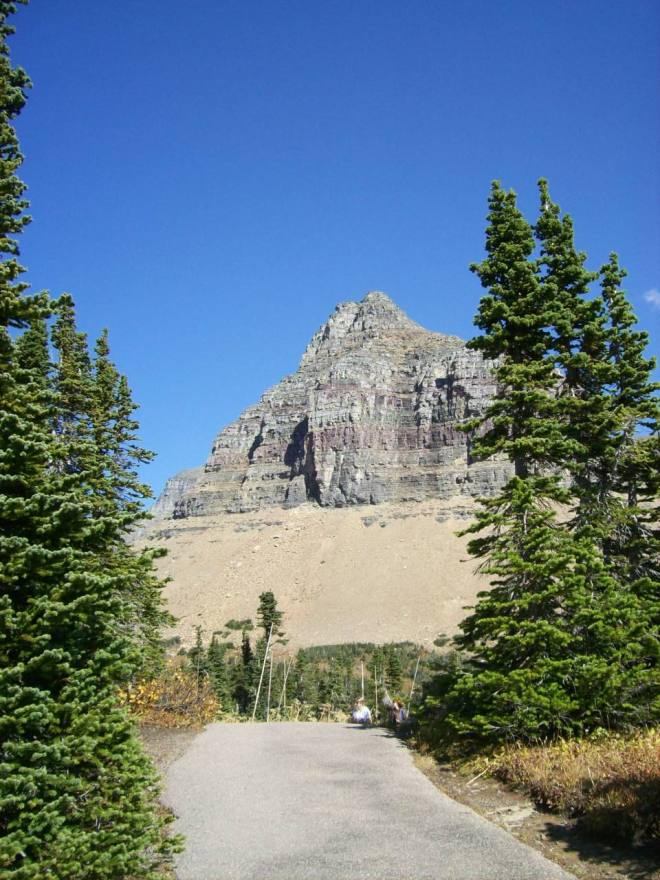
Our next National Park visit was to Glacier. We were so busy taking pictures of gorgeous scenery along the way that all we had time for once we were in the park was the two-hour drive up Going-to-the-Sun Road to Logan’s Pass (6646 ft.) and back down again. Better go soon if you want to see any glaciers. They’re melting fast. The 150 glaciers that inhabited the park in 1850 have now shrunk to a mere 25, and all of those are slated to disappear in the next few decades. The park will have to be renamed, perhaps to Glacier Memorial National Park in honor of the glaciers that once were.

Our first peek at a Glacier NP peak

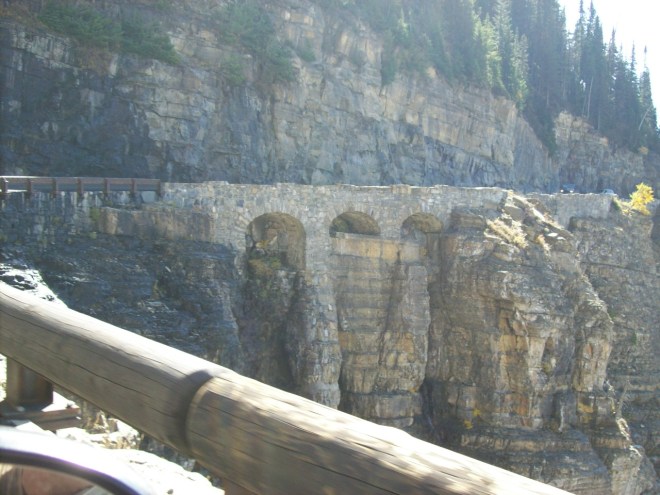
What an engineering feat it must have been to build the fifty-mile-long Going-to-the-Sun Road in the early 1900s.

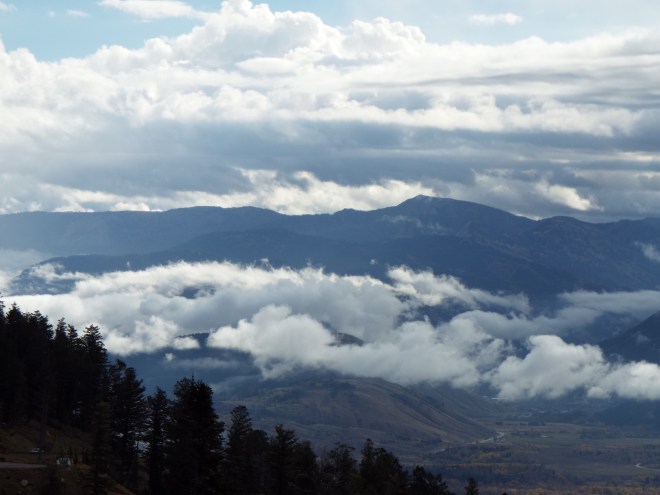
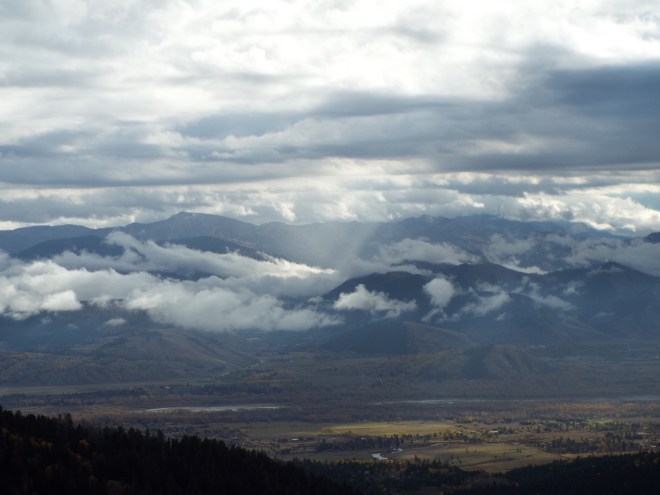
We traveled through a portion of the Grand Tetons on our way to Yellowstone. It was a cloudy, foggy, misty day so the view was a little different than it would be on sunny days, but still stunning in its own way.

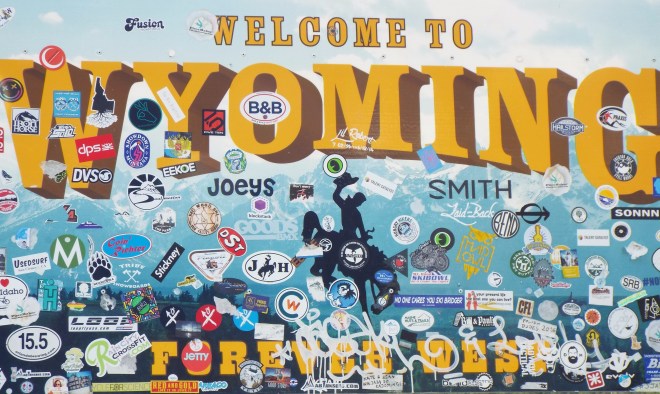
We were welcomed to Wyoming with this billboard and vistas of Grand Teton NP.

We didn’t get to see much of the Grand Teton mountain or her two sister peaks on this cloudy day. Controversy surrounds their naming. By far the most colorful explanation is that early French Canadian explorers from the Northwest Company, upon seeing the three peaks of the range, called them “Les Trois Tetons,” or “The Three Breasts.”

I can’t remember a time in my life when I didn’t long to visit Yellowstone National Park. Back in the sixth grade, when one of my schoolmates returned from summer vacation bragging about her Yellowstone trip, I was too jealous for words. So no way were we traveling to Montana and Wyoming and miss out on my big dream.

Yellowstone. Yes, we knew it was big. But you cannot begin to comprehend its size until you’re right there in the thick of it. To put things in perspective, a friend told me that after her family had entered the park, it was another fifty miles to their campsite. You could spend weeks in Yellowstone and not begin to see it all. (And we just had an afternoon!)

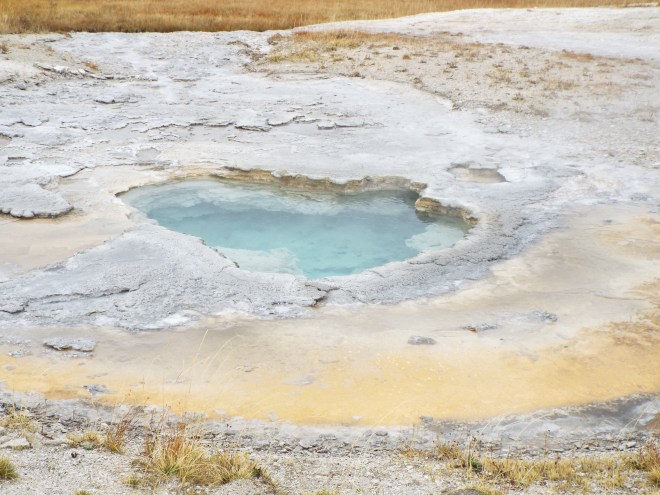
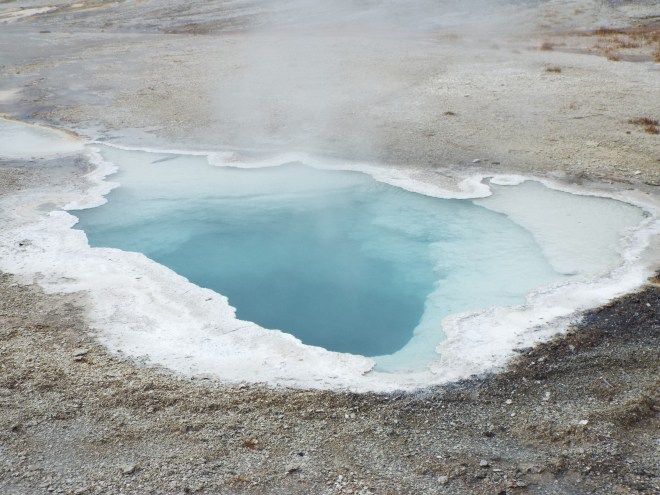
It took us a while to figure out that all those white wisps we were seeing off in the distance weren’t fog, but geysers. I’d forgotten that Old Faithful wasn’t the only one. There are actually 500 geysers and 10,000 thermal features in all. In other words, they’re everywhere!

A cluster of steamy spots

We arrived at Old Faithful just as its display was ending. That was a good thing—the wait for the next show meant we could stroll the boardwalk and see many more geysers as well as mud pots, fumaroles, and hot springs. We might have passed them up otherwise, and that would have been a real shame.

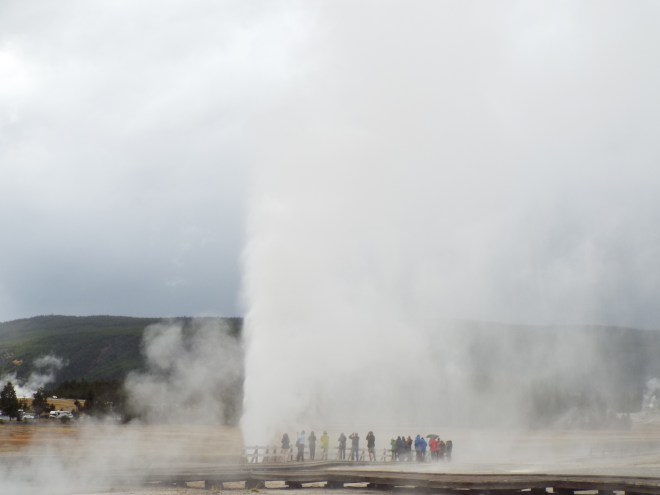
No, this isn’t Old Faithful, but Beehive Geyser, which shoots steam 200 feet into the air, more than 50 feet higher than its more famous sibling’s average. We lucked out—it can be days between eruptions.

One of Yellowstone’s 300 waterfalls

There are nine lakes in the park. At 136 square miles, Yellowstone Lake is the largest.

Our national parks, forests, monuments, memorials, trails, historic sites, and landmarks are indeed treasures. They are our heritage and our future. It takes only a visit to understand beyond measure that we must preserve and protect them for all to enjoy—today and all our tomorrows.


More Fifth-Grade Aphorisms

I explained the origin of these proverbs in this post. Here are a few more, in case you need a chuckle today.

A fool and his money . . . is a bad idea.
A friend in need . . . calls for help.
Don’t count your chickens . . . count your friends.
What’s good for the goose . . . is bad for the moose.
Those who live in glass houses . . . have too many windows.

(This one was obviously misread:) Give him an inch . . . and he’ll scratch it.
All work and no play . . . isn’t the way.
Don’t count your chickens . . . as your children.
A friend in need . . . needs help.
A bird in the hand . . . pecks.

Give him an inch . . . and he’ll leave you alone.
When the cat’s away . . . the dog can sleep.
A man’s home is . . . where he lives.
A fool and his money . . . can buy some honey.
When a door closes . . . it’s shut.

Don’t count your chickens . . . wrong.
A bird in the hand . . . tickles.
Do as I say . . . and go to sleep.
The best things in life . . . are family and friends.
The road to a friend’s house . . . is Park Avenue.

A bird in the hand . . . is a bad idea.
Give him and inch and . . . he’ll grow.
A friend in need is . . . worth helping.
Those who live in glass houses . . . can be seen.

And perhaps my personal favorite: When the cat’s away . . . the litter box is clean.

Images Etched in Time

Images Etched in Time

(Note: at a recent writing workshop, I was challenged to quickly bring to life on paper ten memories, incorporating as much colorful description as possible—we had 20-30 minutes, I think. I’m sharing the results here to challenge you to try this exercise yourself. The lightning speed of the assignment created energy-filled pictures in my mind and the result gave me a bunch of ideas for more in-depth stories from the past to pass along to my family.)

Two rain-drenched brother-twins sidestepping puddles in the brick-red dirt road, holding two-year-old me tight under a single umbrella hurrying to the paved road in hopes of hailing a midnight rider for an emergency run to the hospital

Mother clutching her pink bathrobe over white and blue print pajamas as she stormed out the kitchen door, across our yard, and over a barbed wire fence into the landlord-neighbor’s pasture to turn off the water filling the cow trough so it would instead run into into our kitchen faucet and she could make Daddy’s morning coffee

The small, yellow, frame house in a grass-starved yard where shoes filled with sand from our play on the unpaved road and our clothes were stained with the red clay from our play deep in the catty corner excavation site

The dank underbelly of the brick-pillared house where Daddy and I twirled clotheshanger-thin sticks into holes surrounded by sandy funnels chanting, “Doodlebug, doodlebug, come out of your hole. Your house is on fire and your children will burn”

Six silly seven-year-olds hiding in the blackened airlock-style entry to the girls’ bathroom shushing each other over our giggles as we lay in wait for the next unsuspecting victim to walk through the door to our screams of “Boo,” except that person turned out to be our teacher

Waking under blue, yellow, and red handmade quilts in my grandparents’ still-sleepy house as fog drifted through the opened windows urging me to slip outside into the dew-kissed grass in my bare feet to nibble on a green apple and daydream among the enveloping branches of their ancient weeping willow tree

The home-made cotton-candy-pink shirtwaist dress with rose-embroidered edge stitching I was wearing the day my family of five and suitcases with all my clothes were crammed into our two-tone brown Ford Fairlane at the moment I saw the sign pointing the way to my soon-to-be college home and the butterflies in my stomach turned into cannonballs

The sunshiny July day we arrived on our mountain to a sea of wild daisies, their white and yellow faces bobbing in the gentle breeze to welcome us to our forever home

My throbbing heart the first time I saw valley fog from above with the tops of purple-green mountains peeking through the massive cloud like little volcanic islands rising above an ocean of white foam

The day I walked out of my just-at-that-moment former workplace with the white-hot sun beating down on my face, my shoulders now lighter than air, and stepped into my future

Fifth-Grade Aphorisms

And now for a little whimsy.

As the school year winds down each year, teachers in some districts have to submit grades while school is still in session. They are left with the challenge of keeping their students occupied with academic-related activities those last few days even though they don’t “count.” My teacher-daughter likes to give her elementary language arts students a list of incomplete aphorisms to complete. If they know the saying, fine; if not, they’re to think up something logical to finish the statement.

While the proverbs are common in the adult world, fifth-graders might not always be familiar with them. I had the privilege of reading through some of their worksheets recently.  The responses were often hilarious while simultaneously being clever and pithy in their simple “truthiness.” She gave me permission to share some of them here.

All work and no play . . . can bore you to death.
All that glitters . . . is shiny.
Do as I say . . . and you will be safe.
A man’s home is . . . where his guns are.
Absence makes the heart . . . empty.
Do unto others as . . . you would do to yourself.
Don’t count your chickens . . . by their feathers but by their heads.

Give a man an inch and . . . he’ll walk all over you.
Good fences make . . . safe sheep.
The grass is greener . . . when it rains.
Beggars can’t be . . . givers.
Let sleeping dogs . . . sleep or they will be cranky.
Money is the root of . . . success.
No news is . . . true.

The bigger they are . . . the better.
Every cloud has . . . water.
When a door closes . . . go through the back door.
Enough is as good as . . . too much.
Those who live in glass houses . . . can be seen easily.
Out of the frying pan . . . onto the plate.
What’s good for the goose is . . . laying eggs.

The pen is mightier than . . . iron bars.
A bird in the hand . . . can peck you.
Don’t put all your eggs . . . in the coop.
Early to bed, early to rise . . . makes a man energized.
A friend in need . . . will be with you forever.
Too many cooks . . . eat all the leftovers.
When the cat’s away . . . the dog comes to stay.

You can catch more flies with . . . nets than with jars.
The grass is greener . . . because of chlorophyll.
Money is the root . . . of the tree.
A rolling stone . . . does not stop.
A bird in the hand . . . will make a mess.
All work and no play . . . will make you tired.
You can catch more flies . . . with frogs.

Our Grand Road Trip, Part 4: Colorado to Arkansas

Our Grand Road Trip, Part 4: Colorado to Arkansas

I’m not sure our hearts could have taken much more of Wyoming’s wild wonders, so it’s a good thing our next day’s travel took us to Colorado, where we were greeted with this sign:
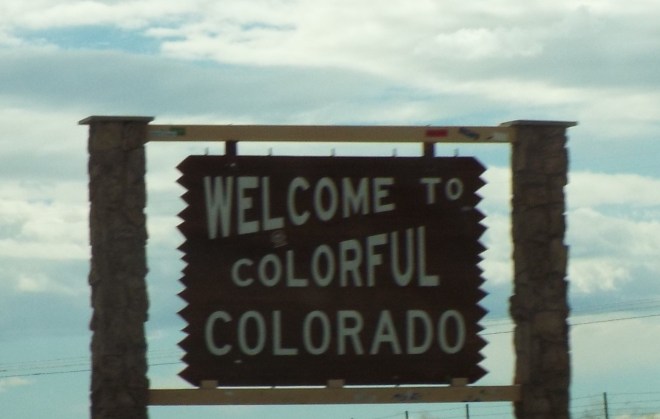
I think maybe it’s a double entendre.

We’d spent a little time in Denver before, so this time we only drove through on our way to Pueblo. I’d had my heart set on seeing Pueblo for one reason: the Arkansas River. I knew we’d be crossing that river later in the state where you’d expect it to be—Arkansas—and it seemed so right to see it here in Colorado, too, on the very same trip. (It doesn’t take much to make me happy.) As soon as we checked in to our airbnb, we headed downtown to Pueblo’s Historic Arkansas Riverwalk. I’m glad we did.

The 32-acre waterfront area is sophisticated, yet welcoming. It’s artistic and calming. Just the place for a late afternoon stroll.

The next day we made it to Taos, New Mexico. Along the way, we were stunned by the sight of Blanca Peak. Here we were at a flat-as-could-be 7,000′ elevation, and almost right next to us, soaring out of  the earth like a phoenix, was this mountain that rose to another 7,000+ feet. Just like its name, it was white. We were mesmerized. And we may well have missed it had we not missed our turn. More serendipity.

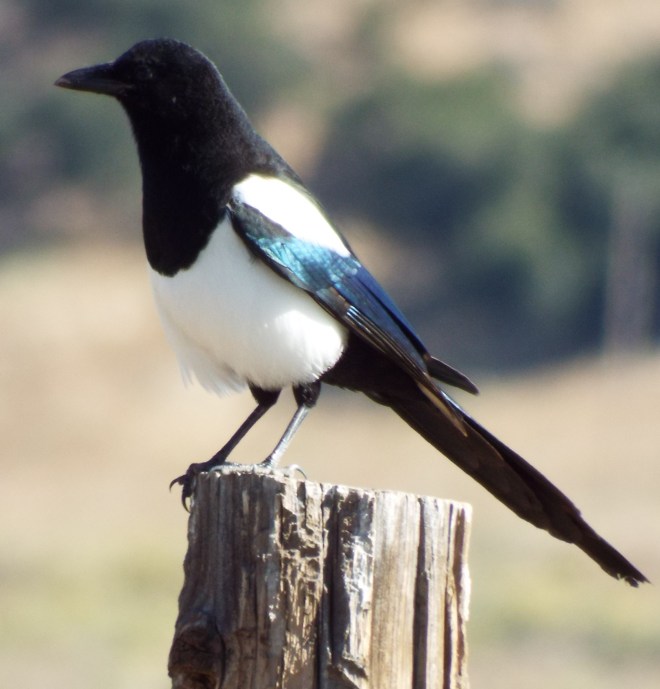
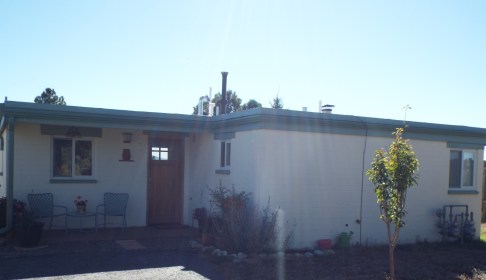
While we were admiring the majestic mountain, this incredibly beautiful magpie gave us an audience. Magpies had been flirting with us since South Dakota, but were never still long enough for us to get a good look at their striking iridescence. We don’t have magpies at home and we reveled in the opportunity to observe one up close.We stayed just outside of Taos in another airbnb, appropriately enough a casita. It would have been an ideal place to chill out for a few days with a good book and a few glasses of our favorite beverage had we not wanted to see what Taos had to offer.Courtesy of our airbnb host, we were in for another bit of serendipity (by this time, we were almost expecting such moments)—the Rio Grande River and Gorge. We had no idea the Rio Grande was this far north. It was an awesome sight.
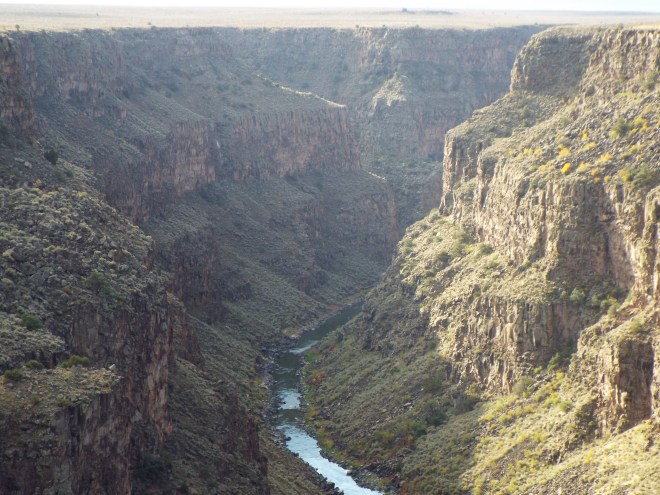
A chilling one, too.

Ten of these call boxes were situated strategically along the length of the bridge.

And then this happened: a couple approached us to take their picture. Turns out this is where he’d proposed a year ago, shortly before she was in a serious accident causing a brain injury and memory loss. They were on a mission to relive and record those lost moments. We clicked the camera’s button as he knelt on one knee above that vast canyon. They were deliriously happy. After we’d walked off the bridge to get a view of it from some distance away, we could still hear her laughter. Lots of warm fuzzies that day.

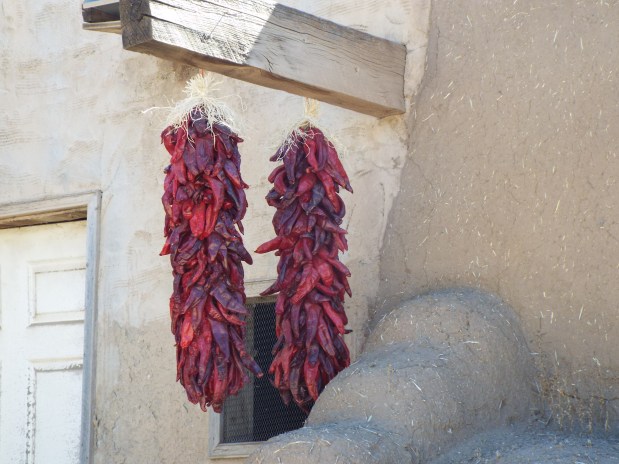
We knew Taos began life as an artists’ colony and remains a haven for artists, but we were surprised to discover how tiny it is. With a population of 5716, it’s even smaller than Douglas, WY, where we’d been just two days before. Naturally, the shops are heavily focused on art, and outdoor sculptures are common. But in my view, Taos’ best feature is its architecture. A big fan of Pueblo/Spanish/Mission architecture, I was excited to see so much of it.  It must be a challenge for local leaders to hold true to the town’s origins and avoid turning it into a garish strip, like some places I know. They even have an ordinance to protect the night sky. Good for them.

The post office is adobe, banks and grocery stores are adobe, the churches are adobe.

Even McDonald’s is adobe.

We left Taos and New Mexico for the panhandle of Texas and a little stretch of Route 66. I’m a child of the ’60s and a fan of that decade’s TV series featuring the iconic highway, so I had to get me some Route 66 kicks!

Old Route 66, what little there remains of it, is filled with all sorts of quirky kitschiness. Our destination was Cadillac Ranch, just outside of Amarillo. What a hoot!

We especially liked this:As we left Cadillac Ranch, we decided to travel a few miles farther on Route 66. For the most part desolated and decaying, it still has a few unexpected treats, one of which is the Devil’s Rope Museum in McLean, TX. We had a little time; we decided to stop. As we walked up the steps, a woman leaving looked at us and said, “It’s surprisingly interesting.” She was right. The museum (free, by the way) features collections from barbed wire collectors (yes, that’s a thing all across the country, as well as everything related to barbed wire—tools, salesman samples, sculpture, and a library filled with patent information.
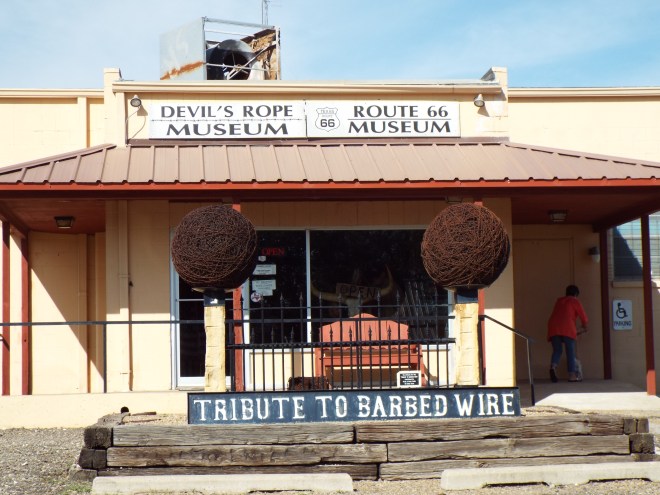
In addition, the museum displays Route 66 memorabilia,

Who’s old enough to remember these?

and it contains a poignant Dust Bowl photo exhibit. It’s worth a stop. Really.

In Oklahoma, we stopped in Elk City to visit a superb museum complex: a Blacksmith Museum, the Old Town Museum, the National Route 66 Museum,

and the Farm and Ranch Museum. All for one low price—just $5.00 for adults. Well worth it.
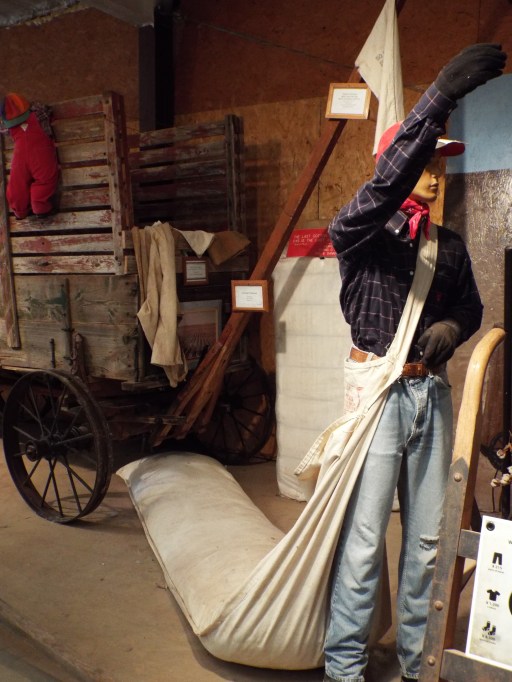
This exhibit put me in mind of my father’s boyhood. His father’s too. (You can read all about it in my book, Boyhood Daze and Other Stories: Growing Up Happy During the Great Depression.

After twenty-some days on the road  and home getting closer with every mile, it was hard to think of the remainder of our trip as anything more than the fastest way to get home. We still had three days to go, though, and we wanted to make the best of it. We’d planned one last big stop: Little Rock, Arkansas. After all, we had to get another look at the Arkansas River.

And we got to visit our first Presidential Library. The Clinton Presidential Library and Museum kept us fascinated for hours. We decided it would be a good idea to visit as many of these libraries (all privately funded, by the way) as possible. Apparently, lots of people do that; the gift shop sold “passports” with space for stamps from each library one visits.

We zipped through Tennessee. Though there are lots of things we’ve not yet seen and done in our neighboring state, it’s just a border away and easy enough to visit another time. As the landscape grew more familiar, we became even more anxious to get home, to see how our garden had fared during our absence. Surprisingly well, it turned out. We still had crops to harvest.

We learned so much on our big fall adventure. Perhaps the biggest lesson of all was that serendipity is what it’s all about. My advice? Give yourself some extra time and space when you travel. Keep your eyes open. Look for the little things, the unexpected. You never know what surprises will be waiting. Savor it all.

(Want to read about our road trip from the beginning? Start here. And stay tuned for episodes detailing our time in National Parks and more.
Our Grand Road Trip, Part Three: Wyoming

Our Grand Road Trip, Part Three: Wyoming

Oh, Wyoming! We had no idea what staggering wonders you hold within your borders. Yes, there are the Grand Tetons. Yes, there is Yellowstone (whose size alone is utterly incomprehensible—and which will get more coverage in another post, I promise). But there is so much more.

We left Yellowstone at deep dusk with fifty miles to go before we reached Cody, our destination for the night.

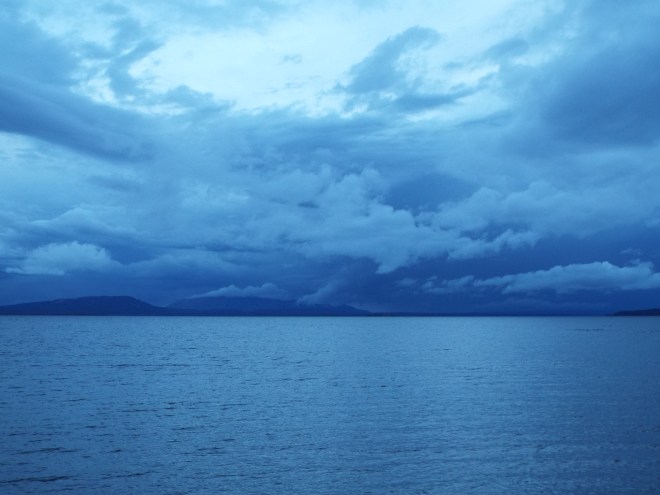
Yellowstone Lake at dusk

We didn’t know Cody was named for Buffalo Bill or that he was its founder back in 1896. It was just a convenient stopping point. Neither did we know the road we were traveling has been called the fifty most beautiful miles in America—by none other than Teddy Roosevelt. We’ll have to take his word for it; we could barely see a thing in the foggy dark. But we saw enough to believe that a daytime trip through the wilderness of the Shoshone National Forest in the Wapiti Valley with the Shoshone River running alongside the road might be almost too beautiful to bear.

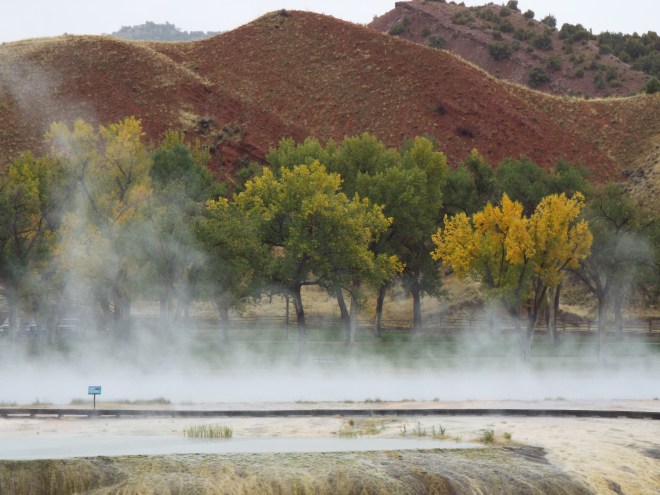
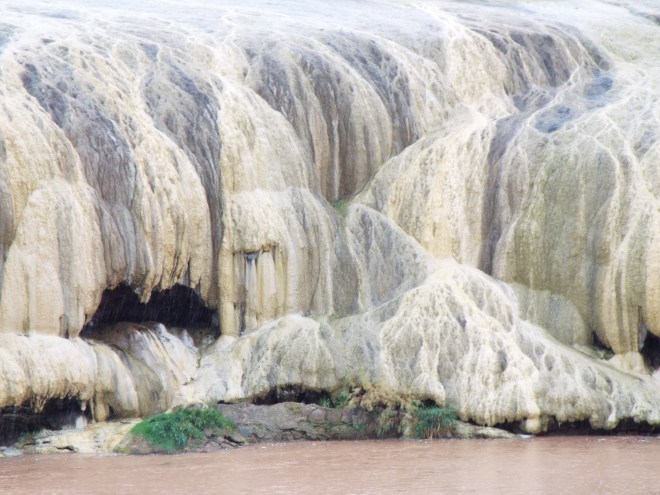
In the morning light, we realized Cody itself might have given us a fun day of adventure, but we had many miles to go before we could rest our heads on pillows that night—Wyoming is one big state! Along the way we passed Thermopolis, which lays claim to the world’s largest mineral hot springs. Wish we’d had time for one of its promised free soaks, courtesy of Hot Springs State Park.

Steam rising from Thermopolis’ hot springs

Hot Springs mineral deposits.

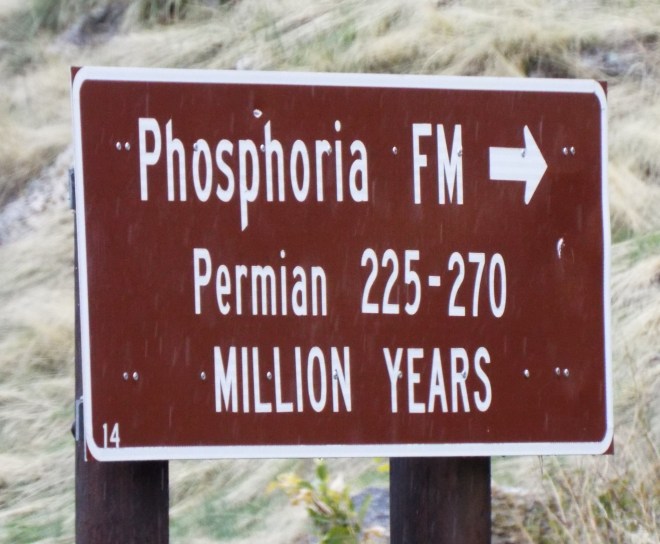
And then it happened. We were already in it before we realized we were actually inside a canyon, heading for its floor. We were floored as we drove into and out of Wind River Canyon, which was full of signs like this first one we saw, each pointing out a little slice of geologic time.

Phosphoria Formation from the Permian Period

These signs accompanied us all the way to the canyon floor’s Precambrian era, 2500 feet deep and 2.5 to 3 billion years into prehistory. We were time traveling, y’all!

And another cool thing: as we entered the canyon from its north end, the river’s name changed—from the Wind to the Bighorn. The spot where the change occurs has its own name: Wedding of the Waters. Don’t you just love it? The river, of course, flows through the bottom of the canyon walls. When we entered the canyon from above, it was far, far below us. As we descended, it seemed to rise until we were almost level with it. The canyon with its high rock walls, rapidly flowing river, and railroad running on a narrow ledge between the river and the canyon wall caught us completely off guard. And it became one of the two biggest highlights (other than family, of course) of our entire trip. All in thirty-four miles. They say you can drive it in forty minutes if you don’t stop. But of course we did. We wanted to savor it—both the scenery and the sheer awesomeness of the experience.

Honestly, I don’t know how we ever got to our next destination, the little town of Douglas, population 6,120. Just as with Cody, we’d planned to spend the night in Douglas only because the timing was right to get us where we wanted to go the next day. But Douglas was full of its own treats.

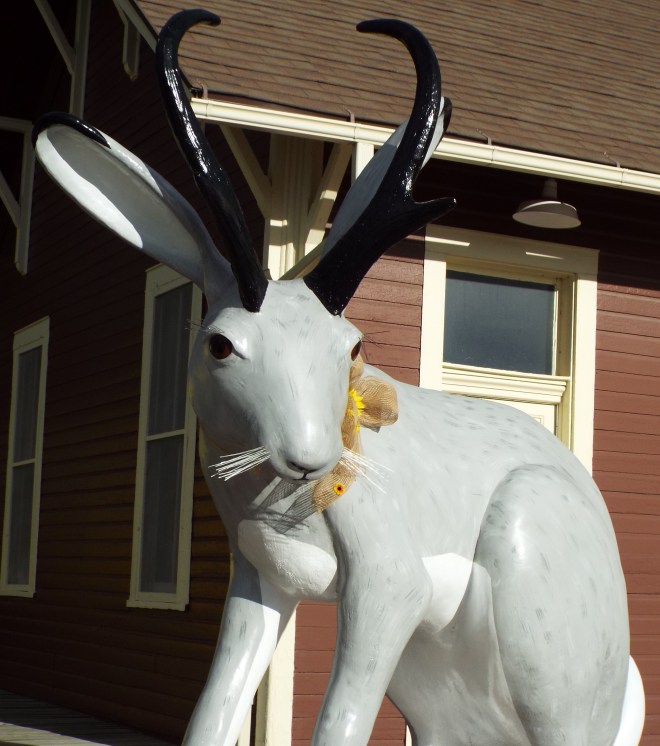
Douglas: home of the jackalope. You know, that mythical half-rabbit, half antelope creature you grew up hearing about? Well, Douglas is where it all started. Legends abound. Like its ability to mimic human voices, or that it mates only when lightning flashes, or its fondness for whiskey. The Chamber of Commerce even dispenses licenses for hunting the rare creature, legal only from midnight to 2:00 am on June 31st. Douglas is full of history. Established in 1867 when Fort Fetterman was built just ten miles away, named for Stephen A. Douglas (Lincoln’s presidential opponent),  a World War II prisoner of war camp that held 5,000 German and Italian soldiers, and home to both the Wyoming Pioneer Memorial Museum and the Wyoming State Fair.Our Douglas lodging was the charming Hotel LaBonte, currently on the National Register of Historic Places. It’s hard not to let your imagination run wild when you stand in the lobby. The place reeks of ranchers, cattle barons, and railroad tycoons.Just as it was closing time, we dropped in on what may be the world’s friendliest Chamber of Commerce where the helpful staff told us about what turned out to be the other biggest highlight of our trip: the Oregon Trail Ruts and Register Cliff, part of the Oregon National Historic Trail. We’d been planning on turning in early, but it didn’t take a nanosecond for us to change our plans and take off for Guernsey, just twenty miles away.

The whole of the Oregon Trail was over 2,000 miles long, beginning in Independence, Missouri, and ending in Oregon’s Willamette Valley. From there, pioneers chose between settling down or spreading out, going either north or south. Most heavily used from 1841-1869, almost half a million people traveled it.

The routes varied somewhat from one wagon train to another, but not here. Because of the topography, almost all of the nearly 500,000 westward-heading folks traveled this very same path near Guernsey with their horses and wagons or their handcarts. Not just to Oregon—this passage was part of the Mormon, California, and Santa Fe Trails, too. In places, their feet, wheels, and hooves wore the sandstone rock down to a depth of five or six feet, still visible today. Imagine!

See the top of these rocks? That’s the level the first pioneers traveled. Four hundred thousand plus people with their horses and wagons and carts wore the rock down this much.

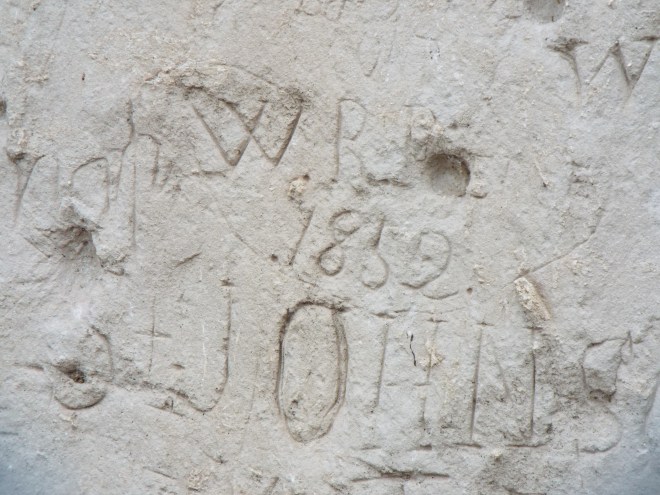
Just a couple of miles away is a place called Register Cliff. Think of it as a pioneer version of a hotel and its accompanying ledger. The sandstone cliff, in those times a day’s journey from their previous night’s stay at Fort Laramie, provided some degree of shelter as well as a place where people could chisel their names and date of arrival. Maybe it was a message to relatives and friends coming in a later caravan. Or maybe it was a way of recording for the ages, “Look, I made it this far!”

What were their fates?

Now, I’ve just got to take a minute here to tell you this was a deeply spiritual experience for me. I felt that I was on sacred ground. Not that it’s personal—my ancestors traveled no farther west than east Tennessee in their search for land and a brighter tomorrow. But they did cross the Atlantic in dangerously rickety boats to face the unknown, knowing they’d never see beloved faces and familiar places again. And some of them did trek across the mountains from Pennsylvania to Virginia to Tennessee to western North Carolina in a time when roads were scarce and hazards were plenty. That particular history and struggle is part of me and I feel it deep in the core of my being. So, seeing these ruts and the names of some of the people who made them moved me.

The Oregon Ruts and Register Cliff touched me in a way I cannot express. If you get a chance, you really should see them. Give yourself time to study the signage, time to examine the names faintly etched into the rock. Time to “see” these people. Time to think on things. Things bigger than yourself. Here is a place where you can immerse yourself in the story, a story of heroism and hope. And a place where you can actually touch history.

Oh, by the way, those clouds that were missing earlier in our trip? We found ’em.Wyoming, you stirred my soul and stole my heart.
(More of Our Grand Road Trip still to come. Stay tuned.  Want to read about our trip from the beginning? Start here.)

Our Grand Road Trip, Part Two: South Dakota, Montana, Idaho

Our Grand Road Trip, Part Two: South Dakota, Montana, Idaho

In my last travel blog post, we traveled to Louisville, through Illinois, across Minnesota and into South Dakota’s Badlands. Today we’ll visit more of South Dakota and three states farther west.

Here’s where our journey started to take a serendipitous turn. Over and over we found ourselves in the midst of something unexpected. And that unexpectedness never failed to wow us. Just the idea of falling into so much amazingness almost entirely by accident was enough to take our breath away.

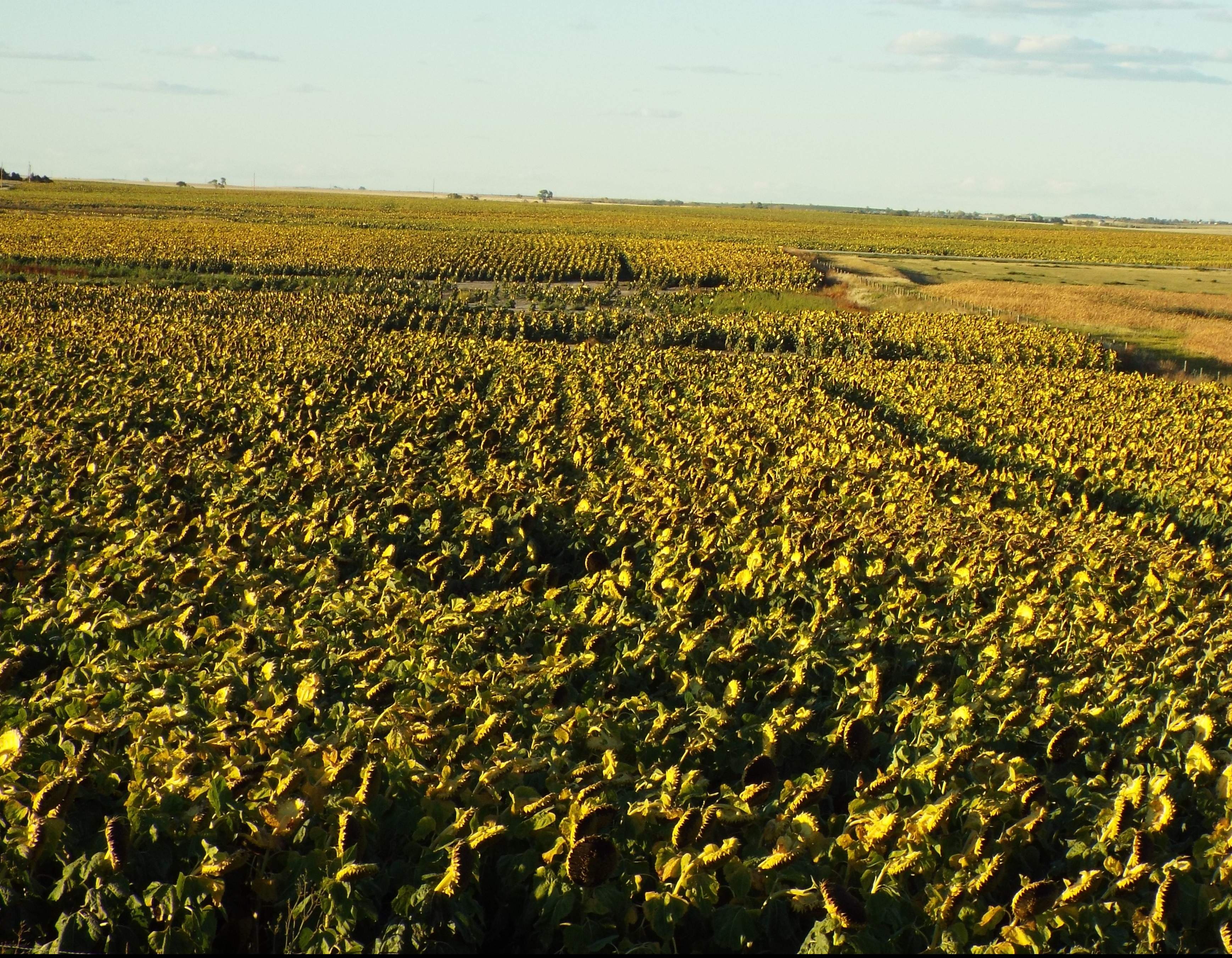
We’d almost become inured to the massive fields of corn and soybeans when we spotted something a little different. Ever wondered where all the sunflower seed you buy for your songbirds comes from? Well, we found out. They were well past flowering—wouldn’t that have been something to see—but the seeds were still busy preparing for their destiny.

DSCF1665

As far as the eye can see and then some

On our way across South Dakota we pulled in at a rest area that turned into a happy surprise. How many rest stops do you know that house a museum? Yeah, that’s what I thought. But just off Interstate 90 near Chamberlain, that’s exactly what we found with the Lewis and Clark Interpretive and Keelboat Center. We were excited to be standing on ground where Lewis and Clark’s Corps of Discovery explorers set up camp. They picked quite the spot—a bucolic bluff overlooking the scenic Missouri River. (We’d soon discover that much of our journey passed along the Lewis and Clark Trail—another unexpected treat.)

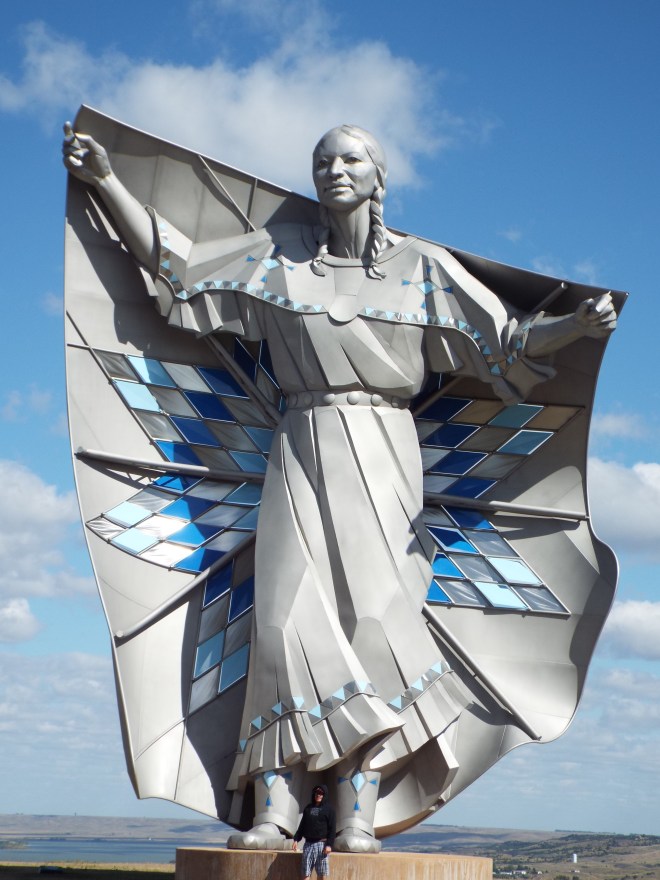
That was only the beginning of the excitement we felt at this rest area. Just days before our arrival, the fifty-foot tall, stainless steel sculpture named Dignity had been installed. Dignity, with outstretched arms holding a multi-hued blue-star quilt, was designed by South Dakota artist Dale Lamphere to honor the culture of the state’s indigenous Lakota and Dakota peoples. He used several Lakota models from fourteen to fifty-five years of age to give the statue a universal feel.

She was magnificent!

Gives me chills, even now

This was a stop we had not planned, knew nothing about. We certainly didn’t anticipate spending well over an hour there, but it was worth a late arrival in the Black Hills that evening to experience this moment.

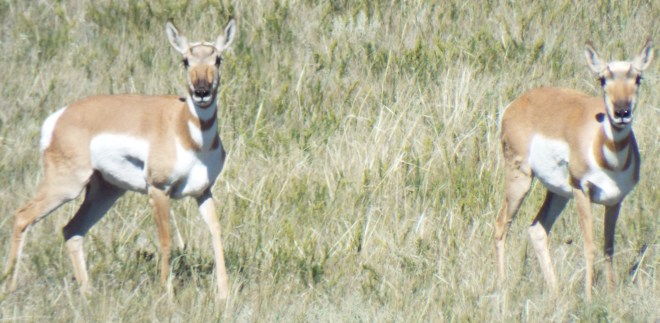
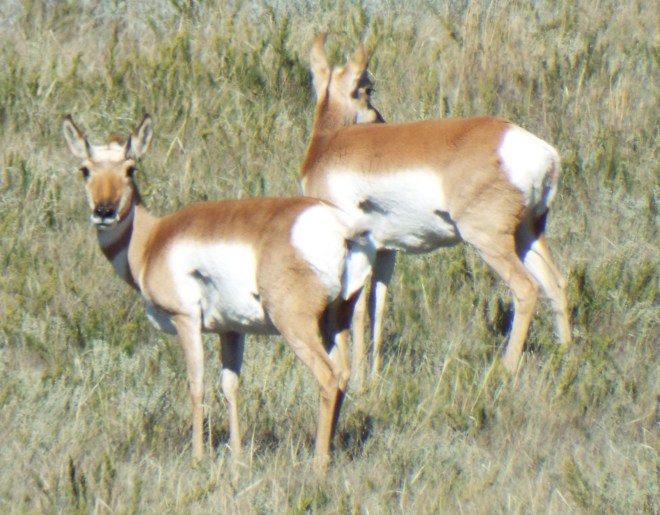
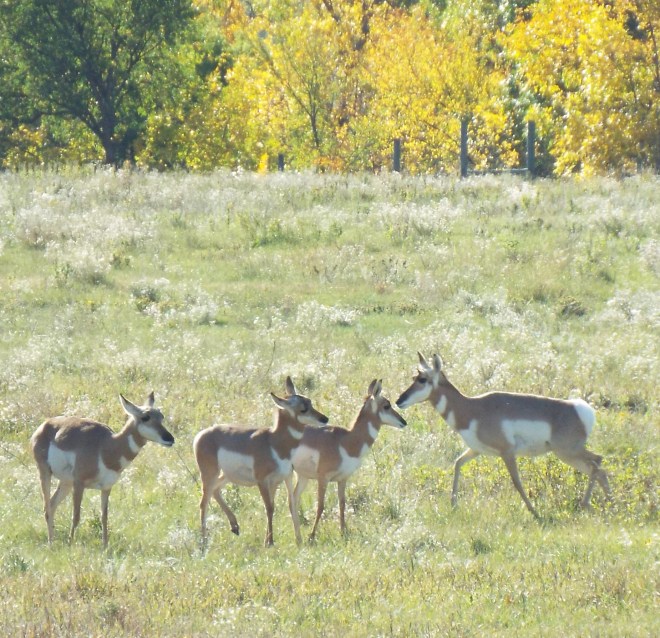
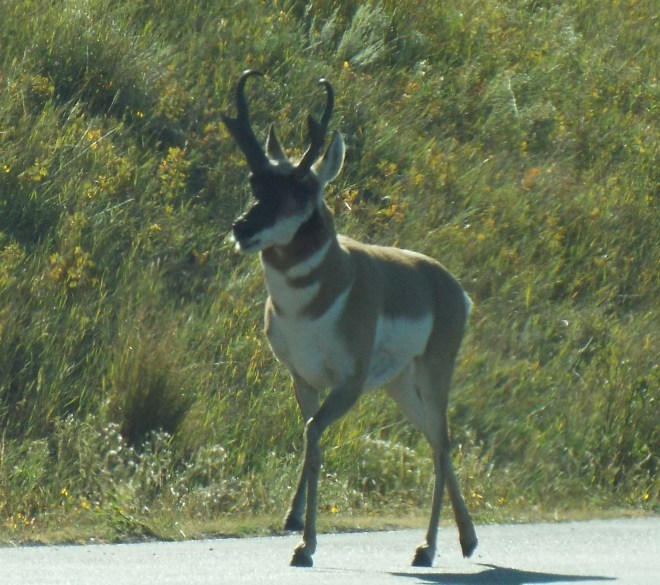
Then came the pronghorn antelopes. They appeared from nowhere, then they were everywhere, sometimes outnumbering the cattle whose pastures they shared with apparent impunity—a real peaceable kingdom. I couldn’t get enough of them: their stature, their gracefulness, their markings.

Where the antelope play

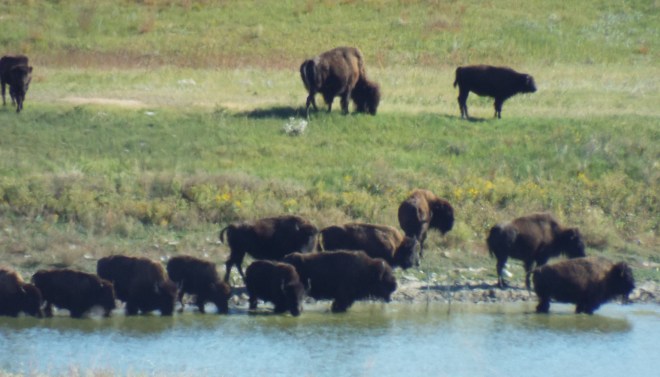
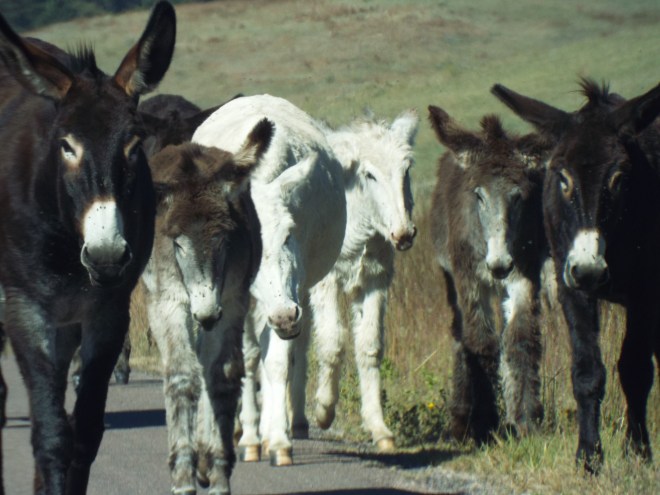
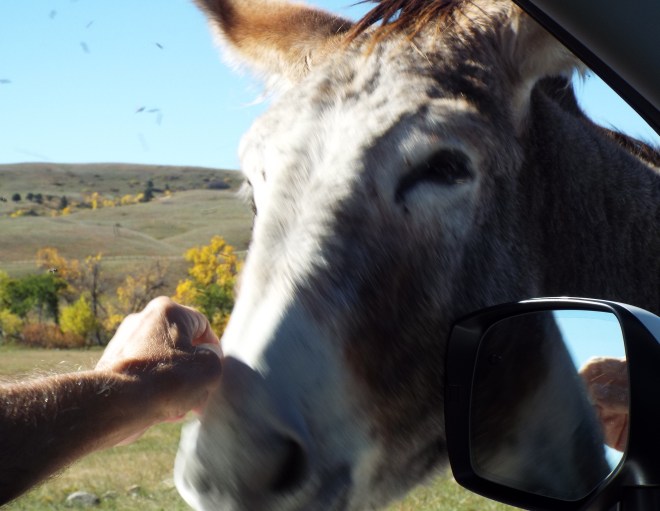
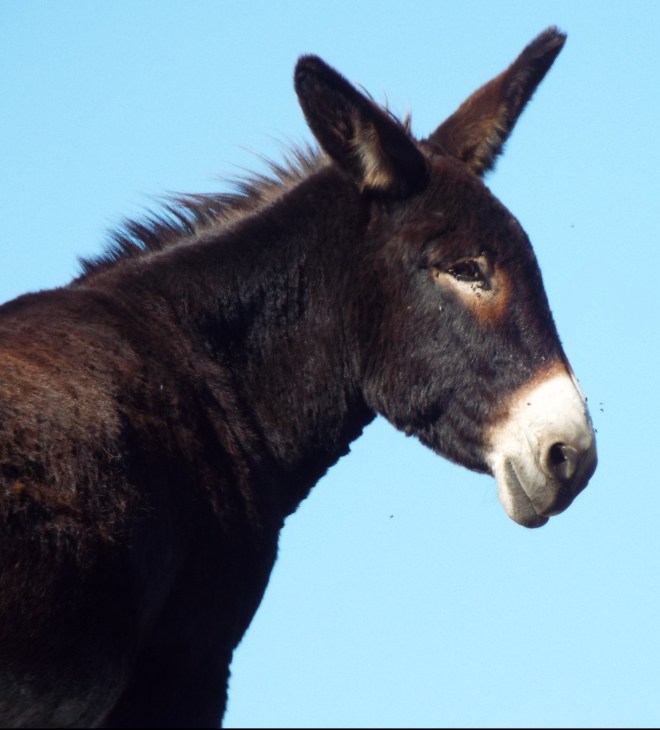
DSCF1738 - CopyWe really didn’t know what to expect in the Black Hills, other than that we’d see Mount Rushmore and hopefully a few bison or other wildlife blocking our path somewhere or other. Were we ever in for a treat! Driving the Loop Road in Custer State Park, not only did we get close-up (as close as is safe) views of the bison; we got real up close and personal with some pretty brazen donkeys.

Where the buffalo roam

I thought they looked like a bunch of teenage hoodlums up to no good or maybe a gang of gunslingers itching for a fight.

The Gnome makes a friend. (But this guy would be happier if that hand held an apple!)

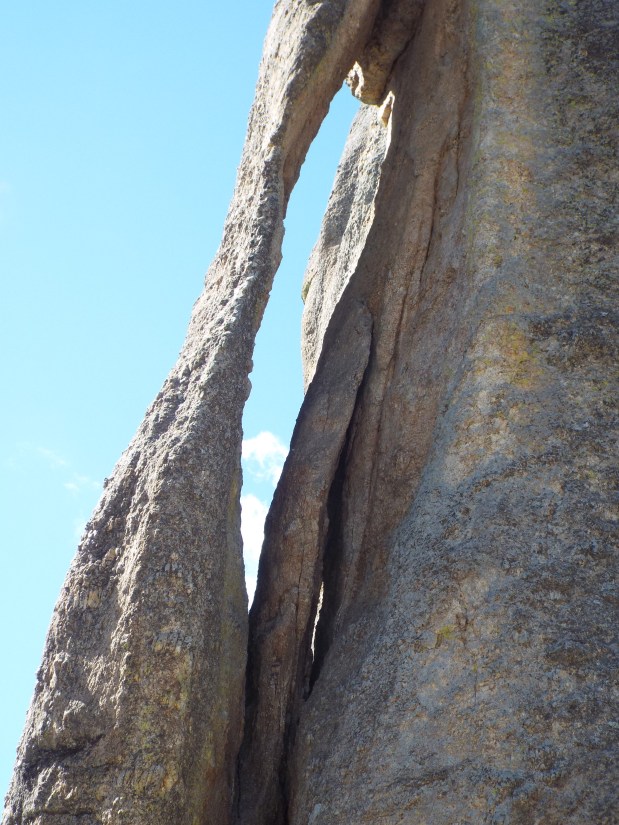
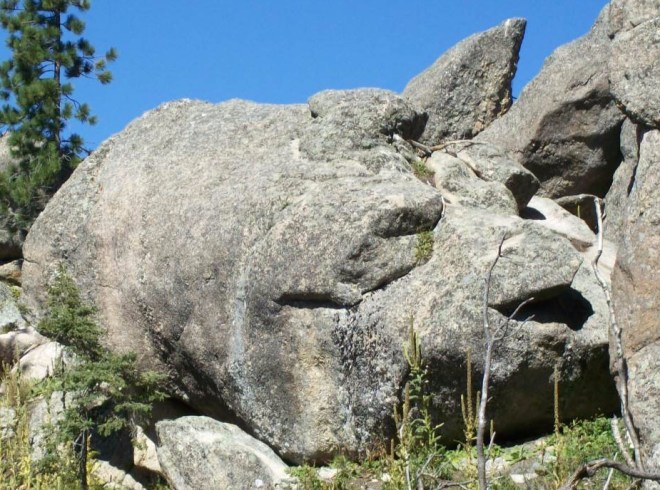
It was the many unusual and massive rock formations, though, that captured our imagination. Sort of like finding cloud pictures in the sky. We’re definitely returning for a longer stay, probably right smack in Custer State Park. What do you see in these images?
As we crossed into Montana, we understood the state’s Big Sky moniker (though South Dakota and Minnesota could vie for that title as well, in my book). We couldn’t pass up a day trip to Glacier National Park where we went up, up, up the Going-to-the-Sun Road. How romantic a name is that? And such an astonishing engineering feat, especially given that it was built in the early 20th century.

I really wish we could have spent more time in the park. Like so much else on this whirlwind trip, it only got a lick and a promise, but even that was pretty amazing. Yet, it was again the unexpected that really got to us. Driving to Glacier meant passing Flathead Lake in the Confederated Salish and Kootenai Tribes Flathead Reservation. With over 185 miles of shoreline, it’s huge! On the way up, we oohed and aahed over the lake’s crystal blue surface glistening in the sun. Our return coincided with twilight, giving us an equally dramatic perspective.

Leaving our final “cousin destination” in western Montana, we opted for a more southerly route home so we could see more new-to-us parts of the country—a very good idea, it turned out. One of the many unexpected and spectacular sights we encountered was Mt. Borah. Located in the Challis National Forest in eastern Custer County, Mt. Borah is Idaho’s highest mountain. Though it was only rainy down where we were, way up at 12, 667 feet above sea level, snow was beginning to cover the peaks.We stopped to learn about the 6.9 magnitude earthquake that shook the mountain in 1983, raising the peak about a foot and lowering the valley floor by eight feet. We could even see the quake’s scar on the side of the mountain. (All very intriguing, but absolutely as close as I ever want to get to an earthquake!)

And then we came to Wyoming. Now, there’s a big state! And it graced us with so many unexpected wonders that it deserves an entry of its own.

Until next time . . .

More About Rhubarb: Growing It, Harvesting It, Eating It, and More

Rhubarb stalks can be green, red, or in between. Victoria (pictured here) has strong growth and yield habits and produces some of the sweetest stalks.

Yes, I’m on a rhubarb kick. After all, it’s that time of year, and I think rhubarb is the cat’s meow. Just when you think winter will never end, rhubarb proves you wrong. A harbinger of spring, rhubarb has lots of virtues. In addition to its colorful stalks and massive leaves, rhubarb is an easy-to-maintain perennial; it’s loaded with important vitamins (C, K, B complex), minerals (calcium, potassium, manganese, magnesium), flavonoids (beta carotene, lutein), and fiber; it has a long growing season; you can eat it fresh, canned, or frozen.

Growing Rhubarb

The sight of a young rhubarb plant in early spring is a special treat after a long, harsh winter.

If you live in the right climate (dormancy temps under 40°F and average summer temps below 75), look for rhubarb crowns in your favorite garden store or catalog. Early spring is the best time to plant. Find a well-drained spot in the edge of your garden or yard and get rid of any weeds growing there. Dig a large hole (at least a foot wide and a foot deep), fill it with aged compost or well-rotted manure, and place the rhubarb crown in the center with its top no more than two inches below the soil’s surface. Then water it in. Give each plant about one square yard—it will expand to fill that space over time. Add a thick layer of mulch or newsprint around (but not on top of) the crown—like most of us, rhubarb does not like weeds. Voilá! You’ve done it. Your rhubarb plant(s) should last a decade or more with little to no additional effort from you.

Maintaining Rhubarb

One, two, three and you’ll have rhubarb for years to come. First, keep weeds out—a thick layer of mulch will save your aching back. Second, keep a watch on your plants for those pesky flower heads; as soon as you spot one, snip its stalk to keep the flower from robbing the plant of its nutrients. You want all that energy to focus on growing more and stronger stalks. Rhubarb doesn’t like drought so water during dry spells. That’s about it. It doesn’t hurt to add some organic fertilizer each spring, but your rhubarb should do just fine without it.

Even though your rhubarb should give you good harvests for ten or more years, it’s best to divide it after four or five. Now, you have even more rhubarb for those wonderful cakes, pies, and breads. Or you can give extra crowns to your favorite friends.

Harvesting Rhubarb

Remember that virtue, Patience? It will come in handy during your first year or two growing rhubarb. As much as you may want a thick slice of juicy rhubarb pie, keep your hands off during its first growing season. It needs all the energy it can get to establish itself well. Even in its second year, you should harvest only lightly—just a couple of stems off each plant. After that, you can pretty much have your way with rhubarb. You can harvest it all at once, but better to leave a few stalks on each plant so it will keep producing. Although spring is rhubarb’s peak season, you can harvest all summer as long as you remember to begin reducing the number of stalks you pick after June.

To gather rhubarb, you can use a knife to cut the stalk at ground level, or you can grab hold at that same point and give it a gentle yank while simultaneously twisting the stalk.

Cut off the leaves of your harvested stalks. They’re poisonous. But don’t throw them out. Toss them on your compost pile, instead. Don’t worry. The toxic oxalic acid breaks down as it composts.

Eating Rhubarb

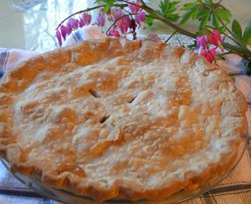
Bebop-a-rebop, rhubarb pie!

Pie: Of course, pie is the first thing most of us think of when rhubarb is mentioned. And why not? Baking a rhubarb pie is as easy as . . . well, pie. It’s a kindness to say my luck with making from-scratch pie crusts has been erratic, so I rely on frozen or refrigerated. I find them just as tasty as homemade. With a refrigerated crust, I can use my own pan so my guests never know my secret—I can trust you not to tell, right? Frozen crusts come with a disposable pan. Perfect if you’re giving your pie to some lucky person.

Making your crust decision may be the hardest part about this pie. All you need to do is remember this standard ratio: four parts rhubarb to one part sugar. In other words, chop four cups of rhubarb into ½-inch slices; place into a bowl and mix in one cup of sugar to coat. For a heaping filling or deep dish pie, add another cup of rhubarb with an additional quarter cup of sugar. (To be honest, I like my pie a little less sweet than this, so I usually cut back on the sugar—maybe 3 ½ cups.)

Mix in about 4 tablespoons (¼ cup) of flour or cornstarch to thicken the juice and ½ teaspoon of cinnamon for a richer, more complex flavor profile. (To make your rhubarb pie baking even simple, slip an index card with this easy recipe/formula inside a kitchen cabinet for easy reference.)

Pour mixture in pie pan, cover with top crust, crimp the edges, and make four slits in the top crust with a sharp knife. Bake in 425° (preheated) oven for fifteen minutes. Reduce heat to 350 and cook for an additional 20-30 minutes. Check in occasionally to be sure edge isn’t overbrowning. If it is, cover edge with a silicone shield ring or strips of aluminum foil.

Let cool for at least fifteen minutes. Eat plain or with a scoop of vanilla ice cream.

(If you’d rather have cake, check out this recipe for a skillet rhubarb upside-down cake.)

Stew: Rhubarb stew is just pie without the calorie-laden crust and can be served either as a side dish or dessert. Using he same four to one ratio measurement (or whatever proportions seem right to your palate), place rhubarb, sugar, and a couple tablespoons of water into a saucepan. Simmer for 8-10 minutes or until rhubarb is soft. Serve warm or cold in individual bowls.

Syrup: See this post for a great syrup recipe. The things you can use rhubarb syrup for are limited only by your imagination: mixed with carbonated water for soda, poured over ice cream, drizzled over pound cake, added to lemonade, mixed with cocktails.

For more ways to use rhubarb,visit the Rhubarb Compendium or Rhubarb-Central.com.

Preserving Rhubarb

It’s ridiculously easy to freeze rhubarb. No blanching needed. Simply wash and thoroughly dry the stalks, cut them into ½ or ¾ inch pieces, and place into your preferred freezer container. I use FoodSaver bags to vacuum seal mine—it prevents freezer burn. I also to measure and label my bags. That way when I want to, say, bake a pie, I can use the entire pre-measured bag, No need to thaw, either. Just mix with other ingredients and prepare as usual. Bringing the taste of spring into the kitchen on a frigid January day is one of the best pick-me-ups I can imagine for a winter-weary soul.