Proud Mountain Woman

(This essay was first published in the 2018 issue of Gateways Creative Arts Journal, themed Remembering and Forgetting.)

Not again!” she snapped. Until this moment, it had been a perfect morning. But when she turned on the tap to fill the coffee pot, nothing. Dadgum it! Preparing a hearty breakfast before seeing Braxton off to work was one of the many ways she strove to be the best wife she could possibly be. This thing with the water was getting to be a nuisance. All she asked of the Harwell boy was that he wait just a measly half-hour to divert the water supply to the cattle trough so Brack could get a pre-workday shower and she could fix his breakfast.

Today was one time too many. In a flash of huff, she trounced across the kitchen, slammed the screen door behind her, stomped across the sandy back yard in her pink and blue flowered pajamas, climbed over the barbed wire fence into the neighbors’ pasture, and turned off the cows’ water supply with a sharp wrist twist.

She marched triumphantly back to the kitchen, still mad, but smug. Today there would be coffee.

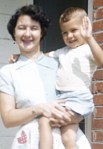
Who is this woman? What is her story? Her name is Pam Dillard Coates. I know this true life episode because the four-year-old me was in the kitchen when it happened. No doubt, the only reason this long-ago moment stands so clearly in my memory is that such a display of temper and venom was so unlike the quiet, gentle woman I knew as my mother.

That woman would never snap, never slam, and never, ever leave the house in her pajamas.

At the time, our young family of four was living in Mars Bluff, South Carolina, about eight miles east of Florence. My parents rented an old farmhouse from the Harwells who lived next door in what has been described as one of the finest examples of Greek Revival antebellum architecture in South Carolina. Even I knew it was pretty impressive encircled as it was with twenty-two Doric columns (not that I knew to call them that).

By contrast, our small wood frame house stood atop brick pillars, in the way of many houses of its era. The open space under the house was intended to keep things cooler in the hot southern summertime. Perhaps the nearby presence of “The Columns,” as the Harwell home was known, made our little house look shabby to the lady who came calling one day to welcome us to church. Mother did not like the sense she got that this matron felt sorry for us and that she looked down on us. It was a slight Mother never forgot.

But our home wasn’t nearly as pitiful as the two-room unpainted wooden shanty occupied by a tenant-farming couple. I walked across the fields to visit them on occasion. It was a tiny space, even by four-year-old standards. I walked into the small area designated as a kitchen with room for a wooden counter top on one side of the door and an old-fashioned icebox on the other. An open doorway led into the combination living-bedroom. The place was dismally spare. At least our house had electricity—and running water, sometimes.

We lived a couple hundred miles and a world apart from Mother’s hometown in the mountains of southwestern North Carolina. The people of sandy eastern South Carolina thought her mountain accent was quaint. By one means or another, someone was always calling attention to her differentness. She felt out of place, patronized, and she was rightly sensitive to any hint of disdain.

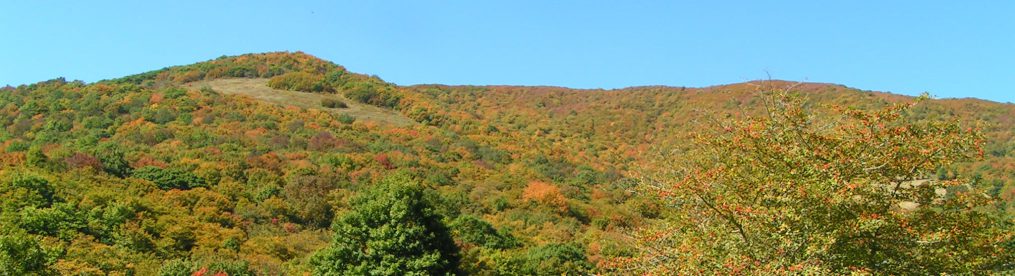
In the mountains, she was in her element. Her family was well-respected. Her parents were leaders in the small community. It was home.

She didn’t realize just how much. Though she was unaware of it, all of Mother’s ancestors had settled the area when it was first opened up via cession by the Cherokee. Every single one of them came to this country no later than the 1700s, some earlier. Like today’s immigrants, they were mostly poor folk who left their home countries in search of a better life. For the most part, they found it.

The Stillwells, Loves, Dillards, and Nortons were some of the first to move to western North Carolina as it opened up for settlement. The rest came not long after. Some made their way from Virginia through eastern Tennessee. A few moved from points further east in North Carolina, and more came from bordering counties in South Carolina and Georgia.

In other words, Mother’s mountain heritage included the very deepest roots among European settlers. And though she is still the sweet, gentle woman I remember from my childhood, I now understand that she is—and has always been—so much more. She shares many of the traits commonly attributed to Southern Highland mountaineers: self-reliance, persistence, and stoicism borne of necessity; reticence, independence, and individualism borne of isolation; and a hefty dose of mountain pride that demands to be treated with dignity.

Today she’s even more proud of her mountain heritage than she was as a twenty-something young mother. So am I.
That Feel Good Moment (Another Kind of Love Story)

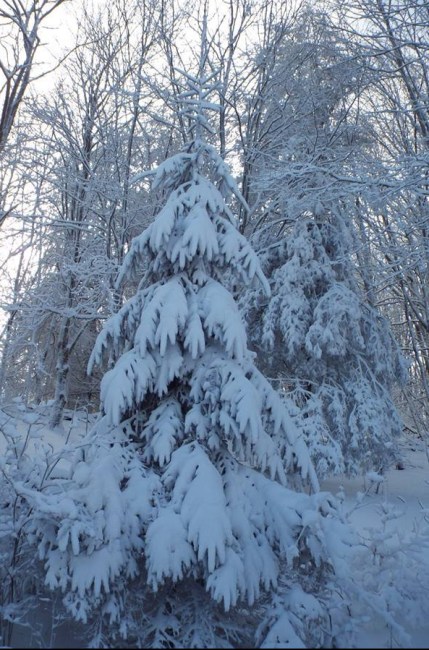
We woke up to another glorious snowfall, this one a fluffy six inches deep and preceded by hoar frost that made all outdoors a glittery white. We bundled up in warm layers and snow boots in preparation for a trip to town for a few errands.

On the porch, the Gnome was fumbling with boxes destined for the recycling bin while I was busy locking the door. I turned around to see what looked like an apparition of Amber, one of our beloved pets of yore.

The dog was beguiling with her golden plume of a tail wagging in youthful enthusiasm. Where had she come from? We live far from a public road. How long had she been out? She must be hungry and cold.

For a moment we thought we’d once again been adopted. But she was wearing a harness. She must have been with her humans recently. Surely she hadn’t been abandoned by the side of the road.

As the Gnome held tightly to her harness, he felt for a tag. Appropriately, it read, “Not all who wander are lost, but I might be.” There was a phone number. I was already digging for my cell phone.

“Hello,” the male voice answered.

“Hi, we have a dog here whose tag has this phone number attached.”

I could hear deep worry quickly replaced by relief as he told me he and his wife were out looking for her at that very moment. We exchanged information; they were less than half a mile away. I told him we’d pile her in the car and meet them in a few minutes.

But they weren’t about to hang around waiting. Before we got to the road, we saw them hiking up the mountain on our very long, climbing, gravel road. Red-faced, wet-haired, and with tears rolling down their cheeks, they hugged each other, they hugged the dog, they hugged the Gnome. (I’m sure they would have hugged me, too, but I was still buckled up in the car at the moment.)

Turns out this young couple had been out on a romp with their barely one-year-old pup. They’d practiced letting her off leash at home for a few weeks with no problems and decided today, on the remote path they were hiking, would be a good time to try it further afield. But they turned away for a mere second. That was all it took for her to disappear. Probably spotted a rabbit or maybe a deer.

They’d been searching for a couple of hours, climbing ever higher in the deepening snow—exhausted, worried, with no idea if they were going in the right direction, and about to give up when the phone rang. In the few minutes she’d been in our custody, we’d already fallen a little in love with the dog, but our infatuation couldn’t hold a candle to the adoration this young couple showed for their furbaby.

Even though they insisted they could walk, we couldn’t let them trek another half mile home. They were on a natural high but obviously overheated and exhausted. We piled the humans in the car, too, with the dog safely ensconced between them.

After we dropped them off, I realized how full my heart was. I looked at the Gnome and said, “Doesn’t it feel good to do a good deed!” We had smiles on our faces, smiles in our hearts, and livelier springs in our steps the rest of the day.

Have you found your good deed for today? This day devoted to love is the perfect time to reach out. You’ll be glad you did.

Grandparents’ Camp, Part II: Lessons Learned

If you read last week’s blog post, you know we sponsor Grandparents’ Camp every year for our grandchildren. Some have told us the name is topsy-turvy—sounds like someone’s sending the Gnome and me to old people’s camp. Hey, maybe when they get older, the grandchildren will actually host a camp for us. That would be totally awesome!

A friend of mine hosted her own grandparents’ camp the same week as ours. She’s a natural born planner with a strong theatrical bent—each year her camp has a different theme. She even engages her grands in planning and preparation. That must be fun. Our camps are more a hodgepodge: a few new activities scattered among a host of old favorites. That works, too, though it can be a challenge finding activities that suit a toddler, a soon-to-be ’tween, and a couple of teenagers all at the same time.

(Hover over picture for caption. Click a second time to see captions in their entirety.)

Here’s a little compilation of things I’ve learned from hosting Grandparents’ Camp. Some I learned long ago; now, with a little one added to the mix, I’m learning a few new things, as well as relearning a few old tricks.

1. Children thrive when they get to explore outdoors, sometimes completely on their own. Children thrive when given the opportunity to be creative. Children thrive when they discover it’s perfectly fine to get dirty. Children thrive when they know it’s okay to use their ‘outside’ voices.

2. Almost-three-year-olds ask a lot of questions, especially ‘why’ questions, often about life’s great unanswerables: why do you have (insert any visible object)? Why do you wear clothes? Why do you have stairs? Why are birds here? Why are we eating (insert any visible food item)? Why is it still light?

3. Almost-three-year-olds also talk about their parents a LOT! Mommy this, Daddy that. It’s only natural—an almost-three-year-old’s world is small and those in it loom large. Our almost-three-year-old has set his parents on such high pedestals they’re in danger of breaking something when they inevitably crash to the floor with the rest of us mere mortals. (They are mighty special—and lucky to have his adoration.)

4. Little girls idolize their older cousins, looking at them with wondrous eyes, mimicking everything they see. The older ones are a little stunned by the awesome responsibility that just dropped in their laps once they notice a younger cousin adopting their hairstyles and clothing tricks.

5. There’s nothing quite so good for one’s self-esteem as having an almost-three-year-old scoot next to you for a cuddle with these words: “I love you. You’re my best friend.” Hundreds of times a day. Literally. Hundreds. (Smiling gramma!)

6. There are a few things you should check out with the parents before they say their goodbyes. If certain routines that have become sacred traditions, you need to know about them, word for word. You need to know the bedtime sequence of events.

7. Planning activities for vastly different ages in a camp-like atmosphere is best done with more than one adult on hand. Occasionally, one set of campers needs a break from the other age group and separate activities are called for. A shopping trip for the older ones, a visit to a playground for the younger ones gives everyone the breather they need to be happy to spend their remaining hours together.

8. Just like at home, campers need to be given some responsibilities, such as helping with the dishes, putting things away when an activity is over. Not too many—they’re not at Basic Training—but enough to build their confidence as able human beings and enough to be reminded we’re all in this thing together.

9. It’s important to refrain from the temptation to overly rely on the older ones. They shouldn’t be made to feel like babysitters or ‘junior counselors.’ Camp is for them, too. Sometimes the balancing act is delicate.

10. When older campers notice that the camp directors have hit a wall and offer their services unbidden, you love them more than you thought possible. (Clearly, they’ve  been raised right.)

Bonus: This year, I also discovered that the almost-three-year-old and his camp director, seventy years his elder, now use the same cautious technique to climb stairs! Oh, my!

Grandparents’ Camp, Part I

The Gnome and I sponsored our annual grandparents’ camp a few weeks ago. Lots of folks do these days, but I’d never heard of such a thing when we opened our first camp seventeen years ago.

A lot has changed in that time. Back then, we had only one camper. Easy peasy. As the years passed, the number of campers has, at times, quadrupled; the camp directors’ ages increased dramatically, along with the number of cranky joints. The age gap between campers grew, too. We’ve had as many as four campers simultaneously, their ages ranging from two to eighteen. That makes planning a little more complex than back in the early days of our camp.

Our pioneer camper is clearly aging out, no doubt soon to be followed by the next eldest—too soon. But they will always be welcome in our home, camp or no camp.

I still look forward to camp and, unsurprisingly, still feel a bit of a letdown when the last camper says goodbye and heads for home. Kind of like that feeling I get as a wonderful vacation is nearing its end or the way I felt as a child as the holiday season wound down.

The first few camp years, I began planning weeks in advance. Now, with nearly two decades of experience, I’ve pared the process down a bit. I keep a notebook with all essential information (menus, recipes, activities), adding new ideas along the way. But planning still begins about three weeks in advance—I just don’t spend so long on it in a given day or week.

For campers of a certain age, I send camp invitations and registration forms, SASE included. I insert a goofy questionnaire asking, for instance, if the camper has ever been bitten by a tsetse fly or suffers from conditions like whinitis or pre-teen angst. I send a checklist of potential activities, including a few goofy options, such as eating worms or picking up rocks. I include a list of common-sense items to bring with them, and I request that they leave some items at home, absurd things like pet crocodiles.

About the same time, I put together a menu and shopping list. It’s fairly standardized because I can count on the same special requests from year to year: fondue, cookout, s’mores, sweet potato casserole, and a baked spaghetti dish.

I break buying trips into two parts. Perishables are purchased only a day or two before the start of camp. But to save myself from too much sticker shock, I buy non-perishables a week or two in advance.

I check the status of our regular supplies: canvases, paper, and acrylics for painting along with glue, food coloring, and liquid starch for that all-time favorite, slime. I collect materials for new projects I’ve discovered over the year.

I make sure bedding is in place, pull out equipment that’s been stored for the last twelve months, and do a last minute clean-up. I don’t know why I do this—it will take about five minutes for the house to explode in suitcase innards, toys, crayons, and more. Still, my illusion (delusion?) is that starting the week organized helps keep things under control.

In addition to the ever-popular painting and slime-making, we blow bubbles, watch fireflies, stargaze, make homemade ice cream—with a different fruit each year, add an item or two to one grandchild’s wooded fairyland, go for walks. I try to stay away from rigid schedules as much as possible. At the risk of hearing those dreaded words, “I’m bored,” I still prefer the freedom from routine that comes with grandparents’ camp.

The best part of making ice cream is getting every last drop from the can and dasher.

Learning to arm knit

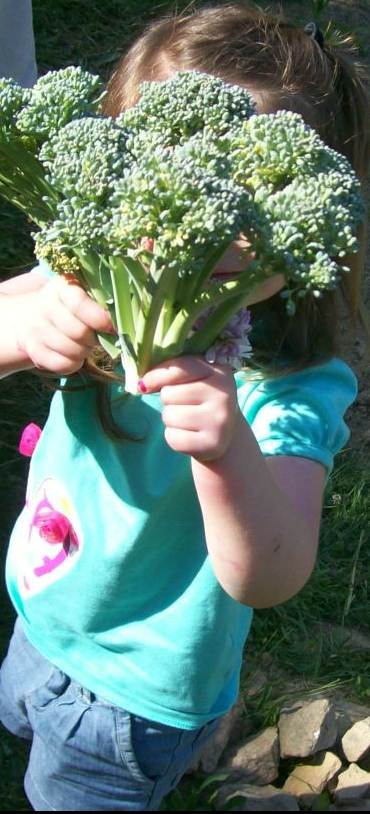
Harvesting supper from the garden is great fun.

We include a few field trips. They break up the routine, but too many and the week starts to feel overscheduled. Field trips have included a trip to our favorite local park for picnicking, playground fun, bicycling or strolling, kite flying, and splashing in the icy mountain river that bounds the park. We’ve visited local tourist attractions, we’ve gone gem mining, we’ve toured a cavern. Lately, we’ve included a shopping trip to boutiques for the older kids while the youngest one visits a playground or library story hour. (Shopping bonus: I get surefire gift ideas.) We’ve gone on downtown scavenger hunts, visited a working alpaca farm, attended a street festival, spent long evenings at fireworks displays.

One of our all-time favorite activities was the “spaghetti pool.” It involves playing naked in a kiddie pool full of oily spaghetti sprinkled with food coloring, so it’s only suitable for the youngest campers. But since it’s one of the first camp experiences the grandkids have, they’re sure to anticipate future camps as a wildly fun adventure. (A long, warm, bubbly soak in the tub inevitably follows this activity.)

We’re seventeen years older than we were when we held our first grandparents’ camp. We’re a little slower now, but I love our special week with grandkids every bit as much now as then. It’s a rare opportunity for them to spend time with each other; it’s a different pace than their norm with different freedoms—and different rules; they get to know us one-on-one. Invariably, the kids initiate conversations on subjects that don’t usually come up when the house is filled with mostly adults, so we get to know them better, too. Their conversations are open and free, and they treat us like one of their own.

John McCutcheon, one of my favorite folk artists, sings the song, “Water from Another Time. It tells of childhood summers spent with grandparents, getting water from a rusty pump “primed with water from another time.” The point of the song is that we all need a little from the past to feed our souls—old melding with new to help us make our way in this world.

I hadn’t really thought about it before I heard those words, but that’s what the Gnome and I are trying to give our grandchildren with these precious summer moments. My fervent hope is that one day my grandchildren will utter the words I so often do: “I want to be kind of grandmother my grandmother was.”

Water from another time.

Dressing Gramma’s childhood doll in clothing made by Great-gramma—water from another time.


The Ones Who Show Up

The Ones Who Show Up

As a society we’re often drawn to bigness. Philanthropy is equated to charitable giving in the millions. Grand gestures get attention. But what would we do without the small gestures? All that magnanimity we hail from people who can easily afford it would be meaningless without the little deeds of daily kindness, sacrifice, and responsibility from just plain folks. I refer to:

* the neighbor who brings groceries to the shut-in

* the gardener who grows a little extra to donate to homeless shelters

* the young woman who weekly organizes her mother-in-law’s medications

* the busy teacher who takes a few sacred moments to send a note of encouragement to a former student

* the friend who brings cookies and laughter to her terminally ill neighbor

* the co-worker who offers a much-needed compliment to a beleaguered colleague

* the harried nurse who still finds time to bring a bookmark to a patient who reads

* the child who writes chatty letters to her lonely grandparents

* the boys who shovel the snow-covered walk of someone recuperating from surgery

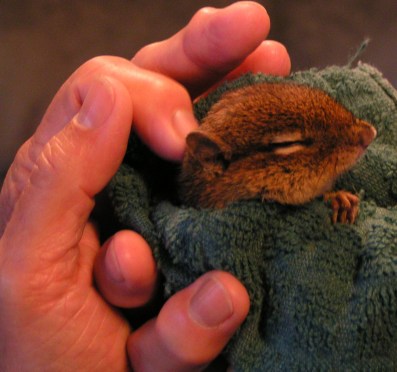
*the passerby who comes to the rescue of a drowning chipmunk

* the writer who sends nostalgic essays to aging relatives

* the man who cares for an acquaintance’s pets when she’s injured and hospitalized

* the many who give to a stranger’s health-related social media campaign, even when their own resources are scant

* the shopper who hands a dollar to the one in front whose bill was a bit bigger than his pocketbook

* the one who smiles at a stranger

* the young one, tired from a long day of grueling manual labor, who nevertheless offers his seat to the older one

* the teens who bring homemade goody boxes to residents of the nearby nursing home

* the foreign visitor who chases you down to return a dropped scarf in the parking lot

* the kid who carries an injured classmate’s books

* the retailer who takes precious time off from work to visit a stranger in prison

* the club members who de-litter a section of highway

* the customer who holds the door for a daughter and her wheelchair-bound father

* the stranger who catches a runaway shopping cart

* and the building custodians and sanitation workers, the electric line workers and snowplow drivers, the bedpan emptiers and street sweepers who do the dirty work at all hours of the day and night to make getting through each day easier for the rest of us.

Oh, that we would glorify these, the ones who show up, the ones who make a profound difference by changing not the world but what is three feet around them.

Resilience and Grace

She never asked to be a widow—hoped not to be. Yet, she fully expected it. She was up on gender and life expectancies, so she knew the odds were strong that she’d outlive him by some years.

It wasn’t that she was happy about it, but I wanted to stamp my feet every time Mother made some comment about living longer than Dad. To me, it felt like a self-fulfilling prophecy, and one I didn’t want to think about. But Mother was simply being realistic.

And though she went straight from her parents’ home to sixty years with him, she somehow knew how to survive on her own when at eighty-one she found herself alone for the very first time in her life. They’d been married for sixty years.

A couple of years later when she broke her hip and had to spend more than two days in a hospital bed awaiting surgery, she found the tiniest movement excruciating. Yet, she was loath to press her buzzer regardless of her need—didn’t want to bother anyone. She couldn’t help emitting a groan, though a tiny and apologetic one, when it was time to change the sheets or reposition her. But instead of complaining and bemoaning her constant pain, she made it her purpose to bring laughter to the nurses, aides, and others who looked after her. One nurse aide regularly took refuge in Mother’s room because it was such a pleasant and safe place to be.

My mom has always looked life straight in the face and taken it on wholeheartedly. Tears are so rare I can count the times I’ve seen them on one hand and still have a finger left over. The first was when I was six years old; the last more than fifty years later when Dad’s ashes were delivered to her. Instead of focusing on what’s sad, she looks for things that bring delight—a sunset, a newly discovered flower, a snowfall. I remember her saying she couldn’t imagine anyone being unhappy—sad, occasionally, but not unhappy.

The last thing she ever wanted to do was leave her home for assisted living, but once the decision was made she never complained, never looked back. Again, she began looking around her to see which worker needed a smile or a word of encouragement. (Needless to say, she’s a staff favorite.)

Once, on the phone from her one-room confines, she said to me, “I’ll bet there aren’t many ninety-two year-olds as lucky as I am,” reveling in the birds at her feeder, her books, her crossword puzzles, the cats who frequent her room, and memories of her family and happy marriage. She continues to offer similar sentiments two years later. If she’s ever had a regret, I don’t know about it.

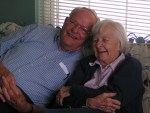
Her job as a mother is never-ending. Though in many ways over the last few years our roles have reversed, she’s still teaching me, especially in the art of aging well and with joy. May I learn her lessons well.


Dear Lula

My grandmother, Lula Smith Coats,  11/25/1894-4/14/1942

(I was recently challenged to issue a dinner invitation to one of my ancestors. I chose my paternal grandmother, who died four years before my birth.)

Dear Lula, (you don’t mind if I call you that, do you?)

Will you please join me for dinner on Saturday evening? There’s so much I want to ask you. You’re the grandmother I never got to meet, having died just after my parents met. As a child, I didn’t know enough to ask about you, and once I had the good sense to get interested, some of the details had begun to fade from the memories of your children.

I want to know what it was like raising seven boys. They talked about some of their mischief, but I’ll bet they left out a few juicy details. I’d love to hear their mom’s perspective. You probably have stories of precious moments with each of them, too. I’d like to hear them. What made you proudest of them? (And did you secretly long for a daughter? Wouldn’t it have been nice to have some female companionship in that household! Did you dote on nieces? Seek feminine refuge with your sisters?)

Would you describe your typical day—if there was such a thing? I know you washed clothes in a pot over an outdoor fire and that between preparing breakfast, dinner, and supper you worked in the fields along with the rest of the family. And that you cleaned, ironed, made everyone’s clothes. What other chores filled your days? Did you ever have a moment to yourself?

What were your favorite activities? Daddy told me you gardened, played the piano, sang, and told stories. Were there more? What did you love to do above all else?

What would you have said and done with the twenty-two grandchildren you never got to know? Could you ever have imagined that after having seven sons, the first five grands would be girls—and that of the first eight grandchildren, seven would be girls? Would you have sewed up some frilly dresses for us? Would you have oohed and cooed over us? What advice would you have given us as we grew up?

And what about your experiences as matron at the Poor House? I never heard much about that. It must have been quite the experience raising those boys while overseeing all the domestic chores of the County Home when its seams were bursting during the Great Depression. Did you ever worry about the boys being exposed to the TB patients? To their being around convicts assigned to work on the farm? To their being around so much sickness and dying? Or did you even have time to think about it while you were overseeing the cooking, housekeeping, laundry, medications, clothing and personal needs, and more? Maybe you were just glad your boys had a roof over their heads during those tough years.

You were twenty-five, mother of four children, and pregnant with your fifth when our country finally recognized that women have an inherent right to vote. Did you take advantage of it? Your husband and father were on opposite political sides, almost rabidly so. Where did you fall? Did you ever share your political leanings with either or both of them or did you keep quiet about the whole thing? What was it like, in general, to be a woman in rural North Carolina in the early twentieth century? Would you have supported my feminist activism in the second half of the century?

I want to know about your strokes and your migraines, too. I used to suffer from migraines, too, so I have an inkling how you must have felt. But by my time, they’d at least discovered some medications that helped a little. It must have been devastating being in such pain and cooped up in a dark room so much of the time while life was swirling outside your door. Is it true that the doctor bled you when your blood pressure spiked? Did he use leeches? They say that after your first stroke, you were bedridden for a year or two and had to learn to walk and talk all over again. Is that right? What got you through those days and nights? Were your sons attentive to your needs? When you were up to it, did they fill you in on their days? Did they confide their fears and dreams?

And the little things—what was your favorite color? Your favorite song? Your favorite radio program? Did you have a favorite food? Book? Movie? Holiday? What were your pet peeves? Most dreaded chore?

Then there’s Granddaddy. The story goes that you were his seventh-grade teacher and that’s when you met. You married as soon as the school year was over. (He was old for a seventh-grader.) Is that the way it all happened? How did your romance evolve? What kind of student was he? Where was the school? I understand you only taught that one year. Did you give up a longed-for career to marry and start a family or was teaching simply the most logical job available to a young, single woman in those days?

You see, I have so many questions! Please come early. I’ll invite all the cousins and we’ll have a good old-fashioned pajama party catching up on each other’s lives all night long. You’d better believe I’ll be recording the whole thing, too. I can’t wait!

With love and anticipation,

Your (4th) granddaughter Carole

Mortality

January 27, 2011:

My cousin died today.

And so it begins. I’d already found myself wondering who among the twenty-two of us would be first. Figured it would be one us older ones. Hoped it wouldn’t be me.

Instead, it was one of the younger set—ten years my junior. Cancer’s what got him: unpredictable, ugly, indiscriminate disease. You never know about life’s twists and turns, how it will all end.  

Cousins 


March 20, 2016:

It’s happened again. This time on my mother’s side of the family. This time it was one of us older ones. Not oldest me but the next in line.

Life feels more precarious than it did yesterday. We’re all, we cousins, entering the danger zone, that time in life when a generation ago death was the norm at the age we are today. Now, we think we’re still too young. Clearly we’re not.

They say it’s when your last parent dies that you feel most vulnerable, when mortality becomes vividly real. But I’m not so sure. Cousins—we’re the same generation. We were toddlers together. We grew up together. We see ourselves in each other’s faces.

When it’s one of us, a different kind of light goes out.

Gender Bender (for Danielle)

What if humans . . .
were synchronous hermaphrodites
like earthworms
who, when two mate,
both become impregnated?

Now, that’s equality!

Or the banana slug,
able to mate with itself alone?
Uniparental reproduction
is what it’s called.

As much fun as with a partner?
More?
Simpler, for sure—
certain of being in the mood.

What if humans . . .
were parthenogenic
like the rock lizard?
Some turkeys do it, too—
going it alone
reproducing without fertilization,
making maleness irrelevant
for species survival,
making maleness obsolete?

If men were extraneous,
would we still
keep them around
just for the fun of it?

What if humans . . .
were like the blanket octopus,
she a hundred times his size
and he, wanting to mate,
breaks off his penis
and gives it to her
for keeps?

The ultimate romantic gesture?

What if humans . . .
were like seahorses
where the male
is the one
who gives birth?

Would we have any reproductive laws?

What if humans . . .
were like anemonefish
practicing dominance hierarchy?
Where the largest female rules
and upon her death
the favored male
gendermorphs to take her place,

where all develop
first as male; then mature
to female.

How would social conventions change?

What if humans . . .
were bidirectional
like hawkfish
able to change gender
at will
and back again
and again?

What would we learn
when we’ve lived both sides?
Where would we hang
our biases?

What if?

(First published in Branches Literary Journal in a slightly different form, 2017)