The Cabot Trail, Part I

((I’m reposting a travel series from a couple of years ago. If you’re like me, you are patiently (or maybe not so patiently) waiting for a safe return to the road. If so, how about traveling along with me on a virtual road trip. To read about our Nova Scotia travels from the beginning, start here.)

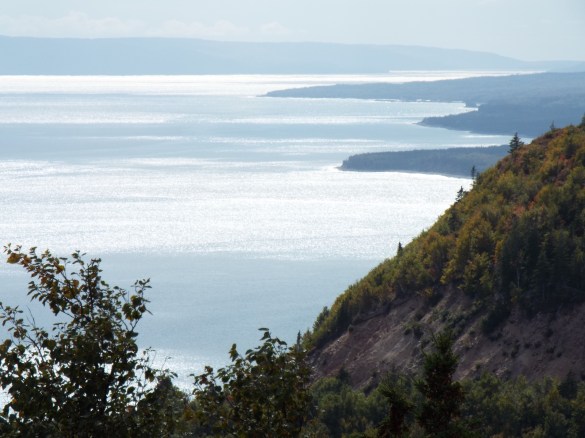
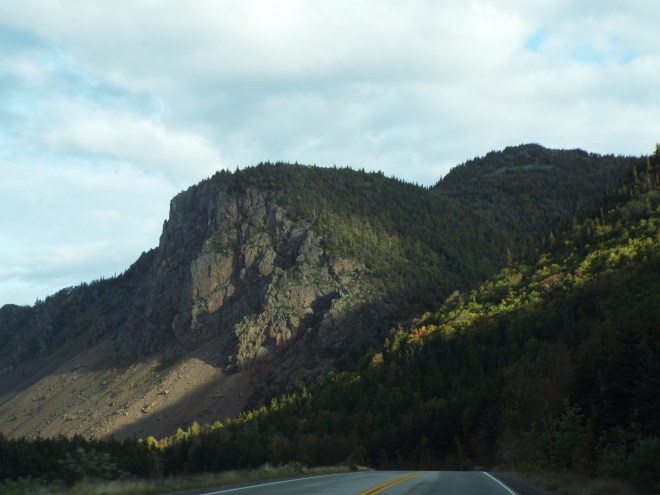
When it comes to the Cabot Trail, the winding road that hugs the coastline in Cape Breton, much of it in Cape Breton Highlands National Park, words are a waste. Let’s just look at some pictures!

seal island bridge, sydney river

We crossed the Sydney River by way of the Seal Island Bridge (vantage point: atop Kelly’s Mountain) to reach the Cabot Trail.

Someday I want to go here to see if I can learn Gaelic. Really, I do.

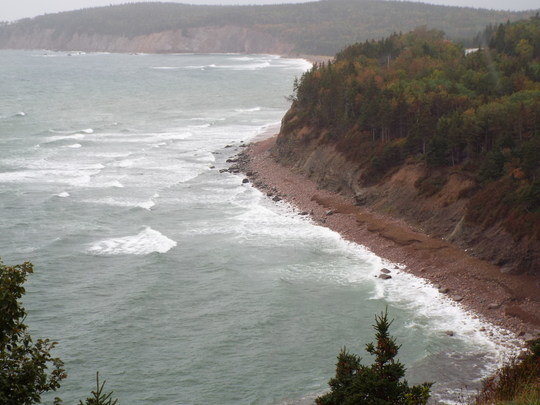
The sky was angry and so was the sea! Can you see a bit of the white house hiding behind that huge spray of water in the lower right photo? (Click on individual photos for larger view.)

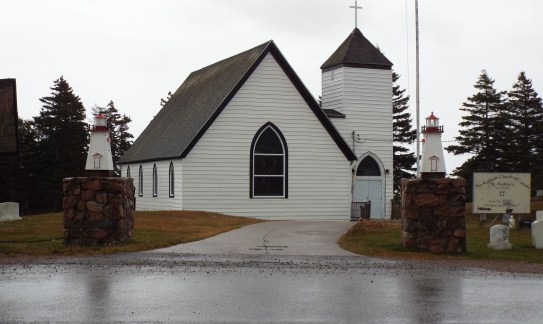
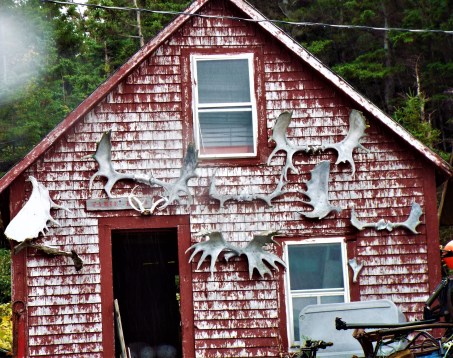
Cabot Trail: Anglican ChurchA stand of birch, an Anglican church, and a workshop adorned with moose antlers

DSCF5295

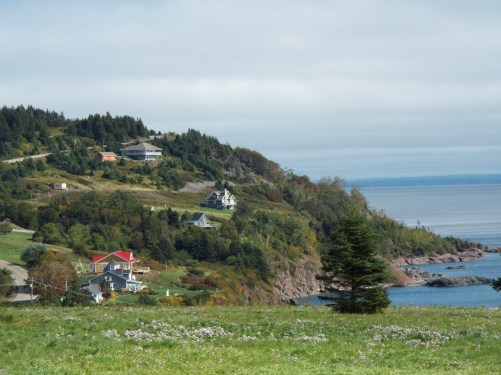
Scenes from Neil’s Harbour (I believe).

Meat Cove: much prettier than it sounds. You reach this beautiful spot after a very long (30 minutes or so) drive on a rutted dirt road (only to return the same way). Not much more than a campground (see the little cottages in the foreground of the bottom picture?), it’s worth the drive. They say that on a clear day you can see Newfoundland from this northernmost Nova Scotia community. We weren’t there on a clear day.

Check out all those balancing rock cairns on the rocky beach far below us at Meat Cove.

Why, yes, you can find sand on Nova Scotia’s beaches! (A wee bit, anyway.)

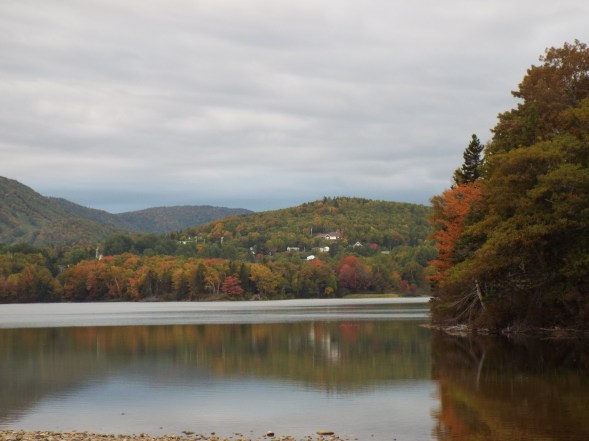
Freshwater Lake, Ingonish Beach

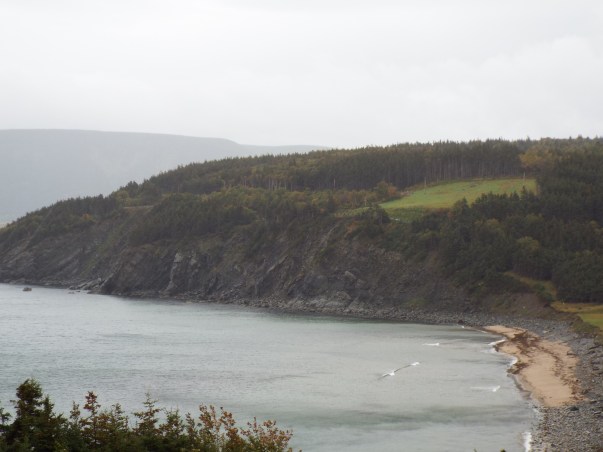
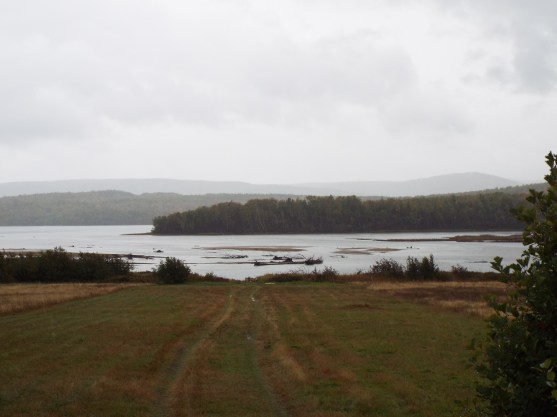
cabot trail shoreJust some pretty Cabot Trail views, even on a rainy, foggy, hazy day

Stay tuned for more on Cape Breton’s Cabot Trail.

Nova Scotia’s Eastern Shore and More

(I’m reposting a travel series from a couple of years ago. If you’re like me, you are patiently (or maybe not so patiently) waiting for a safe return to the road. If so, how about traveling along with me on a virtual road trip. To read about our Nova Scotia travels from the beginning, start here.)

From Wolfville, we headed for Cape Breton Island by way of Nova Scotia’s Eastern Shore. The province is divided into seven geographical regions, and this one may be the least well-known. It’s surely the least visited by outsiders and maybe even other Nova Scotians. There are no towns to speak of, only communities—and small ones at that. Places with names like Ecum Secum. According to Wikipedia, the name comes from the M′ikmaq (aka Mi′kmaw) language and means ‘a red house,’ which suggests to me that may be about all that was there at the time. The nearest town of any size is Antigonish on the west coast, 45 miles away, with a population of 4,200.

As usual, we drove as close to the coast as we could get, this time on Trunk 7, also known as Marine Drive. Our Airbnb stop for the night was at Moser River, in what was billed as a former prospector’s cottage. It was an instant hit, and Gail, our Airbnb host, was simply delightful. (More about her in a future post.)

Our Moser River prospector’s cottage Airbnb and area images. (Click on individual photos for larger view.)

We were advised to stop for food or gas in the community of Sheet’s Harbor, about 30 miles away—that’s how unpopulated this place is. People here are mostly connected to either the fishing or gold mining industry.

The Eastern Shore is not a place to go if you depend on theme park style extravaganzas for entertainment (though if you time it right you can join in a sand sculpture competition, a parade, a cakewalk, or a Celtic jam session). But if you want a little solitude away from everyday hassles, it’s perfect. I can imagine hanging out here for a long weekend with a hammock and a good book or hiking boots and a walking stick. It’s the perfect retreat stop—as long as you bring your own meals. Unfortunately, we had only one night at this peaceful place.

And the next day we finally made it to the place that had held onto our hearts for so many decades, Cape Breton Island. We would be here for six days instead of the one of so long ago. It would still be too little.

But first, we made a little detour to the opposite side of the province. We kept having to remind ourselves how short a drive it is from one side to the other. This side trip was to Cape George, near the town of Antigonish. It was well worth the drive.

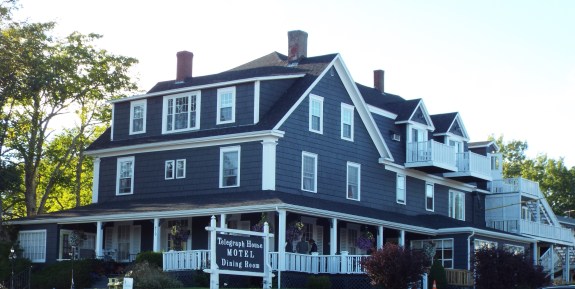
Our first Cape Breton stop was the town of Baddeck (pronounced Buh-DECK). We stayed at the historic Victorian-style Telegraph House, built in 1861, one of the few non-Airbnb places we stayed during our travels. At one time, the Telegraph Inn contained the office of the first Trans-Oceanic Cable Company. Some of the first telegraph messages in North America emanated from here.

Baddeck is famous for two things. It’s home to the Bras d’Or Lake (arm of gold), actually an inland sea. It’s roughly sixty miles long and thirty miles wide. Pretty darned big. And beautiful, surrounded as it is by low mountains. We could never get a photo that came near to doing it justice.

Baddeck is also where Mabel and Alexander Graham Bell lived for the latter half of their lives. It was here that Bell established a research laboratory—the first Bell Labs. He used the lake to test his huge kites, hydrofoil boats, and airplanes, just a few of his varied research projects.

Of course, there’s a museum, and since the Gnome is interested in anything having to do with inventiveness, we had to go.

Married as I am to someone who observes every little thing, I was especially drawn to this quote memorialized in the museum.

I was impressed to learn that Bell was much more interested in his work teaching deaf students (Mabel was deaf), and later with aviation, than with his best-known invention, the telephone. In fact, he was rarely interested in following through with any of his inventions after the initial creation; he was ready to move on to the next thing, leaving the details to others.

The highlight of our time in Baddeck had to be finding a ceilidh (KAY-lee), or kitchen party, where we got to listen to some lively traditional Cape Breton tunes by fiddler Mike Hall. Mike didn’t just play; he talked about the history of the music and how the Scottish Highlanders who were driven from their homelands with no instruments or written music managed to keep their musical tradition alive and true to its roots. It was mesmerizing—and quite different from the bluegrass jams we attend at home.

Cape Breton is where you might hear not only English and French, but also Gaelic and Mi′kmaq, an Algonquin language. It was fascinating to see multi-lingual signs everywhere. Appropriately, top billing usually matched the primary culture and language of a given area, as far as I could tell. Here’s a little Gaelic for you: Fàilte gu Cridhe Gàidhealach Albainn Ùr.  (Don’t bother trying to pronounce it—it sounds nothing like you’d think if English is your primary language.) As best I can determine, it translates to “welcome to the heart of New Highland Scotland.”

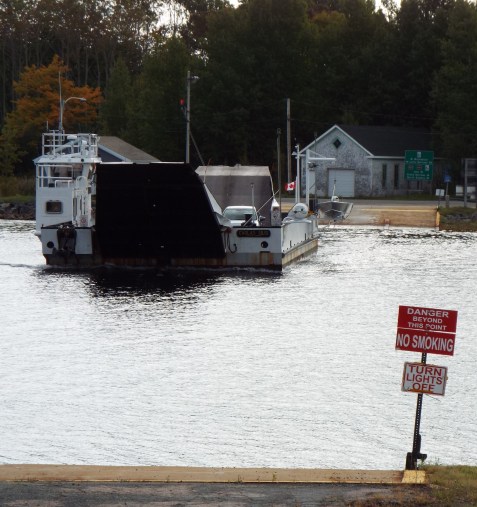
We left Baddeck by way of Iona, traveling ever so briefly on a cable ferry to Grand Narrows, then on to Sydney and the Cabot Trail, the subject of my next blog post.

Here comes the ferry. Short crossing—very short.

(Check back next week for more of our Nova Scotia travels as we head to the famed Cabot Trail and Cape Breton Highlands National Park.)

A Couple of Nova Scotia’s Historical Sites

(I’m reposting a travel series from a couple of years ago. If you’re like me, you are patiently (or maybe not so patiently) waiting for a safe return to the road. If so, how about traveling along with me on a virtual road trip. To read about our Nova Scotia travels from the beginning, start here.)

In previous posts about our visit to Nova Scotia, I’ve mentioned a couple of sites that deeply moved me, promising to delve into them later. Today, I’m keeping that promise with memories and photos of our visits to Grand Pre, a UNESCO World Heritage Site, and the Canadian Museum of Immigration.

A little history is called for here. The Canadian encyclopedia entry about the Acadians of Grand Pré begins this way: “Soldiers rounding up terrified civilians, expelling them from their land, burning their homes and crops ‒ it sounds like a 20th century nightmare in one of the world’s trouble spots, but it describes a scene from Canada’s early history, the Deportation of the Acadians.” The story of the expulsion of Acadians from Grand Pré is painfully evocative of our own Trail of Tears history, when the Cherokee were led on a forced march from the east to Oklahoma.

In French, the forced deportation was known as le grand dérangement. Sounds fitting. Since 1604, Acadians had created a thriving, peaceful community in the Bay of Fundy area. During their 150 years here, they developed an impressive dyke system to control the bay’s high tides, a method still in use today; they developed and maintained a rich agriculture; they created a massive and gorgeous landscape

The arduous task of building earthen dykes to hold back the Bay of Fundy’s high tides

A  typical Acadian farmstead
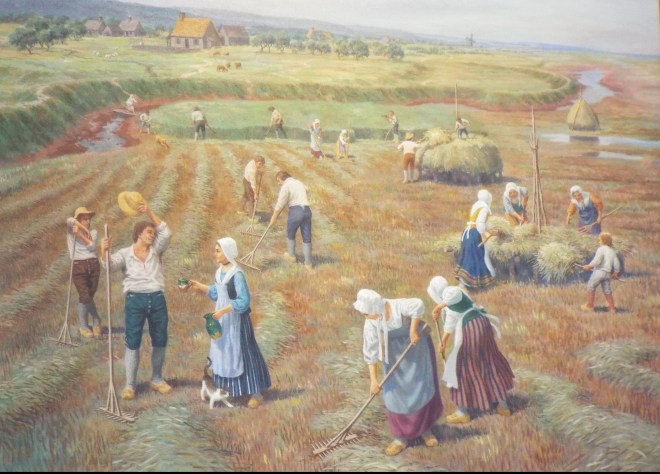
An image of  an Acadian day in the fields

A portion of the 3200-acre landscape of Grand Pre’

Meanwhile, the British and French were engaged in a long tug of war over Nova Scotia. The Acadians had sworn neutrality in any conflict between the two countries, but that wasn’t enough for the British governor. In 1755, he hatched a plan to surround their churches, threatening entire families with bayonets, while breaching the dykes and burning homes and crops. The first 3,000 deportees were sent to Pennsylvania, South Carolina, and Georgia while 7,000 more were shipped to other British colonies, France, and the Caribbean during the next seven years.

Try putting your family in this scene:  panicked flight, trying to stay together, leaving everything–everything–behind forever.

People found themselves left, like Longfellow’s Evangeline, to wander fruitlessly in search of the families they’d been separated from. That, too, sounds all too familiar in today’s troubled times. (Only later did Acadians find their way to Louisiana because of their familiarity with the language. Thus did the Cajun culture become established.)

Detail of the statue of Henry Wadsworth Longfellow’s heroine, Evangeline. It graces the entrance to the memorial church built in the early 20th century which serves as a museum today. It was a church at this approximate location where British soldiers set up headquarters, rounded up the village’s men and boys, and told them their land, livestock, and almost everything they owned were to be forfeited to the Crown, and that their families were to be deported.

By 1764, the British government allowed small groups of Acadians to return, but they didn’t return to their former lands—nothing was left for them there. Instead, those who returned settled on the mainland and in Cape Breton. It was, indeed, as the Acadian Shores restaurant patron we overheard had said, a shameful moment in Nova Scotia’s history.

But Nova Scotia can at least be proud of how it owns up to inglorious historical moments. I was impressed by this trait both here and at the Canadian Museum of Immigration, located in Halifax.

Even before you pay your admission fee to the immigration museum, the Wheel of Conscience almost smacks you in the face with its raw power. A circular steel structure about six feet in diameter, the wheel includes names of the approximately one thousand Jews who were aboard the MS St. Louis in May 1939, the eve of World War II. They were fleeing Nazi Germany, seeking and being refused entry into Canada and other countries, including the United States. With nowhere to go, the ship was forced to return to Germany where a quarter of its passengers ultimately died in concentration camps. 

 The kinetic sculpture also features four rotating, interlocking gears, each one larger than the one before and each emblazoned in red with a single word—from smallest to largest: hatred, racism, xenophobia, anti-Semitism. As visitors study the sculpture, they can’t help but see their own reflected faces looking back at them.

Inside, the exhibits are equally powerful. The museum is located in the very place, Halifax’s Pier 21, where more than a million immigrants came into Canada between 1928 and 1971. It’s logical that the museum would tell what that experience was like.

But the museum is more than that. It also tells the story of 400 years of immigration to Canada, and it takes an even broader approach, looking at refugee life as a whole, documenting through both visual and oral exhibits the horrors that force people to leave their home countries.

What horrific conditions would cause you to make this kind of journey? For how long? To what unknown future?

Imagine living in a tent this size with your entire family and all your very limited possessions, buckets for washing yourselves, your food, your dishes, and more. Imagine living here for up to eighteen years–or more? What would have brought you here?

Some of these painful exhibits come with a warning: “Not suitable for some visitors.” I tend to shy away from such stories, but I think we should force ourselves to face them so we can remember—cannot forget—the realities that send people fleeing all they know in hopes of finding a better life, a safer place, for their families. I did not photograph them.

Among other displays we visited were life-size replicas of a ship’s cabin, a life raft meant for eight that carried as many as thirty refugees, a child’s trunk, a family’s crate carrying everything they could cram in.

You can read notes handwritten on cardboard luggage tags from previous museum visitors who had immigrated, and you can watch videos of immigrants telling their personal stories. As moving as these exhibits are, what touched me most was finding myself in the company of a number of immigration ‘veterans,’ individuals who had landed at the immigration center in Halifax—at this very site when they were mere children. Other visitors were children of immigrants who had come through the port of Halifax. It was truly humbling to hear their stories, to be in their presence.

We didn’t want our visit to Nova Scotia to be touristy; we didn’t intend to spend much time inside museums. Our trip was meant to be about getting a feel for day-to-day life in the province and getting to know real-life Bluenosers while soaking in the phenomenal natural beauty of this place. But I’m really glad we took time out to visit these two sites. They, too, tell a story about the real Nova Scotia. And the rest of the world, in the past and, unfortunately, the present. They remind us about ‘man’s inhumanity to man’ as well as hope and the possibility of redemption.

This moving piece of public art, “The Emigrant,” near the Immigration Museum, pays tribute to those who have said goodbye to their families, hopefully temporarily, in search of a better life for all of them.

(Check back next time for more of our Nova Scotia travels.)

Return to Nova Scotia

Two years ago, we had just returned from a long-awaited trip to one of our favorite place—Nova Scotia. That was back in the long-ago when we could go places. Since most of us are stuck at home these days, I thought you might like to take a virtual fantasy tour with me in this ‘classic’ (or rerun) travel series of words and pictures. 

Forty-nine years later, the Gnome and I have fuzzy but memorable impressions of our first visit to Canada. They go something like this—Ottawa: old-fashioned officialdom; Toronto: sleekly professional with more traffic lanes than we’d ever seen; Montreal: sophisticated, Euro-cosmopolitan; Quebec City: old-world charm; rural Quebec: rolling green farmland; New Brunswick: waves of amber; Prince Edward Island (PEI): verdant romanticism.

And then there was Nova Scotia, a place I’d seen in my dreams, a place where the mountains meet the sea, a place of blues and greens, a place that inspires the imagination, a place of calm and peacefulness.  I’d always imagined living someplace where I could open my front door to the ocean and my back one to the mountains. I assumed it was a mythical place, attainable only through my fanciful visions.

Yet, here it was, right before my awestruck eyes. But our trip was at its end. We only had a fraction of two days to soak in this magic. Still, Nova Scotia managed to grab a little piece of our hearts.

So, how come it took almost fifty years for us to return to this bewitching land? We’d managed to revisit some of the other provinces and explore them further, making a five-hour, 186-mile train trip to (what we thought was far north) Moosonee, Ontario, on the Polar Bear Express. (Rail is the only way to reach Moosonee by land.) And we camped on Quebec’s Gaspé Peninsula, home of Forillon National Park and the Chic-Choc Mountains, a continuation of the Appalachian chain.

Maybe we stayed away so long out of an unconscious fear that reality couldn’t possibly measure up to our happy memories. Or maybe we instinctively knew the longer we yearned, the more phenomenal it would all be when our dreams finally turned to reality.

And so it was that in mid-September we made our way back for a long-planned and even longer-imagined visit to the place that had held on to our hearts for so long. A twenty-six-day road trip, eighteen of those in Canada’s second smallest and second most densely populated province (coming in after PEI in both cases).

Eighteen days, especially compared to the barely two of our previous visit, should be enough time to get to know a place so small that it’s a mere 360 miles from tip to tip, so small that nowhere in the province is more than 42 miles from the ocean, right? Hardly. That was clear after only a couple of days.

We weren’t so much interested in visiting museums and traditional tourist sites, though we did take in a few. Instead, this time around we wanted to get to know the real Nova Scotia—her people, places, and culture. We didn’t want to just see the place; we wanted to feel it. We thought we could accomplish that by visiting community after community. But each locale has its own unique story and demands more than a quick pass through. Before we knew it, we were busy planning our next trip, one that keeps us in fewer places, but for a longer period of time in each.
Was it all we’d imagined? Oh, yes! In the next few weeks, I’ll be writing about some of the special places we saw, people we met, and things we learned. In the meantime, to tantalize you, here are just a few of the 3500+ pictures we took along our journey.

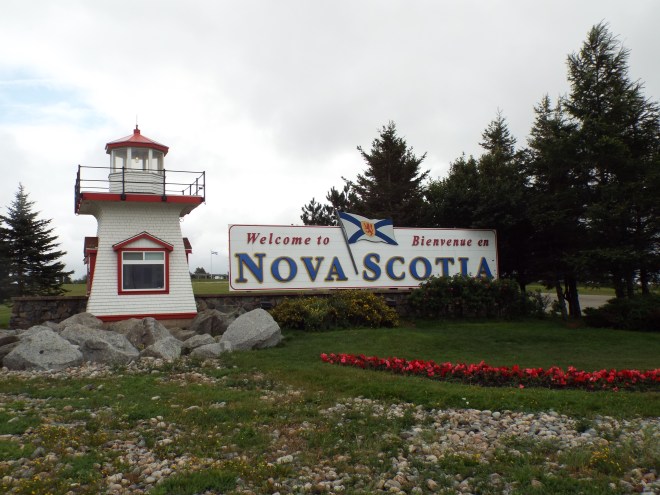
Long-awaited welcome

So many colorful houses everywhere–you’re as likely to see red, purple, or orange as you are white.

Early morning in Peggy’s Cove

Beautiful Cape Breton

DSCF5984

We even got to see the beginning of Cape Breton’s fall colors.

DSCF3865

Looking out from a sea cave at Ovens Natural Park

DSCF4047

So many striking homes. So much detail.

Annapolis Valley

DSCF4332

Example of an 18th century  Acadian home

Oh, Canada!

The Landscape of Grand Pre, a UNESCO World Heritage Site

And here are a couple of Nova Scotia factoids: The distance from Nova Scotia’s southernmost tip to its northernmost is 360 miles, almost two hundred miles less than the distance across my home state of North Carolina. In land area, it is closest to, though smaller than, West Virginia, which is ranked 41st among our 50 states.

To join me on my journeys stay tuned for more stories and pictures.

Tips for the Modern Homesteader

In case you didn’t know, in addition to what I write over here on Living on the Diagonal, I also blog for Mother Earth News Magazine. This week, I’ve decided to lead you to some of my most popular Mother Earth News posts.

I Blog for Mother Earth News-1

You can find my tips for repurposing common household items here.

To get ideas for planning a memorable picnic, click here.

If you want to discover some of the easiest vegetables to grow in your home garden, this is the place to go.

But if, like me, your ideas for your garden outpace the space you have available, you can see how I choose which crops NOT to grow.

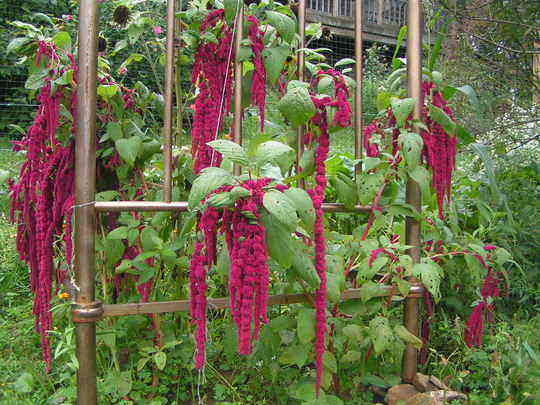
I love the look of Love-Lies-Bleeding amaranth, but it isn’t a feasible garden crop.

AND . . . if, like me, your knees are getting cranky, you might be interested in knowing how the Gnome and I are learning new approaches when age and illness invade the

homestead.

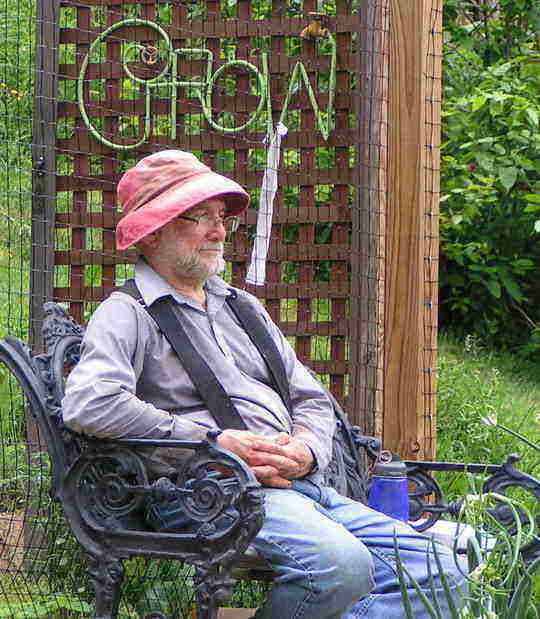
One tip is to take a break from backbreaking garden chores and just revel in what you’ve created. Actually, that’s a healthy idea at any age.

I write on all sorts of topics for Mother. You can find more of my Mother Earth News posts here.


More Plant-Based Meal Ideas

This is Part II of my plant-based meal ideas to help you feed your family healthy, tasty meals without stressing about meat shortages in grocery stores–or to help you get started on a plant-based diet regardless of pandemic supply issues. For Part I, click here.

Hippie Power Bowl

Nothing brings out my inner hippie more than a simple, healthy, super-tasty dish. And this Hippie Bowl is just that. I recently dug out a clipping for the Hippie Bowl from a 2015 issue of Rodale’s Organic Life. Of course, I changed it up a little to fit what I had on hand— which goes to show you can be a little flexible with the ingredients. It takes a little preparation time, but it stores well in the refrigerator if you want to prepare it a day ahead.

I made this just for me and it made four tasty lunches. To prepare it as the main course for a family of four or so, you may want to double the recipe. If you’re lucky enough to have leftovers, store the extra in the refrigerator. A zap in the microwave is all you need for a quick lunch.

Ingredients:

1 cup cooked short-grain brown rice
1 cup broccoli florets
1 cup sliced mushrooms of your choice (I used baby portabellos)
1 large carrot
1/2 medium onion, sliced lengthwise
2 Tbsp olive oil
salt and pepper to taste
1/4 cup tahini
2 Tbsp lemon juice
2 tsp tamari, soy sauce, or teriyaki sauce
1 clove garlic, minced
1/4 cup water

Directions:

Preheat oven to 425. In a large bowl, mix broccoli, mushrooms, carrot, and onion with olive oil and salt and pepper until vegetables are well-coated. Place on a parchment-lined baking tray and roast for 20-30 minutes until lightly browned.

While veggies are roasting, whisk remaining ingredients together until smooth.

Stir rice into vegetable mixture and mix in half the tahini sauce. (Reserve the rest to dress a salad or as a dip for raw vegetable sticks. It’s yummy!)

Serve with a few avocado slices or a green salad.

Slow Cooker Chili with Winter Squash

I found this fabulous recipe at the Real Simple website. It has become a real family favorite at our house—comfort food that’s healthy and a real treat on chilly winter nights. You can use sweet potatoes or any winter squash. Our favorite is butternut. Pumpkin is just as good. If you think the addition of cocoa and cinnamon is a little weird, give it a try anyway. They add piquancy without being identifiable.

It only takes twenty or so minutes to put this together. Then you can walk away and forget it. Yield: 4-6 servings.

Ingredients:

1 medium onion, chopped
1 green bell pepper, chopped
4 garlic cloves, chopped
1 tablespoon chili powder
1 tablespoon ground cumin
2 teaspoons unsweetened cocoa powder
1/2(+) teaspoon ground cinnamon
kosher salt and black pepper
1 28-ounce can fire-roasted diced tomatoes or 1 qt home canned tomatoes
15.5-ounce can black beans, rinsed and drained
1 15.5-ounce can kidney beans, rinsed and drained
2 medium sweet potatoes or one butternut squash, peeled and cut into 1⁄2-inch pieces
sour cream, sliced scallions, sliced radishes, and tortilla chips, for serving

Directions:

In a 4- to 6-quart slow cooker, combine all ingredients. Add one cup water.
Cover and cook until the sweet potatoes are tender and the chili has thickened, on low for 6-7 hours or high for 3-4. (Check the last hour of cooking to see if you need to add more water—or tomato juice if you have it.)

Add your favorite toppings: grated cheese, sour cream, green onions and/or crushed tortilla chips.

Cream Curry Casserole

This oldie but goody is so old—it comes from our earliest hippie-ish days—I’ve forgotten its source. I think we may have found it in one of Frances Moore Lappé’s Small Planet books. It has always been a favorite. I’ll be the first to admit, though, that even though its flavor is mild, this one may not go over well with any unadventurous young eaters in your household. Yield: 6-8 servings.

(Note: If you have trouble finding dry milk powder, this ingredient can be omitted.)

Ingredients:

2 cups cooked brown rice
1 can kidney beans, drained and rinsed
2 T butter
1 T arrowroot powder or 2 T flour
2 c milk
¾ c non-fat dry milk powder
2-3 tsp curry powder

¼ c sesame seed
1 onion, diced
2 cloves garlic, minced
2 large carrots, diced
2 small to medium zucchini, diced
1 Tbsp lemon juice
1 Tbsp honey
olive oil for sautéing and oiling casserole dish

Directions:
Mix rice and beans together. Turn into oiled casserole dish.

Make cream sauce of butter, flour, and both milks. (To make cream sauce, melt butter over medium heat in a small saucepan. Whisk in the flour, until smooth—you may need to reduce or remove from heat to get it smooth, then return to heat, gradually whisking in milk. Bring to simmer; cook and stir for 2 minutes or until thickened.)

Sauté veggies and sesame seed until onion is transparent. Add zucchini at the end and cook for one more minute. Stir lemon juice, honey, curry into sauce, then stir into vegetable mixture. Pour over rice and beans.

To make this dish even simpler, mix all ingredients together into a large bowl, then pour the whole thing into baking dish. Bake at 350 for 20-30 minutes.

DAVID RAE SMITH, OPERATIC BARITONE

I had barely put the final touches on my last book Blackberries and Biscuits, the story of my mother’s life and times, last fall when a writer friend asked me what was next. I told her I needed to take a break from writing for a while.

Well, that plan lasted for about a minute. I plunged right into developing a book from previously written anecdotes of a number of my ancestors. Seemed like a pretty easy topic since I’d already done most of the work. But before I got my writing feet wet with that book, I got distracted by one particular story, that of my dad’s first cousin, David Rae Smith. Rae, as he was known in the family, had no descendants to tell his story. Nor did any of his immediate family have any descendants. I found myself a mission–and a new passion.

I’ve been hard at work researching Rae’s story ever since. I’m sad to say it’s still a long way from completion, having been interrupted by all sorts of personal, family, and world issues (can you say COVID-19?) But I’m still hard at work on it.

I think maybe it’s time to share what may become the book’s opening scene. Perhaps sharing will give me a little extra incentive to keep at it.

David Rae Smith, baritone, New York City Opera

Look, Julius, I don’t care if he’s under contract with the Shreveport Civic Opera.. I want David Rae Smith!”

All right, all right, Bev. I’ll make it happen.”

Of course, I don’t know if this was the exact conversation between New York City Opera Impresario Julius Rudel and his resident star mezzo soprano Beverly Sills, but it may well have gone something like that. As the March 29, 1978 issue of The Times of Shreveport, Louisiana, reported, “Smith was released from his contract at the request of Beverly Sills who wants Smith to join her in the cast of a New York City Opera production of The Merry Widow,” a show which would take place four days later.

Whether Rae needed that validation of of his talents or not, it must have felt good to the baritone to know how much the best-known diva of the era valued him. He had performed opposite Sills in San Diego the previous year, a production that was broadcast nationwide on PBS stations in late November and recorded for Angel Records. Sills must have appreciated the dynamic.

Newspapers all over the country publicized the 1977 event, usually beginning with words similar to those in New Mexico’s Deming Headlight: “Public television will present a new English-language production of Franz Lehar’s zesty operetta, The Merry Widow starring Beverly Sills Monday, November 28 on PBS as it was presented earlier this fall at the San Diego Civic Theater.

“Appearing with Miss Sills in this all-new San Diego Opera Company production will be Alan Titus, Nolan Van Way, Glenys Fowles, Ryan Allen and David Rae Smith.”

The company’s musical recording of Widow highlights was the 1978 (February 23) Grammy award winner for Best Opera Recording. (Other 1978 Grammy recipients included Luciano Pavarotti, Steve Martin, Donna Summer, Chick Corea, Al Jarreau, the BeeGees (“Saturday Night Fever”), Orson Welles, the Muppets, Willie Nelson, Dolly Parton, George Benson, Ann Murray, Barry Manilow, Billy Joel and Earth, Wind and Fire.)

How did the son of an Asheville, North Carolina, letter carrier and a homemaker make his way to the Grammys and the opera and Broadway stages?

In truth, the multi-talented Rae had many career choices, and his path was the result of a multitude of happenstances—in addition, of course, to his great natural abilities.

Based on his early accomplishments, Rae could have been successful at almost any career: politics, acting, the law, concert pianist, vocalist, radio personality, scholar. It must have seemed as if the world was his pearl-studded oyster.

* * *

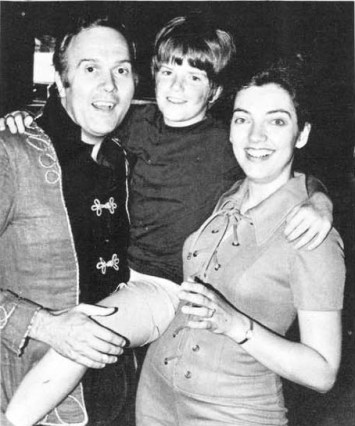
Rae as Professor Harold Hill in Brevard Music Center production of The Music Man, 1971, with co-stars. Photo courtesy of Brevard Music Center, Overture  magazine, 1972. Used with permission.

Meatless Meal Plans, Part I

All sorts of vegetables can be found in tasty, healthy, and meat-free main courses. And unless someone gives you the list of ingredients, you might never know the difference. 

With the potential for meat supplies to be limited and/or see sharp price increases, what better time to give a meatless diet a try? Even if your family is not ready to jump on the meatless wagon, Meatless Mondays offer a perfect opportunity for baby steps. If you’re the chef in your home, I’ll bet you can even introduce a number of plant-based and other meatless main dishes into your menu without anyone even noticing the absence of their meaty entrée. Below are two meatless main dishes for you to try.

This meatless loaf makes one of best ‘meatloaves’ I’ve ever tasted, and I’ve had the best—my mom’s. Whenever I introduce this recipe to a group, they always beg for more. I always make a double batch because it’s so addictive. If you’re lucky enough to have extra, it can be refrigerated or frozen for another delicious meal.

Choose the same go-togethers as you would for a traditional meatloaf. Maybe mashed potatoes, a green or yellow vegetable, and a salad. Since my sister-in-law introduced this one to me, it bears her name.

BECKIE’S SPECIAL K LOAF

(eight servings, approximately 300 calories per serving) 

1 lb cottage cheese

¼ c vegetable oil (can reduce to 2 Tbsp)

1 T soy or tamari sauce

3 eggs, beaten

¼ c finely chopped walnuts or pecans

4 c Special K cereal

1 tsp sage

1 tsp dried rosemary

1 envelope Lipton dry onion soup and dip mix (the only meat-free onion soup mix)

Put all ingredients in a large mixing bowl and mix well. Hands work best for this.

Place mixture in well-greased loaf pan. (Don’t use spray—the loaf will still stick.)

Bake at 350 for 45 minutes.

Cool completely before removing from pan.

Here’s another family favorite we discovered decades ago in Frances Moore Lappé’s Diet for a Small Planet. Rice con Queso is a deceptively simple name for a truly hearty and tasty dish. A green salad and some crunchy nacho chips will round out the meal.

First, prepare three cups of cooked rice. We only use brown rice, but white will do. Hint: Make a big batch of rice the day before. Save three cups, refrigerated, for this dish and freeze the rest, measured for future rice-containing recipes. Be sure to label amount and intended use.

You can used canned or pre-cooked dried beans in this recipe. If you prefer dried, go ahead and cook up a potful. As with rice, you can freeze extra for easy meal prep another day.

Now that it’s time for meal preparation, set the oven for 350.

Oil a casserole dish (8×8 or so).

You can prepare the dish in layers as shown below, or you can do what I do and dump all ingredients into a bowl and mix well.

RICE CON QUESO (gluten free)

(Six servings, approximately 500 calories per serving)

3 c cooked rice

1 15-oz can black beans, drained and rinsed or 1 1/3 cups of cooked dried black beans (1/3 c dry)

3 cloves garlic, minced

1 large onion, well chopped

1 small can green chilies (4 oz)

½ lb ricotta or cottage cheese

¾ lb jack or cheddar cheese, grated

½ cup sharp cheddar cheese, grated

Mix first five ingredients together in mixing bowl.

In the casserole dish, layer half the rice mixture, followed by the cottage cheese, then the ¾ lb grated cheese. Add remaining rice mixture as top layer.

Bake for 30 minutes, sprinkling ½ cup grated cheddar over the top after 25 minutes.

I’ll add more simple meatless recipes in future blog posts. Neither of these recipes is vegan and their reliance on dairy and/or egg products makes them high fat and relatively high in calories, but they are yummy, which makes them a good intro to meatless meals. In future posts, I’ll have some lower calorie and vegan recipes. And they all taste delicious, I promise! So be sure to check back.

Stay tuned for this tasty chili recipe.

And if you have a favorite meatless recipe, send it along in the comments.


Mom’s Life in Pictures

Well, that’s  not right. Mother’s life was much more than can be depicted in these few photographs. This is more a through-the-years photo essay–a snapshot of snapshots, limited by what has been scanned and is readily available and not in any particular order. (And unfortunately, misses her middle life altogether–maybe another time.)

Pam Dillard Coates: 10/11/1923-7/7/2020

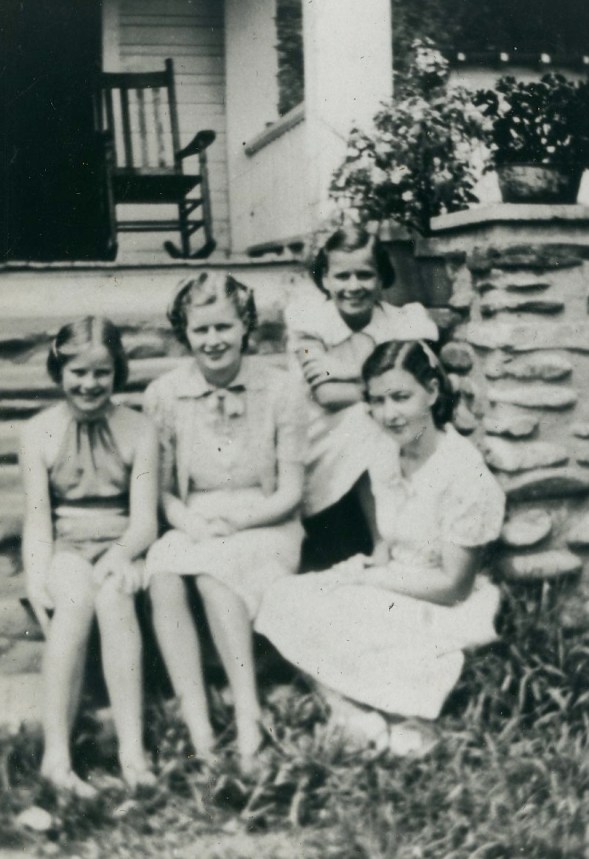
Circa 1936–sisters (l-r) Bobbie, Jeannette, Phyllis, Mom.

Circa 1937 family photo: (front) Bobbie; (center) Mom with a teenage smirk, Grandmother, Jeannette; (back) Granddaddy, Phyllis, Bill.

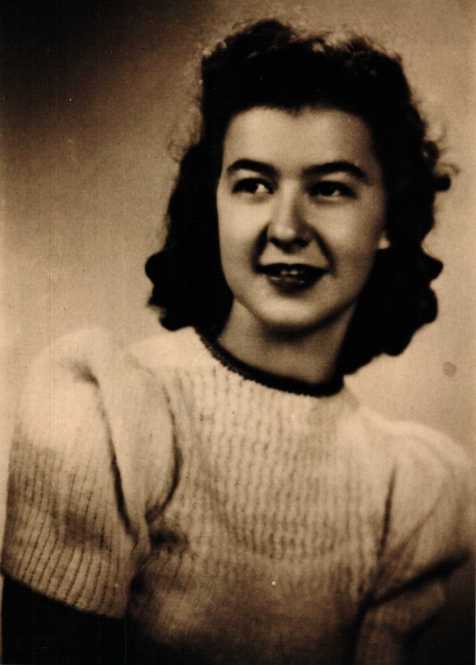
1942–college sophomore photo, Western Carolina Teachers College (now Western Carolina University).

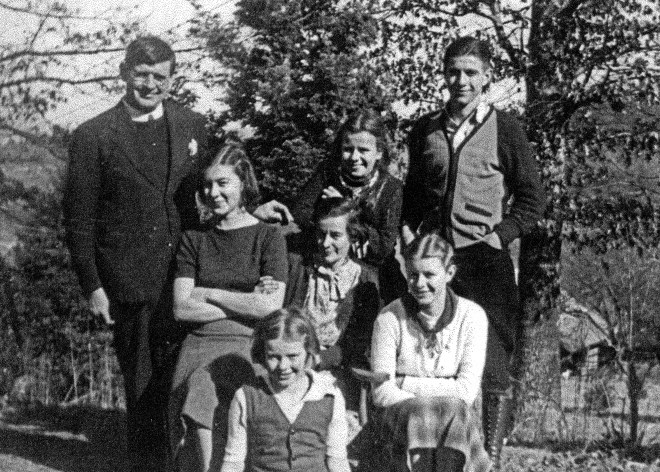
1940–Mom (right) high school senior, with friends at Sylva High School.

Sometime in the early ’40s–maybe senior yearbook photo.

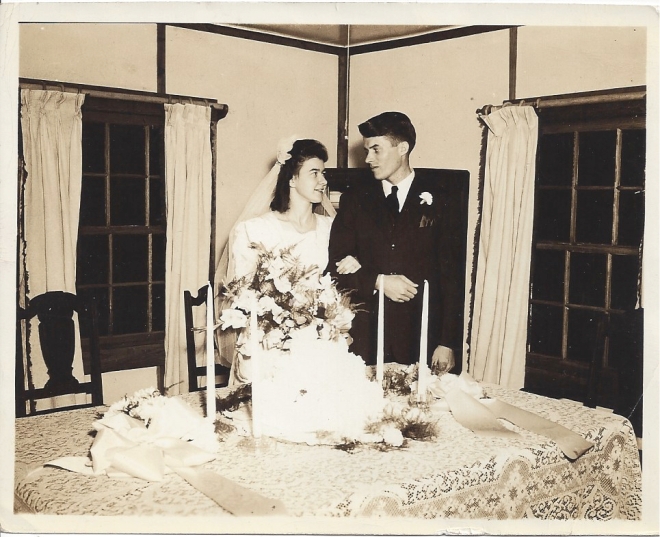
Braxton and Pam Coates wedding

November 14, 1944.

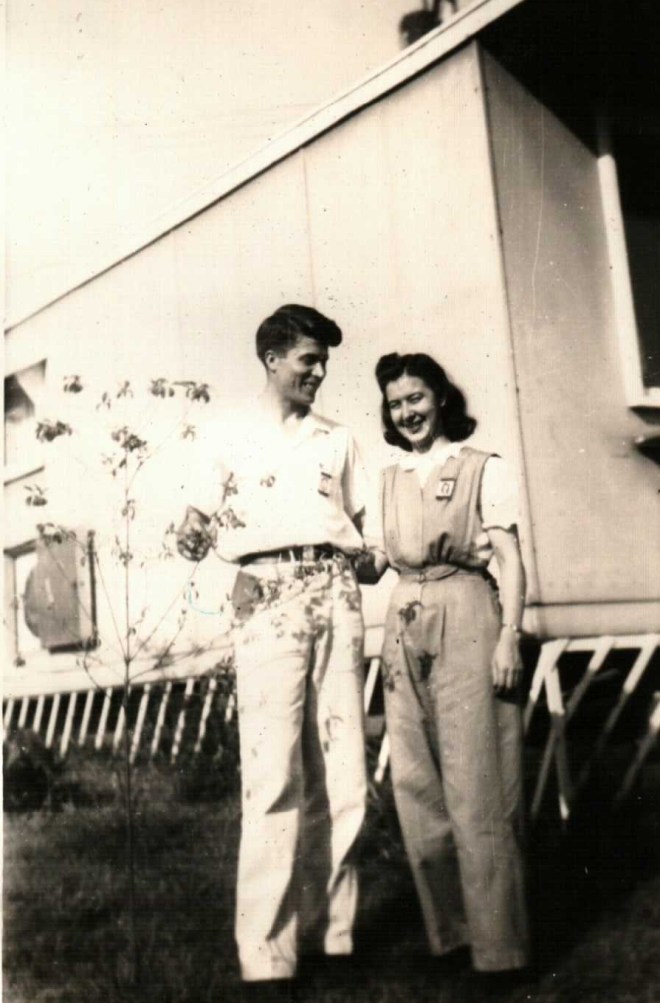
1945–war workers in the Secret City (Oak Ridge, TN)–standing in front of their flat top home, one of thousands  brought in by truck and lifted into place by crane, fully finished and furnished.

1946 or 47: Mom with firstborn (me) in front of her parents’ home in the Addie community, about four miles from Sylva, Jackson County, NC.

Fall, 2004: Family reunion, Asheville, NC,three months before Dad died.


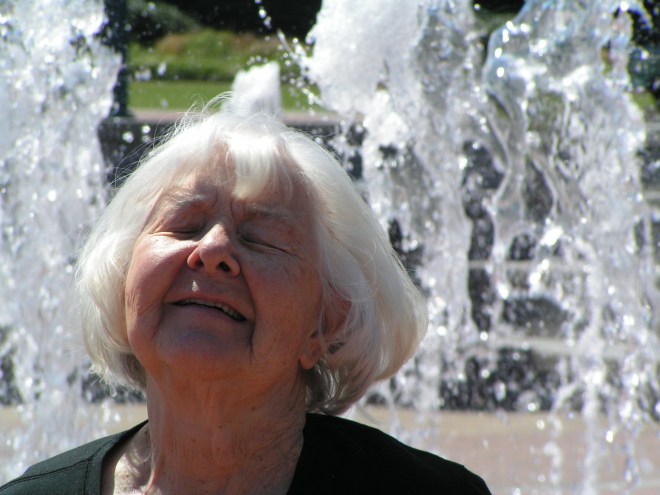
Circa 2006–Mom basking in sunlight in front of Olympic fountain, Atlanta, GA.

Circa 2007: Mom (r) with sister Jeannette, Blue Ridge Parkway.

mom 95

October 2018–Mom’s 95th birthday.

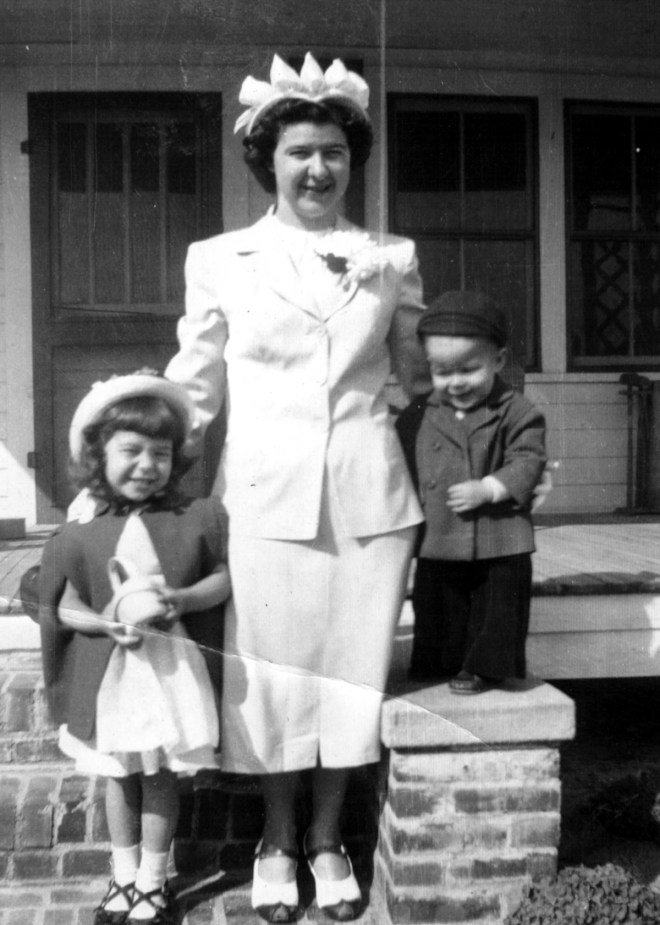
1950–Mom flanked by my brother Alan and me. She made all the clothes, probably including Alan’s cap and my pocketbook.

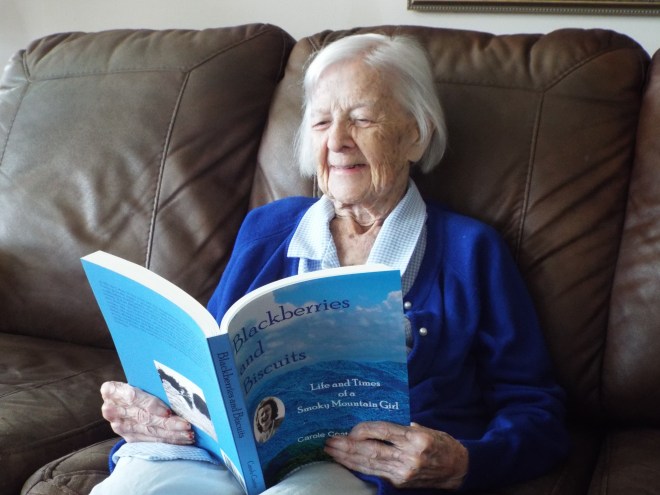
November 2019 (age 96)–Mom checking out a hot-off-the-press copy of my book about her life.

Circa 2010 at home in Fairview, NC. (Thanks to brother Curt for this one. He is the BEST photographer!)

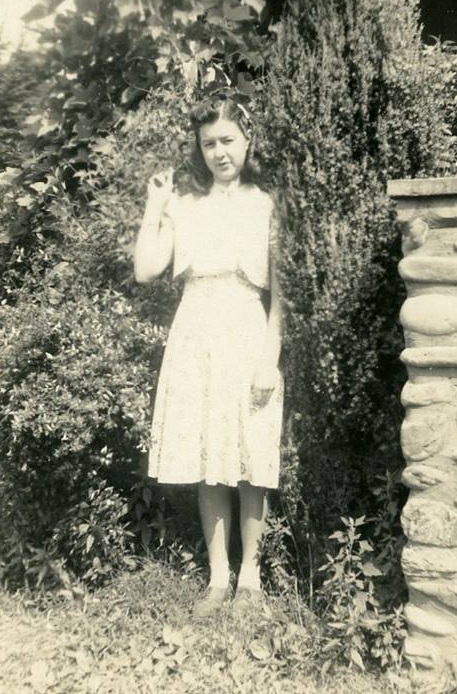
circa 1938.  Mom as a teenager standing by the rock pillars in front of her home in Beta, NC (just outside of Sylva, Jackson County)

Circa 2005. Mom at home.

Circa 1990–in the woods at home, Fairview, NC.

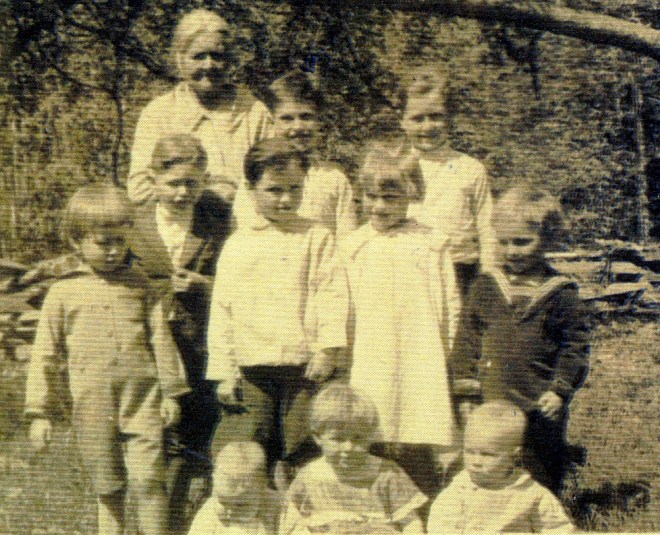
1924, with her siblings, cousins, and grandmother. Mother is the baby, front left, fascinated with something on the ground instead of the person behind the camera.

Circa 1939. Mom at Swannanoa 4-H camp, Swannanoa, NC.

Circa 1943. Dad and Mom courting on the mountainside at her home in Addie, NC (near Sylva, Jackson County).


Circa 2015. Mom and Dad’s youngest brother, Bryan, are reminiscing.

Circa 1954. Mom holding her youngest, Curtis, at home, Florence, SC.

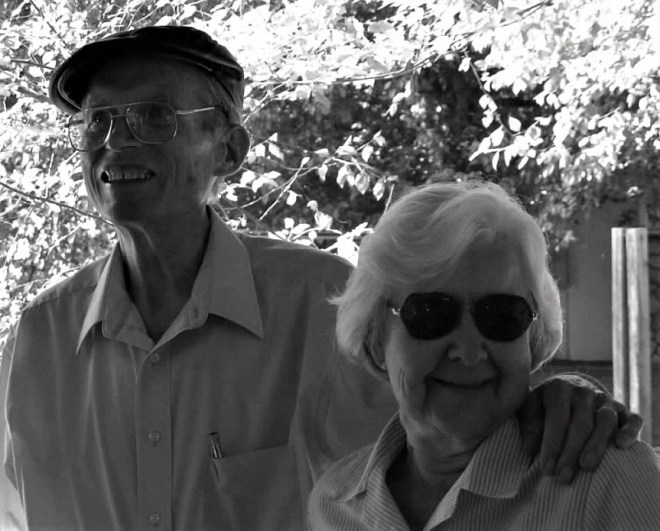
1994. Mother and Dad celebrated their 50th wedding anniversary when she was 71.

Circa 1944. A big smile for her boyfriend.

Circa 1942. Sisters: Barbara, Jeannette, Phyllis, Pam (my mom)

A Life Well Lived

My mom died a couple of weeks ago—about 5:20 pm, July 7, to be exact. I don’t write this to ask for sympathy. Yes, I’m sad, but I’m also filled with gladness. And, yes, I just feel a need to share. It’s part of saying goodbye, so thank you for sharing with me.

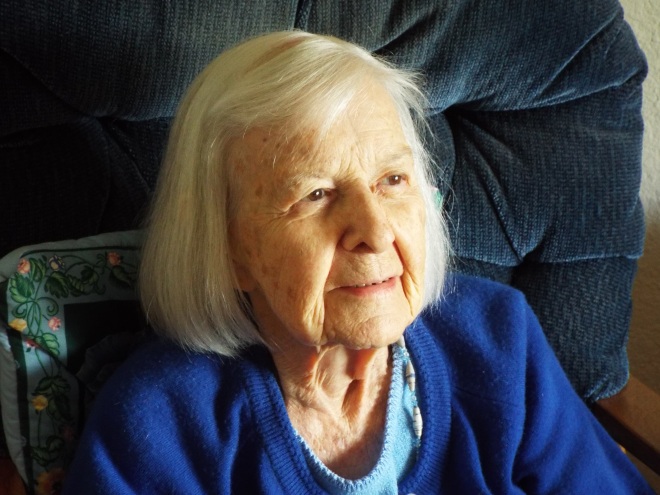
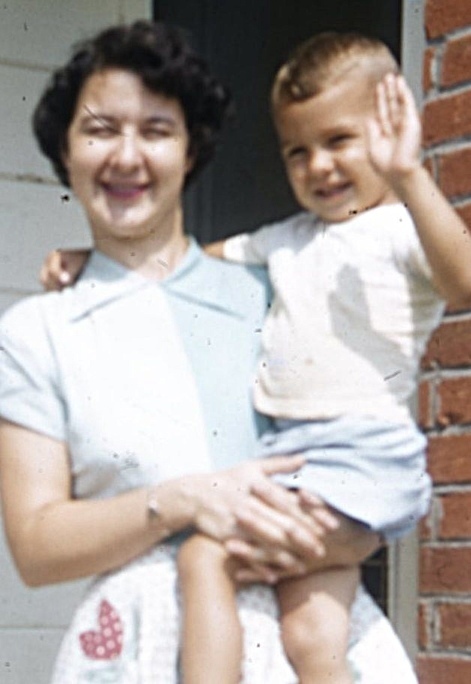
My mom, Pansy (Pam) Dillard Coates, in her late 80s. Who wouldn’t fall in love with a smile like that?

Mother was three months and a couple of days shy of her ninety-seventh birthday. She lived not just a long life, but a full one, full of joy and wonder. But in the last year or so, it was clear her body was letting go. She had been losing weight, had little appetite, had more trouble getting around with her walker, didn’t have much to talk about. Still, the end came fairly unexpectedly.

And that, in my mind, is a good thing. She was an avid reader. She started early and never stopped. It was one of her very favorite activities. Her room was filled with books. In the last few years, she said to me numerous times that she was so glad she loved to read, was still able to read, couldn’t imagine life without reading, and that she felt sorry for all the people around her who didn’t seem to care that much about reading.

Mother couldn’t keep up with the number and names of her great-grandchildren—after all, some of them she had rarely seen—but she knew us children, and still recognized the sound of our phone voices, even before we announced ourselves.

Mother lived in a small assisted living facility for the last seven years. I wish that could have been different, but it wasn’t. Yet the folks who work there gave her a new lease on life. When she first arrived, her health, both physical and mental, were in rapid decline. Regular and healthy nourishment, keeping to a medication schedule (and the correct one), and socialization got her back on track within days. It was a miraculously quick transformation.

Because of the pandemic, I had not been able to visit Mother in person for the last five months. From the first days of the shutdown, I feared I would never get the chance to see her again. That has been the case with so many people these last few months, and my heart weeps for them.

But when Mother called out for help, she was rushed to the hospital, and the hospital allowed visitors—just one per day. My brother spent the first day with her and I got to be there the second day. Of course, our first words to each other were, “I love you,” as we grasped hands and looked into each other’s eyes. Those were close to the last coherent words she said. A few hours later she started receiving morphine and she was moved to a hospice facility the following day, where visitation was a little more relaxed. I got to spend the night in her room. My brother and I, our spouses, and a couple of friends all had a chance to touch her, to tell her what we needed to say whether she heard or not, to hold her in the light, and to say goodbye. Yes, it was sad. But it was beautiful, too.

For all these things, I am grateful. I’m grateful for much, much more, too—Mother’s love of nature, her happy outlook on life, her smile, her laugh, her guiding light, all the skills she taught me. I’m grateful that we had a happy, healthy family life where she and Dad showed us children how to adult, how to parent, how to maintain healthy relationships with our own spouses. I’m grateful she was an adventurer, always willing to try something new. I’m grateful she always supported us in our endeavors, both when we were children and as adults. I’m grateful that once we grew up and began living on our own, Mother continued to support us but that she knew better than to ever once criticize or interfere in our lives. I’m grateful for her warmth and her love.

The best l can do to honor her is to model the life she lived, and I will thank her every day of my life for giving me that.