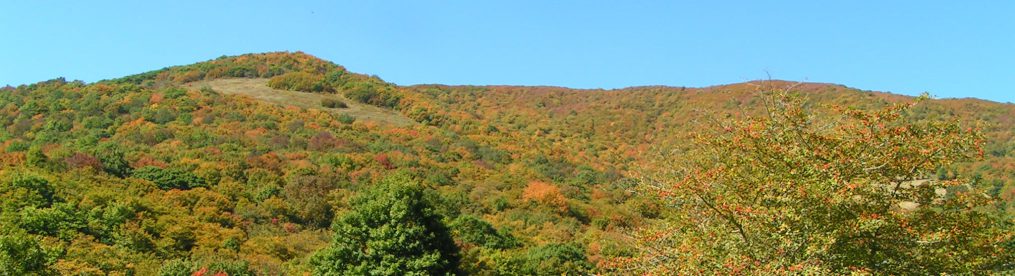
Here’s to New Chapters

I’ve been thinking about momentous occasions lately. The end of summer brings a lot of them. One grandchild began 3K just about the time another officially became a college freshman.
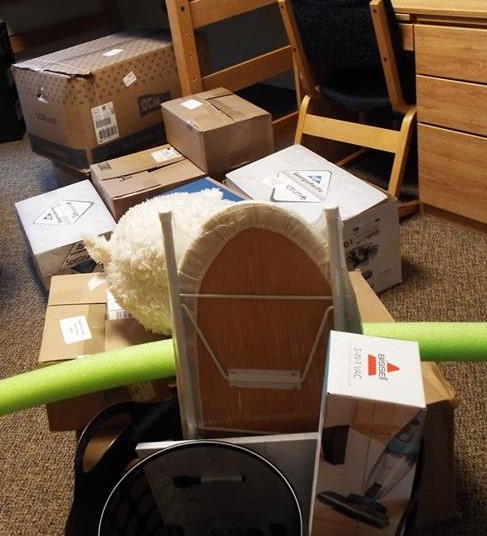
Just a few boxes filled with essential items for college life

I shared some thoughts about the start of college about this time last year. You can read those here and here. It suddenly got a lot more personal this year as one of those college freshmen is my eldest grandchild. Her life is about to change in ways she nor her parents can imagine.
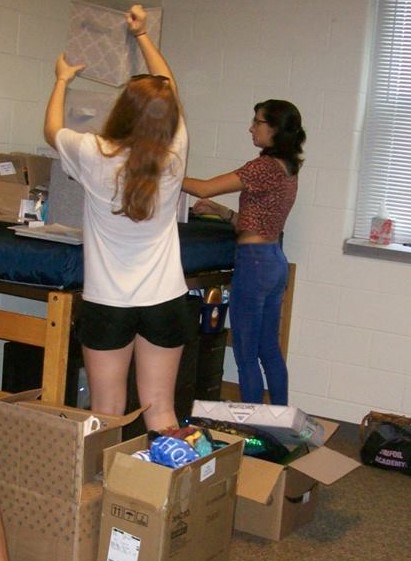
. . . and in a flash, the younger sister becomes an only child, so to speak.

Naturally, my mind hearkens back to my own graduation summer and college freshman fall. Letters passed between three soon-to-be roommates. Who were we? What clothes should we pack? How should we decorate our dorm room? I was nothing but ecstatic and expectant. For years, I’d spent most of my summers away at one 4-H camp or another, so the notion of homesickness never occurred to me. I was only looking forward. My mood didn’t alter all summer.

Then came the big day, our family of five and all my luggage crammed in my parents’ car for the four-hour trip to the college of my choice. I sat on the right-hand side of the back seat in the soft pink shirtwaist dress trimmed with deeper pink hand-embroidered stitching on the collar edge and both sides of the collar-to-hem button placket. All hand-made by Mother. It was one of my favorites, a dress to help me put my best foot forward as I entered my new life.

It was only when directional signs to my school appeared, just a couple of miles from our destination, that I started to freak. Totally unexpected, my tummy brimmed with butterflies. While I was still mostly excited about what the future held for me, a tiny but powerful part was ready to turn around and head back home. Had I been on my own, I might have done just that.

I’m so glad turning around wasn’t an option. Even as the heady anticipation of that summer evolved into all-night exam cramming sessions, even as the grades I was used to in high school eluded me, even as idealism turned to reality and sometimes cynicism, even as I endured the agony of heartbreak, I had found my place. Not once did I consider giving up.

At most, I traveled home for school holidays and summer breaks. On occasion, I even stayed at school during shorter breaks. I appreciated the solitude of a dorm and campus empty of the hustle-bustle of daily student life. I could read for pleasure, reflect, organize, take solitary strolls through my favorite spots, daydream. There wasn’t much time for those things the rest of the school year.

I discovered new passions during my college years. I set out on a career path, though it morphed and morphed again in my post-college years. I learned what mattered to me. I discovered independence. Ideas jelled into philosophies. I found love. I lost love. I found it again. I survived. I learned that I could.

It’s not that I think college years are the best years of one’s life, a sentiment I’ve heard so many times. How depressing to hit twenty-one and think all the best times are behind you. No, I see those college years as a unique time, a time to grow, a time to explore, a time to discover what you’re made of. If all goes reasonably well, it’s a time to look back on with fond nostalgia, not as the best time of life but as one that holds sweet memories and provided important building blocks for the life to come.

As we said our goodbyes, I wished I could find the wisdom and the words to give my granddaughter the most brilliant piece of advice, the pithiest sentiment. In the end, all I could do was give her a hug and say, “I love you.”

I wish my granddaughter and all her fellow college freshmen the very best college has to offer, hopefully with only a few disappointments, though those are important to growth, too. Sometimes it’s our mistakes that define us; hard as they are, we need a few along the way. It’s what we do with them that matters.
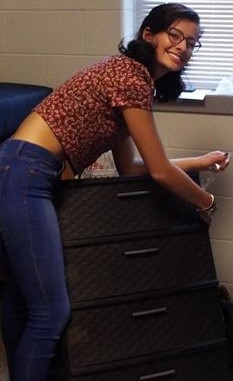
Here’s to you, Starshine!


The Holy in the Here and Now

The Holy in the Here and Now

Someone recently mentioned to me that dogs are more in tune with the earth than we humans. Think about it: they sense moods; they know when a storm is coming. In a car with the window down, they sniff out every scent—apparently with great joy. They know when their beloved human is due to arrive or even when someone unexpected is about to come up the drive.

Chalk it up to heightened sensory skills if you want. But the bottom line is dogs aren’t distracted by the sometimes inane things we allow to get in the way of capturing the moment. They don’t share our incessant ability to fret over the past and agonize about the future. They’re all about the present.

It’s a lucky person who can see what is holy in the here and now:

a child’s laughter,
the wind,
daffodils and cardinals,
redbuds and moss,
the wingbeat of bats,

the architecture of a tree,
a baby’s toes,
sister duets,
cloud shadows drifting across mountains,
the poetry of a shovel’s utility,

dew drops on a spider web,
the songs of spring peepers after an evening shower,
little red wagons,
a seed’s unfurling tiny leaves as they break through the soil,
baseball and kite-flying,

a cow’s bellow or the dignity of a donkey,
food from the field,
a friend’s voice,
leaf mold and mushrooms on the forest floor,
a letter in the mail,

embers of an evening campfire,
grapes fresh off the vine,
the kindness of a stranger,
hope,
a poem,

Spanish moss dripping from oak branches,
a pat on the back,
a smile across the room,
a snowflake caught on the tongue,
a mockingbird’s repertoire or a magpie’s iridescence.

The holy: it’s where we choose to look and how we choose to see.


So Beautiful It Changed My Life

What an amazing concept—something so beautiful it could change a life. Most of us, if we’ve lived long enough, have had at least a couple of life-changing experiences. But by nothing more than beauty? That was the writing challenge I was presented recently: a time when something was so beautiful it changed your life. It took me aback for a moment. But only for a moment. As I scoured my memory, it came to me.

Driving from Kentucky to the mountains of North Carolina in 1979, after the Gnome and I had made the mental decision to move but before we had actually taken action to make it happen (in other words, it would be easy enough to back out), I looked at the mountains on the horizon with new eyes. It was as if they were cloaked in blue-green velvet.

Their apparent softness overwhelmed me. Though I didn’t have words to articulate it, I sensed something magnificent. Those ancient rocks, some of the oldest in the world, had been worn down by eons of rain and wind; in the process, they had been reshaped from the haughty cragginess of youth into the gentle wisdom of age. Their strength lay in their graceful endurance. I didn’t want to back out.

We spent a week searching for a spot to call home Discouraged by all the not-right-for-us places we’d been shown, we were about to head back to Louisville with unfulfilled dreams. At the last minute, our realtor recalled a secluded piece of land tucked away on a mountainside, and our decision was made. In early April, things were still pretty barren; still, we were confident we’d found what we were looking for. We signed some papers and went back to Louisville to prepare for the big move.

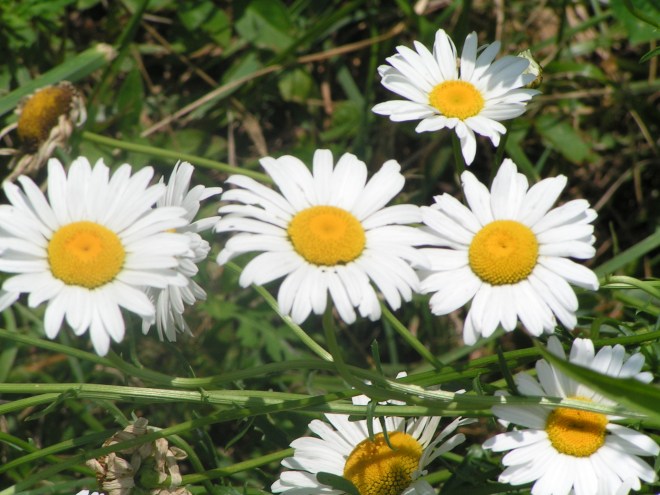
When we returned to our mountain with all our worldly goods not quite three months later, my heart stopped as we drove into a meadow bursting with daisies. (How did the universe know to greet me with this outsize bouquet of my favorite flower?) 

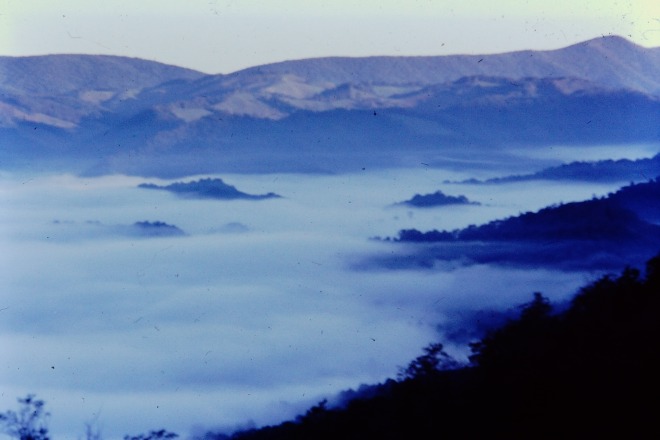
It stopped again the first time I looked over a cloud-filled valley, mountaintops peeking out like islands in a sea of snowy foam.

I knew I’d never leave.

pict0068

(To read more about our adventure of moving and building a home with our bare hands while living in the wild, begin here.)

The Ones Who Show Up

The Ones Who Show Up

As a society we’re often drawn to bigness. Philanthropy is equated to charitable giving in the millions. Grand gestures get attention. But what would we do without the small gestures? All that magnanimity we hail from people who can easily afford it would be meaningless without the little deeds of daily kindness, sacrifice, and responsibility from just plain folks. I refer to:

* the neighbor who brings groceries to the shut-in

* the gardener who grows a little extra to donate to homeless shelters

* the young woman who weekly organizes her mother-in-law’s medications

* the busy teacher who takes a few sacred moments to send a note of encouragement to a former student

* the friend who brings cookies and laughter to her terminally ill neighbor

* the co-worker who offers a much-needed compliment to a beleaguered colleague

* the harried nurse who still finds time to bring a bookmark to a patient who reads

* the child who writes chatty letters to her lonely grandparents

* the boys who shovel the snow-covered walk of someone recuperating from surgery

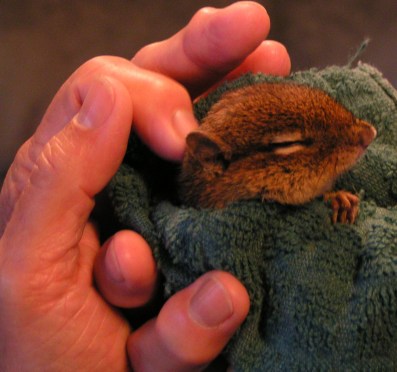
*the passerby who comes to the rescue of a drowning chipmunk

* the writer who sends nostalgic essays to aging relatives

* the man who cares for an acquaintance’s pets when she’s injured and hospitalized

* the many who give to a stranger’s health-related social media campaign, even when their own resources are scant

* the shopper who hands a dollar to the one in front whose bill was a bit bigger than his pocketbook

* the one who smiles at a stranger

* the young one, tired from a long day of grueling manual labor, who nevertheless offers his seat to the older one

* the teens who bring homemade goody boxes to residents of the nearby nursing home

* the foreign visitor who chases you down to return a dropped scarf in the parking lot

* the kid who carries an injured classmate’s books

* the retailer who takes precious time off from work to visit a stranger in prison

* the club members who de-litter a section of highway

* the customer who holds the door for a daughter and her wheelchair-bound father

* the stranger who catches a runaway shopping cart

* and the building custodians and sanitation workers, the electric line workers and snowplow drivers, the bedpan emptiers and street sweepers who do the dirty work at all hours of the day and night to make getting through each day easier for the rest of us.

Oh, that we would glorify these, the ones who show up, the ones who make a profound difference by changing not the world but what is three feet around them.

Confederacy

(May 10 is the anniversary of the death of Confederate army general ‘Stonewall’ Jackson (1863) and the capture of Jefferson Davis (1865). It is no longer a state holiday in my state, but there are still some local observances of “Confederate Memorial Day” on this date.) 

CONFEDERACY

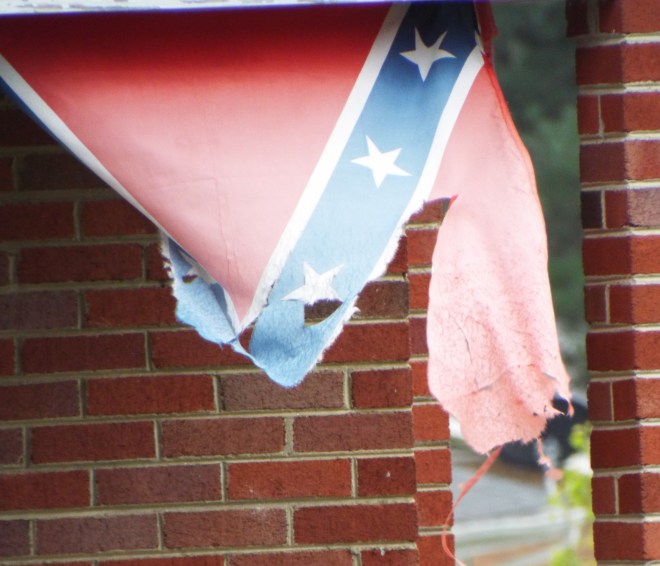
Saw a confederate flag
on display today
hanging on someone’s porch banister—
sinister.

That’s how they always seem to me:
menacing, taunting, ominous;
synonymous
with hate and fear,

jeering at me.
Obtrusive, abusive.
But something was different here—
torn, worn, shredded, frayed.

A charade, I thought.
A symbol perhaps unintended,
decreeing in its degenerate state
that it’s time to stop.

Swap your misplaced anger.
Anchor your feelings in love instead.
Spread the word: its time is over.
Done.

Just Wondering


My grandfather, Joseph Bezzel Coates, b. 05/21/1895

My grampa was a fiend for learning.
Immediately he knew
radio’s potential
for education,
calling his boys
from their play
when “Music Appreciation Hour” aired.

Grampa was a fiend for hard work, too.
Too little of it
and the devil might
set up his workshop—
that’s the way Grampa saw it. Besides,
too much work needed doing
to trifle with idleness.

Hard work was like play for him
so he was known to say,
during an afternoon break from working in tobacco
or cotton or corn and the heat from the sun
blew the top off thermometers,
“Boys, while you’re resting,
let’s go shuck some corn.”

So, I wonder how Grampa would handle
the age of social media.
Surely he’d see the potential for good,
the opportunity for learning.
But day after day, hour upon hour
playing games on smartphones, scouring Facebook, or texting friends?
Would Grampa put up with that?

WWGD?
(What would Grampa do?)

Resilience and Grace

She never asked to be a widow—hoped not to be. Yet, she fully expected it. She was up on gender and life expectancies, so she knew the odds were strong that she’d outlive him by some years.

It wasn’t that she was happy about it, but I wanted to stamp my feet every time Mother made some comment about living longer than Dad. To me, it felt like a self-fulfilling prophecy, and one I didn’t want to think about. But Mother was simply being realistic.

And though she went straight from her parents’ home to sixty years with him, she somehow knew how to survive on her own when at eighty-one she found herself alone for the very first time in her life. They’d been married for sixty years.

A couple of years later when she broke her hip and had to spend more than two days in a hospital bed awaiting surgery, she found the tiniest movement excruciating. Yet, she was loath to press her buzzer regardless of her need—didn’t want to bother anyone. She couldn’t help emitting a groan, though a tiny and apologetic one, when it was time to change the sheets or reposition her. But instead of complaining and bemoaning her constant pain, she made it her purpose to bring laughter to the nurses, aides, and others who looked after her. One nurse aide regularly took refuge in Mother’s room because it was such a pleasant and safe place to be.

My mom has always looked life straight in the face and taken it on wholeheartedly. Tears are so rare I can count the times I’ve seen them on one hand and still have a finger left over. The first was when I was six years old; the last more than fifty years later when Dad’s ashes were delivered to her. Instead of focusing on what’s sad, she looks for things that bring delight—a sunset, a newly discovered flower, a snowfall. I remember her saying she couldn’t imagine anyone being unhappy—sad, occasionally, but not unhappy.

The last thing she ever wanted to do was leave her home for assisted living, but once the decision was made she never complained, never looked back. Again, she began looking around her to see which worker needed a smile or a word of encouragement. (Needless to say, she’s a staff favorite.)

Once, on the phone from her one-room confines, she said to me, “I’ll bet there aren’t many ninety-two year-olds as lucky as I am,” reveling in the birds at her feeder, her books, her crossword puzzles, the cats who frequent her room, and memories of her family and happy marriage. She continues to offer similar sentiments two years later. If she’s ever had a regret, I don’t know about it.

Her job as a mother is never-ending. Though in many ways over the last few years our roles have reversed, she’s still teaching me, especially in the art of aging well and with joy. May I learn her lessons well.


Dear Lula

My grandmother, Lula Smith Coats,  11/25/1894-4/14/1942

(I was recently challenged to issue a dinner invitation to one of my ancestors. I chose my paternal grandmother, who died four years before my birth.)

Dear Lula, (you don’t mind if I call you that, do you?)

Will you please join me for dinner on Saturday evening? There’s so much I want to ask you. You’re the grandmother I never got to meet, having died just after my parents met. As a child, I didn’t know enough to ask about you, and once I had the good sense to get interested, some of the details had begun to fade from the memories of your children.

I want to know what it was like raising seven boys. They talked about some of their mischief, but I’ll bet they left out a few juicy details. I’d love to hear their mom’s perspective. You probably have stories of precious moments with each of them, too. I’d like to hear them. What made you proudest of them? (And did you secretly long for a daughter? Wouldn’t it have been nice to have some female companionship in that household! Did you dote on nieces? Seek feminine refuge with your sisters?)

Would you describe your typical day—if there was such a thing? I know you washed clothes in a pot over an outdoor fire and that between preparing breakfast, dinner, and supper you worked in the fields along with the rest of the family. And that you cleaned, ironed, made everyone’s clothes. What other chores filled your days? Did you ever have a moment to yourself?

What were your favorite activities? Daddy told me you gardened, played the piano, sang, and told stories. Were there more? What did you love to do above all else?

What would you have said and done with the twenty-two grandchildren you never got to know? Could you ever have imagined that after having seven sons, the first five grands would be girls—and that of the first eight grandchildren, seven would be girls? Would you have sewed up some frilly dresses for us? Would you have oohed and cooed over us? What advice would you have given us as we grew up?

And what about your experiences as matron at the Poor House? I never heard much about that. It must have been quite the experience raising those boys while overseeing all the domestic chores of the County Home when its seams were bursting during the Great Depression. Did you ever worry about the boys being exposed to the TB patients? To their being around convicts assigned to work on the farm? To their being around so much sickness and dying? Or did you even have time to think about it while you were overseeing the cooking, housekeeping, laundry, medications, clothing and personal needs, and more? Maybe you were just glad your boys had a roof over their heads during those tough years.

You were twenty-five, mother of four children, and pregnant with your fifth when our country finally recognized that women have an inherent right to vote. Did you take advantage of it? Your husband and father were on opposite political sides, almost rabidly so. Where did you fall? Did you ever share your political leanings with either or both of them or did you keep quiet about the whole thing? What was it like, in general, to be a woman in rural North Carolina in the early twentieth century? Would you have supported my feminist activism in the second half of the century?

I want to know about your strokes and your migraines, too. I used to suffer from migraines, too, so I have an inkling how you must have felt. But by my time, they’d at least discovered some medications that helped a little. It must have been devastating being in such pain and cooped up in a dark room so much of the time while life was swirling outside your door. Is it true that the doctor bled you when your blood pressure spiked? Did he use leeches? They say that after your first stroke, you were bedridden for a year or two and had to learn to walk and talk all over again. Is that right? What got you through those days and nights? Were your sons attentive to your needs? When you were up to it, did they fill you in on their days? Did they confide their fears and dreams?

And the little things—what was your favorite color? Your favorite song? Your favorite radio program? Did you have a favorite food? Book? Movie? Holiday? What were your pet peeves? Most dreaded chore?

Then there’s Granddaddy. The story goes that you were his seventh-grade teacher and that’s when you met. You married as soon as the school year was over. (He was old for a seventh-grader.) Is that the way it all happened? How did your romance evolve? What kind of student was he? Where was the school? I understand you only taught that one year. Did you give up a longed-for career to marry and start a family or was teaching simply the most logical job available to a young, single woman in those days?

You see, I have so many questions! Please come early. I’ll invite all the cousins and we’ll have a good old-fashioned pajama party catching up on each other’s lives all night long. You’d better believe I’ll be recording the whole thing, too. I can’t wait!

With love and anticipation,

Your (4th) granddaughter Carole

REFLECTION

Creative Commons Introspective Chicken by Jonathan Lidbeck is licensed under CC BY 2.0

When I look in the mirror, I see
a much younger version of me–
not the face
that stares back from photographs,
so rudely honest
in their appraisals.

In truth, it’s not quite
the younger me I spy,
but the whole of myself–
the things a photo will never catch.

I see both youth and age,
twinkles and wrinkles;
I see emotion and belief,
passion and compassion;
I see history: life’s experience,
and expectation. Hope’s still there;
I see a life of love and, occasionally, hard knocks.

The whole of me
is much more interesting
than any Kodak moment
could ever be.

That’s not quite right;
the whole is what I see
each time my gaze lands
on anyone I love;

But in the mirror,
rather than a whole,
perhaps I see
just an edited me—
only what I want to see.

Mortality

January 27, 2011:

My cousin died today.

And so it begins. I’d already found myself wondering who among the twenty-two of us would be first. Figured it would be one us older ones. Hoped it wouldn’t be me.

Instead, it was one of the younger set—ten years my junior. Cancer’s what got him: unpredictable, ugly, indiscriminate disease. You never know about life’s twists and turns, how it will all end.  

Cousins 


March 20, 2016:

It’s happened again. This time on my mother’s side of the family. This time it was one of us older ones. Not oldest me but the next in line.

Life feels more precarious than it did yesterday. We’re all, we cousins, entering the danger zone, that time in life when a generation ago death was the norm at the age we are today. Now, we think we’re still too young. Clearly we’re not.

They say it’s when your last parent dies that you feel most vulnerable, when mortality becomes vividly real. But I’m not so sure. Cousins—we’re the same generation. We were toddlers together. We grew up together. We see ourselves in each other’s faces.

When it’s one of us, a different kind of light goes out.