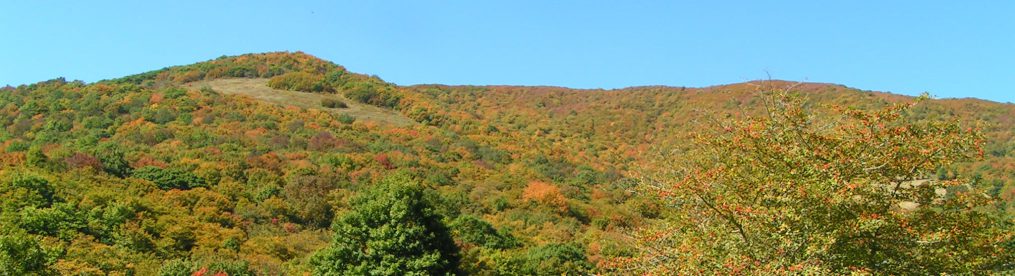
Summer’s Slow Slide into Fall

Summer’s Slow Slide into Fall (written in mid-August)

First day of summer: words that conjure up notions of vacations, suntans, freedom from homework. Thoughts of fun in the sun with summer reads, picnics, hikes, swimming, tennis, softball and baseball, bike rides, day trips. All those traditional outdoor activities mean summer’s here.

In truth, when the first official day of summer rolls around, fall is already lurking in the shadows. The first sign, of course, is day length. Summer means longer days, right? But summer officially begins with the summer solstice—the year’s longest day. The very next day—officially the first full day of summer—will be a little shorter, as will the day after that, and the next, and the next. Every day for the next six months.

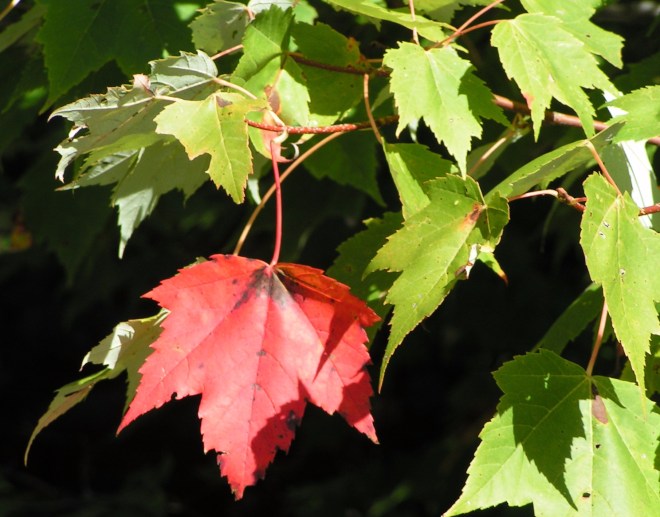
It’s about the time of the summer solstice that I inevitably spot a tree with that one red or yellow leaf. I’m a big fan of autumn, but I also prefer to live one day at a time, and that leaf sits there taunting me, reminding me that fall is inching its way into my life. To the astute observer, other signs of autumn’s sure return are all around. Those lime-green spring leaflets that sprouted on trees (wasn’t that just yesterday?) have been growing both larger and darker. Before they put on their showy fall display, they will continue to darken until, in the distance, they’re such a deep green they look almost black.
As spring wildflowers transform into summer ones, so summer’s blooms have now, almost imperceptibly, given way to those of fall. Daisies are replaced by Queen Anne’s lace; black-eyed Susans seem to morph into yellow coneflowers, Jerusalem artichokes, and sunflowers. Floral hues become both more muted and more rich. The buttery yellows of summer’s evening primrose make way for the more mellow tones of fall’s goldenrod. There’s the rusty shade of spotted touch-me-nots in lieu of daylilies’ brighter tints. In the wild, pinks virtually disappear as summer subsides, and lavenders transmute into the subtler mauves of milkweed and Joe-pye weed and the rich purple of ironweed. In front yards, gardeners discard summer’s petunia palette in favor of the earth tones of chrysanthemums. Berries appear. Fruits ripen.


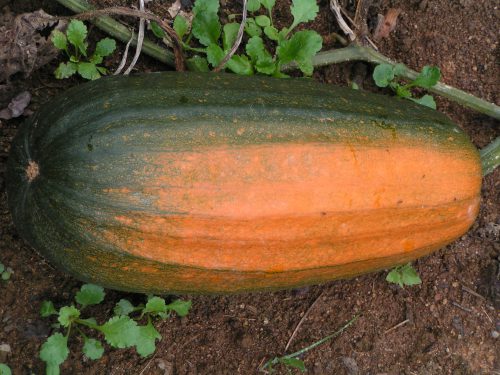
Birds’ feathers become a little less brilliant. Grasses develop gracefully drooping seed heads. Little by little, vegetable gardens show signs of wear as growth slows, pumpkins turn from green to orange, and early veggie plants dry up or go to seed.
dscf9200.jpg

The sun itself gets in on the action. Ever since summer’s solstice, its arc becomes a little more southerly, a little lower as it moves across the sky.

As I write this piece at the beginning of the third week of August, my calendar tells me we are just past summer’s midpoint. To be precise, sixty percent of our summer days have passed. Sitting outside in the afternoon, I hear a distinctive sound unique to this time of year—the thump of acorns and hickory nuts as they hit the ground in the woods. It’s not a safe time to be standing under a nut tree!

Then comes an evening’s after-supper walk when I unexpectedly sense another change. The days may still be warm and humid, but I feel the barest hint of chill in the night air. Sometimes, I even catch a slight change in nighttime scents—a little less floral, a little more spice. My ears notice the ever-increasing cacophony of crickets and katydids doing their late-summer thing. Their sounds also pierce the otherwise country quiet during the day, but at night the music is almost deafening, yet soothing in its own way and one more sign that fall is closing in.

Fall has always been my favorite season, so I welcome its coming. Still, it’s a little curious that just as we’re getting into the full swing of summer, autumn has already begun its birthing process. I guess that’s the way of things. The peak signals certain ending, but an ending accompanied by new beginnings—caterpillar to chrysalis to butterfly, seed to tree and back to seed again, adolescence to adulthood, retirement to a new life chapter,  the whole of life itself.
 

Move-In Day

Move-In Day

(Written on Saturday, August 19, 2017)

move in 5 better

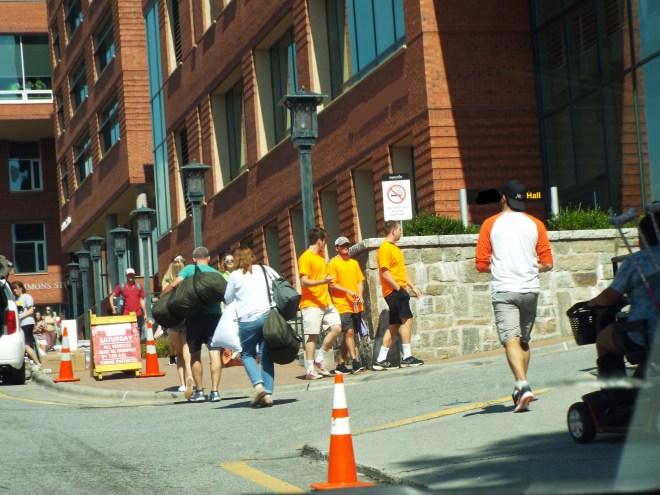
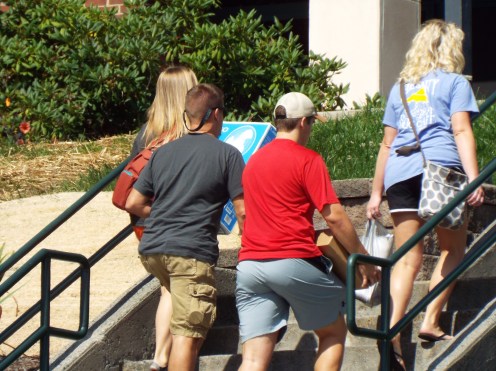
It’s Move-In Day at the local college. Traffic has been a mess all week as students who live off campus, as well as student advisors and others with pre-move-in responsibilities, clog the roads for miles around. Roadside signs directing parents and new students to this or that area of campus begin several miles beyond town.

The campus itself is dotted with temporary identification and directional signage. Campus security personnel and ROTC students direct on-campus traffic while other staff, including my nearest neighbor, are on hand to help carry suitcases, boxes, and carts full of bedding and other necessities to dorm rooms—this being their fourteenth straight day on the job. They’ve been hectically sprucing up those same rooms and making sure all maintenance issues have been resolved in preparation for this weekend for weeks. 

Dorm parking lots are full of loaded pick-up trucks and rental trailers as parents help their fledglings move in. I’ve seen license tags from places as far away as New Hampshire, Texas, and Colorado. We’re used to out-of-staters. After all, we’re a tourist town as well as a college town, but the prevalence of far flung tags has been greater for the last few days. DSCF9247_LI

Students fill the campus and downtown sidewalks in groups of twos, threes, and fives. It’s an exhilarating time. Freshmen are getting acquainted with their roommates and other newbies. Their shared excitement, nervousness, and uncertainty creates an instant and strong bond. Upperclassmen are eager for reunions with friends. Some are all aflutter at the prospect of being back together with sweethearts after months apart. For a few, the start of the new year is bittersweet, having said sad good-byes to their steadies back home, but eager to greet friends and decorate their rooms.

Parking lots and dorm rooms are scenes for a fair share of teary-eyed goodbyes, but for the most part the damp cheeks belong to parents. More students than not are virtually shoving their families out the door. They want Mom and Dad to stop with the bed-making and drawer-filling and advice-giving. They want to get on with it. This is their time.

It’s a weekend unlike any other. No classes, no assignments. It’s get-acquainted time. Settle-in time. A few hours of relaxation with no academic stresses. Still, minds are a little muddled for many freshmen, who have more-than-ever moments of feeling like little kids on the inside while trying with all their might to be all grown up on the outside. Their innermost feelings and fears will not be spoken aloud.

Today is all about hope. It’s the beginning of a fresh start. Freshmen, especially, have a chance to make themselves anew, if they choose. No baggage follows them here. No one knows their academic, family, or personal backgrounds. They can scout out other like-minded folks; there are clubs and organizations aplenty for exploring new ideas and finding expression for their deepest interests. (In fact, some of these kids will be unrecognizable on their first weekend home—with radical hair colors and styles, tats in unlikely places, piercings on improbable body parts, and strange new ideas. They may sport heretofore unknown wardrobes to announce their current status.)

Meanwhile, vendors conglomerate just beyond the school’s boundaries to hawk mini-fridges, carpet remnants, and college-themed products for student rooms. Restaurants, retail stores, and churches display signs that say things like “Welcome Back” or “Welcome, Students.” One was different. It simply said, “Welcome Home.” In a microsecond I was transported to my own college days, and I realized this was the sign that got it right.

Even as a butterflies-in-the-stomach freshman, it was only a matter of days until I understood I’d found my home at my now alma mater. As I returned from semester and summer breaks for my next three years, I knew for certain I was coming home—home to roommates, classmates, hall parties (held for any reason or no reason at all). Home to favorite professors and classes for which I had a passion. Home to love interests, ball games, dances, bonfires, and concerts. Home to learning and my still unknown future. Of course, I still referred to that place from which I hailed as home, too, but it was my parents’ home. This was mine. All mine.

Welcome home, students! 


No Touching

(Part of my Blowing on Embers series)

About this time of year I’m overcome with nostalgia. What brings it on is the flowering of touch-me-nots. My now grown children groan in exasperation whenever they hear me mention these wildflowers—they know what’s coming next.

It’s the story of how these jewel-toned flowers remind me it’s time for the school year to start in these parts. How I fondly remember watching the two of them emerge from a heavy fog as they walked up our newly-graded and graveled road after their first day of school barely more than a month after we moved up here on the diagonal. (Punkin was a fourth-grader, wishing she was back in the Brown School in Louisville. It was Cuddlebug’s very first day of school anywhere.) How their arrival home from late-summer school days was often delayed because they couldn’t resist the urge to stop along the way to do exactly the opposite of the warning implied by the plant’s name and pop the flowers’ seedpods. It’s an addictive pursuit, and it was a fun way to end the school day.

Handling a touch-me-not is a uniquely rewarding and giggle-worthy experience. The seedpods don’t look particularly fragile, but when they’re mature, the slightest movement causes a virtual explosion, with tiny seeds catapulting onto the landscape—no doubt the reason this wildflower is so prevalent in territory friendly to its needs. The steep banks along our country roads are saturated with touch-me-not plants right now.

Predictably, with all those explosive seedpods, touch-me-nots have taken over the roadsides.

Also known as jewelweed, this prolific wildflower may be either yellow or orange, each variety’s flowers freckled with deep reddish-brown spots near and in their deep throats. Their nectar-filled spurs make them attractive to hummingbirds, butterflies, and other pollinators. In appearance, they strike me as a cross between miniature orchids and larkspurs.Touch-me-nots are common throughout all of the U. S. with the exception of a few western states. They’re fascinating plants—beautiful, useful, quirky, and irresistible to kids of all ages. Once you’ve popped a few seedpods, you never outgrow the urge when you come upon a patch of these intriguing plants.

When a seedpod bursts open, either on its own or with a little human help, the hull instantly curls up into tight coils, like small, green springs. It’s all so fast you can’t see it happening. A captivating sight in itself. And even though you know that little explosion is coming and are waiting for it, it will inevitably make you jump in startled surprise.

The leaves are just as intriguing. If you find yourself in a patch of jewelweed on a dewy morning or just after a rain, its leaves will be the only dry thing around, displaying little beads of water on their surface. Dancing in sunlight, the water glistens like diamonds.

Submerge a leaf in water with its underside facing up and it turns silver. Pull it out and it will be dry, with only a few droplets of water here and there.

Touch-me-nots also have medicinal uses. The best-known and most practical use is as a remedy for itching. In fact, they’re often found in conveniently close proximity to itch-inducing poison ivy and stinging nettle. By breaking open the liquid-filled stems and spreading the watery sap on skin that’s been exposed to these plants or to insect bites or stings, you’ll most likely experience immediate relief.

And you can even eat the little seeds. They taste a lot like walnuts–really! Granted, it would take a lot of collecting to get enough to bake into a dish, but it’s a handy thing to know if you happen to find yourself lost and hungry in the midst of these delightful plants.

All this and nostalgia, too.

The sight of touch-me-nots, the start of the school year, the long held vision of our children in their first-day-of-school finery, the hint of autumn in the air, the memory of those first days of house-building—all these things represent the beginning of our life on the diagonal.

Kids, if you didn’t already realize, you might as well get used to it because whenever touch-me-nots are in bloom, I’ll continue to reminisce aloud about this giant tangle of sweet memories.

Avon Calling

(Part of my Blowing on Embers series)

Smell: the sense that triggers our strongest childhood memories.

While it’s the aroma of sauteed onions or fried chicken or vanilla and cinnamon wafting from the kitchen that conjures up distant memories for most people, my strongest scent memory comes from an altogether different place.

For as long as I can remember, my mother has used Avon’s moisturizing cream on her face. Today’s “new and improved” product no longer comes in that familiar green jar, and these days the contents don’t have much of a scent at all, but back in the old days the aroma was distinctive.

avon jar

As a girl, I often found myself slipping into my parents’ bedroom on the sly and heading straight towards Mother’s dresser. I could count on finding the ubiquitous green jar in one of two places—either in the top middle drawer or, more often, front and center on the dresser top. I stood there, furtively unscrewing the lid to take in a deep whiff. The scent brought me comfort and a profound sense of closeness to my mom—even though she was only two or three rooms away.

As far as I know, no one in our family ever knew about my fixation, and to this day, I can’t for the life of me explain why I didn’t just walk down the hall to wherever Mother happened to be and give her a hug. She was certainly huggable—and she was always there. But for some reason I found something alluring about surreptitiously getting my “Mom fix” from that little green jar. Maybe it was the concentration of the fragrance, somehow making my sense of Mother an even stronger presence than the real thing.

But what made this secret habit so funny, so bizarre, is this: I never liked how that cream smelled!

These days I keep an old empty Avon jar in my own dresser, just for the memories. I call it “Mom, Distilled.” I do miss that old scent, though.

March Madness

March Madness

Oh, cruel fellow!

You blow in with your sunny charms
melting hearts in your wake
they’ve all fallen for your wiles
secure in the warmth of your watchful eye
all they see is hope

Me? I’m cynical
I’ve seen your kind before
you cast your spell and they believe
until you turn tail and run
just like a swindling tent-revival preacher

But this time you stayed so long, seemed so sincere,
you lured even me into your lair
ready, yearning even, for your promises
I packed away my old grievances
like heavy raiments I’d held onto for too long

I should have known better
I know you all too well
sure enough just like always
you made those innocents fall for you
and in a flash you snapped

Late one night when they were
fast asleep you did your deed
just as I always knew you would
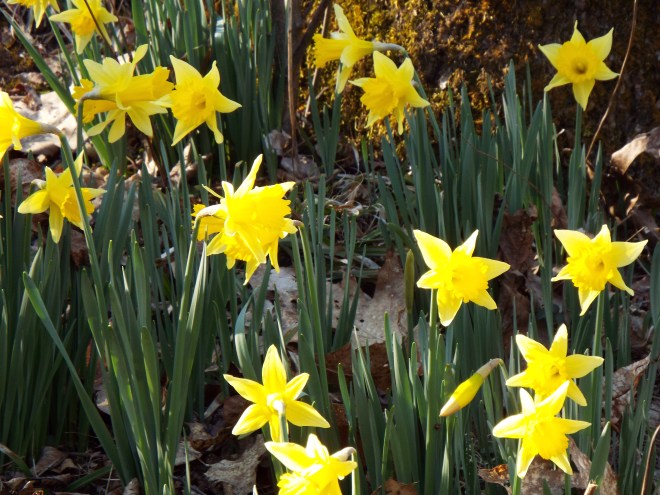
broke their slender little necks
every one

So unsuspecting
their bright trusting faces
full of aspirations lifted to the sky
just waiting for the rebirth spring brings
poor trusting daffodils

Oh, March, how could you?

More about Trees

More about Trees

I’ve been thinking about trees a lot lately. For all their beauty, grandeur, and life-sustaining qualities for us humans, the thing that most impresses me about these remarkable specimens is their sheer tenacity.

Nature confounds and amazes me. Plants can be so finicky, demanding just the right kind of soil, the right number of daylight hours, the right amount of water. But what’s right for one tree is wrong for another. Magnolias prefer acid soil while maples do just fine in alkaline. Willows like it wet; palms prefer dry. Some like it hot; others are happy in cooler climates.

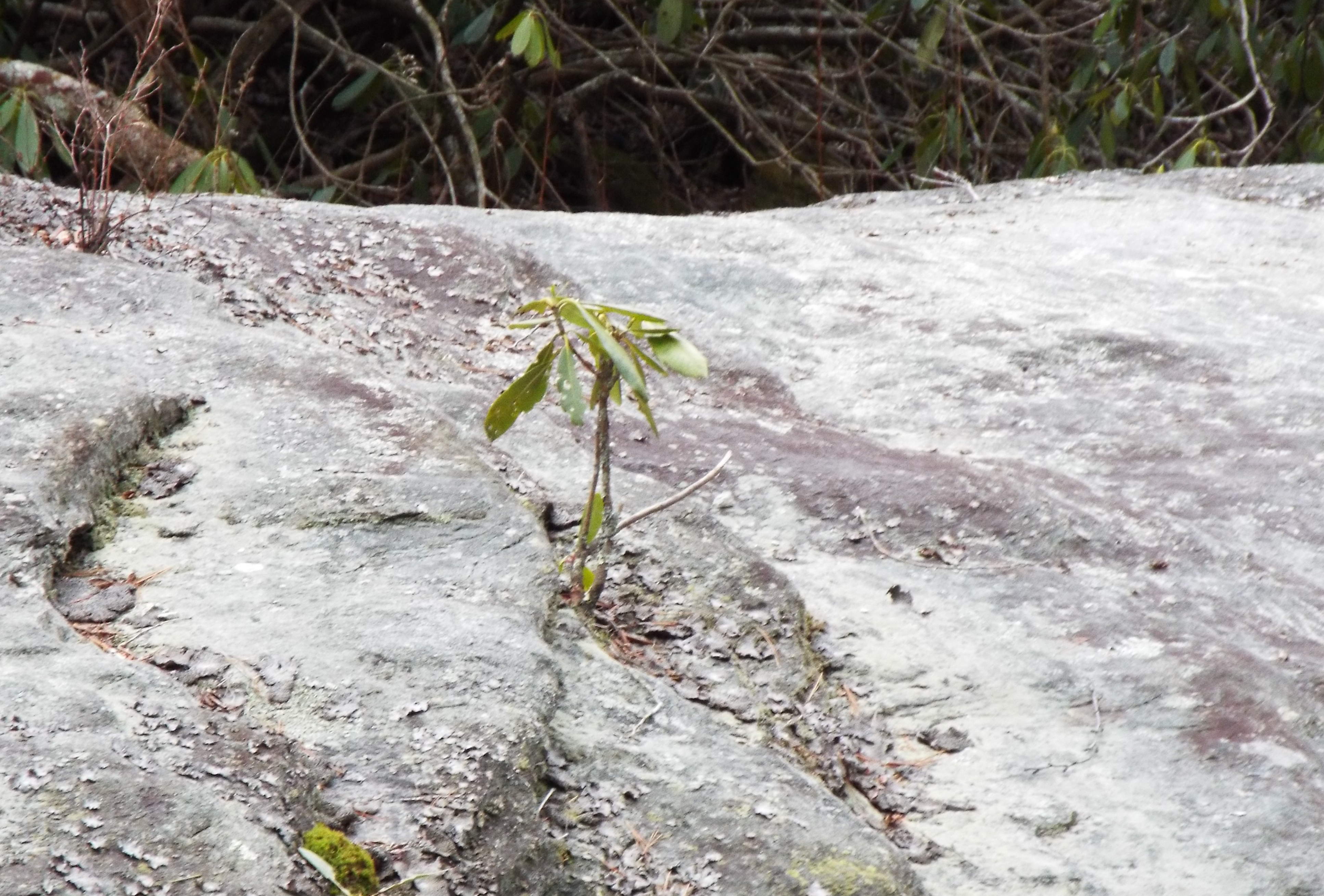
But the one thing all trees need is roots, and roots need soil. Yet, I’ve seen trees thriving in the most inhospitable places, defying all the odds. Like this baby rhododendron that has somehow taken root on a boulder.

dscf5462.jpg

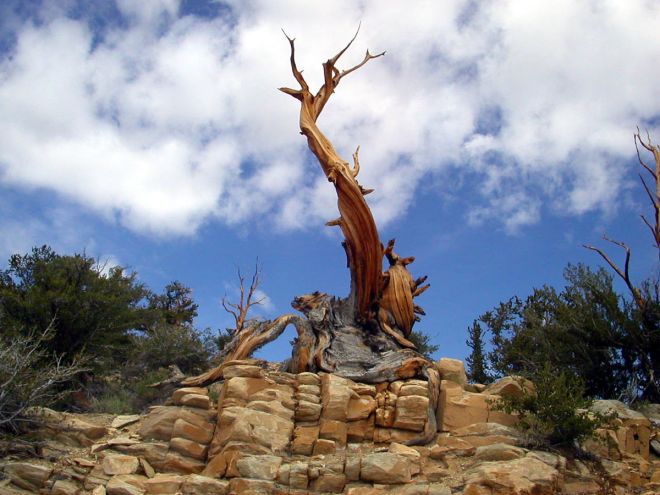
And look at this bristlecone. Maybe when it was a wee thing five thousand years ago, the rock it now stands on was rich, loamy soil, but that hasn’t been true for ages. Yet the tree keeps on. (Even though it doesn’t look it, it’s still alive).

oldest-bristlecone-public-domain-mark-wilson

Then there are these trees clinging to the side of a rock cliff, almost as if they’re suspended in mid-air. How do they do it? Really, they shouldn’t survive in these conditions. Nevertheless, they persist.

dscf3615

Life is complicated, and we humans are often plagued by complex physical and psychological conditions. Sometimes it’s not enough to say, “Just hang in there.” Still, when times are tough, it seems we could take a lesson from trees.