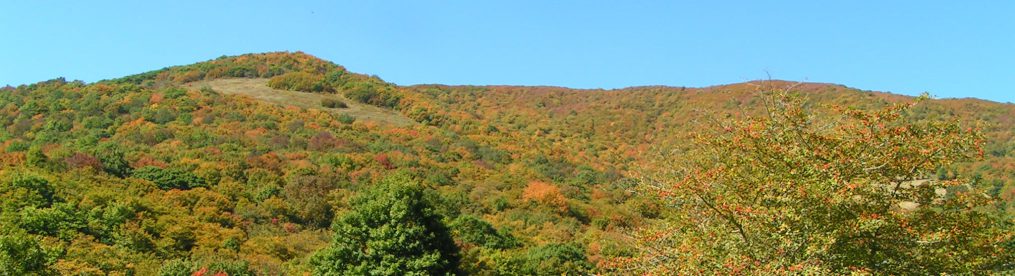
(With this post, we wrap up the virtual tour of our Nova Scotia road trip from 2018–sort of. There might be a couple of semi-related follow-up posts. Enjoy. We sure did!)
If you’ve ever watched the TV series Due South, you know the running joke about the uber politeness of Benton Fraser, the Canadian Mountie assigned to work in Chicago. (If you haven’t seen it, do yourself a favor and watch.) The nice Canadian is such a tired stereotype that I’m a little embarrassed to acknowledge I found it to be true, at least as far as Nova Scotia is concerned—-New Brunswick, too, which we passed through on our way to and from.
Not just polite, but downright nice. Folks struck up conversations with us from the next table in a restaurant, on hiking trails, at roadside overlooks. It was more than politeness; there was a real genuineness to their overtures. The bonhomie was contagious—everyone seemed friendlier in Nova Scotia. We had long, delightful chats with folks from the Philippines, China, New Zealand, and Scotland. It’s hard to define, but the truth of it was amplified as soon as we returned to the States. After 2 1/2 weeks in Nova Scotia, a Maine “I’m sorry” uttered after an accidental brush sounded mechanical, almost brusque, by comparison.
Sorry to my Canadian friends if you’re sick of hearing this cliché, but there are far worse character traits to be had. After all, niceness is a moral virtue. And I thank you for it. You brought out my best self.
Speaking of niceness, I found it particularly touching that from the first Canadian we met to the last, as soon as someone knew we were from North Carolina, the first words out of their mouths were about Hurricane Florence. Almost to a person. They’d been following the news, they’d mourned the losses, they commiserated with us. Even though the Gnome and I were virtually unaffected by the hurricane’s wrath, we were comforted by this display of concern and caring.
Kindness in Nova Scotia extends to the environment. A friend of mine once noted about our outdoor clothesline that she didn’t know anyone else who had one. Well, if she lived in Nova Scotia, she would! Every dry day in every part of the province, we saw laundry drying in the breeze. And I was impressed to see that almost every public trash receptacle in Nova Scotia was accompanied by not one but two, and usually three, recycling units, including one for food waste. Note how well-maintained they are.


Containers for almost all ready-to-serve beverages, not just soft drinks, are recycled. Got a half-gallon orange juice carton? An individual apple juice carton? Recyclable. They’ve been doing this for more than twenty years! (We didn’t realize until too late that we’d been paying deposits on all our containers and could have gotten refunds. Guess we’ll file that info away till our next visit.)
Nova Scotians are serious about their recycling. Every Airbnb, every restaurant, every attraction we visited featured recycling bins. Good for them.
And what could be more hospitable than to discover a set of red Adirondack chairs waiting for you at random scenic spots? The red chair program was first put into place by Canada’s national park system. Now, it seems to be a ubiquitous trend. We found them at other public venues as well as in the backyards of several of our Airbnb hosts. We relaxed in them every chance we got. Is there a better way to invite your guests to stay a while?


Even the postal boxes are festive and welcoming.
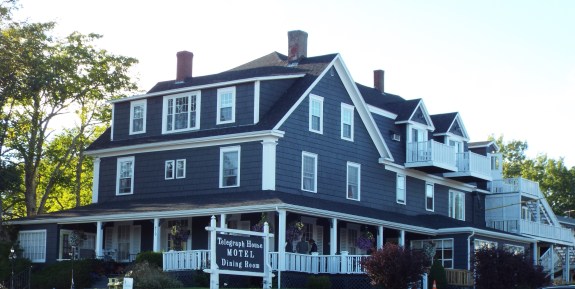
There’s another side to the people of Nova Scotia: their sense of humor. We encountered it over and over. There was the sign at the entrance to the Telegraph House in Baddeck exhorting guests to avoid trying to close the screen door, stating that “he is lazy and will close in his own time.”
There were more examples. For instance . . .

This public sculpture on the Halifax Boardwalk, titled Got Drunk, Fell Down, features not only the ‘drunk’ lamp post but its friend whose head hangs in embarrassment and (a little further away but unseen in this photo) a less engaged post who’s trying to ignore the whole thing.) Poignant, yes, but also funny.

Granted, this Disney cruise ship isn’t from Nova Scotia, but that’s where we saw it. We couldn’t help smiling at this scene.
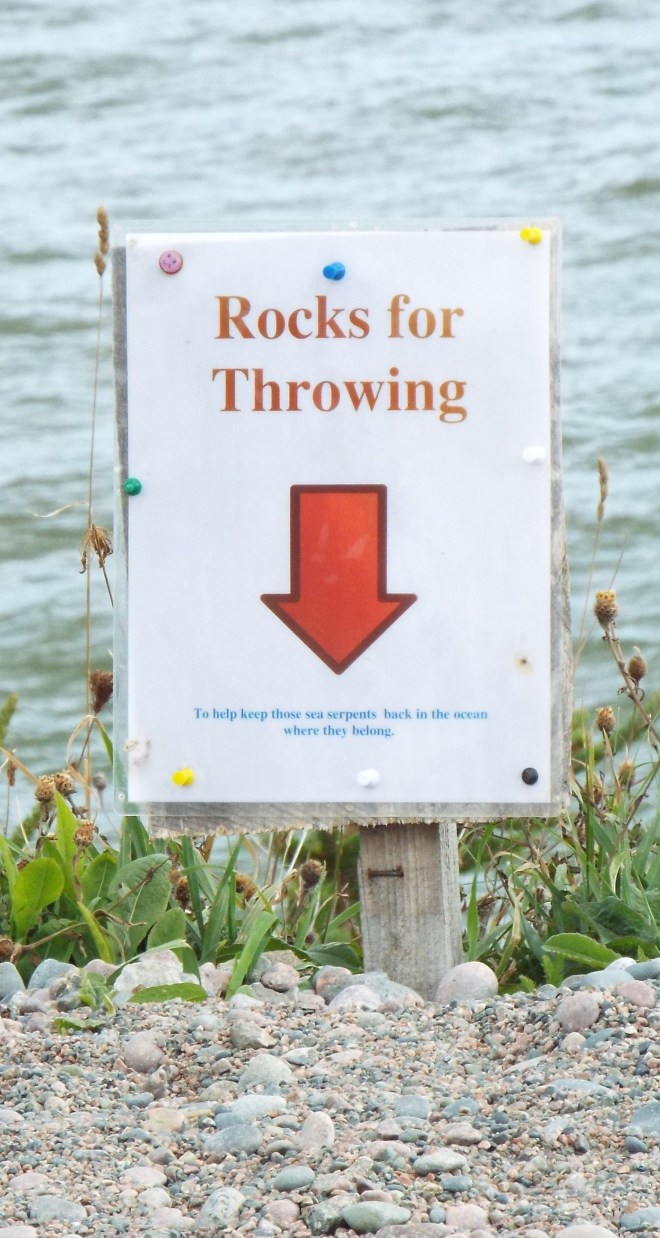
I have no idea why we happened to pull off the road at this particular spot, but when we did, we came upon this sign. I’m glad we stopped. It gave us a chance to . . .
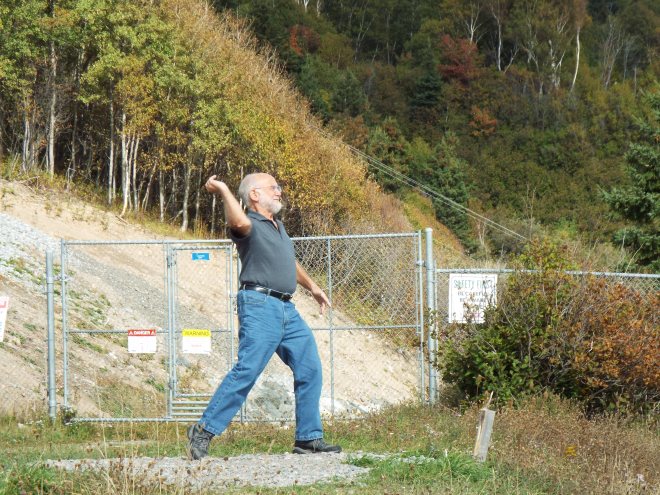
do our part to keep the sea serpents at bay.

Pitch perfect sign on the bathroom door of a Yarmouth restaurant

We’d gotten used to seeing Nova Scotia houses painted in happy reds, purples, greens, and yellows. But this is the only one we saw that actually IS a painting. Gotta love the whimsy of it.
And then we saw this ‘news’ notice in the North Shore Community Museum—a new take on fascinators that highlights the amount of snow likely to be found in that part of Cape Breton.

With that chuckle, I say a nostalgic goodbye to our Nova Scotia road trip and will return to my usual fare of Living on the Diagonal miscellany.

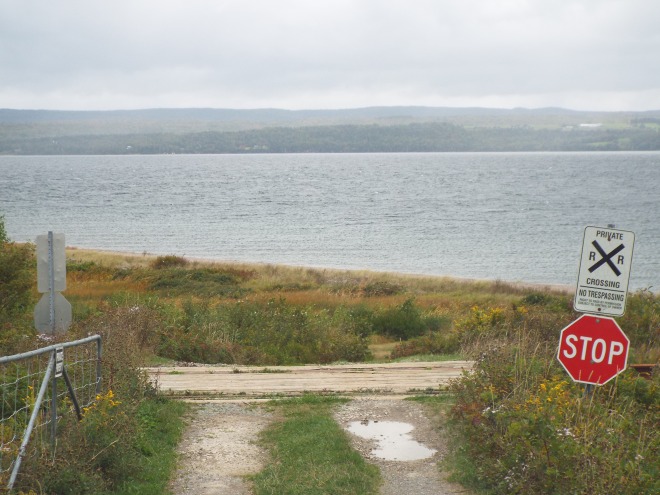
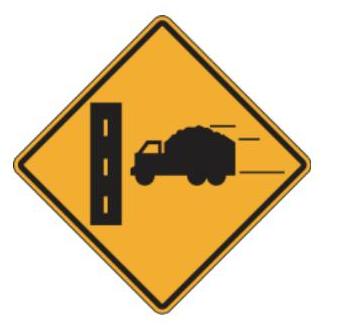


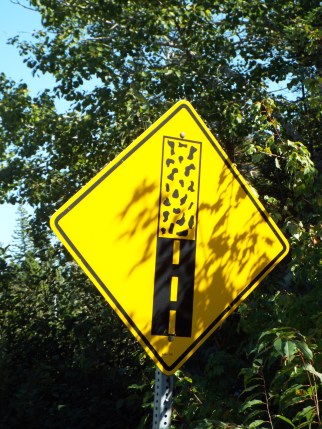
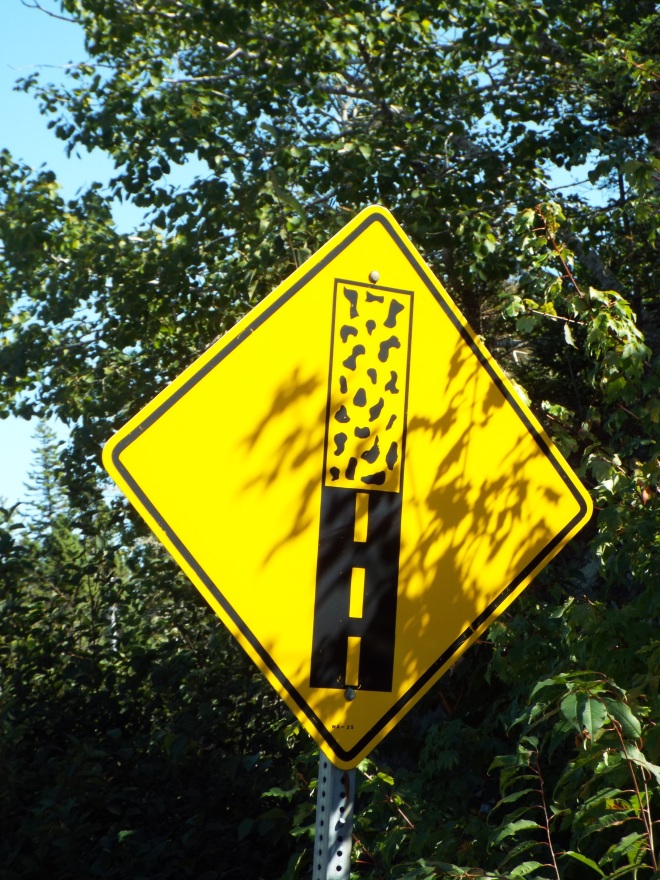 You may have seen this on a previous post, but it fits here, too. It took us a while to figure it out. It looks like cuts of meat or something on top of two capital H’s. Soon enough we learned it means the pavement is about to end in favor of gravel–or worse.






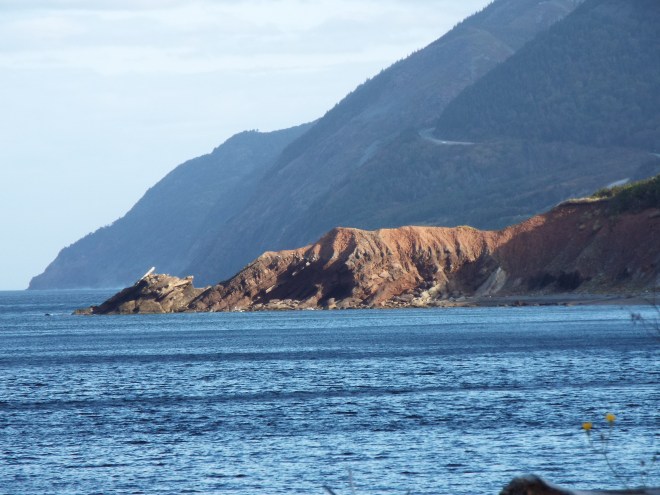

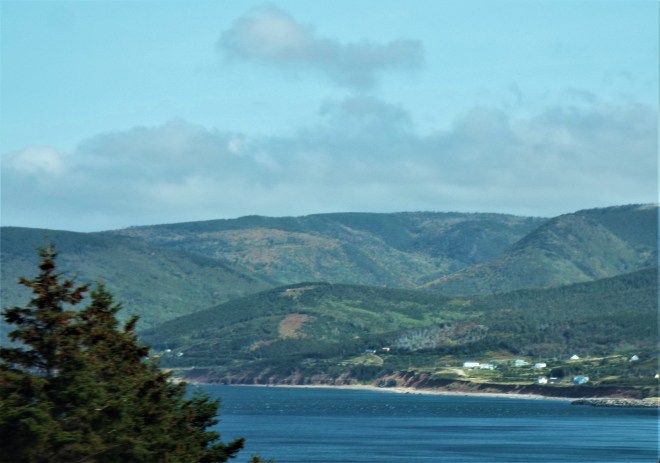


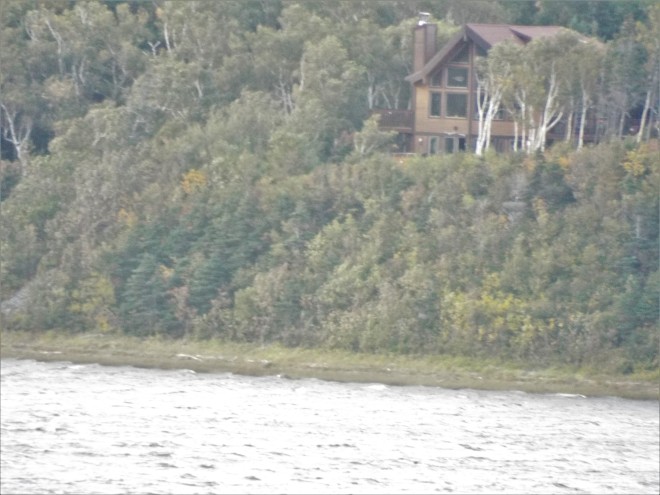 Our charmed, and charming, hosts had found themselves one of the most perfect places on earth to live. Not only is their home on the edge of the Chéticamp River (which they often kayak, lucky ducks!), but on the opposite side of the river is the majestic park itself. From their huge living room windows, they can also see where the river empties into the Atlantic Ocean. Where else could you get that kind of view? It was a good way to end our trip around the park.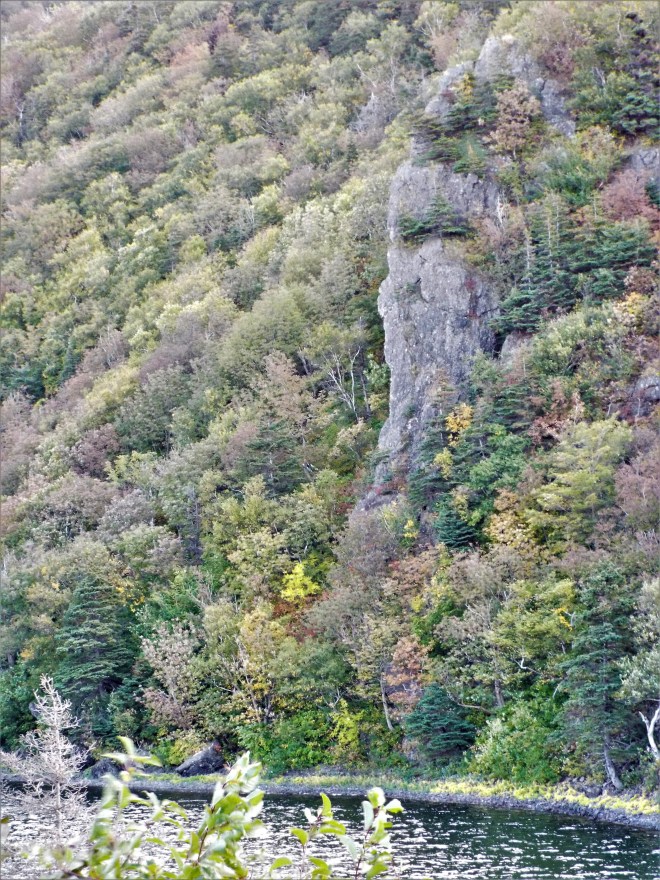
 This spit of land is all that separates the river from the ocean, also seen from our hosts’ living room window. How cool is that?!




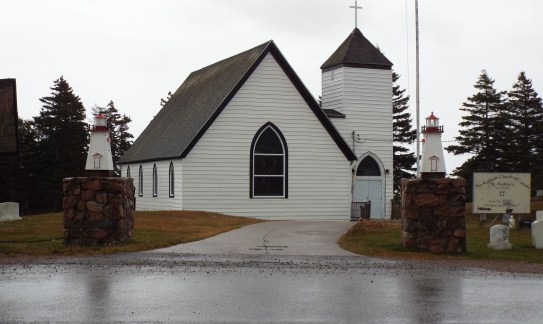
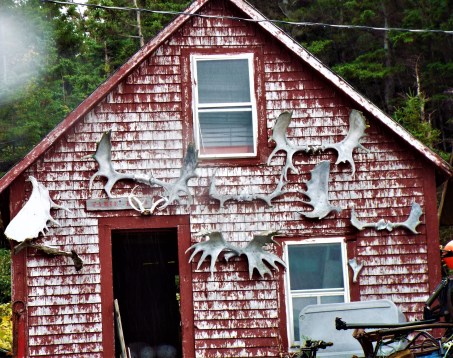 A stand of birch, an Anglican church, and a workshop adorned with moose antlers
 Scenes from Neil’s Harbour (I believe).


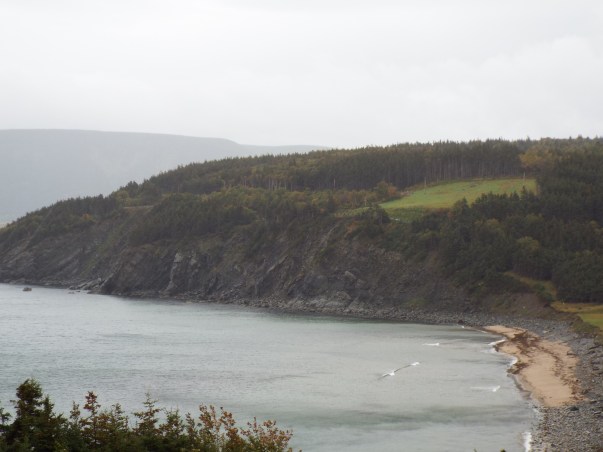
 Meat Cove: much prettier than it sounds. You reach this beautiful spot after a very long (30 minutes or so) drive on a rutted dirt road (only to return the same way). Not much more than a campground (see the little cottages in the foreground of the bottom picture?), it’s worth the drive. They say that on a clear day you can see Newfoundland from this northernmost Nova Scotia community. We weren’t there on a clear day.
 Check out all those balancing rock cairns on the rocky beach far below us at Meat Cove.
 Why, yes, you can find sand on Nova Scotia’s beaches! (A wee bit, anyway.)
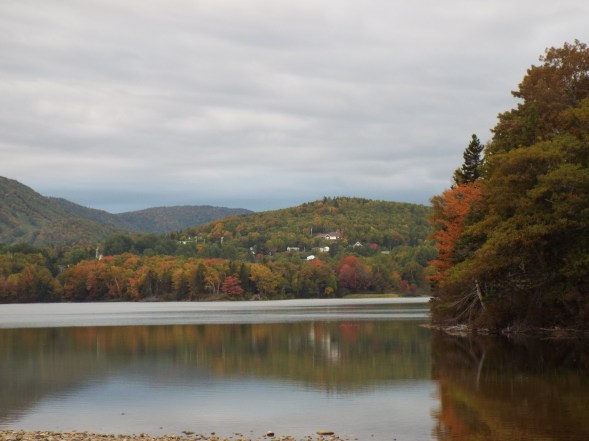 Freshwater Lake, Ingonish Beach
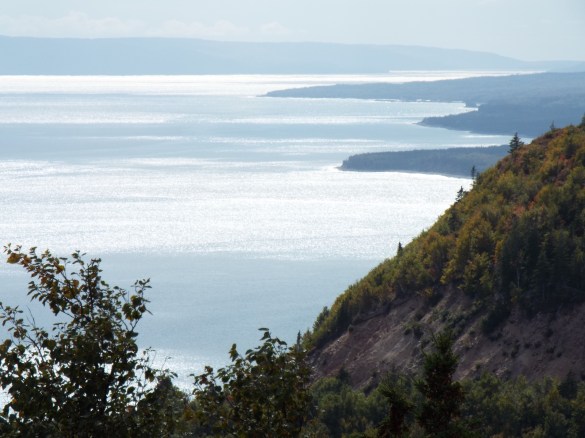


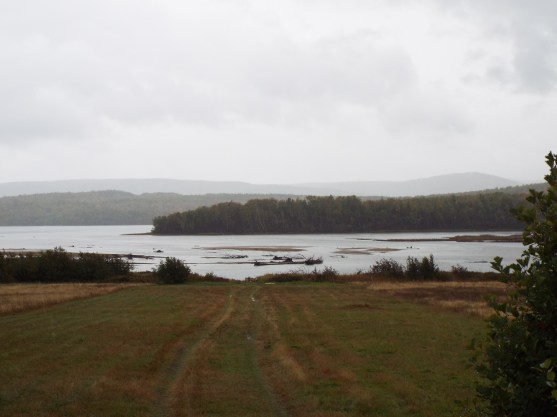

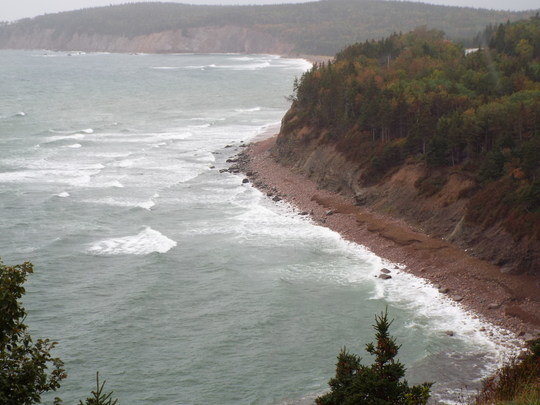 Just some pretty Cabot Trail views, even on a rainy, foggy, hazy day



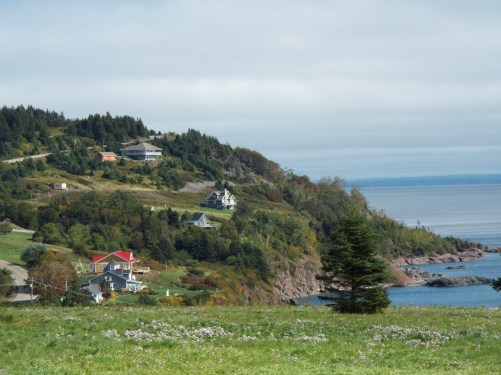




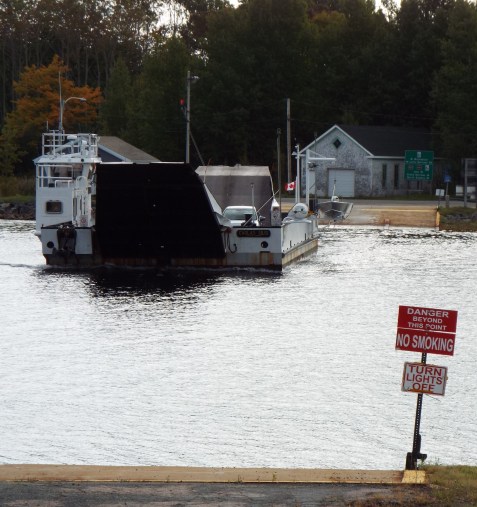 Here comes the ferry. Short crossing—very short.








 At Cape Forchu, we learned about rockweed, that stringy, brownish-green stuff you see in this picture. Each fall, fishermen fill their deep-bottomed boats with it using handheld cutter rakes. Rockweed is important to the local economy, exported worldwide where it’s used as a stabilizer and thickener in products as varied as salad dressing, lipstick, and ice cream. Think about that the next time you put a spoonful of your favorite frozen dessert in your mouth.

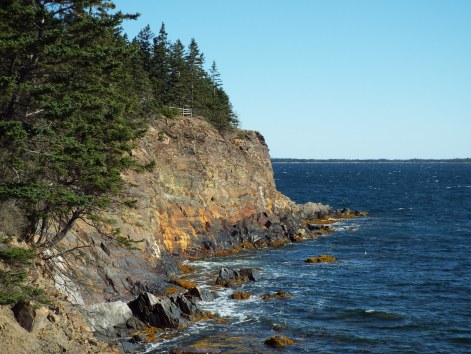
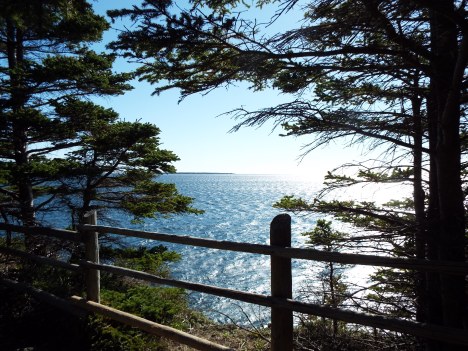




 but not before sitting on the deck with a glass of ginger wine and wrapped in quilts (there was a real brr factor that evening) to watch the sun set across the bay.
 Living on the Diagonal