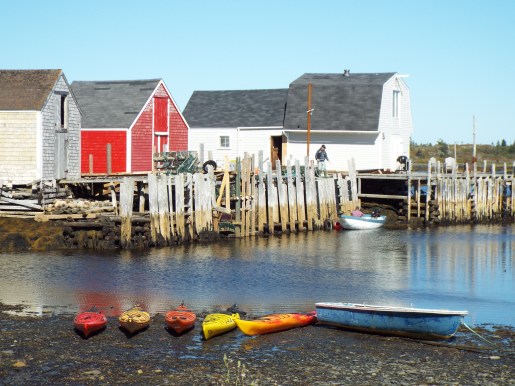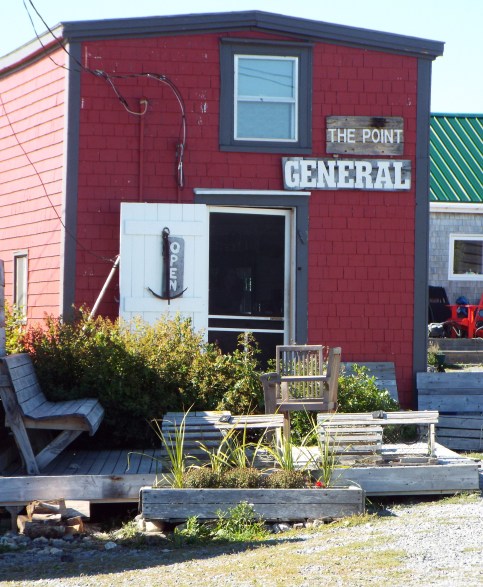
Yarmouth and the Acadian Shores

(I’m recapping our recent Nova Scotia trip in words and pictures—lots of pictures. If you’d like to follow along from the beginning, you may want to click here.)

We didn’t know it when we settled in at our Lower Argyle Airbnb, but we’d left Nova Scotia’s South Shore for the Yarmouth and Acadian Shores region of the province. Our first clue came at dinner that night. Another table of patrons included a local couple and their guests, possibly from someplace as far-flung as ours.

In response to a question from one of her visitors, their host said, “It was a shameful moment in our history,” and went on to discuss her admiration for Acadians, noting they are a hard-working group of people who strive to maintain their historical identity. We weren’t exactly eavesdropping, but this foursome’s reunion was ebullient; it was hard not to overhear.

The visitor’s question may have been prompted by the flags flying from so many homes in the area, the same ones that would pepper the landscape on our next day’s travels. It definitely wasn’t the Canadian maple leaf nor the Nova Scotia coat-of-arms flag. This one had vertical bars of blue, white, and red. You might think it was the French flag except for the gold star in its blue third. The Gnome knows flags, but he wasn’t familiar with this one.  


We came upon this interpretive sign and the picturesque Sainte Anne-du-Ruisseau Church near Rocco Point in Argyle. According to the sign, “The main feature of this church is invisible. After the exile and return of the Acadian people, the church provided hope and spiritual renewal. It became the heartbeat of the community—and remains so today.” (I’ll be writing more about the Acadians and their tragic expulsion in the mid-1700s in a later post.)

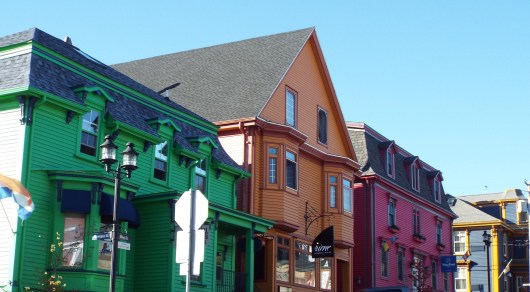
We soon found ourselves in Yarmouth, another colorful town and the port where the big CAT ferry brings people and their cars into Canada from Maine. We spent a couple of hours on a self-guided walking tour—blocks of shipowners’ and sea captains’ homes built in the second half of the eighteen-hundreds.


Downtown Yarmouth


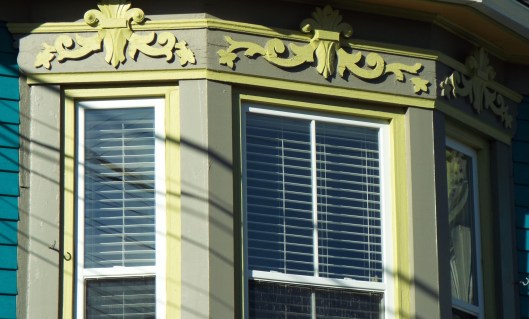
It’s the detail I can’t get over.

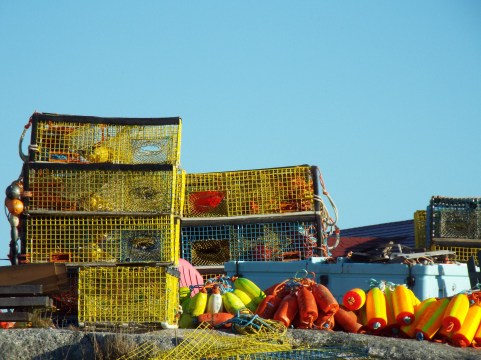
The Yarmouth area, home of the world’s richest lobster-fishing grounds, is unsurprisingly also home to Atlantic Canada’s largest fishing fleet. It has suffered its own losses at sea.


The first launching in Yarmouth County took place at this site, now a memorial to the county’s seafaring folks “who  ‘going down to the sea in ships,’ by their outstanding seamanship and valour, brought undying honour to Yarmouth in every port around the world” according to the memorial’s plaque.

Staff at the Yarmouth visitor center encouraged us to drive out to Cape Forchu, west of Yarmouth. It had been on our list once, but in the interest of time, we’d crossed it off. Back on it went. Cape Forchu, home of the first ‘apple core’ style lighthouse, is surrounded by nineteen acres of beautiful walkable space and has been named one of Canada’s greatest public spaces. I can understand why.


At Cape Forchu, we learned about rockweed, that stringy, brownish-green stuff you see in this picture.  Each fall, fishermen fill their deep-bottomed boats with it using handheld cutter rakes. Rockweed is important to the local economy, exported worldwide where it’s used as a stabilizer and thickener in products as varied as salad dressing, lipstick, and ice cream. Think about that the next time you put a spoonful of your favorite frozen dessert in your mouth.

We also learned about dumping day—probably not what you think. Dumping day occurs at different times in different parts of the province. For southwestern Nova Scotia, it comes on the last Monday in November, the day Southwestern Shore fishermen go out in boats to ‘dump’ their lobster traps. In the wee hours, entire communities line the shore to see them off, a blessing of the fleet is recited, and the brightly lit boats head out to sea in a parade of colorful vessels. Now, that’s something I’d like to see.


After spending a couple of hours at Cape Forchu, we really did have to mark some things off our list to make it to the Annapolis Valley area before nightfall. More about that next time. Hope you’ll keep traveling with me.


Along Nova Scotia’s South Shore

It’s not every day the Gnome and I plan an overnight stop just an hour from the previous night’s lodging, but that’s just what we did on much of our Nova Scotia journey. It’s a good thing we did, because a one-hour drive anywhere else easily turns into an eight-hour adventure of the senses in this maritime province, especially when you decide to take the slowest, most scenic route, traveling out to this cove and that one, and stopping at every photographic opportunity you see. That’s approximately one per minute along the South Shore of Nova Scotia!

We had already made a sunrise visit to tiny, picturesque Peggy’s Cove on one of our Halifax days. Peggy’s Cove was one of our most delicious memories from our first visit forty-nine years ago, even though we were shrouded in fog. We could barely wait to see it again. It did not disappoint.

Our destination today was Lunenburg, stopping at the villages of Chester and Mahone Bay along the way. Chester’s waterfront is nothing less than stunning.  (Click on images for a larger view.)

The village sports a small park with a couple of stirring war memorials. One features a Nova Scotia Highlander atop a monument honoring the 54 area soldiers killed during World War I. The other is a thank you from Norway. During World War II, more than 1,000 Norwegian merchant ships were at sea when Nazi Germany invaded the country. The ships sailed to the nearest allied ports. Thus, Chester’s Hackmatrack Inn became a convalescent center for the sick and injured Norwegian seamen who headed for safe harbor in Nova Scotia.

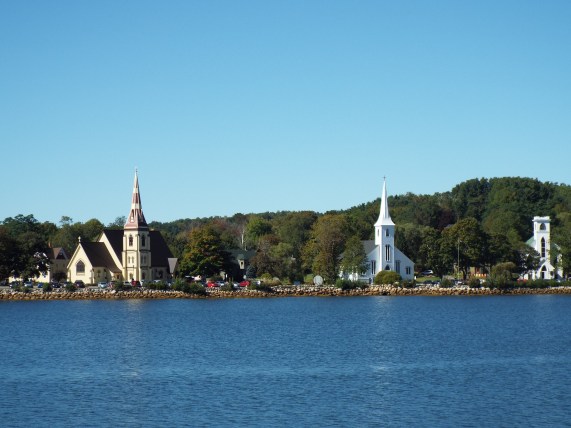
We wanted to stop in Mahone Bay to see its photogenic ‘Three Churches.’ Though we never found the best spot to photograph them, we still enjoyed their beauty—along with three or four tour busloads of other folks. DSCF3596

Quite by accident, we happened upon other visual entertainment, as well. The village was preparing for its annual Scarecrow Festival, which was set to begin in five days. Everybody gets in on the act from families to churches to dentists. (Look closely—can you see the braces on the dentist’s patient, bottom right. These characters were, of course, in front of a dentist’s office.)

We discovered a small nearby beach for a picnic lunch where a couple of folks from the area recreation department had set up shop encouraging residents to visit this little-known treasure. (Nova Scotia has few sand beaches, but this is one of them—sort of.) 

They invited us to fill a jar with sand and shells as a memento of our trip. And here is where we found, as we did over and over, the very best thing about the province—its people. They asked where we were from, commiserated over Hurricane Florence (which was on every Nova Scotian’s mind), found out where we were headed, and filled our heads full of not-to-be-missed places to visit on our journey. It was great fun meeting them.

Next on our agenda was Blue Rocks, Lunenburg’s ‘answer to Peggy’s Cove,’ even tinier and just as much off the beaten path. 

Downtown Blue Rocks

And, finally, just around suppertime, we made it to Lunenburg, whose Old Town is a UNESCO World Heritage Site as the best surviving example of a planned British colonial settlement in North America. In spite of its tourist appeal, this fishing village has managed to retain its authenticity since its founding more than 250 years ago. Quite a feat.

Lunenburg streetscape

Old Town Lunenburg’s buildings are not reproductions. These are the real deal.

Detail, detail, detail!

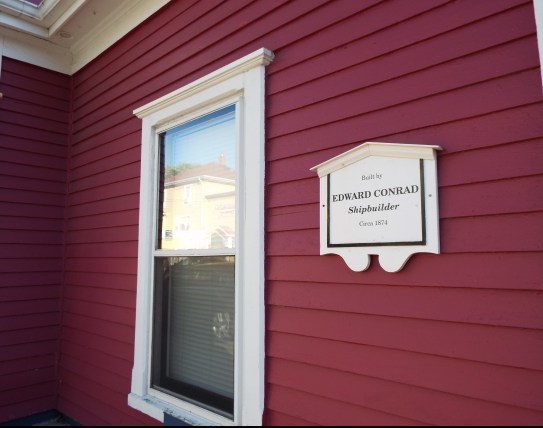
A 1870s shipbuilder’s home

Nova Scotians sometimes refer to themselves as Bluenosers and here’s their proud reason why, I’m told: the Bluenose schooner, launched in 1921, raced undefeated in international competitions for 17 years. The Bluenose II, a faithful replica, was born and lives in Lunenburg just like her predecessor.

Complete with passengers

Just as we expected, our ‘one-hour’ trip turned into a long and busy day, and we were definitely ready for an early bedtime before the next day’s activities. Stop by next week to see what we discovered next.

Surprises on the South Shore

(To read about our Nova Scotia adventures from the beginning, click here.)

Our original travel plans included another very short trip, this one theoretically a ninety-minute drive from Lunenburg to Shelburne. We knew it would take longer since we wanted to peruse every nook and cranny—and there are a lot of them among the coves and harbors of Nova Scotia’s South Shore.

Shelburne interested me because it’s home to the Black Loyalist Heritage Centre. I learned about Black Loyalists from watching the series TURN, available on Netflix. (If you haven’t seen it, you may want to. Not only is it riveting, but educational—and surprisingly true to historian Alexander Rose’s book, Washington’s Spies: The Story of America’s First Spy Ring.)

As the British were facing the loss of the Revolutionary War, its military leaders offered freedom and land to anyone who escaped slavery and came over to the British side. It was a big risk, but some 30,000 successfully made it to the British lines. As the war ended, about 2,000 Black Loyalists were evacuated to Nova Scotia, most of them landing in Shelburne, which became the largest settlement of free blacks outside the continent of Africa. Shelburne was home to other British Loyalists, moneyed ones, and many of those homes are still intact today.

However, a few weeks before our trip began, we got a phone call from the Nova Scotia area code. Our Shelburne Airbnb host told me the well had run dry so we’d have to find another place to stay. We decided our best bet was the ‘Lobster Bay Loft’ in Lower Argyle. (Don’t you just love that name?) It was on our route and only added another half-hour to our driving day. We figured we had plenty of time to take in Shelburne and all its sights and still arrive at our final destination by 3:00 pm, the earliest time we could check in. I was thoroughly exhausted and looked forward to a few relaxing afternoon hours in our Airbnb.

But . . . within minutes of leaving Lunenburg, we came upon a sign for The Ovens Natural Park, another place on our must-see list with its cliffside walking trail and sea caves, aka ovens.

We turned off our scenic highway route toward the park. The young woman who took our admission fee explained about the sea cave trail and said most people make the round trip hike in about forty-five minutes. She must not have had many photographers pass through. It was a good two hours later when we returned to the parking lot, chilly and windblown (it was so windy)—but exhilarated.

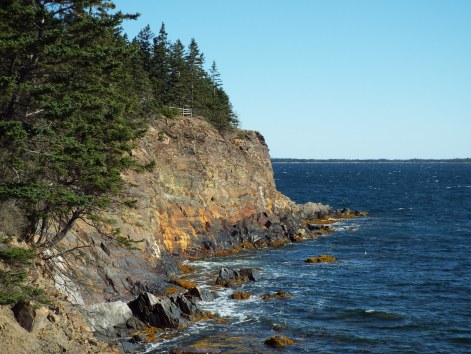
Can you see the wooden rail way up there where there’s a gap between the trees? That’s how close we were to the rocky cliff on most of our walk through the park.

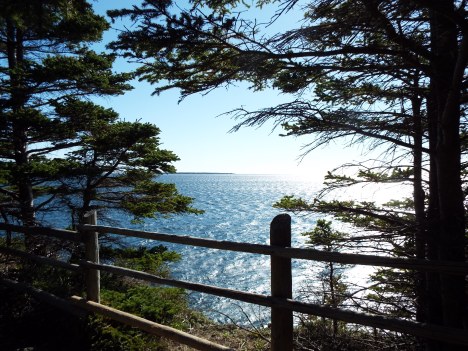
Trailside view

I got a new spiky hairstyle thanks to the wind.

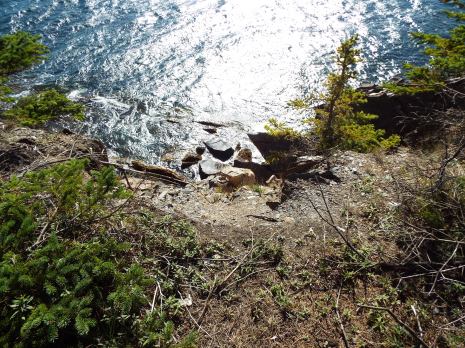
So far down

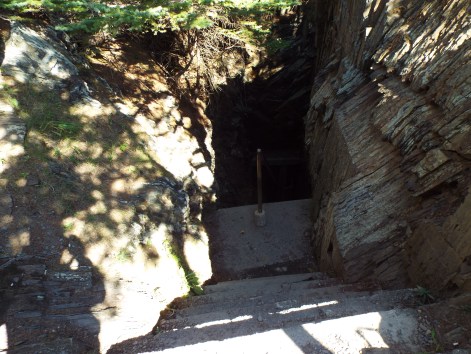
Beyond the platform (in that dark hole) is yet another set of steep, narrow steps into Tucker’s Tunnel, a natural cave that was extended during the gold rush era. The Gnome went down there; I didn’t.

View  from inside Tucker’s Tunnel

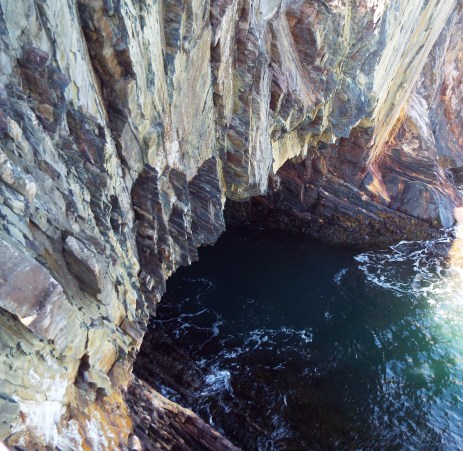
Looking into an oven, or sea cave, from above

I did venture down many, many steps into Cannon Cave. When waves enter this cavern, you can both hear and feel the resounding boom. Eerie!

After we returned to the parking lot, the Gnome was intrigued by the folks on the beach below searching for remnants of gold that may have been left from the 1861 gold rush. He climbed the ladder down to the rocky shoreline. I stayed up top and had a delightful chat with a couple of Scottish fellows.

I’m so glad we put The Ovens on our itinerary. In spite of the high winds, the sometimes frighteningly-close-to-the-cliff trail, and the zillions of steps to get to and from the astounding views, our time there was worth every moment. And when we saw some of the waters-edge campsites, we immediately began planning a return here with a tent— just so we can watch the sunrise over the ocean just outside our tent flap.

Now, the only thing that lay between us and Shelburne was the Kejimkujik National Park Seaside near Port Joli.

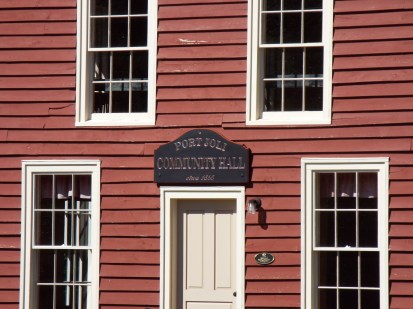
Every community in Nova Scotia, no matter how small, seems to have a community hall. Wish we’d timed it to make one of the cakewalk or bingo or fiddle-playing events. Oh, well–something for next time.
We didn’t realize quite how far off the main road we had to travel to get to Keji, how slow the going would be, nor that we’d still have a 3.2-kilometer hike (one-way) to the coast when we reached the park’s parking area.

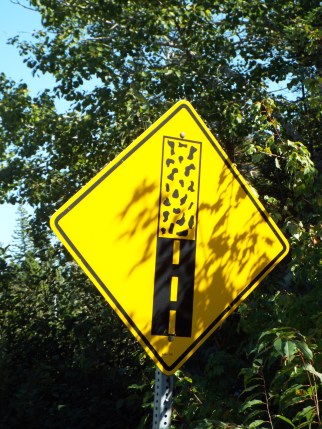
Sometimes it was a challenge interpreting Canada’s highway signs. We found out soon enough that this one meant we were leaving the paved road for a far bumpier and much slower gravel road.

We really wanted to make that hike—after all, we might get to see seals at the end of it. But we would barely have time for a quick drive-through at Shelburne in order to get to meet our Airbnb host at five o’clock—two hours later than we’d originally told her.  Thank goodness for cell phones.

These Sherburne buildings date from 1785 or so. I love the doorways.

Sherburne, as well as virtually every other fishing village, has a monument to its fishermen and other seafarers who have been lost at sea, sometimes in only the last couple of years. It gives one pause.

Not only did we have to nix the Black Loyalist Centre, we regretfully left the scenic route in favor of the faster highway for the remainder of the day’s trip.
We had the whole place to ourselves in the loft of this former museum dedicated to all things nautical. Oh, how I looked forward to falling into this inviting bed after our busy day . . .

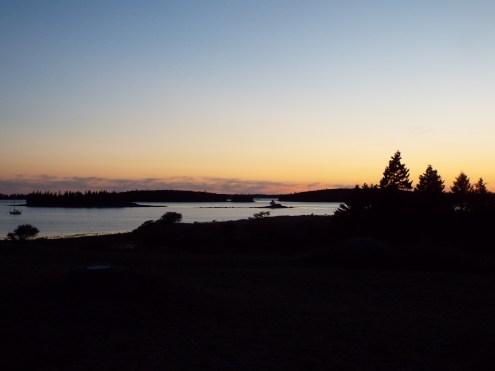
    but not before sitting on the deck with a glass of ginger wine and wrapped in quilts (there was a real brr factor that evening) to watch the sun set across the bay.

Next up: Yarmouth, the Annapolis Valley, and more. Come back next week, won’t you?

Touring Halifax

(To read about our Nova Scotia travels from the beginning, start here.)

Nova Scotia redux began for us in Halifax, a fitting first stop. The province’s capital and by far its largest city, Halifax is vibrant and cosmopolitan, but with a cozy feel. It never felt overcrowded—at least as the first stop on our provincial travels. After a couple of weeks touring the coastline and running into people in only twos and threes, even a city as welcoming as Halifax might have seemed jarring.

We were surprised at how easy it is to navigate Halifax. Though we were staying in an Airbnb condo in a residential area, a short one-block walk took us to a large grocery store (liquor store, too); we found numerous local restaurants in easy walking distance; and we were never more than a five-minute drive from anywhere we wanted to visit.

Our days in Halifax were by far the most ‘touristy’ part of our Nova Scotia visit. Our first stop was the Halifax Citadel National Historic Site, a star-shaped fortress first constructed in 1749 to protect the harbor. The Citadel was never engaged in battle. It didn’t need to be; its mere presence was deterrent enough to would-be invaders. We watched the hourly sentry change, as well as cannon and rifle-firing demonstrations, all performed in full military regalia of the era. With the national parks passes we purchased prior to our travels, this was a freebie.

As avid gardeners, we could hardly pass up the sixteen-acre, Victorian-era Public Gardens, occupying a large city block in the heart of downtown. We took our time exploring its fountains, bridges, statues, pond, and its massive floral displays including exhibits like these

and carpet beds like these.

They even have tropical plants on display. How do they do that?
Not every public library is a tourist destination, but Halifax’s new Central Library certainly is, with its five-story, 112,000 square foot award-winning architecture. It even boasts a green roof, a cafe where patrons can buy coffee or a meal, and a rooftop garden for enjoying their purchases. The library is even LEED-certified, a high-performance green building designation.

Among its many sustainable features are a green roof sustained by rainwater, electric vehicle charging stations, rainwater harvesting for flush features, solar heating, and use of recycled, local, and low-emission building materials. All that and stunning, too. So stunning that in 2014, CNN named it one of ten ‘eye-popping’ new buildings of the year. I wonder why.
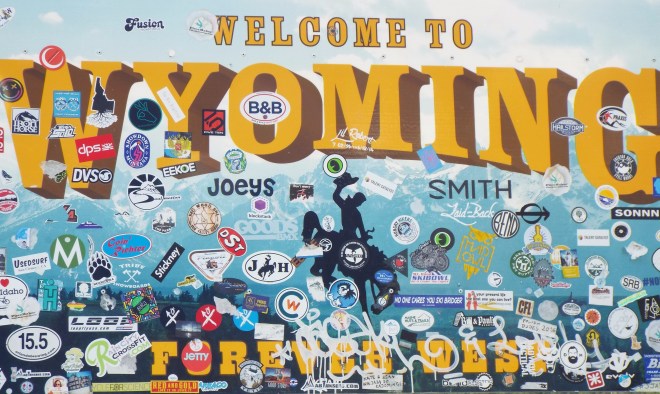
Photo attribution: Citobun [CC BY-SA 4.0 (https://creativecommons.org/licenses/by-sa/4.0)%5D, from Wikimedia Commons

While we knew we didn’t want to spend our precious time in Nova Scotia inside museum walls, the Canadian Museum of Immigration at Pier 21, Canada’s last ocean immigration shed, was a notable exception. I was humbled to find myself in the presence of other visitors who were ‘veterans’ of Pier 21, people who themselves had come to Canada by boat via Pier 21. (I’ll be writing more about this phenomenal experience in a future blog post, so stay tuned.)
(Speaks for itself)

She doesn’t know it, but a primary reason Halifax was one of our destination points was folk artist Shelagh Duffett, whose brightly colored, playful prints (mostly of cats) adorn our walls. The weekend we were there, she was selling at the Maritime Makers’ Market. We were excited to meet her in person and to purchase even more of her smile-producing fanciful artwork.

Typical of Nova Scotians, Shelagh was genial and generous, giving us tips on vegetarian restaurants and an important site to visit, one we weren’t familiar with. We went straightaway to the historic Hydrostone District, a lovely neighborhood with a tragic history. (I’ll be writing more about that in a later blog, too.)

The tree-lined boulevards in Halifax’s historic Hydrostone District feature wide, grassy strips for community use.

But the best part of our stay in Halifax was strolling, whether through parks, neighborhoods filled with lovely Victorian homes, shopping districts, or the boardwalk at the harbor, a place we found ourselves every day of our visit, sometimes more than once. Day or night, it was safe, relaxing, and yet spirited, filled with people, public art, and a few surprises—like the hammocks just waiting to be used by anyone. What a delightful way to pass the time: swinging in a hammock while reading, watching seagulls, or gazing at sailboats on sparkling water.

Yes, Halifax was a good place to start our journey. Stay tuned for more about our Nova Scotia travels.

Return to Nova Scotia

Forty-nine years later, the Gnome and I have fuzzy but memorable impressions of our first visit to Canada. They go something like this—Ottawa: old-fashioned officialdom; Toronto: sleekly professional with more traffic lanes than we’d ever seen; Montreal: sophisticated, Euro-cosmopolitan; Quebec City: old-world charm; rural Quebec: rolling green farmland; New Brunswick: waves of amber; Prince Edward Island (PEI): verdant romanticism.

And then there was Nova Scotia, a place I’d seen in my dreams, a place where the mountains meet the sea, a place of blues and greens, a place that inspires the imagination, a place of calm and peacefulness.  I’d always imagined living someplace where I could open my front door to the ocean and my back one to the mountains. I assumed it was a mythical place, attainable only through my fanciful visions.

Yet, here it was, right before my awestruck eyes. But our trip was at its end. We only had a fraction of two days to soak in this magic. Still, Nova Scotia managed to grab a little piece of our hearts.

So, how come it took almost fifty years for us to return to this bewitching land? We’d managed to revisit some of the other provinces and explore them further, making a five-hour, 186-mile train trip to (what we thought was far north) Moosonee, Ontario, on the Polar Bear Express. (Rail is the only way to reach Moosonee by land.) And we camped on Quebec’s Gaspé Peninsula, home of Forillon National Park and the Chic-Choc Mountains, a continuation of the Appalachian chain.

Maybe we stayed away so long out of an unconscious fear that reality couldn’t possibly measure up to our happy memories. Or maybe we instinctively knew the longer we yearned, the more phenomenal it would all be when our dreams finally turned to reality.

And so it was that in mid-September we made our way back for a long-planned and even longer-imagined visit to the place that had held on to our hearts for so long. A twenty-six-day road trip, eighteen of those in Canada’s second smallest and second most densely populated province (coming in after PEI in both cases).

Eighteen days, especially compared to the barely two of our previous visit, should be enough time to get to know a place so small that it’s a mere 360 miles from tip to tip, so small that nowhere in the province is more than 42 miles from the ocean, right? Hardly. That was clear after only a couple of days.

We weren’t so much interested in visiting museums and traditional tourist sites, though we did take in a few. Instead, this time around we wanted to get to know the real Nova Scotia—her people, places, and culture. We didn’t want to just see the place; we wanted to feel it. We thought we could accomplish that by visiting community after community. But each locale has its own unique story and demands more than a quick pass through. Before we knew it, we were busy planning our next trip, one that keeps us in fewer places, but for a longer period of time in each.

Was it all we’d imagined? Oh, yes! In the next few weeks, I’ll be writing about some of the special places we saw, people we met, and things we learned. In the meantime, to tantalize you, here are just a few of the 3500+ pictures we took along our journey.

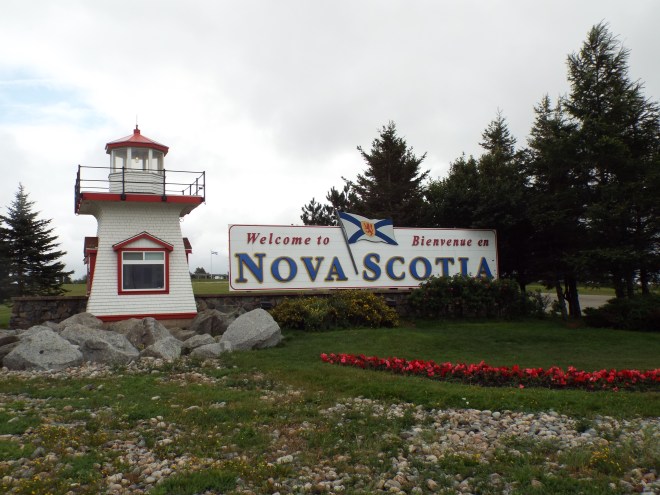
Long-awaited welcome

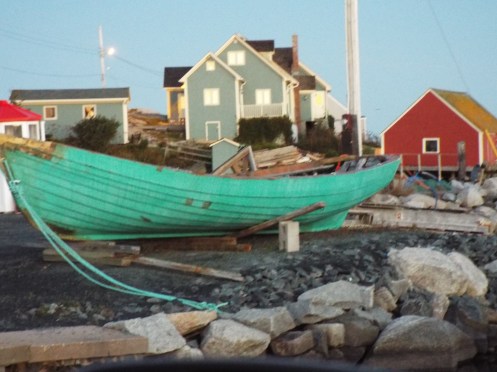
So many colorful houses everywhere–you’re as likely to see red, purple, or orange as you are white.

Early morning in Peggy’s Cove

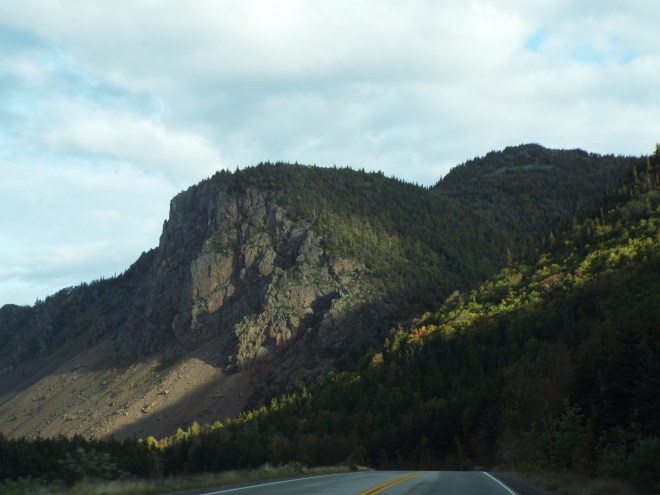
Beautiful Cape Breton

DSCF5984

We even got to see the beginning of Cape Breton’s fall colors.

DSCF3865

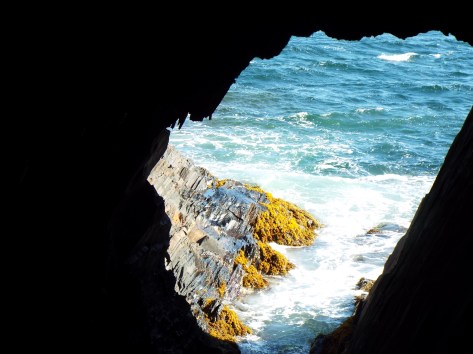
Looking out from a sea cave at Ovens Natural Park


DSCF4047

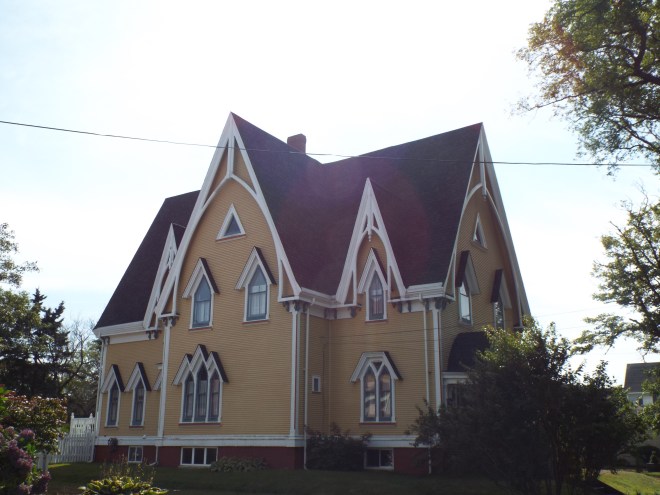
So many striking homes. So much detail.

Annapolis Valley

DSCF4332

Example of an 18th century  Acadian home

Oh, Canada!

The Landscape of Grand Pre, a UNESCO World Heritage Site


And here are a couple of Nova Scotia factoids: The distance from Nova Scotia’s southernmost tip to its northernmost is 360 miles, almost two hundred miles less than the distance across my home state of North Carolina. In land area, it is closest to, though smaller than, West Virginia, which is ranked 41st among our 50 states.

To join me on my journeys stay tuned for more stories and pictures.

Everybody Has a Story

Everybody has a story.

Each of us has a story that’s uniquely ours, though it may have been forgotten in the hubbub of daily life: the blare of alarm clocks, getting everyone up and out of the house on time, job demands and annoyances, financial worries, unexpected emergencies.

Sometimes it’s hard to recall that special moment or event. When we hear others tell their tales, we may tend to think our lives are tediously predictable and tame—though predictable and tame can be blessings, and we should count them.

I’m one of those people who forgot. My life has been blessed with what I used to think was normal: happy, healthy childhood; happy, loving family; food and shelter. Very Donna Reed, Leave It to Beaver, and Father Knows Best all rolled into one (minus the hats and gloves for PTA meetings and errands). I thought it was that way for everyone. Then I learned differently. The TV norm, mirrored in my own family life, was not the norm at all. It was a sad awakening.

In all the normalcy of my life, I completely forgot two most unusual events, one major and one not so much. But both are events that make my story a little different from the stories of other folks in my orbit.

The first was the decision the Gnome and I made to move to a land of strangers hundreds of miles from the known, leaving our jobs and other security blankets behind, to hand-build our own home in the country, just the two of us. It was a remarkable risk and a singularly unlikely step for us to take. Its very significance may be what pushed it to the back of my mind as part of my unique story.

It was a major life decision, but it quickly became the everyday. What brought us here and has guided our decisions and processes is part of our daily life, so it’s become our normal, something it never occurs to me to bring up by way of introducing who I am. Yet it’s the very definition of who I am. I tell that story here. (It’s a nine-part series interspersed with blogs on other subjects—just click your way through for the whole story.)

A totally different aspect of my personal story was a single event, one based purely on luck. At the time, the Gnome owned and managed a small travel and map store. He sold lots of outdoor products and thus was invited to attend the annual Outdoor Retailers’ Market, then held in Salt Lake City. The organizers planned a drawing for free tickets, lodging, and airfare for two to the market. Although he’d never attended one of these markets and assumed he never would, he figured he might as well enter the drawing. He was astonished when he got the call that he’d won. And just like that, we were off to Salt Lake.

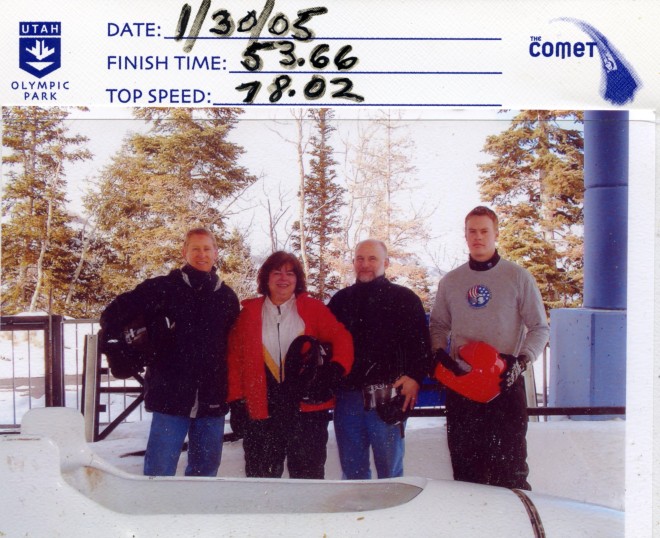
The prize package included a few other perks, one of which was a bobsled ride on the Park City Olympic run from Utah’s hosting of the Winter Olympics of a few years previously. I’m not much of an outdoors person and had never taken up any winter outdoor activities the other side of rushing downhill in a plastic sled. But I was ecstatic about that once-in-a-lifetime chance to do something pretty amazing.

The Olympic Park officials are no fools. They provided an experienced driver for us novices. We were given a brief preliminary lesson, and, of course, we had to sign a waiver which reminded us we were doing something pretty darned risky. The waivers dire language did nothing to dissuade us.

We didn’t set any records, but within mere seconds we were hurtling down that run at seventy-eight miles an hour, our brains bashing against our skulls, our skulls smacking  violently against our helmets, and our helmets cracking against helmets in front of and behind us which, in turn, snapped our necks to and fro in full whip-lash fashion.

Meanwhile, we barreled down the earth-shatteringly bumpy run at what felt like faster-than-light speed. Imagine, if you will, plunging down a steep mountainside full of jagged boulders—it might be almost as treacherous as our bobsled ride. In less than fifty-four seconds (a lifetime, let me add) it was all over. I never want to move that fast again!

You can tell this is the “before” picture because we’re all smiling. They wouldn’t have dared to take an “after” photo!


By the time we crawled our stomach-churning way out of the sled and onto the welcomingly motionless ground, our brains were so scrambled we suspected permanent damage. To this day, I feel justified blaming any poor decision-making or forgetfulness on that bobsled ride.

As much as we anticipated our Olympic moment, the reality was utterly terrifying. I thought it would never end and for the only time in my life, I wished for an immediate death.

Knowing what I know now, I’d probably opt out of that once-in-a-lifetime “opportunity.” But if I’d chosen not to do it, I know I’d still have regrets for passing it up. What we regret is usually what we didn’t do.

But it will never, ever happen again!

How about you? Big or little, on-going or momentary, funny or serious, good or bad, what would you include in your story?


Our Grand Road Trip: National Parks (and more)

In my previous blog posts about our big road trip last fall (start here to catch up), I focused mainly on the unexpected things that happened-. They came upon us with such frequency and regularity that they became the grand theme of our grand trip. But—and this is a big but—we’d incorporated a lot of standard vacationey activities into our travels, and they were grand, too.

We visited four national parks and found ourselves in the midst of several national forests and other national landmarks, especially fitting since 2016 was the 150th anniversary of the National Park System. Each one was spectacular and not one of our visits was long enough to properly take in the splendor. Even so, we were fully engulfed in the joy of the experience, and now we know where we want to spend more time in the future.

I’ve already written about—and posted lots of photos of—The  Badlands. Our reluctance at leaving there was matched only by our anticipation of visiting The Black Hills National Forest, just a couple of hours away. The Black Hills are full of tourist opportunities, including Wind Cave National Park and Jewel Cave National Monument. Unfortunately, we couldn’t figure out a way to make room in our tight schedule for either of those sites. (But as I’ve written before, we’ll be back!)

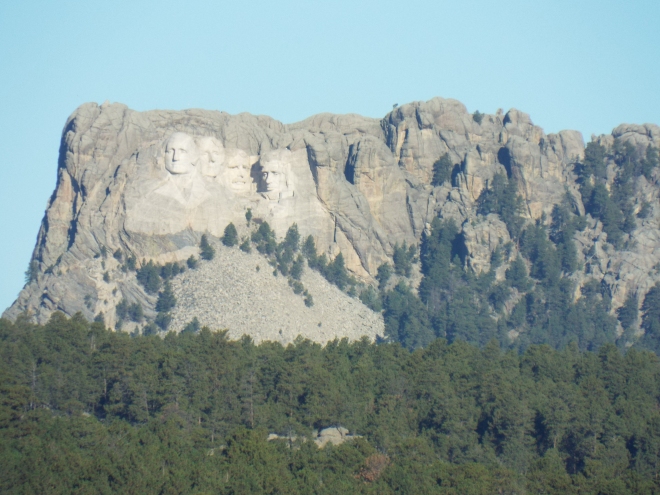
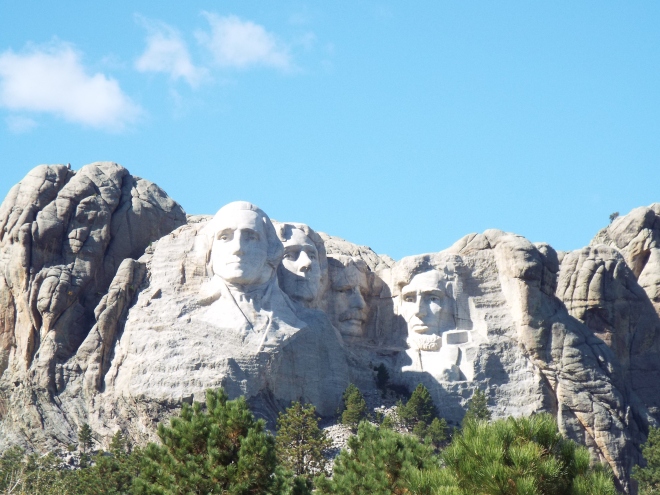
Mt. Rushmore National Memorial is clearly the most iconic and recognizable tourist site in the the Black Hills. Its size alone is dramatic. The mountain’s presidential stone-carved faces can be seen from miles away and from many different perspectives, but to really get a sense of the size of the thing, you may want to visit the memorial itself, which also has a number of ranger talks. Entry and ranger talks are free, but there’s a $10 parking fee ($5 for seniors).

DSCF1705

From a distance

DSCF2096

Closer

DSCF1684

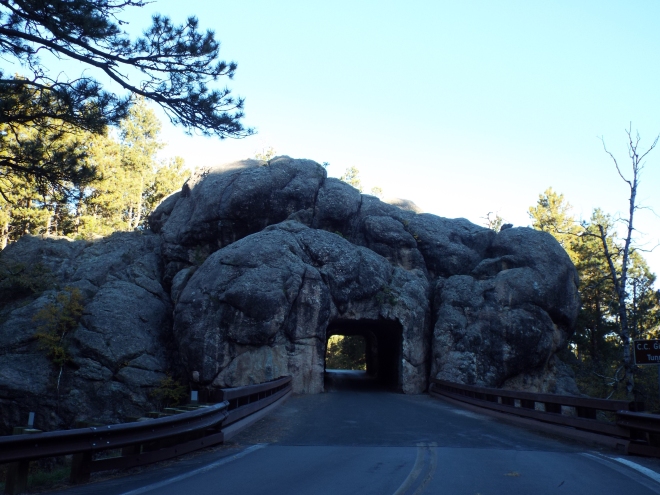
One of the most striking views of Mt. Rushmore came unexpectedly as we were emerging from one of these wee tunnels, the edges of the tunnel acting as a frame for a magnificent portrait.

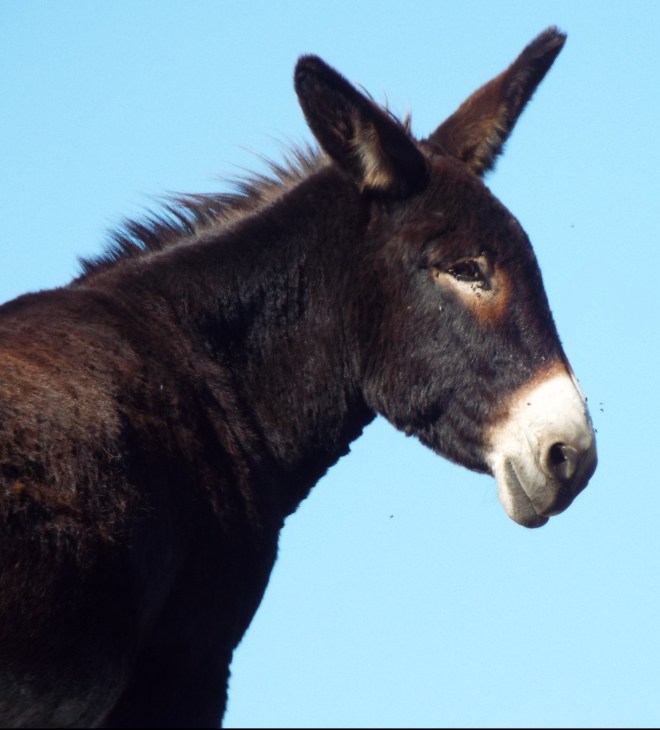
The forest shares a border with Custer State Park, a unique experience all its own. It’s a fairly long drive from Keystone, the nearest town, to get to the park. Though the scenery along the way is fantastic, the park proper is where the fun really begins. Next time, we’ll plan on renting a cabin inside the park boundaries—and taking all our food and necessary supplies. That way we won’t waste precious time getting to and from. In the park is the eighteen-mile Wildlife Loop Road you can drive in hopes of close-up encounters with wildlife like bison, donkeys, prairie dogs, and big horned sheep, as well as the the fourteen-mile Needles Highway. I promise, you don’t want to miss either of these spectacular drives.

Between the Badlands and the Black Hills, there’s enough to keep you gobsmacked for a full two-week vacation, even without stopping at the many commercial tourist attractions along the way, though you can certainly check those out, too.

(You can see more Black Hills and Custer pictures here.

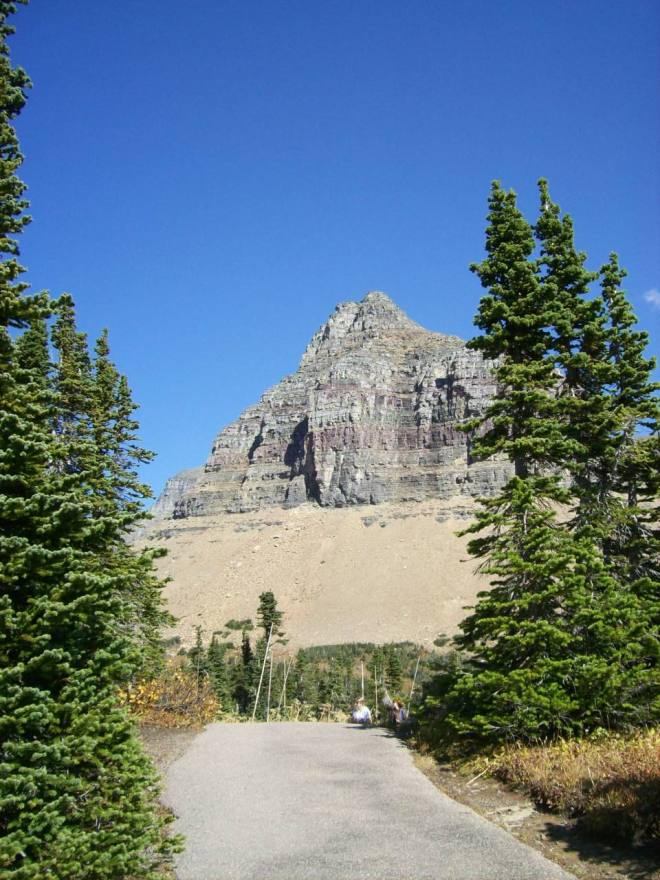
Our next National Park visit was to Glacier. We were so busy taking pictures of gorgeous scenery along the way that all we had time for once we were in the park was the two-hour drive up Going-to-the-Sun Road to Logan’s Pass (6646 ft.) and back down again. Better go soon if you want to see any glaciers. They’re melting fast. The 150 glaciers that inhabited the park in 1850 have now shrunk to a mere 25, and all of those are slated to disappear in the next few decades. The park will have to be renamed, perhaps to Glacier Memorial National Park in honor of the glaciers that once were.

Our first peek at a Glacier NP peak

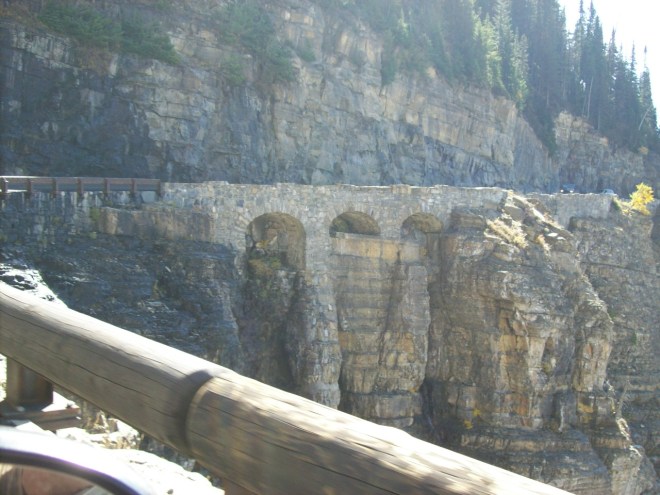
What an engineering feat it must have been to build the fifty-mile-long Going-to-the-Sun Road in the early 1900s.

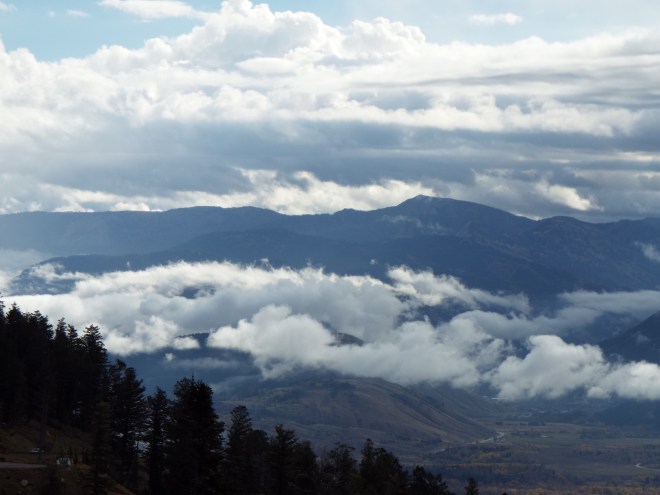
We traveled through a portion of the Grand Tetons on our way to Yellowstone. It was a cloudy, foggy, misty day so the view was a little different than it would be on sunny days, but still stunning in its own way.

We were welcomed to Wyoming with this billboard and vistas of Grand Teton NP.

We didn’t get to see much of the Grand Teton mountain or her two sister peaks on this cloudy day. Controversy surrounds their naming. By far the most colorful explanation is that early French Canadian explorers from the Northwest Company, upon seeing the three peaks of the range, called them “Les Trois Tetons,” or “The Three Breasts.”

I can’t remember a time in my life when I didn’t long to visit Yellowstone National Park. Back in the sixth grade, when one of my schoolmates returned from summer vacation bragging about her Yellowstone trip, I was too jealous for words. So no way were we traveling to Montana and Wyoming and miss out on my big dream.

Yellowstone. Yes, we knew it was big. But you cannot begin to comprehend its size until you’re right there in the thick of it. To put things in perspective, a friend told me that after her family had entered the park, it was another fifty miles to their campsite. You could spend weeks in Yellowstone and not begin to see it all. (And we just had an afternoon!)

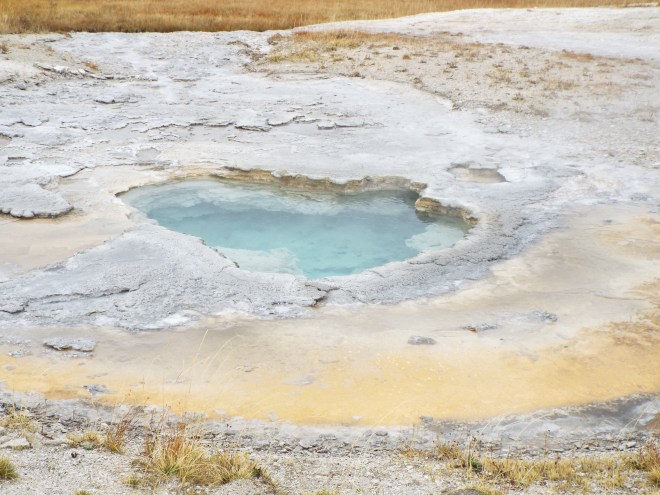
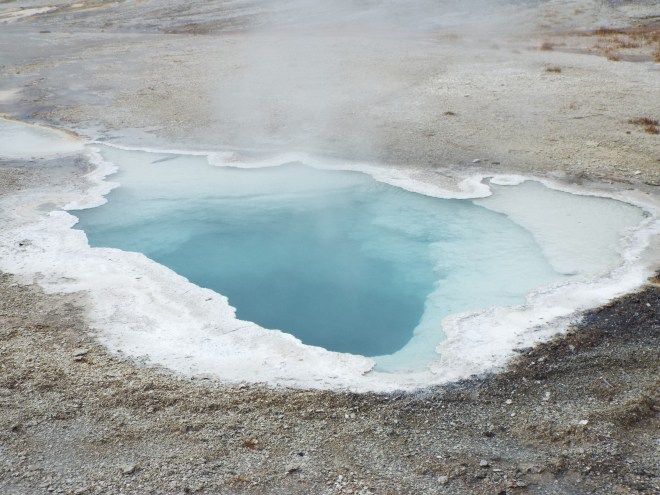
It took us a while to figure out that all those white wisps we were seeing off in the distance weren’t fog, but geysers. I’d forgotten that Old Faithful wasn’t the only one. There are actually 500 geysers and 10,000 thermal features in all. In other words, they’re everywhere!

A cluster of steamy spots

We arrived at Old Faithful just as its display was ending. That was a good thing—the wait for the next show meant we could stroll the boardwalk and see many more geysers as well as mud pots, fumaroles, and hot springs. We might have passed them up otherwise, and that would have been a real shame.

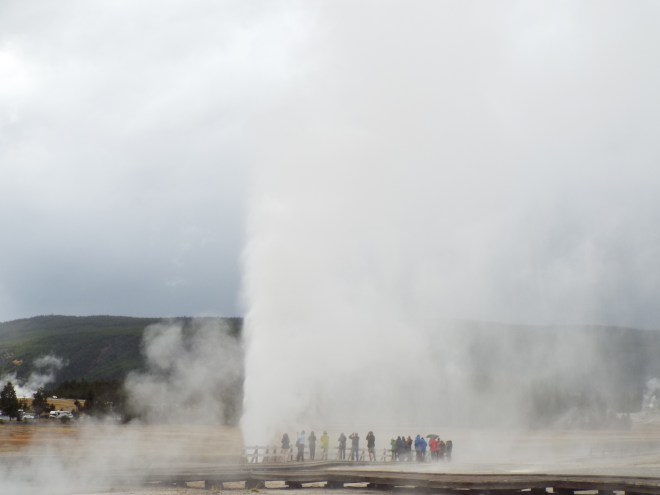
No, this isn’t Old Faithful, but Beehive Geyser, which shoots steam 200 feet into the air, more than 50 feet higher than its more famous sibling’s average. We lucked out—it can be days between eruptions.

One of Yellowstone’s 300 waterfalls

There are nine lakes in the park. At 136 square miles, Yellowstone Lake is the largest.

Our national parks, forests, monuments, memorials, trails, historic sites, and landmarks are indeed treasures. They are our heritage and our future. It takes only a visit to understand beyond measure that we must preserve and protect them for all to enjoy—today and all our tomorrows.


Our Grand Road Trip, Part Two: South Dakota, Montana, Idaho

Our Grand Road Trip, Part Two: South Dakota, Montana, Idaho

In my last travel blog post, we traveled to Louisville, through Illinois, across Minnesota and into South Dakota’s Badlands. Today we’ll visit more of South Dakota and three states farther west.

Here’s where our journey started to take a serendipitous turn. Over and over we found ourselves in the midst of something unexpected. And that unexpectedness never failed to wow us. Just the idea of falling into so much amazingness almost entirely by accident was enough to take our breath away.

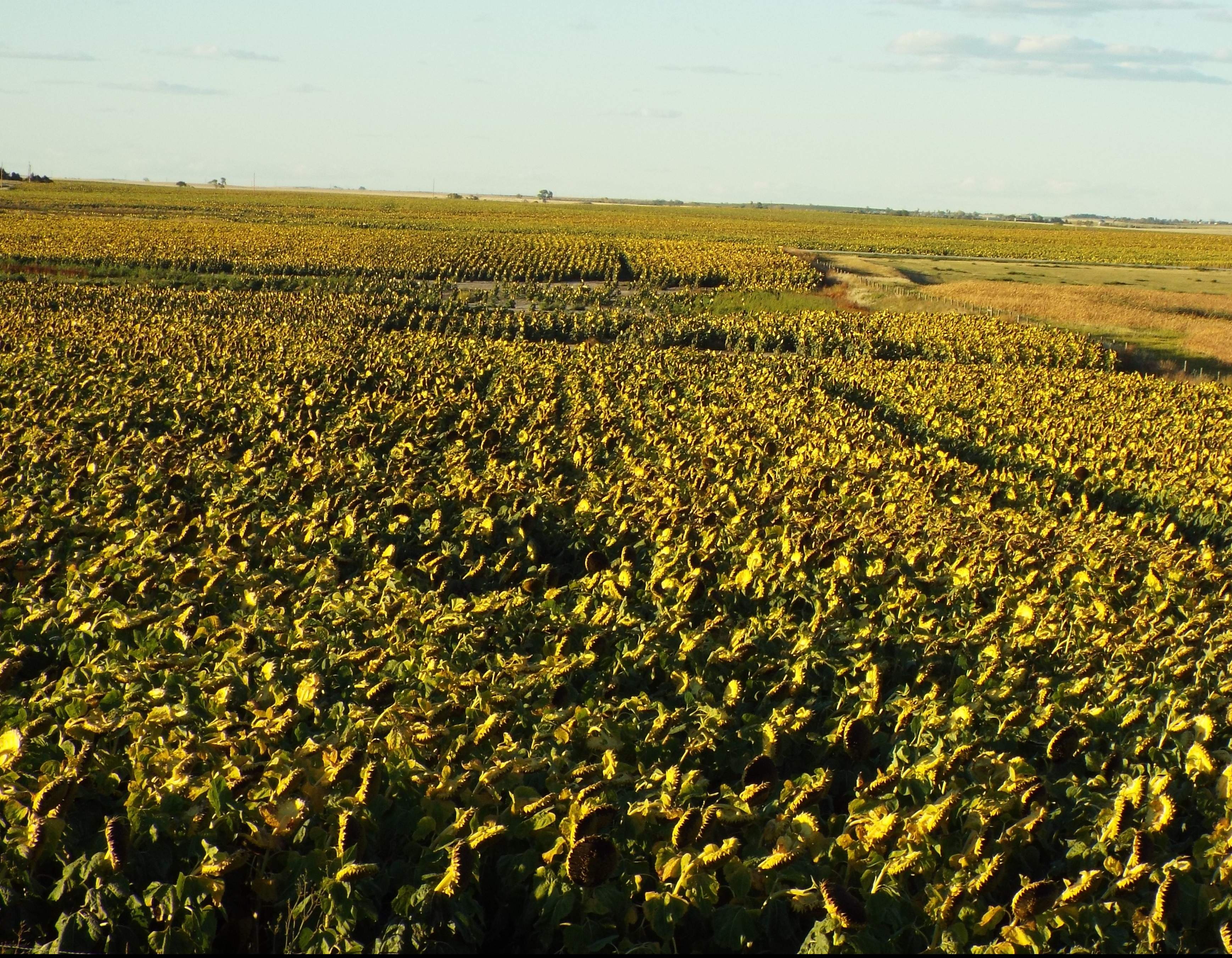
We’d almost become inured to the massive fields of corn and soybeans when we spotted something a little different. Ever wondered where all the sunflower seed you buy for your songbirds comes from? Well, we found out. They were well past flowering—wouldn’t that have been something to see—but the seeds were still busy preparing for their destiny.

DSCF1665

As far as the eye can see and then some

On our way across South Dakota we pulled in at a rest area that turned into a happy surprise. How many rest stops do you know that house a museum? Yeah, that’s what I thought. But just off Interstate 90 near Chamberlain, that’s exactly what we found with the Lewis and Clark Interpretive and Keelboat Center. We were excited to be standing on ground where Lewis and Clark’s Corps of Discovery explorers set up camp. They picked quite the spot—a bucolic bluff overlooking the scenic Missouri River. (We’d soon discover that much of our journey passed along the Lewis and Clark Trail—another unexpected treat.)

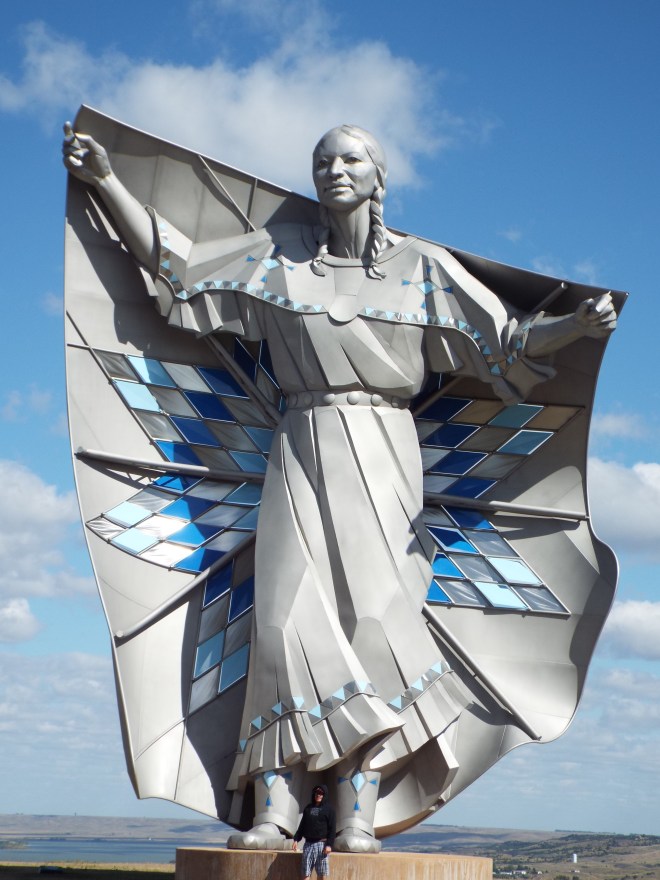
That was only the beginning of the excitement we felt at this rest area. Just days before our arrival, the fifty-foot tall, stainless steel sculpture named Dignity had been installed. Dignity, with outstretched arms holding a multi-hued blue-star quilt, was designed by South Dakota artist Dale Lamphere to honor the culture of the state’s indigenous Lakota and Dakota peoples. He used several Lakota models from fourteen to fifty-five years of age to give the statue a universal feel.

She was magnificent!

Gives me chills, even now

This was a stop we had not planned, knew nothing about. We certainly didn’t anticipate spending well over an hour there, but it was worth a late arrival in the Black Hills that evening to experience this moment.

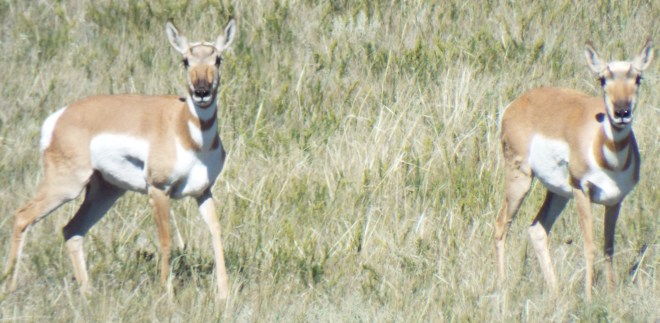
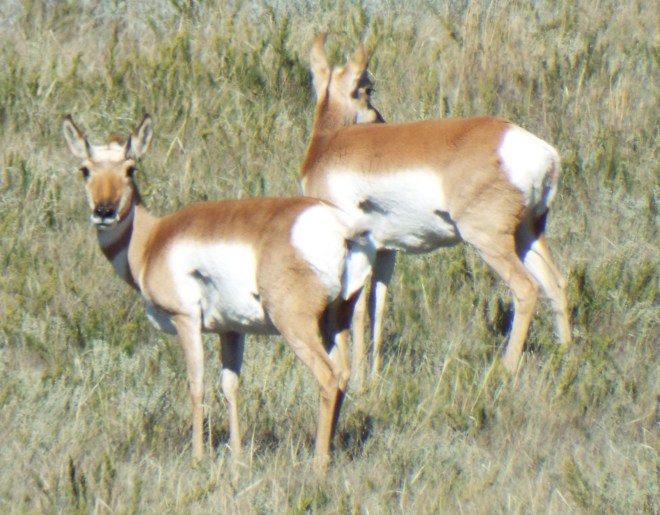
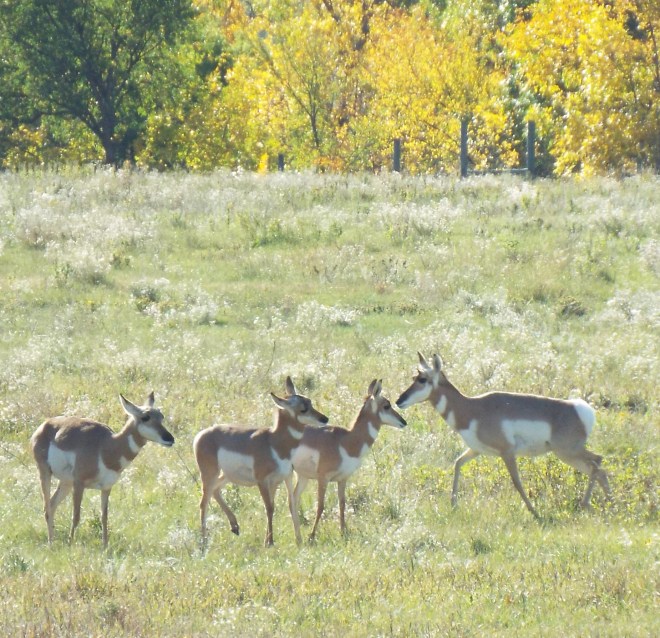
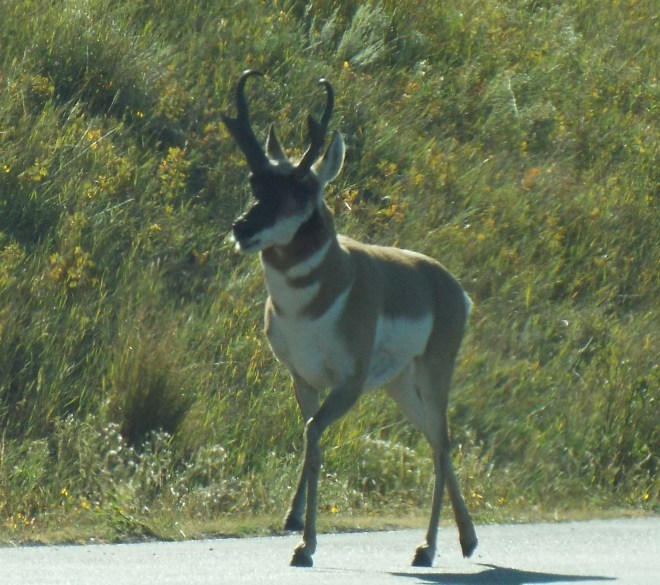
Then came the pronghorn antelopes. They appeared from nowhere, then they were everywhere, sometimes outnumbering the cattle whose pastures they shared with apparent impunity—a real peaceable kingdom. I couldn’t get enough of them: their stature, their gracefulness, their markings.

Where the antelope play

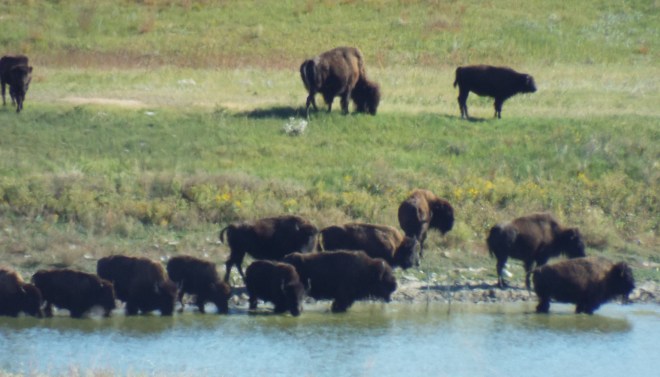
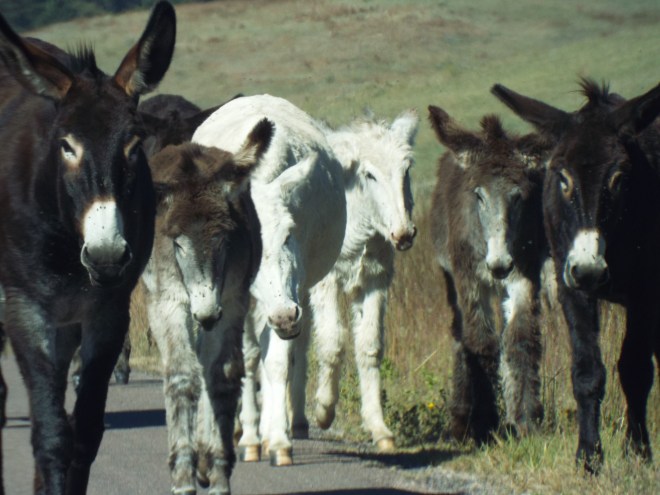
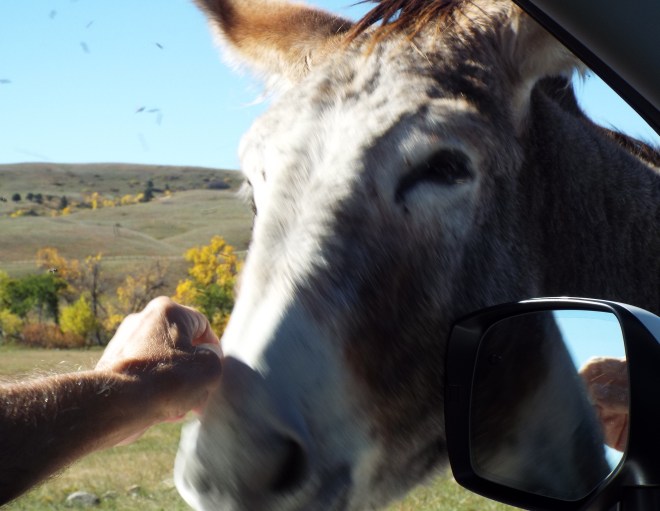
DSCF1738 - CopyWe really didn’t know what to expect in the Black Hills, other than that we’d see Mount Rushmore and hopefully a few bison or other wildlife blocking our path somewhere or other. Were we ever in for a treat! Driving the Loop Road in Custer State Park, not only did we get close-up (as close as is safe) views of the bison; we got real up close and personal with some pretty brazen donkeys.

Where the buffalo roam

I thought they looked like a bunch of teenage hoodlums up to no good or maybe a gang of gunslingers itching for a fight.

The Gnome makes a friend. (But this guy would be happier if that hand held an apple!)

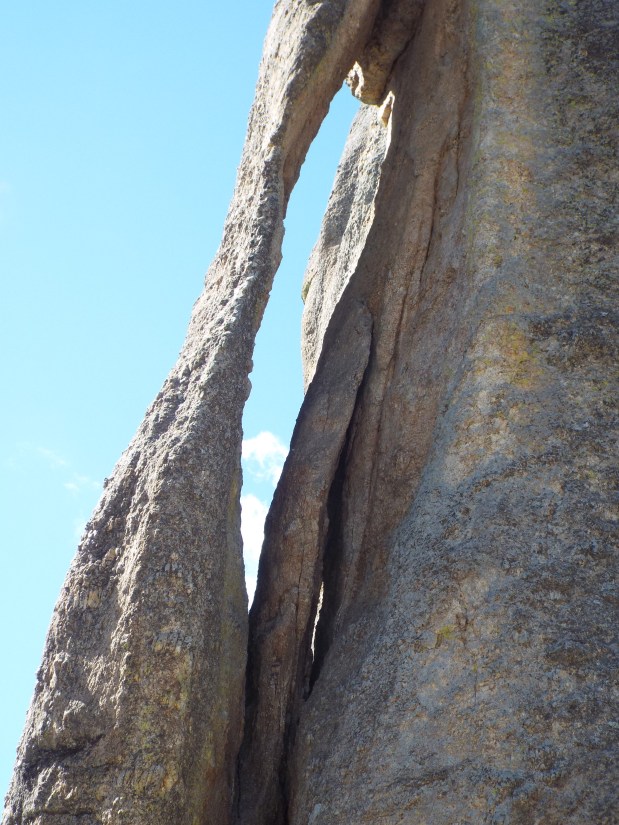
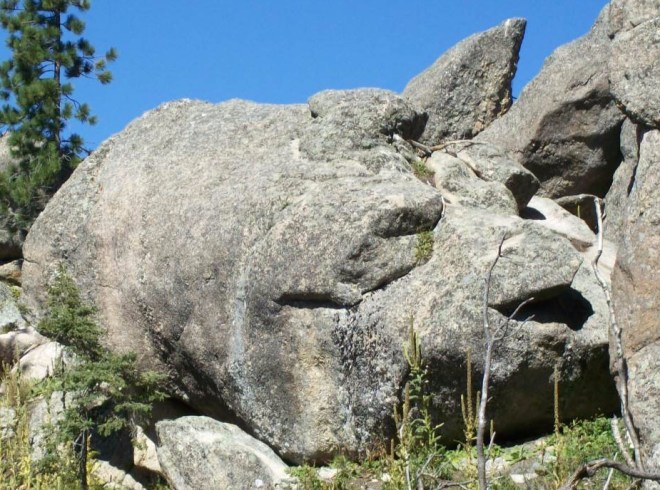
It was the many unusual and massive rock formations, though, that captured our imagination. Sort of like finding cloud pictures in the sky. We’re definitely returning for a longer stay, probably right smack in Custer State Park. What do you see in these images?
As we crossed into Montana, we understood the state’s Big Sky moniker (though South Dakota and Minnesota could vie for that title as well, in my book). We couldn’t pass up a day trip to Glacier National Park where we went up, up, up the Going-to-the-Sun Road. How romantic a name is that? And such an astonishing engineering feat, especially given that it was built in the early 20th century.

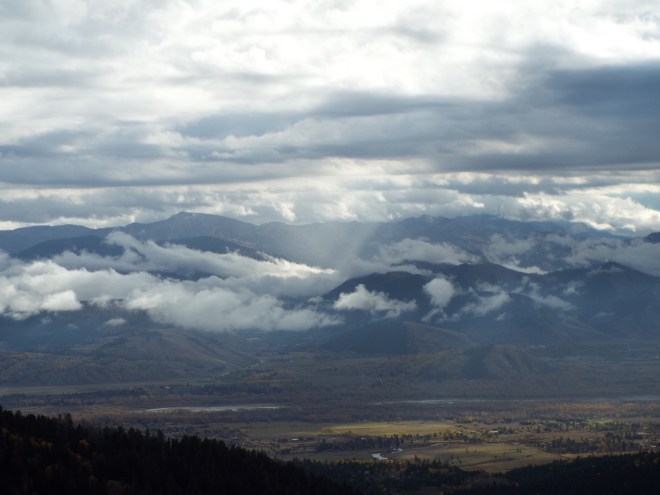
I really wish we could have spent more time in the park. Like so much else on this whirlwind trip, it only got a lick and a promise, but even that was pretty amazing. Yet, it was again the unexpected that really got to us. Driving to Glacier meant passing Flathead Lake in the Confederated Salish and Kootenai Tribes Flathead Reservation. With over 185 miles of shoreline, it’s huge! On the way up, we oohed and aahed over the lake’s crystal blue surface glistening in the sun. Our return coincided with twilight, giving us an equally dramatic perspective.

Leaving our final “cousin destination” in western Montana, we opted for a more southerly route home so we could see more new-to-us parts of the country—a very good idea, it turned out. One of the many unexpected and spectacular sights we encountered was Mt. Borah. Located in the Challis National Forest in eastern Custer County, Mt. Borah is Idaho’s highest mountain. Though it was only rainy down where we were, way up at 12, 667 feet above sea level, snow was beginning to cover the peaks.We stopped to learn about the 6.9 magnitude earthquake that shook the mountain in 1983, raising the peak about a foot and lowering the valley floor by eight feet. We could even see the quake’s scar on the side of the mountain. (All very intriguing, but absolutely as close as I ever want to get to an earthquake!)

And then we came to Wyoming. Now, there’s a big state! And it graced us with so many unexpected wonders that it deserves an entry of its own.

Until next time . . .

The Grand Road Trip, Part I: Kentucky to South Dakota

The Grand Road Trip, Part I: Kentucky to South Dakota

The Gnome and I have never been big travelers. It’s not that we don’t enjoy seeing more of the world—it’s just that we’re always so busy with can’t-wait projects around here. (Not to mention the many years when money for travel was an extravagance we couldn’t consider.)

The past year has been a rare exception. Not only have we traveled more, but circumstances conspired in such a way that we took two major trips in just six months’ time. As I wrote here and here, we recently returned from visiting long-time friends in California. It was quite the trip. But last fall, we headed out on an even bigger journey, a 24-day road trip of more than 6,000 miles (and 4,000 photos—really!)—another long-promised trip both to ourselves and to close-in-heart but far flung cousins and other family.

That trip, too, took us through previously unexplored territory. On our travels, we wound through fifteen states, seven of them new to us. We got to spend time (oh, so little) in Glacier, Grand Teton, Yellowstone, and Badlands National Parks and too many national forests to count.

Of course, the best parts of the trip were the good times we spent with our relatives—not to mention the gourmet meals they prepared for us! They treated us like royalty. But that was family time, private time, so it won’t get any further mention here. But the incredible scenery and the history we encountered along the way was pretty phenomenal too. That I do want to share with the world. And there was so much of it, I realize this story has to be serialized.

First things first. Our driving on Day One ended in Louisville, Kentucky. Louisville will always hold a special place in our hearts. It’s where we moved following our wedding and honeymoon, and we stayed for twelve years. Both of our children were born there. Except for the humid summer heat, we loved everything about Louisville and nothing—except wanting a mountain home nearer our families could have driven us away.

It’s been years since we’d been back, and while much is the same, lots of changes have come to River City since we left, too. Sometimes it was hard to get our bearings, but we had to check out a few of our favorite old haunts. Our first home-of-our-own is still there (minus a couple of special dogwoods), but barely. A church parking lot expansion has taken all but a few houses on that block.We sat on the banks of the Ohio munching on Kingfish Restaurant’s onion rings while the Belle of Louisville graced us with her presence.And then there’s Plehn’s Bakery—A Louisville staple for almost a hundred years and one of our favorite weekend destinations back in the day. We couldn’t say goodbye to Louisville without dropping in for our favorite butter kuchen. I wish they shipped!
We didn’t have time to take in any of Louisville’s many tourist and cultural venues, but it’s chock full of them, from Churchill Downs to the Muhammed Ali Center to Actor’s Theatre. I highly recommend Louisville as a vacation destination. You’d never get bored.

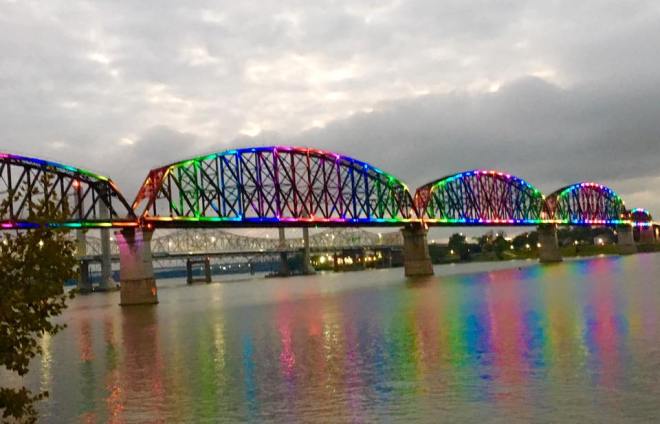
Louisville already had a phenomenal park system (eighteen parks and six parkways designed by the father of American landscape design, Frederick Law Olmstead). Now, the city has added 85 acres of waterfront green space and walking paths. A great place for family frolicking. The mighty Ohio itself has become a haven for paddlers. We were delighted to discover that the old Big Four railroad bridge has been transformed into a walking bridge that will take you across the state line into Indiana. It’s clearly a popular walking and cycling spot. Lit up at night, it’s all about romance. We had a terrific view of the bridge from our riverside restaurant terrace. I could have stayed for hours.

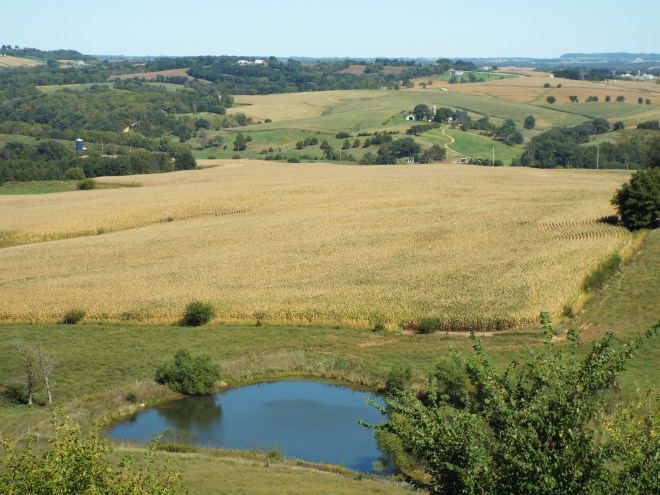
Time has been good to Louisville.From Louisville we traveled across Indiana and up to northwestern Illinois. We know this route, but the dramatic change from flat plains to rolling hills always catches us off guard. When we visited the museum in charming Galena, we learned a little more about the landscape and its history. The Driftless, an area encompassing parts of Wisconsin, Minnesota, Iowa, and Illinois, escaped the flattening effect of glacial ice fields way back when. As a result, the region is graced with millions of bluffs and valleys with elevation changes of up to 1100 feet. Right in America’s heartland. Driving through the pastoral Driftless is not only beautiful, it’s calming. Good for what ails you.Something we hadn’t seen before in our travels through this area was the silver glint of massive wind farms. Wind turbines filled nearby fields and faded into the distance. Far too many to count. Farther than the eye could see. Watching the blades turn while listening to a classical piece on the car radio nearly put me into a hypnotic trance.DSCF1271Of course, we drove past miles and miles of corn. It was higher than the proverbial elephant’s eye. I wondered if any of it was being grown for human consumption.
Not a cloud in the sky

After a couple of days in southeastern Minnesota, we traveled across that state on our way to South Dakota and then Montana, passing even more massive wind farms and even more corn. I know people make jokes about how boring the flat landscape of the plains states is, but we found it to be soothing. Three (big) states’ worth of soothing. The thing is that with all that flatness—and fewer and fewer trees along the way—the sky seems to grow ever larger. So much space. So blue. So cloudless. Honestly, we hardly ever saw even the smallest trace of a cloud all the way across those three states.  And the landscape is ever-changing.  I was afraid to blink for fear of missing something. But I’m getting ahead of myself.

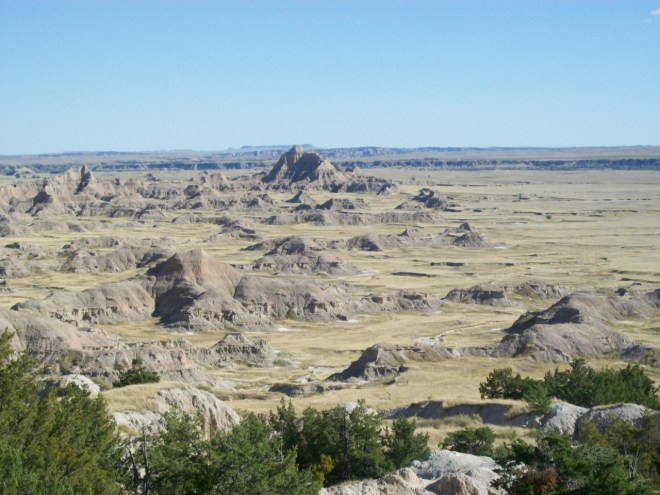
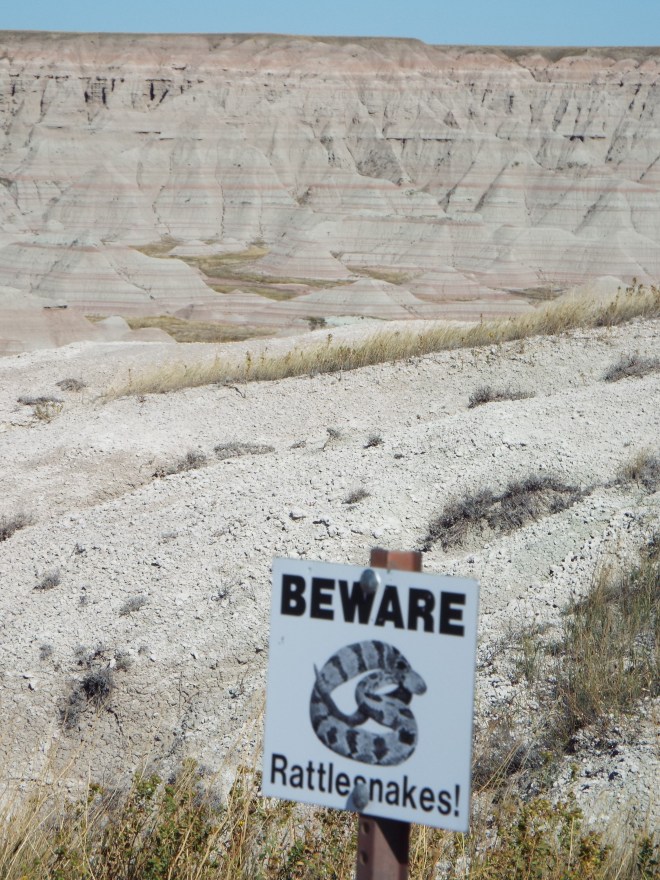
Back to South Dakota—-we had only given ourselves a few hours to spend in the Badlands, but every minute was magnificent, and it took no time for us to know for certain that we’ll be coming back here for an extended stay. We could barely stand upright against the strong wind gusts, and the glaringly bright sun made it impossible to catch the nuanced but striking shades of color in the rock.

Looking out across the canyons and the vast expanse of land with buttes rising from the plains, we were transported to the movie and TV westerns of our youth, imagining the black-hatted bad guys firing off shots from behind some unknown rock deep in a canyon. It was hard to believe we were looking at something real.This sign kept us on our toes—especially me with my sandal-exposed tootsies.
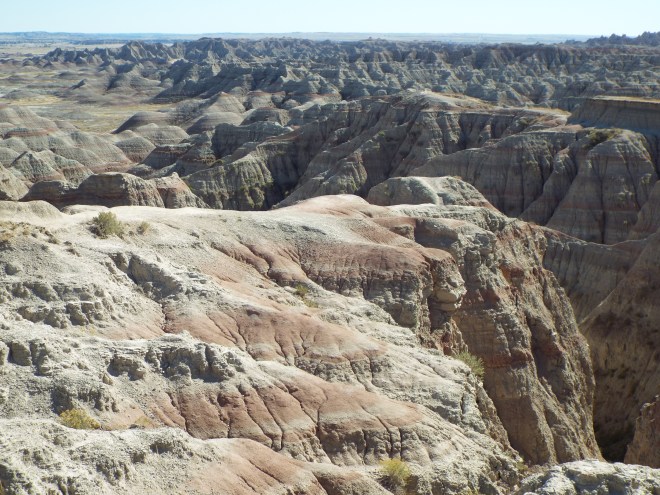
Again, no clouds. Not anywhere.

And our trip was just beginning.

(Stay tuned for Part II of The Grand Road Trip, full of unexpected discoveries. Coming soon.)

California Dreamin’ – Continued

California Dreamin’ – Continued

Last Tuesday’s post tells a bit about our recent trip to California. I won’t repeat it here. Just wanted to share some more photos as promised. (Some pix by the Gnome; some by me–can’t remember whose is whose anymore.)

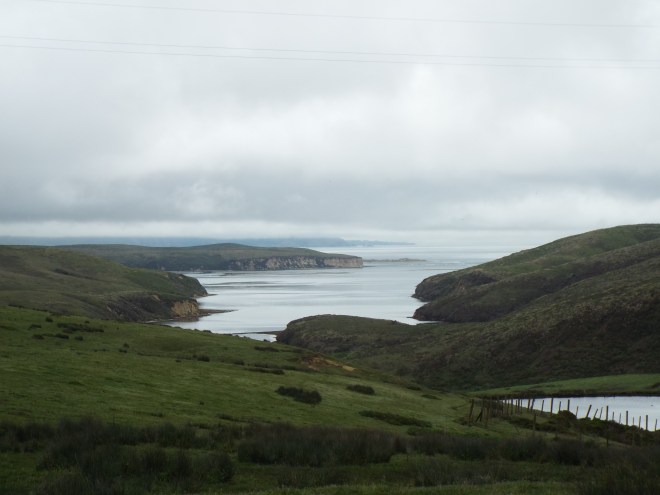
Leaving Pt. Reyes

Pride of Madeira


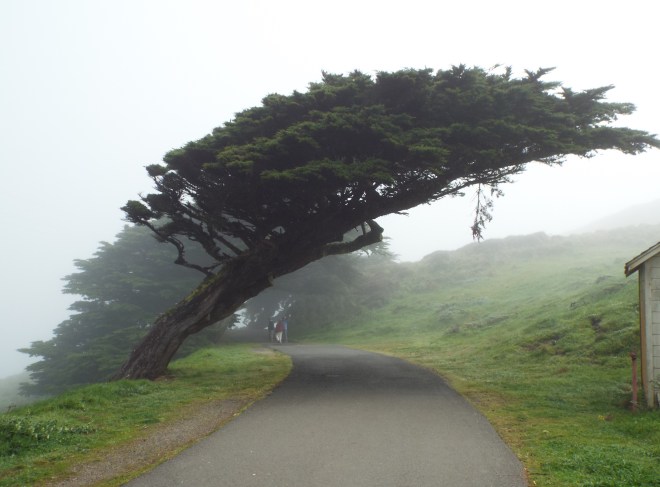
Windblown

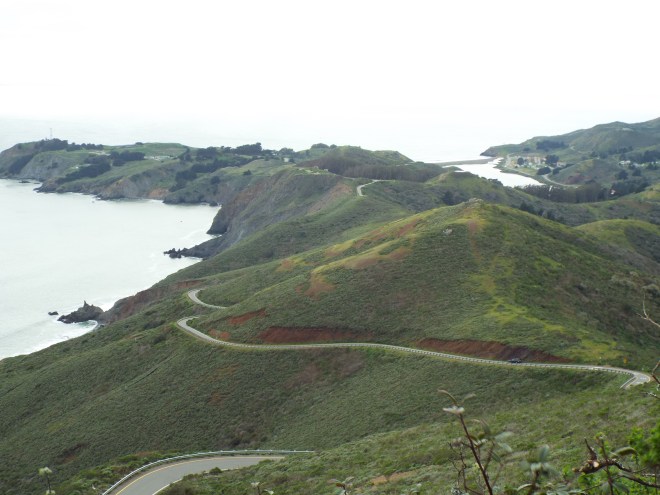
Point Bonita, across the bay from San Francisco

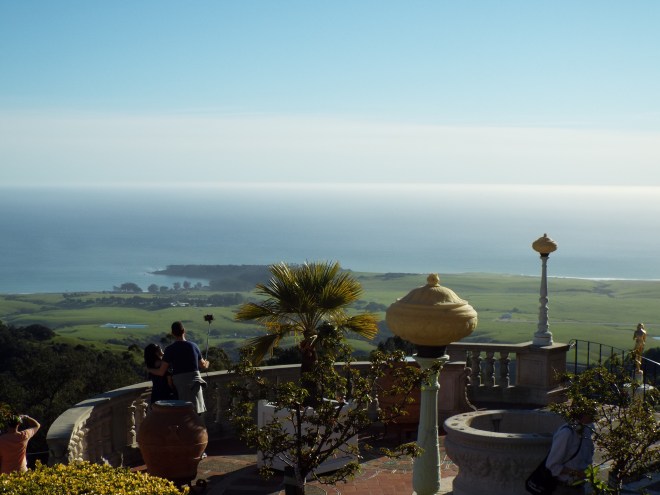
Scene 1 from the Hearst Castle

Scene 2 from the Hearst Castle–the man knew how to find a heck of a view.

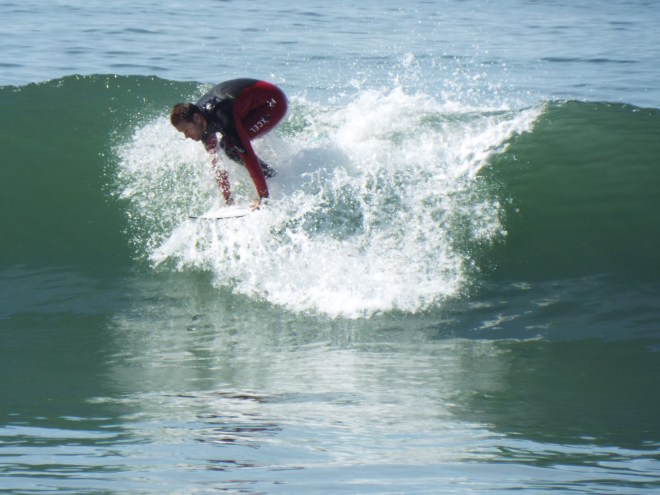
Surfin’

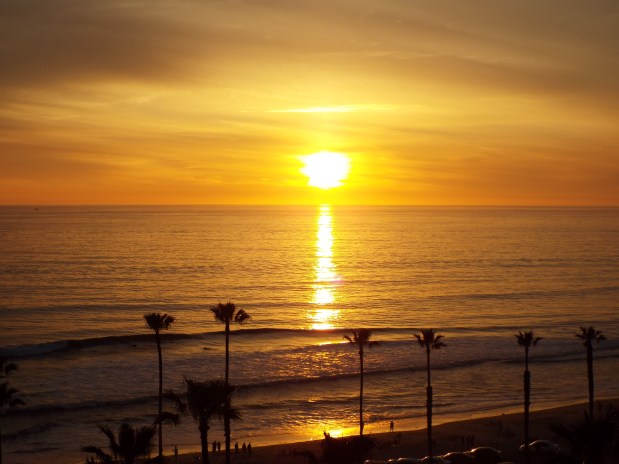
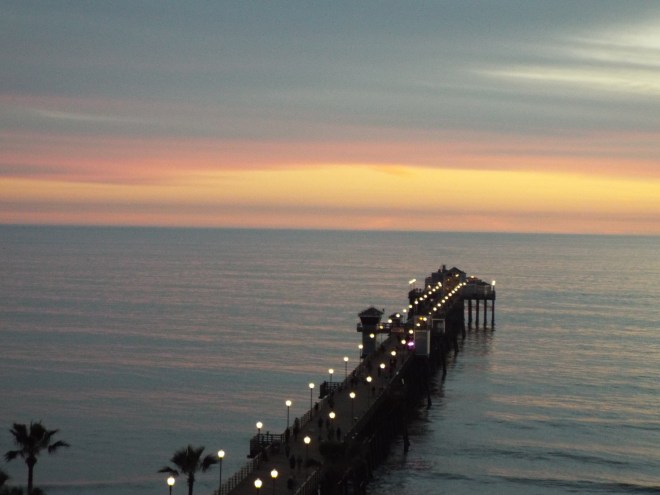
Oceanside Pier at twilight

Nearly full moon


So many orange, lemon, and quince trees. How I wanted to reach up and snatch a juicy one.

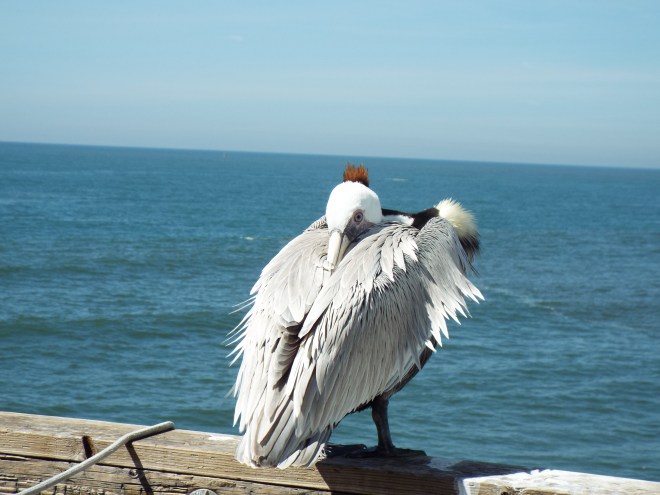
This guy was a real showoff.

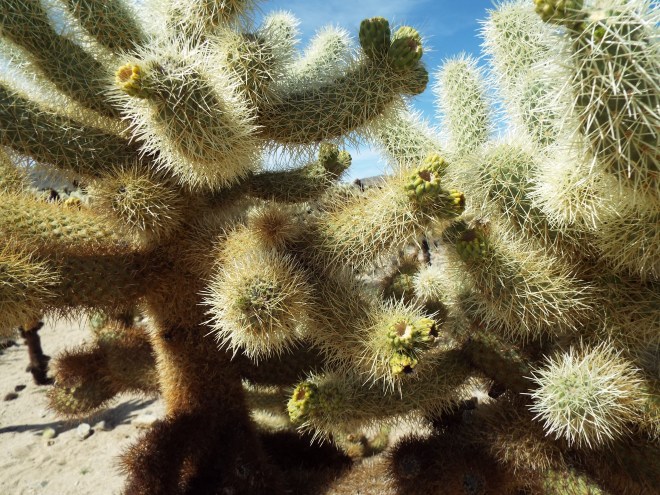
Don’t let this soft-looking Teddy Bear cactus fool you . . .

their spikes can cause serious injury.

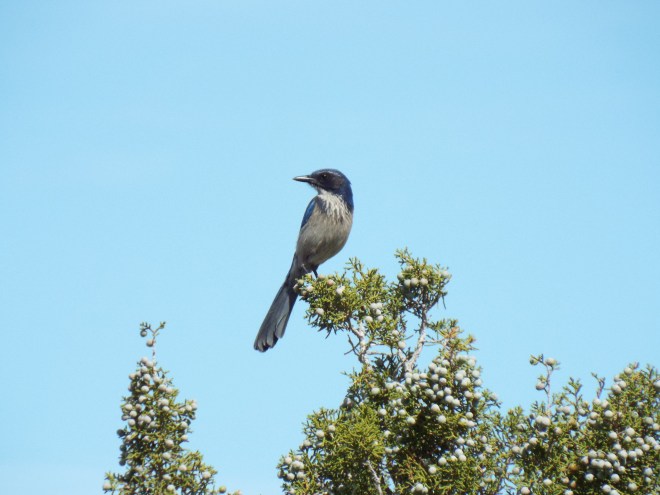
Western jay

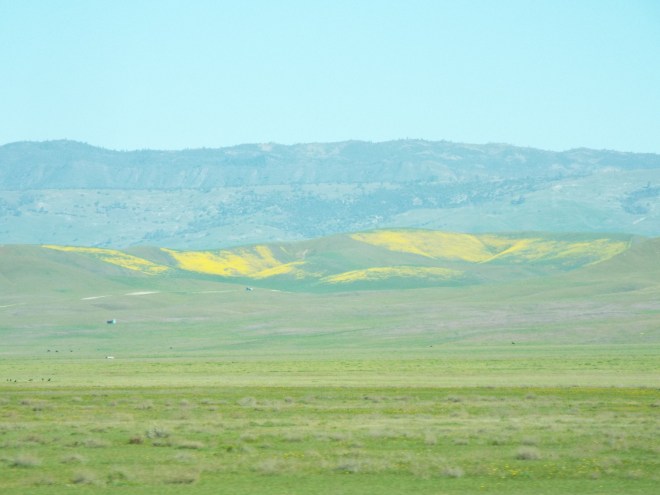
See those big patches of yellow? California’s wildflowers were just beginning to put on their display while we were there, working their way up the mountainsides.


Lizard


San Simeon