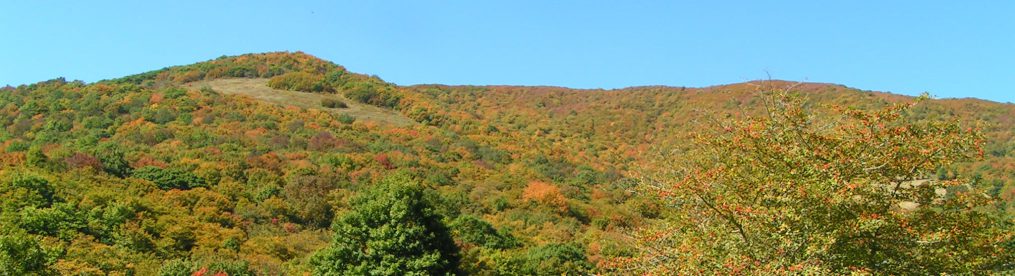
Yes, It Snows In North Carolina

Yes, It Snows in North Carolina   

(On the occasion of the twenty-fifth anniversary of the Blizzard of ’93)

When the Michigander I’d just met learned that our family lives in North Carolina, he said, “Well then, you don’t have to worry about snow.” It’s a comment I frequently hear from people who “aren’t from around here,” as if they think all Tar Heels live at the beach. Little do they know. In a state that stretches 600 miles inland, my home is on the same longitudinal plane as Cleveland, Ohio. The meridian actually skims Michigan’s mitten thumb and lines up with eastern Ontario. Pretty far inland.

At more than 4,000 feet in elevation, we’re also a bit higher than coastal areas. So, yes, we have some weather, and it’s not usually fit for swimsuits. Our thermometer has read as low as -32º. Our most wintry weather has a tendency to come after many folks have long since said goodbye to winter. During our first year here, we were surprised by several inches of snow on Memorial Day. Just a few years later, four-foot drifts covered our gravel road in the middle of April.
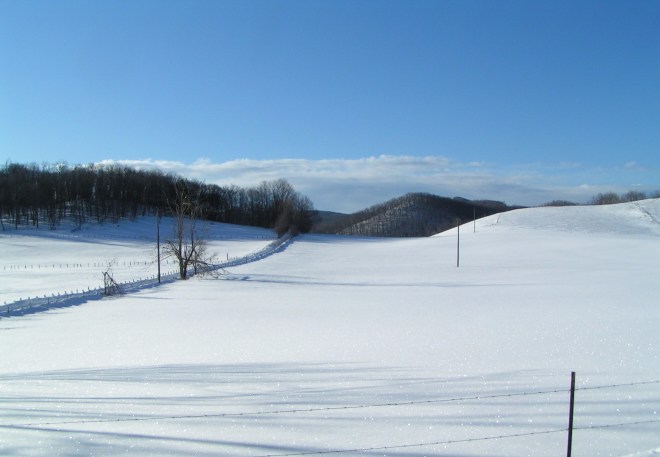
Snowfall near our house, 2010: everything is covered.

Then, there was that other time . . .

In mid-March, 1993, I had a business meeting a couple hours from here. I decided to add a quick overnight visit with my parents, who lived nearby. Snow was again in the forecast, but it wasn’t expected to begin falling until sometime the following day. I’d surely return home ahead of any significant precipitation.

Even so, I parked my little Geo Metro at the bottom of the mountain road that led to their home. Just in case. If the snow came earlier and/or heavier than expected, it would have been treacherous trying to drive out from my parents’ mountainside perch.

The next morning, we woke to a world of white outside and darkness indoors. The snow was deep and heavy. Power lines had snapped for miles around. Snow poured down for three days. Hundred-mile-an- hour winds created monstrous drifts. The governor issued a two-day long, twenty-four-hour curfew. Even wwhen the curfew was lifted, it was clear I wasn’t going anywhere.

Not only could I not retrieve my little car from the snowbank created by a snow plow—I couldn’t even see it under its huge snow mountain. My seventy-something-year-old father, who had suffered a massive heart attack several months prior, was in no shape to shovel snow. And I wasn’t willing to risk the same fate myself.

Back at home, the Gnome and our college-aged son who was getting ready to return to school after spring break were confronted by drifts up to four feet deep once the snow finally stopped falling. They were trapped, too. We usually hire someone to plow out our gravel road when it’s impassable, but no one could get up there. With school beckoning, they felt compelled to begin the daunting task of digging themselves out by hand.

Worried about not one but two potential heart attacks, I insisted on sworn promises that they’d take breaks a minimum of every two hours and call me on the nose at each break. I couldn’t get to them, but if I didn’t hear from them on time, I’d be calling 911 stat!

There was nothing more I could do except wait it out. My parents and I got by with a roaring fire in the fireplace and a lot of canned soups heated on a camp stove. We entertained ourselves with conversation and reading.

Enjoying my snow exile in a hammock

My mother had recently acquired a book published by the genealogical society of her home county. Residents had been invited to send in family stories and histories. Some were straightforward with lots of begats. Some people heaped praises on themselves—in the third person, clearly not realizing their own name would appear as author of their submission. Some were pious, some irreverent, some lavishly embellished.

Other entries were laugh-out-loud funny. Like the one about the grandpa who never cut his toenails and walked around his log cabin barefoot, his nails clicking loudly on the wood floor with each step. Or the one about the family whose children decided to outfit their mother with a football helmet and hang her upside down in a homemade traction device to cure her aching back. Or the story about the man who kept a skull in his closet. Then again, maybe we were just punch drunk. It was good medicine to read and share those stories while we were cooped up.

The book presented another opportunity, one to learn about my own family history. When I’d previously asked Mother how long her family had lived in her home county, she couldn’t tell me. She knew nothing about her family beyond her grandparents. Even then, the information was sometimes scanty.

Each article, it seemed, provided a clue about yet another previously unknown branch in my family tree, which in turn led me to still another and another. My paternal grandfather died years before my grandparents met. Mother knew hardly anything about him. With the help of the heritage book, I discovered that he had been in the Civil War, that my great-grandmother was thirty years his junior and was his second wife. I learned that my grandfather’s ancestors were some of the first European settlers in the area. My grandmother had deep local roots, too. I discovered that while most of my ancestors hailed from the British Isles, some came from Germany. It was fascinating stuff, even if not quite all of it was verifiable.

I was stuck in place for almost a week, much of it with my nose buried in the heritage book. By the time I finally left for home, I had a sheaf of papers summarizing family stories and diagramming potential genealogical connections for further research.

That week was the beginning of an enduring passion for family history, one that’s even led to a couple of books. All because of the Blizzard of ’93, otherwise known all along the East Coast as the Storm of the Century. On this occasion of the storm’s twenty-fifth anniversary, we’re in the midst of another great snowstorm. It’s not expected to be as big an event as the Blizzard of ’93, but then that one caught us off guard, too. 
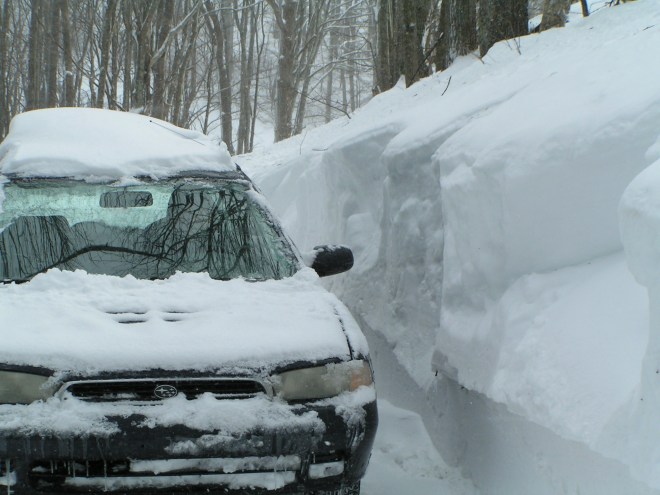
Taking a bite out of snow

For a recap of the Blizzard of 1993, click here:   https://www.wataugademocrat.com/watauga/the-blizzard-of/article_13899f70-3c38-5153-8e92-10c2da17e884.html

The Gift that Wouldn’t Die

The Gift that Wouldn’t Die

What do hair curlers, a canary funeral, and a burn pile have in common? They’re all connected to a childhood Christmas present.

My grandmother—my amazing, funny, creative, exuberant grandmother—sent a replica of an oak sugar bucket for Christmas when I was eight years old.

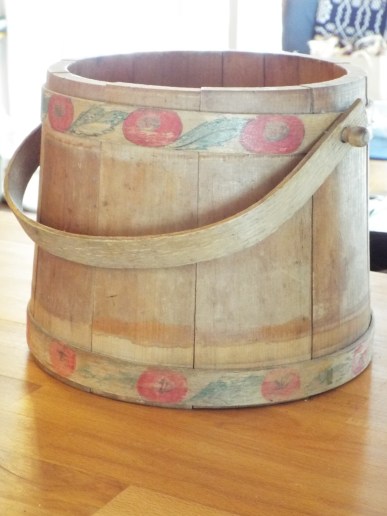
It was the same year a black cocker spaniel puppy quietly sat in a basket under the tree, waiting to be discovered and fussed over. But Blackie wasn’t the first thing I spotted. The sugar bucket was—a small wood-stave bucket, slightly smaller at the top than the bottom, held in place by two circular wooden bands, one near the bottom and one near the top. It had a wooden lid and a curved handle for carrying. To make it uniquely hers, Grandmother had added decorative touches with crayon.

As was typical, her designs didn’t match. On the lid, in all the primary colors, was a depiction of a female Mexican hat dancer, while red apples and green leaves ringed the bucket’s bands. A strange combination.

That was sixty-three years ago. As unlikely a gift as a wooden bucket is for an eight-year-old, I still have it. It’s traveled with me through childhood, adolescence, and adulthood in all its stages. It’s traveled from South Carolina to Kentucky to North Carolina. It’s been with me through teen angst, first love, first heartbreak, college, marriage, motherhood, and empty nest. It has seen me through girly girlhood to feminist maturity. It’ was part of my greatest life adventure—moving to a strange place and hand-building our home.

My bucket played a role in the funeral of our canary, Gene, who died unexpectedly not long after that Christmas. I’d had no experience with human death at that time, but Gene’s was the second pet death in my life; it was hard on me. I gathered my brothers and neighbors in our backyard where we dug a small hole. I placed Gene in an aluminum-foil-lined shoe box, and we lowered him into the ground with a eulogy, a hymn, and tears. But I didn’t have a monument. So, to memorialize Gene’s life and death, I wrote the details—name, dates, and how beloved he was—on the underside of my bucket’s lid.

For the most part, my bucket was where I stored my hair curlers, curlers that changed over the years as hairstyles and curling techniques evolved. First, there were small-diameter metal rods with attached clips, rubberized on the closure end. Those were followed by spongy, pink, foam curlers with matching attached plastic clips. At some point, self-gripping velcro curlers filled my bucket, as did snap-ons.

When bouffant hairstyles became all the rage, my old curlers were replaced with large, brown, mesh cylinders, supported by wire spirals and held in place with bobby pins, which were in turn succeeded by similar mesh curlers that surrounded hard, stiff bristles to lock the hair in place. Plastic “pins” were stuck through the curlers to hold them in place. Those curlers were painful to sleep in, and if you didn’t curl and uncurl just right, those curlers grabbed your hair and wouldn’t let go. Even more painful.

The way we were–a typical late night dorm party


Probably the last curlers to make my bucket their home were the so-called magnetic curlers. They were made of hard plastic punched with holes for air circulation and came in various pastel shades and multiple sizes from half-inch to two or three inches in diameter. Those were the days of serious hair teasing, gels, and sprays. Again, bobby pins held the curlers to my head.

Primping for the prom


Then, electricity entered the world of home hair care. Heated hard plastic electric hair rollers with nubs to catch hair, steam curlers using a combination of hot water and salt to create some kind of molecular curling magic, and ultimately curling and flat irons took the place of loose curlers. A mish-mash of curlers sat unused in my bucket—just in case they needed to be called into service.

When a more natural look came into style, curlers of any sort were irrelevant to my life. My bucket no longer served a practical purpose. But it was a gift of love from a person dear to my heart, so I kept it, as I do so many things. It became part of our eclectic “decor,” if you will, wherever we lived.

A few years ago, the Gnome and I were on yet another of our simplifying kicks. (They come upon us every now and again, only to be replaced by some other collecting kick.) I decided the time had finally come to say goodbye to my sugar bucket. The rim of the lid was broken and the lid wouldn’t stay in place. The bucket’s bands kept slipping off, turning the whole thing into little more than a pile of sticks. I’d gotten tired of piecing it back together every time something bumped into it.

But it was a conflicted moment. I had to thrash out my mixed emotions with my husband, hoping he’d weigh in and give me justification for either keeping or throwing. He wisely left the decision entirely in my hands. I threw the bucket on our burn pile. Sixty years seemed plenty long enough to hold onto a childhood gift, regardless of its source.

Some time later, suffering from tosser’s remorse, I couldn’t take it anymore. Wracked with guilt, I had to check on my bucket. Even though it had sat through weeks of sun, rain, and snow, the bucket was somehow still intact, not much the worse for wear. I retrieved it.

The lid was too far gone for reincarnation so I bid a final farewell to Gene’s memorial. But the bucket is safely back inside, where it sits as a fine memorial of its own—a lidless monument to perseverance, to my ultimate inability to simplify, and to my inimitable grandmother.

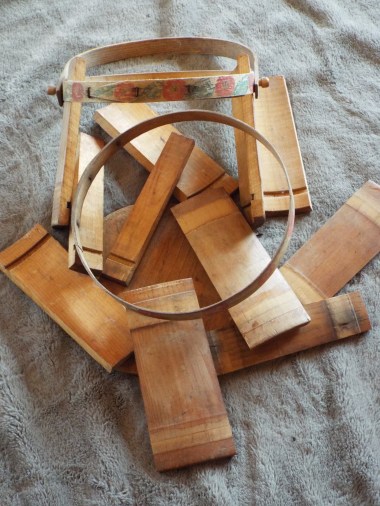
The sugar bucket in tatters

Reclaimed sugar bucket


Breakfast Traditions

BREAKFAST TRADITIONS (another in my Blowing on Embers series)

Breakfast: the most important meal of the day, they say.

Always the first one up in the mornings, Mother made sure we had a good breakfast to start our school days off right. In those days before frozen waffles, toaster pop-ups, or smoothies, breakfast was a pretty big deal. And we never rushed out of the house without it.

Our breakfasts were varied. There was that old standard: bacon, eggs, and toast or similar combinations of protein and carbohydrates. Sometimes we had oatmeal and cinnamon toast; other mornings it might be Cream of Wheat; occasionally pancakes or waffles were on the menu, though most likely on the weekends. And sometimes we went into the kitchen to nothing more than dry cereal and milk. I was never much fond of cereal days—those were the days when my stomach started growling by mid-morning.

By my calculation, while we children were living at home, Mother prepared nothing short of 10,000 breakfasts. When my youngest brother left the nest for good, Mother made an announcement to our father: she was retiring from breakfast duty. From that day forward, before he left for work, Daddy made his own breakfasts (willingly, I might add) before Mother gave a thought to getting out of bed. If not for the cat pawing at her face on the pillow every morning, Mother might have remained in bed for a sinfully, but well-deserved, long time.

But back to breakfast. In addition to all that typical morning fare, there were two dishes in our breakfast repertoire that were, I believe, unique.

One was reserved for one day and one day only each year—Christmas. No one was allowed in the living room where the tree and presents were until we’d all eaten breakfast, and that breakfast was always the same: strawberry shortcake. I loved strawberry shortcake as a dessert and thought it was even more special as Christmas breakfast. As I look back on it, I think there were two reasons we were served this delicacy on Christmas morning. The first, and maybe most important, was that it was quick and easy. For one day a year, Mother didn’t have to get up extra early to have breakfast on the table.

The second reason was perhaps a little more wily. What kid wouldn’t be thrilled to have dessert for breakfast? If we were just as eager (or almost) for breakfast as for presents, and if breakfast was just as much a part of our holiday tradition as the rest of that big day, then there wouldn’t be any peeking under the tree before the parents were ready. There wouldn’t be any whining (well, not much, anyway) for everyone to hurry up so we could finally open the door to the living room. Whatever the reason, that strawberry shortcake breakfast was always a success.

The other unusual breakfast we had on occasion had a regional basis. Mother grew up in the Great Smoky Mountains of southwestern North Carolina, a place where blackberries grow profusely on the mountainsides. Along with her mother and three sisters, she spent many afternoons picking blackberries, so many that they were able to can plenty of jars for use in the winter. And one of the ways blackberries were served in her home was stewed with a little sugar and poured over homemade buttered biscuits. It was a breakfast treat summer or winter.

Mother kept this breakfast tradition alive in our South Carolina home. We didn’t have access to fresh blackberries and frozen blackberries weren’t to be found in the freezer aisles in grocery stores, but stores did carry canned blackberries. Not the blackberries in gooey thick syrup for pies, but just plain old blackberries packed in water. All Mother had to do was put them in a pot on the stove, add a bit of sugar and a little more water, and heat them until the berries were warm and the sugar dissolved. In my opinion, there’s just nothing better than a plateful of biscuits, halved and buttered, smothered in blackberries, and swimming in that purple liquid. Mm-mmm good!

Needless to say, we’ve maintained both of these breakfast traditions in our home. And nothing has tickled me more than to discover that our now grown children have done the same in theirs. No doubt, one day some child in generations hence will look up to a parent and ask, “Why do we eat blackberries on biscuits?” or, “Why do we eat strawberry shortcake on Christmas morning?” and the parent will have no better answer than, “I don’t know. We just always have. It’s tradition.”

And that’s just fine with me.

The List, Part II: Priorities

THE LIST, Part II: Priorities

(If you’re just tuning in, you’ll want to catch up. You can find Part I here.)

Right up near the top of my “One Hundred Things I Want to Do When I Retire” list was to make baskets. I had first learned how as a child from my maternal grandmother.

My grandmother: high school graduation photo

My grandparents, W. G. and Georgia Stillwell Dillard, on their fiftieth anniversary

Grandmother always had craft activities ready and waiting whenever we went for a visit, and she and I made baskets on more than one occasion. Basket making with Grandmother is one of my fondest memories.

An early basket weaving exercise under Grandmother’s tutelage

But I’d long since forgotten that skill. When I saw an ad for a basket-making class as part of Appalachian State University’s Craft Enrichment Program about three years before I retired, I jumped at it.

In those days I regularly worked until seven or eight o’clock at night and too often as late as ten or eleven. I took work home on the weekends. I dreamed about work. I woke up in a 3:00 a.m. work-related panic almost nightly. My job involved overnight travel, too, sometimes a couple of trips a week. I hadn’t had time for just-for-me activities for years. But I wasn’t about to let anything interfere with my basket-making sessions. In three years of classes, I missed only one because of work.

Making baskets was good for my spirit; it relaxed me; it gave my overworked mind a break from all the work-related issues that were swirling around in it. I really loved making those baskets, and I was eager to delve into my newfound hobby in a big way once I retired. In anticipation of that day, I bought my own basket-making supplies and four big boxes of reed and other materials.

Just a few of the many baskets I made in my basket-making workshops

A few things happened to change all that. No studio space for making baskets magically appeared. Nor did our small house with its open design lend itself to leaving materials all over the place between sessions. Just pulling out all those boxes and supplies, then putting them all away and sweeping up the debris after a basket-making session was time-consuming, so much so that it was only worth doing if I was going to make a day of it. But a full day of hand weaving, of pushing and pulling, of holding ornery pieces in place with one hand while forcing a reed through a too-small space with the other is hard on fingers, especially arthritic ones.

And I was running out of ways to use those baskets. Our house was overrun with them, and I’d given away more than people really wanted to receive. My skill hadn’t developed enough to sell my baskets and I wasn’t really interested in marketing them, anyway—too much like work.

Most of all, I began to realize that baskets had been my very important respite from the daily grind of my work life but now things were different. My needs had changed. Basket-making, it turned out, had served its purpose.

Besides, other interests had begun to take on more importance, like gardening and food preservation. Both of these activities had been on my list, too. At the time, my goal was simply to re-learn those skills from my childhood. I wanted to be competent at them, enough so that if, say, climate change challenged our food distribution system (as it has now begun to do), I’d be able to take care of my own food needs. In other words, I wanted to move towards more self-reliance.

But even I had no idea how these two activities would begin to take over my life. I didn’t expect to get so passionate about them. Why, last year the Gnome and I grew more than twelve hundred pounds of vegetables in our garden, far more than enough for the annual food needs of two people.

One day’s harvest from our garden

I looked back at my list recently and discovered I’d made a pretty good dent in it. What I hadn’t expected though, was to discover a few more items that had lost their importance as new interests—gardening and food preservation, for instance—emerged to take their place. Interests that sometimes have taken me by complete surprise. Like writing. Writing didn’t earn a single mention on my list. Yet, here I am with two books to my name (and hopefully more on the way), a couple of blogs, daily dedicated writing time, and participation in various writers’ groups. Who saw that coming? Not I! That’s the way it is with plans. Priorities change.

It’s one of my favorite things about retirement. I can be flexible. And I don’t need to make any more lists. Which was, as it happens, item 100 on my list.

(Won’t you come back next week for Part III of The List?)

Little Deeds, Big Impact

Little Deeds, Big Impact

Some occupations will get you daily thanks for doing a good job. Many more rarely result in expressions of appreciation. Sanitation workers, for instance. Custodians. Government professionals who collect taxes, process unemployment benefits, and so on.

Teachers rarely get a “Thank you” from their students, either. And if they do, it may be years later. It’s hard to stay positive, to believe you’re accomplishing something important when it’s not acknowledged by the very people on whom you focus your professional passion.

But I’m here to tell you that your influence spreads like ripples in a pond when skipping stones. Whether it’s positive or negative. Whether it’s part of your job or a kindness to a stranger. It may be something truly magnanimous or seemingly insignificant. And it may make a difference in ways you’d never imagine. Let me give you some random (and in no way equal) real-life examples.

The first is a story about Fred. Fred came into our family by marriage to a cousin more than forty years ago. In all that time, I’d never met him. But I heard a lot about him over the years from my mom. She’d heard about him from her sister, his mother-in-law. Sometimes, she was in his presence and picked up a bit of his philosophy in person. A long time ago, she shared a tidbit with me. Fred held a strong position on the use of brand names as generic, she said. You know, the way people used to refer to all refrigerators as Frigidaires. Unless you’re of a certain age, you may not remember that example, but what about Kleenex for tissue?

It’s a real marketing coup when a brand becomes so iconic that it becomes part of the lexicon—you want a cola type soda and without thinking you ask  for a Coke, you’ll get a Coke instead of a Pepsi or an RC.

It’s not so great, though, if you’re a small business owner like Fred was. It’s hard enough to break into the public’s attention without having a built-in bias all because some multi-national corporation managed to hire a particularly clever PR person. Small businesses need a fair shot. So Fred thought people should say “tissue” or “cola” or “refrigerator.” Period.

Like I said, I’d never met the guy, but I took that lesson to heart. It made sense to me. Overnight, I changed my vocabulary. Never again did I use the word Kleenex unless I was talking specifically about that brand of tissue. I began asking  for “diet soda” in restaurants, which caused me no end of grief. Almost inevitably, my request got this response from the waitstaff: “Is diet Coke (or whatever brand they happened to sell) okay?” They just didn’t get it. But I persisted. When I had business lunches with colleagues, they learned to anticipate the scene and started chuckling at me before the word cola was out of my mouth. They thought I should just give up and go with the flow.

I finally met Fred. Thought I’d tell him how much he’d influenced me even though we’d never before laid eyes on each other. His response was a surprised, “I said that?”. It took his wife, her mother, and my mother simultaneously exclaiming things like, “You sure did,” or “Yes, there was a time . . . ”.

I thought it was hilarious. Decades ago, Fred expressed an opinion. Over the years, his memory of that principle dimmed to the point of nothingness. But someone—me—heard the message loud and clear (even though second-hand). And I not only put it into practice but passed on the sentiment with a kind of missionary zeal.

* * *

Kirk is a friend from way back in college days. After graduation, our families lived in the same town and socialized regularly. Then his family moved to another state. Fate brought us together sporadically and rarely after that. About five years ago, our paths crossed again. It had been more than thirty years since we’d last spent time together. Kirk told the Gnome and me that our names had come up in a sermon he’d recently preached. It had something to do with what he remembered as all our furniture-building back when we were newlyweds—the creativity, necessity mothering invention, that sort of thing.

The Gnome and I looked at each other in bewilderment. We’d sold weaving and macramé items at craft fairs and street festivals for a time in those days, but furniture-building? We were stumped. As we drove home, we puzzled over the discrepancy between Kirk’s memory and ours. Finally, we remembered that when we’d lived in a small World War II-era apartment with one lilliputian closet, we’d built a wardrobe of plywood with pine molding. We painted it a memorable aqua and yellow—it was psychedelic 1969, after all.

That must have been what Kirk remembered. But in his imagination, our one-time building experience had mushroomed. So much so that our “ingenuity” became the substance of a lesson used in a sermon more than four decades later.

* * *

Many years before either of these events, a different kind of moment occurred. I must have been in my early teens the day Mrs. Truluck, a volunteer youth leader in our church, stopped me in the aisle after one Sunday service to compliment me on something she had observed. I don’t remember what exactly, maybe for sitting next to another girl who might otherwise have been ignored. Whatever it was, I didn’t think it was a big deal. However, Mrs. Truluck taking about sixty seconds to tell me she’d noticed was a very big deal. A big deal that’s stayed with me for close to sixty years now.

Mrs. Truluck no doubt knew the importance of offering a pat of congratulations or a word of encouragement to young people. But I’ll bet she fairly quickly forgot that particular exchange. I never did. I learned two important lessons that day. One, that people notice what you do, even things that seem insignificant. I also learned how far a thoughtful comment can go. For the decades since that Sunday afternoon, I’ve tried to make it a point to let people know when I notice the nice things they do.

So, to all the Mrs. Trulucks out there, thank you—you make a difference.

And so do you.  

By Ashashyou (Own work) [CC BY-SA 4.0 (https://creativecommons.org/licenses/by-sa/4.0)%5D, via Wikimedia Commons


Coming ‘Round the Mountain

Coming ‘Round the Mountain

Coming ‘Round the Mountain (part of my Blowing on Embers series)

Public domain photos retrieved from Wikimedia Commons titled Winning horse and buggy with driver at the Wynnum Show, Brisbane

Is there anything quite like the sweet scent of a dew-kissed early morning—especially in our green southern mountains? Every time—every single time—I catch a whiff of it, I’m transported back to those too-rare childhood trips to visit my maternal grandparents.

It was an excruciatingly long drive from the South Carolina flatlands to North Carolina’s southwestern mountains, even longer for the three children relegated to the back seat.

We claimed our territory before the first hand ever touched a door handle. No one wanted to be stuck in the middle, surrounded by sibling arms, legs, and torsos. We knew we’d have to take turns, but hope sprang eternal.

The window-seat sitters were intolerant, and arguments began almost immediately: your feet are on my side . . . I don’t have anywhere to put them . . . keep ’em on the hump . . . Mama, he’s touching me. And so on.

Our trips usually began late on a Friday afternoon so Daddy could get in most of a day’s work and we’d still have all day Saturday for visiting—and resting up before we had to make our return trip on Sunday afternoon. In the days before interstate highways, the drive lasted more than six hours—an eternity to us children. A couple hours in and we were miserably fidgety. That’s when the questions began. When will we get there? How much longer? Are we there yet?

Mother tried diverting our attention with car games. We looked for license plates from other states; we searched for words on billboards that started with the next letter of the alphabet; we tried to be first to spot whatever animal or object one of our parents called out to us.

Once our brown, two-tone Ford Fairlane began climbing and winding, we knew we were getting close, which only made us more restless. That’s when Mother began leading us in all the verses of She’ll Be Coming ‘Round the Mountain, with its ever longer refrain. In my mind’s eye we were singing about Mother in an earlier era. I imagined her in a bonnet riding on the front seat of our song’s buggy, maybe even wearing scratchy red pajamas.

For Dad, navigating those ever steeper, narrow, curvy roads in the dark after an already long day at the office was harrowing enough without being distracted by the fussing and whining emanating from the back seat. No wonder Mother was so desperate to keep us occupied.

Everyone knew what was coming when we inevitably got on Dad’s last nerve, and we didn’t want to hear it any more than he wanted to say it: “Ask me that one more time, and I’ll turn this car around right here.” Not likely. Returning home would have made for an even longer trip, and no one wanted that. Occasionally, the threat was, “One more argument and I’ll stop this car and give everyone a spanking.” We rarely got spanked and never on a car trip, so why pull out that old chestnut? Sheer exhaustion, most likely.

Somehow, we always reached our destination in one piece and not too awfully frazzled. A few hugs, kisses, and a midnight snack later, we were hustled off to bed and bundled under the covers.

And then it was morning. This was the moment I’d been looking forward to since we first got in the car. I woke under a pile of Grandmother’s homemade quilts, fog drifting through the windows I’d opened the night before so I could feel the kiss of the deliciously crisp mountain air on my face.

Before anyone else stirred, even my early-rising grandfather, I stole outside to walk barefoot in the cool, damp grass. I breathed in the clean scent of a world washed in dew, nibbled on a green apple that had fallen from its tree, and slipped under the graceful, draping branches of the giant weeping willow on the edge of the yard—my sacred hideaway. It was the perfect spot for a little girl to daydream, think private thoughts, and grow.

And worth every minute I was stuck in the middle.


Any hour of the day, any season of the year, every time I see sights like these I know the mountains are my meant-to-be home.


School Field Trips

School Field Trips (part of my Blowing on Embers series)

When we moved up here on the diagonal, our children attended a school far out in the county. Field trip time rolled around, and I was surprised to overhear some of the students saying they were planning to “lay out” that day. A field trip to town not only held no interest for them; they were a little overwhelmed by it. For some, visits to downtown were rare and intimidating, it seemed.

Not for me. Back in my school days in Florence, South Carolina, everyone I knew shared my enthusiasm for our annual field trip. It took place in the spring and was the highlight of the school year. I think we may have seen it as a sort of rite of passage. We’d made it through (almost) another year in the classroom.

My first field trips occurred when I was a student at Briggs Elementary. Some school board shuffling meant I spent the fourth, fifth, and sixth grades at Tans Bay, so much further out in the county that I’d never heard of it. Field trips were a staple at both schools. When the big day came, the air was electric with anticipation.

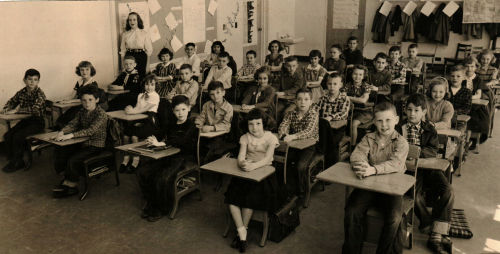
Below are pictures taken of my third, fourth, and fifth grade field trips.

Notice anything?

3rd Grade field trip

Can you spot  me–or Teddy?

4th Grade field trip

5th grade field trip

That’s right! Every single field trip was exactly the same. Year in and year out.

It went like this:

  1. Put home-packed lunch (mine was always my mom’s terrific egg salad sandwich and a small bag of potato chips) in the large cooler filled with dry ice. Do not touch the ice!
  2. Tour Coble Dairy; select a half-pint carton of white or chocolate milk; return to bus.
  3. Tour Merita Bakery; pick up a cinnamon roll two-pack and a Pepsi; pose for official field trip photo on steps of bakery; return to bus.
  4. Hop off bus at Timrod Park; retrieve lunch from cooler, watching in fascination as the dry ice forms fog when it transforms from solid to gaseous state (remember not to touch!); eat lunch and play on playground; return to bus.
  5. Disembark charter bus back at school and board yellow school buses for home.
DSCF0320

The schoolhouse where 19th century poet Henry Timrod taught is a showpiece of Timrod Park.

For some reason I cannot fathom, we were always accompanied by a police officer—he was the same year after year, too. Our county was small and peaceful. We students were certainly not rabble rousers. Nonetheless, we had police protection. Not that we minded. We girls thought he was the cat’s pajamas. Tall, uniformed, dark wavy hair. He scared us a little, but we couldn’t help but flirt in our grade-school way. (You can see him sitting in the lower left of the middle picture with holster hanging from his hip, and standing, upper right, in third picture.)

Florence must not have been much of a happening place in the middle of the last century. But it sure seems like the school system could have come up with a little field trip variety.


Big Changes

Big Changes (part of my Blowing on Embers series)

My year in the yellow house was pretty eventful, but so was the next place we lived: Thrift Road in Charlotte, North Carolina. It was where my youngest brother was born, where I started school and learned to read—a lifetime passion.

The night before my first grade school picture was to be taken, I took a pair of scissors to my hair.

It was where our family listened to the 1952 presidential election results. “Who are we for, Mommy?” It was where I got my first pet, a blonde cocker spaniel-spitz mix we named Boots and where she died from injuries received when she was hit by a car a few months later.

It was where I went from measles to chickenpox in one fell swoop, missing an entire three weeks of school. (Remember, this was before today’s age of vaccines.) I was so sick! And it was where my across-the-road neighbor, Mary Ann, told me she was adopted and had me convinced I was, too, a conviction so powerful that it had me searching for proof among my parents’ papers for five years.

Charlotte was where I was terrorized by the hundreds—hundreds—of snakes that slithered out of a weedy field and across our driveway after a heavy summer rain with me in their midst. I’d never seen a snake, but I’d picked up from somewhere (certainly not from my wildlife-loving parents and not from TV—we didn’t have one of those) that snakes were to be feared more than death itself. I leapt onto the bottom rail of the chain link fence that enclosed our back yard, my tiny hands clutching the links for dear life, and screamed bloody murder till my parents came out to save me. My snakes turned out to be nothing more than slugs!

Thrift Road must have extended further then than it does now because I was able to walk to Thomasboro School, just a few blocks away. According to current maps, it’s much too far a distance for a first grader to walk. Today’s roads in that neighborhood (like Freedom Road and I-85) are also far too busy for children to walk them safely.

We had a school-wide assembly on my very first day where the principal, Mr. Curlee, announced that he had locked up all bicycles that had been improperly parked (whatever that meant). I thought that was so mean! Mr. Curlee terrified me.

I’d swear that my teacher, Mrs. Howie, was older than these mountains I live among today. For reasons I won’t go into, I thought she was mean, too. But she must have been an effective teacher. I started school at a distinct disadvantage: all my classmates had a year of kindergarten under their belts, but I’d just moved from South Carolina where there was no public kindergarten. As a result, everyone else in my first grade class was well ahead of me both academically and socially in the beginning. It must not have taken long for me to catch up, though, because my report card (yes, of course I still have it) was stellar in every way, even when I missed a full 30% of a grading period because of those childhood diseases.

My report card cover. How very Dick and Jane.

We lived in Charlotte a mere sixteen or seventeen months before returning to Florence. I’d been in second grade for just days when we made the move. When I walked into Briggs Elementary School, a few days into the South Carolina school year, as well, whose do you think was the first face I saw? Teddy’s! We were reunited! It was more than I’d ever dared hope for. I had long since resigned myself to the certainty that our paths would never again cross.

In my elation at this happy surprise, I told my newfound girlfriends that Teddy and I already knew each other, that he was, in fact, my long lost boyfriend. When they didn’t seem to believe me, I did what may have been—to this day—the boldest and most uncharacteristic thing of my entire life. I told them I’d prove it by kissing Teddy one hundred times! I had to chase him down at recess, but I did it.

We never spoke again.

My third grade class. For some reason, I don’t have a second grade picture, but with the exception of the teacher, the cast is the same. (That’s me way back there in the last seat of the row next to the wall.)  Miss Milliken was our second grade teacher. Our exotic, red-headed third grade teacher was Miss Whitlock. I adored them both.

My Year in the Yellow House—Revisited

My Year in the Yellow House—Revisited (part of my Blowing on Embers series)

As I wrote “My Year in the Yellow House,” I wondered whether the story would have broad appeal since it didn’t have any overarching theme or message. Just random memories. Nothing much to see there.

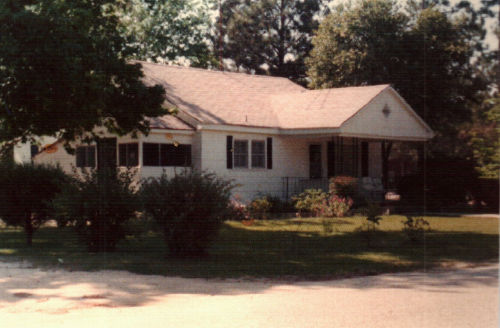
The yellow house many decades later—no longer yellow, but with the addition of front and side porches

I was suddenly taken aback at that notion. My essay was full of big deals. Unstated, but implied, was the fact that my youngest brother was conceived the year we lived in the yellow house, rounding out our family. How would my own life story be changed if that hadn’t happened? Most assuredly, he and his children think it was a pretty big deal.

Questions bubbled up.

For the family who lost their home and all their household belongings right down to their shoes and underwear, the blaze that destroyed their house was monumental. I wonder how it changed their lives. Did they have family nearby to put them up temporarily? Did they have a savings account in the bank to help get them back on their feet? Was their life savings, however large or small, stashed in a mattress that went up in flames? What happened to them, I wonder.

Was Glory’s tumor malignant? That’s what I always thought. If it was, did it go into spontaneous remission? Did her family’s faith cure her? How did she turn out? Or did the tumor kill her? When? How was her family—and their belief system—affected?

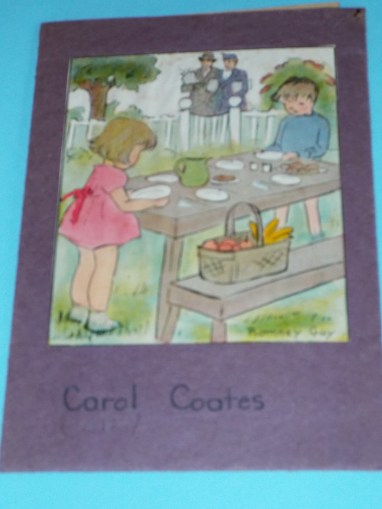
What about Carol’s family? Is there a more devastating blow than losing your young child? Did her family survive intact? Many don’t. And what did the world lose with no Carol to grow up in it? What about the family that never was? Would she have changed the world? Questions the answers to which no one will never know.

It was an eventful year on our small block. My own travails were pretty petty compared to what was happening all around me.

And yet, they weren’t. I heard something on the radio recently about how important it is to listen, really listen, to all the insignificant things your young child wants to tell you, no matter how busy you are with more important grown-up issues. The point was that if you don’t listen now, they’re unlikely to tell you the really important stuff later. But it was the next phrase that really struck me: “to them [the children] it’s all important.” Of course it is. It’s all they know.

To five-year-old me, it was all important. It would have been to any five-year-old.

My most potent memory from that year is the one where I was pushed into a tiny but formidable dark space, locked in, and forced to allow my most valuable possession to be desecrated in order to gain my freedom, having no confidence that the bargain would be honored, even then. My doll was my baby; it was an intolerable choice. And all because of someone’s inexplicable need to be cruel.

I don’t know all the ways the doll experience colored my life. Was that the moment the meek, compliant girl I grew into was forged? Was it what made me forever seek to avoid confrontation at almost any cost? Was Glory’s taunting what birthed my empathy for others? Or was it just a terrible moment with no particular future consequences other than a bad memory?

I don’t have the answers to any of these questions.

What about you? What questions still linger from your early years? Were there childhood moments—little or not so little— that changed your life?

My Year in the Yellow House: Childhood Vignettes

My Year in the Yellow House: Childhood Vignettes (part of my Blowing on Embers series)

I was five the year we lived in the yellow house. My brother was two. Our little two-bedroom home in Florence, South Carolina, near Cole’s Crossroads, was part of a modest and sparse subdivision, if you could even call it that. There were no sidewalks, and grass grew erratically in the sandy yards. Roads in the development were nothing more than not-too-packed sand.

alan yellow house

My brother’s favorite place to play was on the sandy road in our neighborhood.

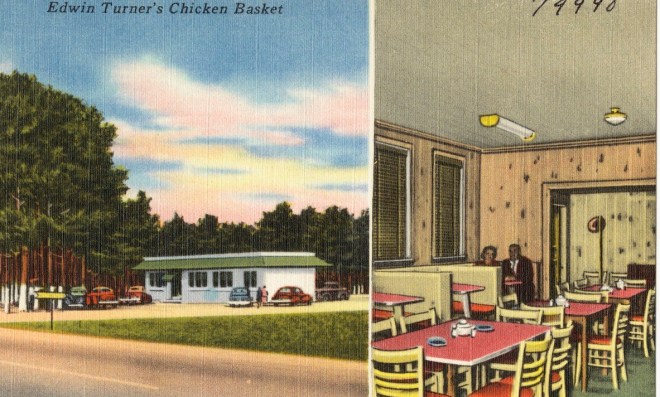
Our house sat on a corner of the neighborhood’s main road. Follow it for a block or so and you’d be on old Hwy 301/52. Directly across the highway was Edwin Turner’s Chicken Basket, a popular family restaurant and the favorite spot for our very occasional meals away from home. As the name suggests, the restaurant’s main fare was fried chicken, along with french fries and hush puppies,* served in brightly colored, paper-lined plastic baskets—the kind you now see in a few casual dining establishments, but a true novelty then. We usually chose a booth in the knotty pine dining room, and Edwin Turner himself would stop by to ensure we were enjoying our meal.

Out front was the sign proclaiming the name of the place. As I recall, atop the sign sat a large rotating replica of one of those famed plastic baskets. My brother could never keep the words for Edwin Turner’s Chicken Basket straight. He always called it Chicken Edwin’s Turning Basket. When you think about it, his literal rendering made perfectly good sense—as children’s name mash-ups often do.CHICKEN BASKET

From the Tichnor Brothers Collection, Boston Public Library, http://ark.digitalcommonwealth.org/ark:/50959/mg74r003g

We loved the Chicken Basket—for its tasty food, its novelty, the attention of its owner, its prominent role in our lives. In addition to special dinners out, Edwin Turner’s was a true landmark in the community. For us, it was the easiest way to direct friends and out-of-town family to our house.

But the restaurant is only one of many memories I have of that year. They are a mixture of good and bad. It was while we lived in the yellow house that my first real childhood friendships developed. It was also where I experienced my first significant encounters with sickness, trauma, and grief.

My childhood preceded the era of many vaccines in use today, and I was in bed with a severe case of mumps for what seemed like forever. The lumps on either side of my neck felt humongous, and the pain of swallowing was so intense that I demanded something to spit into so I wouldn’t have to swallow. Of course, it didn’t work, but I gave it my best, spitting several times a minute all day every day into the blue and white speckled enamel pan Mother placed next to my bed. To this day, I have an aversion to enamel cookware.

Glory (not her real name), with her white-blonde hair, lived across the street from us. She had a tumor on her lower back, just above her buttocks. Her parents’ religious beliefs prevented them from seeking medical attention for Glory, but the tumor must have been extraordinarily painful because Glory, who only wore dresses, didn’t wear underpants—the pressure would have hurt too much.

Neither Glory’s illness nor her family’s deeply held religious beliefs kept her from being a bully, though. One day when we were playing in my bedroom, Glory locked me in the toy cabinet and refused to let me out until I gave her permission to tear my doll’s hair off her head. I was terrified in the pitch black cabinet, and I was devastated at the thought of what was happening to my precious doll. Mother was in the kitchen just a room away, but the cabinet doors and the wall between us must have muffled my piteous crying.

My very best friend, Teddy, lived on the third corner of our intersection. We played together much more often than I played with was tortured by Glory. One of Teddy’s and my favorite places to play was in the abandoned excavated lot on the fourth corner of our intersection. We loved it down there where our imaginations could run wild.

Then Teddy had a birthday—his sixth. When I got the invitation to his party, I was inconsolable. Six was when children started school; it stood to reason that Teddy would start first grade without me. It took both my parents and his ages to convince me that I, too, would be six before school started. Teddy and I would still enter school together, they assured me. (It turned out to be a moot point, anyway, since our family moved to another state before the school year began.)

Celebrating Teddy’s sixth birthday—no longer afraid he’d start school without me

Another playmate—another Carol—lived on the far corner of our street. She rounded out our little circle of playmates. Carol and I shared more than a name. We were exactly the same age, born the same day. We were also both dark-eyed, dark-haired, olive-skinned little girls. We could have passed for twins. I can still see the heavy bangs that framed her round face.

One day Carol was hit by a car. She was hospitalized for a few days before dying from her injuries. We didn’t have a telephone and Mother didn’t drive, so she had no way of delivering the terrible news to Daddy. When he came home from work that day, he found Mother crying in the kitchen. She blurted through her tears, “Carol died today.” It was Daddy’s shattered look that made her realize he thought she meant me.

You might expect Carol’s death to be my big trauma from those days. But the truth is, I remembered nothing about it until my mother recently reminded me of it. I was either too young to understand what was going on or I was, in fact, so traumatized that my mind blocked the whole experience.

From time to time a few other random memories of our year across from “Chicken Edwin’s Turning Basket” flutter through my mind. Late one night, we were awakened by sirens and flashing lights. The whole neighborhood stood and watched as a nearby house burned to the ground, its occupants standing alongside us in their pajamas, watching helplessly as their house went up in flames.

The image of them, pajamas now the only clothing they owned, was indelibly seared into my brain. Ever since that night I’ve thought losing my home and its treasured contents to fire would be one of life’s worst tragedies. All these years later, when coming home from an out-of-town trip, I reach the bend our house is just around only to realize I’ve been holding my breath for the last little bit, waiting to be sure our home is still there, still intact.

My brother and I shared a bedroom in the yellow house. Our parents were awfully concerned about his incessant thumb-sucking. Afraid his habit would cause future dental problems, they tried every remedy they could think of. I remember his thumbs being heavily wrapped in adhesive tape. That didn’t work. Neither did the last desperate measure our parents employed: swabbing his thumbs with the latest advance in thumb-sucking cures. My little brother was unswayed. He stubbornly sucked away, bawling all the while because his mouth was on fire with hot cayenne pepper, the “cure’s” main ingredient. More than sixty years later, Mother still feels guilty about trying that remedy.

We moved back to Florence a year or two later with another brother in tow. In one of those interesting twists of fate, he later became fast friends with Edwin Turner’s son, also an Edwin. Over the years, they shared quite a few adventures of their own. Misadventures, too. But that’s a whole other story—and his to tell. Or not.

*For the hush puppy recipe from Edwin Turner’s Chicken Basket, check outhttp://www.familycookbookproject.com/recipe/3394125/edwin-turners-chicken-basket-hush-puppies.html.