Family Ties

Last year, I participated in a genealogy challenge on social media called Fifty-two Ancestors in Fifty-Two Weeks. You never know where delving into family history will lead you. You end up learning about people you’d never even heard of. It’s not about attaching yourself to fame and glory, at least not for me. But it does remind me that I’m connected to the history I learned about (and didn’t learn about) in school. It brings history to life. Being conscious of that history is not only interesting, but creates connectivity to others. It can teach important life lessons. And were it not for them—all of them—I wouldn’t be here.

For one weekly genealogy challenge, I wrote about my great-grandmother, Sarah Elizabeth Creech Smith. Somehow, that post popped up on a Creech family page, and next thing I knew I’d been invited to a Creech reunion. Of course, I had to go.

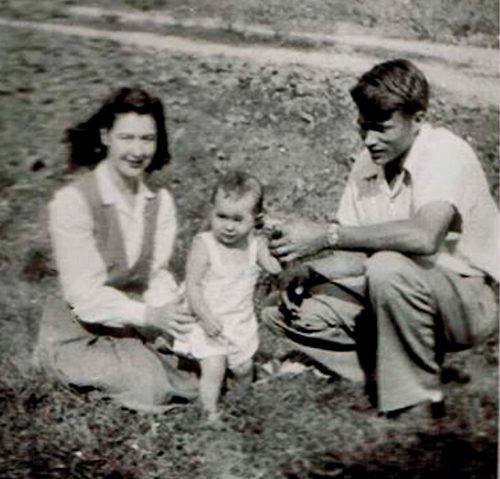
Columbus and Elizabeth Creech Smith

My curiosity about family and family history far outweighed my strong introvert credentials. I’d never met a Creech, probably because my grandmother died four years before I was born. That, and the fact that I was not born and raised in Johnston County, North Carolina, home to many a Creech and the location of the reunion.

I was anxious about being a stranger in the crowd, anxiety that was much alleviated by the Gnome’s presence at my side. (He’s as interested in my family history as I am.) But there was no need to worry. As the newcomer, I wasn’t only welcomed; I was practically rushed by my previously unknown cousins of various degrees.

What a welcoming crowd! Many of us appeared to be from the same generation, all descended from various of Martha Hare and Worley Creech’s nine children. If I’ve got it right, I’m third cousin to most of the kind folks I met that day.
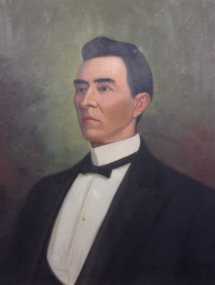
Worley Creech, our common ancestor
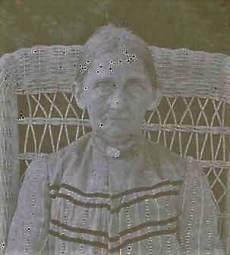
Martha Hare Creech, our common ancestor

I gathered a few interesting facts about my ancestry. For one thing, the Creeches are a seriously musical bunch with a long heritage of vocal and instrumental talent. They played and sang for more than an hour, and it was beautiful. So that’s where my dad and his brothers and so many of my cousins got lots of their melodic genes!

My ‘new’ cousin Charles remembered being in the house where Worley (second-great-grandfather, if you’re keeping up) grew up. Worley’s youngest son, Carmel, lived and died in that house. Charles, just a kid at the time, remembered when Carmel’s body was brought back to the house. While the children played outside, the adults gathered around to watch over the body and to sing hymns, accompanied by the pump organ that had belonged to Carmel. The worn-out skeleton of the house still stands, hidden by a mass of pine trees and overgrown weeds. It remains in family hands.

Unfortunately, stroke has also played an outsized role in the Creech family for generations. My great-grandmother was a stroke victim. According to one of my uncles, “Grandma Creech was bed-ridden for as long as I can remember.” And my grandmother, Lula, died as the result of her second stroke. That’s why I never got a chance to know her. Not such a good sign—though stroke has not claimed anyone in my direct line since.

In addition to Charles, I met cousins Vicki (reunion host), Genie, Jody, Brenda, Steve, Sharon, Susan, Katherine, Shirley, Tap, and too many more to keep all the names straight—sorry.

A highlight of the day was being in the presence of the family’s matriarch—my second cousin once removed. But eighty-nine-year-old Sarah and I are much closer than that. She knew my dad! And remembered most of his brothers. She knew my great-grandparents! I could have jumped out of my skin. She remembered my great-grandfather, Columbus (Uncle Lumbus, she called him), from Creech reunions way back. And she told me a story about my great-grandmother, Sarah Elizabeth. It went something like this.

“There was this corner store our family went to. One day, I was in the buggy with Mother and we stopped at the store where Mother bought a bag of candies. Oh, how I wanted some of that candy! When we came out of the store and got back in the buggy, she said, ‘I want to tell you something. We’re going to see this lady who’s sick [that would be Elizabeth—Sarah’s mother was her niece], and this candy is for her. Now, she’s going to offer you a piece, because that’s what people do. But you are not to accept it.’

“And sure enough, that’s just what she did. And even though I really wanted a piece of that candy, I did just what my mother said, because that’s what people did.”

At the age of seventy-three I sat in the presence, held hands with, a woman who had been in the presence of, and probably held hands with, my great-grandmother. How about that!
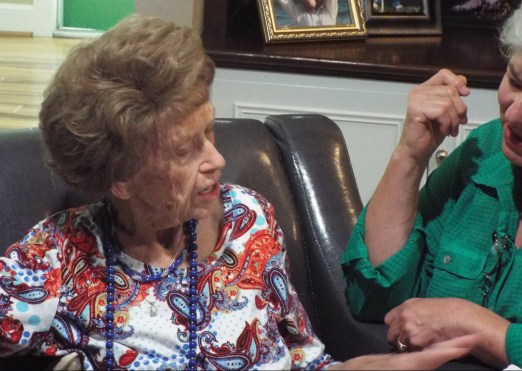
Sarah fills me in. (Sarah was also  pianist for all the fine singing.)

I wouldn’t take anything for that reunion day.

(If you care about things like family degrees of separation, you can learn more here.)
A Day in the Life

We could have been washing dishes. We could have been cleaning the bathroom. We could have been weeding in the garden or mowing the lawn or taking care of any of the other chores on our frighteningly long to-do list. But we didn’t do any of that.

Instead, we sat for more than an hour watching ‘our’ baby Carolina wrens. Sometimes, we stood—to get as close to the screen door as possible to watch the mesmerizing sight in front of us.

The parents showed up about two months ago, first razing their former home, presumably in anticipation of a major remodel. Sticks and leaves were strewn all over our deck floor. Ultimately, they chose an alternate site—on the opposite end of the deck, but in a similar location. They did well, choosing a crevice so tiny and well-hidden that their babes were almost sure to be safe.

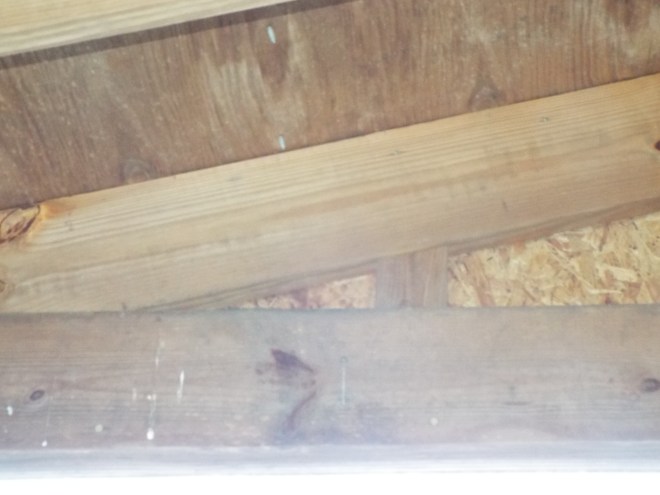
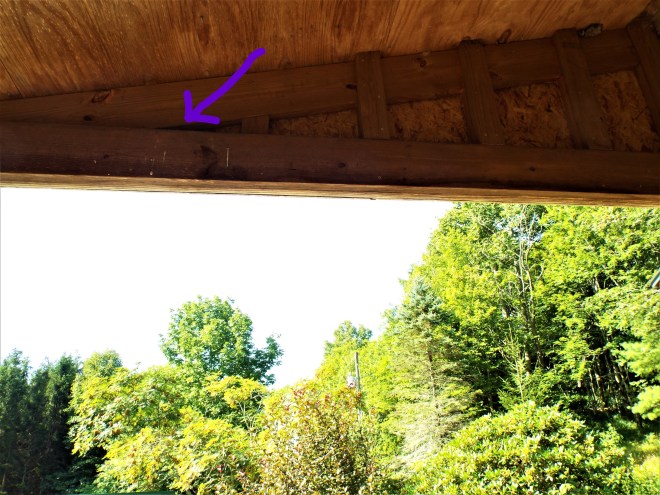
The nest is in the cranny beyond where these two boards intersect. It’s only one and a half inches wide in there. How can a whole family of wrens plus a nest can fit into such a small cavity?

For two months we’ve watched the wrens bringing, first, sticks and grasses and other building material and, next, bits of food for the nester and then the chicks. We’ve listened to Mr. sing his beautifully melodic songs to Mrs. and, later, his babes. He has many songs, and they can be ear-piercing. How can so much sound come out of such a diminutive being? And for two months we’ve been loudly and soundly scolded whenever we dared to venture onto the deck. We know when Mama raccoon is around because she gets the same insistent scolding.

And for the last couple of weeks, we’ve heard the almost unceasing chirps of young wrens begging for their next meal. In the last few days, we’ve noticed a head or two peeking out from their refuge, too eager and curious to stay concealed.

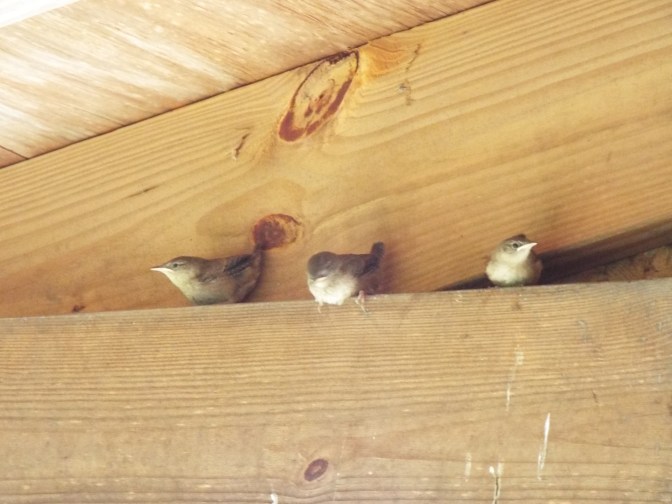
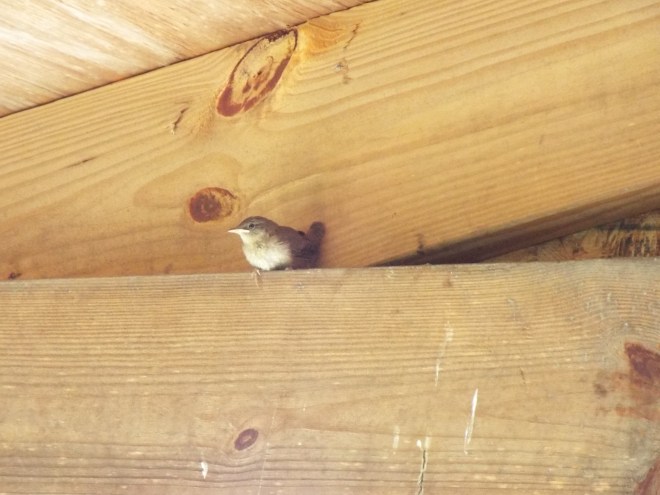
But today—today was different. First one, then a second, and—surprise—a third, slipped out into the open, standing on the wooden beam that supports their home. One ventured even further away from its protected nest. It tested its little wings. It slipped and almost fell, but clawed its way back up. One at a time, the birdlings peered over the edge into what must have seemed an abyss.

One soon-to-be fledgling eyes the horizon while the next investigates the gaping distance to the deck floor and the third lingers at the opening to its nest, ready to dart back in if danger appears.

We were sure this would be the day, the day they would fledge. As many birds as have nested near our home over the years, fledging is an activity I’ve never witnessed, and I didn’t plan to miss it. Not unless they dilly-dallied until we had to leave for an important appointment. I stayed glued to my seat. The Gnome had to go upstairs for a brief shower. “There are four of them!” I cried as another head popped out. “Five! “No, six!” He made it back downstairs in record time.

By the time the last two bashfuls made an appearance, the second bird had joined its sibling on the beam. Their four brothers and sisters, lined up like a chorus of dancers waiting for their cue, weren’t going to miss the big event any more than we were. Perhaps they were gathering courage.

The most adventurous, the first to slip out onto the ledge, finally made its leap of faith. It wasn’t a long flight—just a couple of feet, but it was a huge success, nevertheless.

The wren on the left has flown all the way over (barely down at all) to a cross beam and gives an encouraging look to the one still pondering its options.

Then off flew another, and another, until finally only the most timid little bird was left, alone and surely waffling between the desire to be brave and free and a wish to hold onto the security of home.

Clinging to the beam

Mama brought a last bite of nourishment. That was all it took. The last little bird took the longest flight of all.

We cheered. We hugged. We cried.

We’ve been reading North Carolina writer Leigh Ann Henion’s book, Phenomenal, for the last week. She traveled the globe to explore the world’s greatest natural wonders. It’s a breathtakingly beautiful tale, full of awe and wonder and great truths. I highly recommend it. Yet, today, we experienced our own exhilarating phenomenon. And we never left the living room.

And then there were none.  No more begging, no more scolding, and nearly a year’s wait for the gusty, mellifluous songs heralding that a new generation is on the way.


Favor

Mother, Daddy, and me when it was just the three of us

When I asked my dad which of our parents he thought each of us children most favored, he went for the obvious answer. I, of course, was much more like Mother, and my brothers like him, he ventured. He couldn’t give me a single reason for his rationale—other than gender. I think it’s a lot more tangled than that.

My mother and I were practically inseparable during my youth. But not in a we’re-like-sisters kind of way. She taught me to sew, to cook, to can and freeze our garden harvest. Working alongside each other for hours each day made for easy conversation. As the oldest of three children and the only girl, I was her designated assistant when it came to cleaning, grocery shopping, or any other domestic chore. She was the adult leader for my 4-H club. She ferried me from one extracurricular activity to another.

Our interests were similar, no doubt in part because she guided me toward hers. So, the casual observer could hardly be blamed for assuming we were kindred spirits. At times, I probably did, too. She’s quieter, though, softer, always happy and optimistic, always a smile for anyone lucky enough to cross her path. I’m a little grainier.

In temperament, personality, and general approach to life, I think I was always much more like my father. Driven Type A personalities, we were achievers, always searching for new and better ways, ready to be called upon, eager to be recognized for our efforts. We were equal parts shyness and show-off. Both vocalists, we shared many a car ride to choir practices or music lessons.

His jokes were corny and he regularly embarrassed me in front of my friends, but I was secretly glad he was a presence at our church’s youth activities. Just his being there made me feel ‘chosen’ in some way.

While I was more likely to confide in Mother or ask her more of life’s impenetrable questions—after all, we were in each other’s company much more often, it’s Dad’s example I always looked to for guidance as I navigated the world of work and other aspects of adult life. He had a way of using diplomacy to make his point, keeping potential foes on his side—or at least off their guard. “Make ‘em love you,” he said. I tried, but I didn’t have his panache.

Maybe it’s a toss-up and I’m more or less equal parts him and her. That’s fine by me. I have been so very lucky to have two truly awesome parents to lead me through life’s thorns and thickets and guide me towards fulfillment and satisfaction. Their stars will always shine bright.

What about you? Do you more strongly favor one parent? What makes it so?

Celebration


Today marks a big anniversary in the Gnome and Crone’s household. Exactly forty years ago, our family began our biggest-ever family adventure when we came to this little corner of paradise to stay. Two thirty-something adults, two children only weeks away from their sixth and ninth birthdays, and two formerly housebound cats. We came with a suitcase each of clothes, a tent, and not much else except a whole lot of enthusiasm. Almost everything else—including jobs and any sense of financial security—we left behind.

We’d seen our property twice before—once in early April when we signed the contract, and again in late May. There was no sign of spring on either of those visits.

We had expected our Memorial Day weekend trip to be filled with clearing debris. Wearing nothing more than shorts, tees, and flip flops, we were unprepared when we opened the tent flap the next morning to snow! Clearly, we had a lot to learn about living in the mountains.

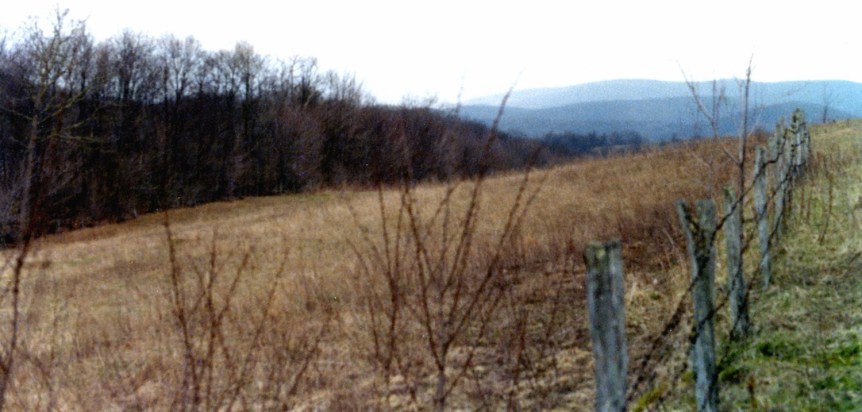
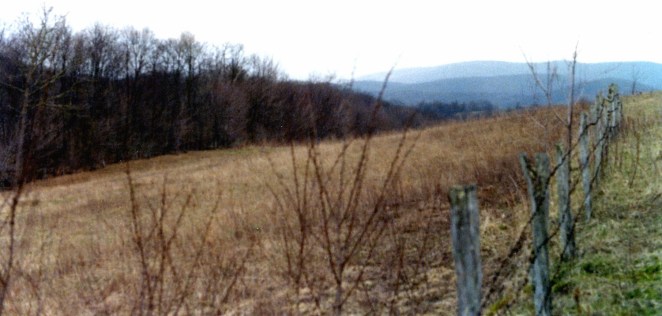
But this time was different. On July 2, 1979, summer was in full swing. No longer bare, the five acres of woods were lush with full-leafed maple, oak, beech, poplar, cherry, locust, and wild magnolia trees. The almost equally large section of open meadow was a massive sea of daisies, with the occasional black-eyed Susan thrown in for variety. It took my breath away.

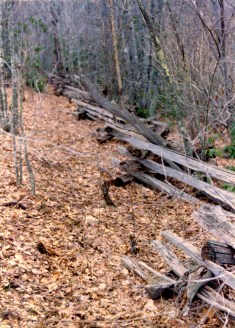
The first few days were for exploring. We discovered the delicate deliciousness of tiny wild strawberries growing everywhere; we visited our wooded mountain creek; we discovered an old locust fence in the edge of the woods along our east boundary line; we found twists of downed trees and ferns and mushrooms and wildflowers.

We found home.

Forty years later, things look a bit different around here. Most of the meadow is gone, thanks to trees sprouting up when mowers were out of order or when we were too busy with life to get around to mowing. We jumped on the Christmas-tree-growing bandwagon and planted a few hundred Fraser Fir and Norway Spruce seedlings. Those, too, got out of hand. Today, they are crowded evergreen giants making a home for birds and other wildlife. Most of the daisies have gotten crowded out.

Just the lower portion of a few overgrown Christmas trees

We got the house built—and decades later, rebuilt. All with our own hands. As dyed-in-the-wool do-it-yourselfers, we can’t bear to farm out any of the work on our place even if that means it gets left undone for far too long.

But we have done a lot. We cleared the land of some trees and over time planted more; we built our forever home with our four hands—as well as the help of four much smaller hands (setting out the building lines, foundation, plumbing, electrical, roofing—the whole bit); we built a spring house and pumped water up from the creek; we built a couple of outbuildings.

We started and abandoned one garden only to begin again a few decades later. This time we enclosed a 5400 square foot space, a space where many of those gorgeous daisies once lived, for vegetables and fruits—we’ve been working on that project for four or five years now, and we do a pretty good job of feeding ourselves from it throughout the year.


(It may not look like it, but that 5,400 sq ft of enclosed garden space (ready for planting) could hold six clones of our house with a decent amount of space left for landscaping. A couple days’ worth of harvest in pictures 2 and 3.)
Most of all, we raised a family. A family where our children learned the value of making do, of making their own fun, of how to do things with their hands, of learning by doing, and that it’s okay to take (certain) risks—to try new things with an entire world of unknowns in front of you.

(Hover over each photo for caption.)

And now, we have grandchildren to share it all with, too.

It’s been a good forty years. We are looking forward to many more.


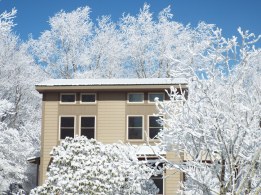
Same view (more or less) 1979 and 2019. Our road is under the snow.


Version 1.0 in need of serious rehab after 30 years vs. Version 2.0

If you want to learn more about our early homebuilding experience, you can start here.

Dancing Trees

DSCF7829

The Gnome has enjoyed playing a woodlands game with our grandchildren during their respective toddlerhoods. He’ll pick them up, hold them in his arms, and place their ears next to one of the large trees in our small forest. “Shh,” he’ll say, in his own hushed voice. “Listen.” After a few pregnant seconds, he asks if they can hear the tree.

Inevitably, they do. Is the unfettered imagination of childhood innocence at work, or are the sounds real? Whatever, watching a small child’s eyes light up, a grin spreading across a lollipop-cheeked face—such moments are pure magic.

On these spring days and nights when the wind skims across the peaks of our mountains in its furious attempt to get who-knows-where, it leaves a few things in its wake.

The crack of still-bare limbs clanging against each other as if they’re engaged in some ancient battle, wooden branches as swords, breaks the silence. Sometimes, one cuts the other to the quick, sending it crashing through other branches on the way to its final destination below.

The wind has an entirely different effect on other trees. Norway spruce and Fraser firs we once imagined growing into a profitable Christmas tree business overwhelmed us—and everything else around. Today, they are jolly evergreen giants, having grown to eighty feet or more, long branches drooping under their own verdant weight.

Wind bends, but never breaks, these resilient trees. Instead, they nod their heads to each other in rhythmic time, their outstretched branches bowing and swaying as if in some sort of complicated old folk dance. It seems they’re almost smiling, wordlessly saying, “It’s okay. I’ve got you covered.”

And they have, in a way. In such close proximity, each supports and shelters its neighbors from the wind’s potential danger. Even more, they create a haven for the wildlife that give us so much pleasure: deer, bears, the squirrels who race through branches in the height of their springtime romantic frenzies, hoppy rabbits, stripey skunks, and of course, the myriad songbirds who seek solace and grow little bird families in the protection of their branches.


The long, graceful, ballerina arms of our tallest neighbors wave at me through the glass door that defends me from wind’s ravages. They invite me to join their happy dance. And I do, if only with a smile as I wave back.

Summertime

(Well, this is embarrassing. For reasons too complicated to explain here, I’m not sure whether the following piece is mine or if it’s a compilation of some of my fellow writers. Logic dictates it’s mine, yet it doesn’t feel as familiar as it should. But since summer, in all its fullness, is officially just around the bend, I want to share. So, here goes—with sincere apologies if I’ve inadvertently plagiarized.)

Summertime

Summer is the most voluptuous season.

Summer is like

. . . a rainbow, bright and colorful after a dark storm;

. . . . wide open spaces with no boundaries;

. . . imagination with endless possibility.

Summer is like like the blinding light of a camera flash, the scent of singed skin, the music of Beethoven; it’s like life at full maturity—gone is the perky innocence of youth as hints of age peek through its brilliance.

Summer is like lemonade—sunshiny bright, sweet and tangy, liquid in a sweating glass.

A Belated Mother’s Day Story

I look to you for courage in my life
And I promise it’s not just foolish idolatry
That makes me gaze at you in wonder.

–Holly Near, “Something About the Women”

My mom’s a Smoky Mountain gal, and I’m in the process of writing a book about her life and times. I’m happy to finally be able to say I’m on the downhill side of the project, but it’s still a long ride. Thought I’d share a little of her backstory in her honor during this Mother’s Day week.

Mother as a teenager–at 4-H camp

Mother’s ancestors arrived in the Smokies with little more than they could carry. Those early pioneers spent their days working the land. The mainstay meat product was pork—hogs were more numerous than all other livestock combined, with farmers killing a hog or two annually for their families to live on until next hog-killing season. It was the era of subsistence farming. Most of the necessities of life were produced in the home or on the farm, and most exchange was by barter. There was little contact with the outside world, even in one’s own county. That’s how scarce roads were.

A record of early settlers’ homes and the sturdy, industrious people who built and occupied them was summarized by Edgar H. Stillwell, Mother’s second cousin once removed and former history professor at what is now Western Carolina University.
Stillwell wrote that no sooner were their rough, one-room cabins built than the pioneers began clearing the cheap, plentiful land for cultivation, making their crude farm implements themselves from whatever was available. He added, “All other necessaries were manufactured by hand . . . ” It was a world of do it yourself or do without.

Such were the conditions in the 1820s, when the family of Mother’s third-great-grandparents, Mary Nicholson and Barak Norton, were the first settlers of Whiteside Cove in the Cashiers community, which is now part of Jackson County. Barak lived to be 92, Mary to 95. Her 1883 obituary stated that she never had need of a doctor until her last year.

Barak and Mary Nicholson Norton

Meanwhile, other of Pam’s ancestors were moving into other sections of southwestern NC, most notably a bit north in the Oconaluftee area, most of it now lying within the Great Smoky Mountains National Park. Soon after Sarah and Jacob Mingus settled the area in the earliest years of the 1800s, the Stillwells arrived, and then the Holdens.

In the isolated coves where they settled, religious services were typically conducted in private homes, as was the case with Lufty Baptist Church founded in 1836. Lufty’s early meetings were held in the home of Dr. John Mingus, whose parents (Jacob and Sarah), Mother’s third-great-grandparents, were among the very earliest settlers in the region.

The Minguses were described by one old-timer in an oral history interview with the park historian. “They are ordinarily large, heavy built with a ruddy complexion having broad faces with a slightly Roman nose. They have soft blue or gray eyes, a grave expression yet comical. They are honest and thrifty. They as a whole delight in paying every penny they owe but it almost kills them to pay an unjust debt. They have a high explosive temper easily offended but quick to forgive . . . Most of the Minguses I ever knew was law abiding and God fearing people. I was raised on the Ocona Lufty river and her tributaries and I never saw a drunk Mingus in all my life . . . They use very little profanity. They have few habits. The women folks are mostly good housekeepers and cooks. They all work and teach their children to work.”

Mingus Mill, Great Smoky Mountains National Park–        Creative Commons photo courtesy of Brian Stansberry [CC BY-SA 3.0 (http://creativecommons.org/licenses/by-sa/3.0/)%5D

John Preston Arthur, in his History of Western North Carolina, said, “It was the women who were the true heroines of this section. The hardships and constant toil to which they were generally subjected were blighting and exacting in the extreme. If their lord and master could find time to hunt and fish, go to the Big Musters, spend Saturdays loafing or drinking in the settlement or about the country ‘stores,’ as the shops were and still are called, their wives could scarcely, if ever, find a moment they could call their own.”
Edgar Stillwell added, “. . . at last, tired and worn out with the long day’s duties, [they fell] on the bed for a well-earned night’s repose, which was often broken by the cries of a sick baby or the return of some male member of the family late in the night. Thus our great great grandmothers served from day to day; thus they labored without honor, often with little reward, and always unselfishly. Heroines indeed they were.”

Indeed.

With few exceptions, not much is known of these women beyond what can be gleaned from various census records. That so little information is available may be due—aside from patriarchy—to the poor state of things like roads and communication systems in western North Carolina in its early, and not so early, days.

Even in this remote area, a few morsels of Mother’s matrilineage did make it into print or oral history.

In 1775 or so, a fort was raised on the land of Mother’s third-great-grandparents, William and Rebecca Cathey in what is now McDowell County, NC, to protect their family and neighbors against Cherokee raids during the Revolutionary War period. It was the westernmost military outpost in the state. A historical marker sits along Highway 221/226.

From that battle came this tale about Catheys Fort and the mother of one of the Cathey men, whose specific identity I’ve not yet been able to confirm. The Catheys were familiar with Cherokee attacks on their property and fort. Mrs. Cathey knew there had been attacks on several nearby communities by the Cherokee/Tory Army, led by Dragging Canoe, war chief of the Chickamauga Cherokee, “and she dang well was ready to alarm McDowell residents” of the coming danger, so she mounted a horse in her stable “astride and at quarter speed” to warn the settlement to flee to the fort.

They barely made it to relative safety before the fighting began. Then one of the defending party cried out that all the powder was gone, an admission that could have spelled doom for the fort’s occupants. At that point, “old Mrs. Cathey” (I’m not sure if this was Rebecca or another family member) once again came to the rescue. She “pulled off a pair of red flannel pockets and called out that there was powder aplenty.” At just that moment one of the attackers was shot and the invaders retreated. The ploy was a ruse—her pockets were empty, but “the bravery and quick wit of Mrs. Cathey saved the party.”

Though there is some confusion, the woman in this photo may be Catherine Cathey (Mother’s second-great-grandmother), daughter of William and Rebecca.

When John Holden left to fight in the Civil War in 1862, Mother’s maternal great-grandmother, Arminda, was left to care for their five young children, ages 5 months to 7 years, give birth to another, and manage all aspects of the family home and farm on her own. After John’s return in 1865, Arminda gave birth to another eight children. That was fourteen children over twenty-six years.

John and Arminda Norton Holden

Mother’s grandmother, Martha Jane Henry Dillard was only eleven when her older brothers went off to war, their father having died that same year. That left Martha Jane, her nine-year-old brother, and their mother, Sarah Elliott Henry to fend for themselves during those dangerous times.

Martha Jane Henry Dillard with grandchildren–Mother is the baby, bottom left

And back to Mary Norton. According to John Preston Arthur, “It is a well authenticated fact that Mrs. Norton, then living in Cashier’s Valley, was awakened one night while her husband was away from home, by hearing a great commotion and the squealing of hogs at the hog-pen nearby. Her children were small and there was no ‘man pusson’ about the place. The night was cold and she had no time to clothe herself, but, rushing from the cabin in her night dress and with bare feet, she snatched an axe from the wood-pile and hastening to the hog-pen, saw a large black bear in the act of killing one of her pet ‘fattening hogs.’ She did not hesitate an instant, but went on and aiming a well directed blow at Bruin’s cranium, split it from ears to chin and so had bear meat for breakfast instead of furnishing pork for the daring marauder.”

Such is the stock from which Pam Dillard Coates comes.

Mother in her late sixties

Mother in her upper eighties

I suspect most, if not all, of us have similar stories somewhere in our family histories, even though we may not know them. So, on behalf of children everywhere, thank you to the mothers of the ages—today and every day—for your struggles, your determination and strength, your survival, and the amazing genes that you carried and passed on. We’re here because of you.


Proud Mountain Woman

(This essay was first published in the 2018 issue of Gateways Creative Arts Journal, themed Remembering and Forgetting.)

Not again!” she snapped. Until this moment, it had been a perfect morning. But when she turned on the tap to fill the coffee pot, nothing. Dadgum it! Preparing a hearty breakfast before seeing Braxton off to work was one of the many ways she strove to be the best wife she could possibly be. This thing with the water was getting to be a nuisance. All she asked of the Harwell boy was that he wait just a measly half-hour to divert the water supply to the cattle trough so Brack could get a pre-workday shower and she could fix his breakfast.

Today was one time too many. In a flash of huff, she trounced across the kitchen, slammed the screen door behind her, stomped across the sandy back yard in her pink and blue flowered pajamas, climbed over the barbed wire fence into the neighbors’ pasture, and turned off the cows’ water supply with a sharp wrist twist.

She marched triumphantly back to the kitchen, still mad, but smug. Today there would be coffee.

Who is this woman? What is her story? Her name is Pam Dillard Coates. I know this true life episode because the four-year-old me was in the kitchen when it happened. No doubt, the only reason this long-ago moment stands so clearly in my memory is that such a display of temper and venom was so unlike the quiet, gentle woman I knew as my mother.

That woman would never snap, never slam, and never, ever leave the house in her pajamas.

At the time, our young family of four was living in Mars Bluff, South Carolina, about eight miles east of Florence. My parents rented an old farmhouse from the Harwells who lived next door in what has been described as one of the finest examples of Greek Revival antebellum architecture in South Carolina. Even I knew it was pretty impressive encircled as it was with twenty-two Doric columns (not that I knew to call them that).

By contrast, our small wood frame house stood atop brick pillars, in the way of many houses of its era. The open space under the house was intended to keep things cooler in the hot southern summertime. Perhaps the nearby presence of “The Columns,” as the Harwell home was known, made our little house look shabby to the lady who came calling one day to welcome us to church. Mother did not like the sense she got that this matron felt sorry for us and that she looked down on us. It was a slight Mother never forgot.

But our home wasn’t nearly as pitiful as the two-room unpainted wooden shanty occupied by a tenant-farming couple. I walked across the fields to visit them on occasion. It was a tiny space, even by four-year-old standards. I walked into the small area designated as a kitchen with room for a wooden counter top on one side of the door and an old-fashioned icebox on the other. An open doorway led into the combination living-bedroom. The place was dismally spare. At least our house had electricity—and running water, sometimes.

We lived a couple hundred miles and a world apart from Mother’s hometown in the mountains of southwestern North Carolina. The people of sandy eastern South Carolina thought her mountain accent was quaint. By one means or another, someone was always calling attention to her differentness. She felt out of place, patronized, and she was rightly sensitive to any hint of disdain.

In the mountains, she was in her element. Her family was well-respected. Her parents were leaders in the small community. It was home.

She didn’t realize just how much. Though she was unaware of it, all of Mother’s ancestors had settled the area when it was first opened up via cession by the Cherokee. Every single one of them came to this country no later than the 1700s, some earlier. Like today’s immigrants, they were mostly poor folk who left their home countries in search of a better life. For the most part, they found it.

The Stillwells, Loves, Dillards, and Nortons were some of the first to move to western North Carolina as it opened up for settlement. The rest came not long after. Some made their way from Virginia through eastern Tennessee. A few moved from points further east in North Carolina, and more came from bordering counties in South Carolina and Georgia.

In other words, Mother’s mountain heritage included the very deepest roots among European settlers. And though she is still the sweet, gentle woman I remember from my childhood, I now understand that she is—and has always been—so much more. She shares many of the traits commonly attributed to Southern Highland mountaineers: self-reliance, persistence, and stoicism borne of necessity; reticence, independence, and individualism borne of isolation; and a hefty dose of mountain pride that demands to be treated with dignity.

Today she’s even more proud of her mountain heritage than she was as a twenty-something young mother. So am I.

That Feel Good Moment (Another Kind of Love Story)

We woke up to another glorious snowfall, this one a fluffy six inches deep and preceded by hoar frost that made all outdoors a glittery white. We bundled up in warm layers and snow boots in preparation for a trip to town for a few errands.

On the porch, the Gnome was fumbling with boxes destined for the recycling bin while I was busy locking the door. I turned around to see what looked like an apparition of Amber, one of our beloved pets of yore.

The dog was beguiling with her golden plume of a tail wagging in youthful enthusiasm. Where had she come from? We live far from a public road. How long had she been out? She must be hungry and cold.

For a moment we thought we’d once again been adopted. But she was wearing a harness. She must have been with her humans recently. Surely she hadn’t been abandoned by the side of the road.

As the Gnome held tightly to her harness, he felt for a tag. Appropriately, it read, “Not all who wander are lost, but I might be.” There was a phone number. I was already digging for my cell phone.

“Hello,” the male voice answered.

“Hi, we have a dog here whose tag has this phone number attached.”

I could hear deep worry quickly replaced by relief as he told me he and his wife were out looking for her at that very moment. We exchanged information; they were less than half a mile away. I told him we’d pile her in the car and meet them in a few minutes.

But they weren’t about to hang around waiting. Before we got to the road, we saw them hiking up the mountain on our very long, climbing, gravel road. Red-faced, wet-haired, and with tears rolling down their cheeks, they hugged each other, they hugged the dog, they hugged the Gnome. (I’m sure they would have hugged me, too, but I was still buckled up in the car at the moment.)

Turns out this young couple had been out on a romp with their barely one-year-old pup. They’d practiced letting her off leash at home for a few weeks with no problems and decided today, on the remote path they were hiking, would be a good time to try it further afield. But they turned away for a mere second. That was all it took for her to disappear. Probably spotted a rabbit or maybe a deer.

They’d been searching for a couple of hours, climbing ever higher in the deepening snow—exhausted, worried, with no idea if they were going in the right direction, and about to give up when the phone rang. In the few minutes she’d been in our custody, we’d already fallen a little in love with the dog, but our infatuation couldn’t hold a candle to the adoration this young couple showed for their furbaby.

Even though they insisted they could walk, we couldn’t let them trek another half mile home. They were on a natural high but obviously overheated and exhausted. We piled the humans in the car, too, with the dog safely ensconced between them.

After we dropped them off, I realized how full my heart was. I looked at the Gnome and said, “Doesn’t it feel good to do a good deed!” We had smiles on our faces, smiles in our hearts, and livelier springs in our steps the rest of the day.

Have you found your good deed for today? This day devoted to love is the perfect time to reach out. You’ll be glad you did.

“Everything I Need”

Have I mentioned I have the most amazing mom? Really, I do. This woman, 95 today, has never ceased being my mentor and teacher. And I’ll bet she doesn’t even realize it. She’s no longer trying to mold me; that work is done. Yet, her daily, living example does influence me.

I recently came across a March 19, 2018, New York Times article by Jane E. Brody: “Finding Meaning and Happiness in Old Age.” She references several experts in the field of geriatrics with observations such as these:

  • Even when physical decline and losses restrict one’s options, there remains the capacity to appreciate and approach each day with a sense of purpose. It’s all about how you frame what you have.

  • Positive aging is “a state of mind that is positive, optimistic, courageous, and able to adapt and cope in flexible ways with life’s changes.”

  • older people, knowing they face a limited time in front of them, focus their energies on things that give them pleasure in the moment,” not on a future that may never be.

That sounds a lot like Mom, now classified as among ‘the oldest of the old.’

Five years ago, my mother lived in a six-room house filled with antiques and family heirlooms. She and my dad had already downsized once or twice. Today, widowed after sixty years of marriage, she lives in one room in an assisted living facility. She no longer drives. She shares her small room with all her possessions—a chest, a rocking chair, a couple of bedside tables and lamps, a small bookcase overflowing with books and word puzzles, a television set, and a few pictures and pieces of needlework adorning the walls. Aside from her clothing and a bed furnished by the facility, that’s about it. Talk about downsizing!

Having suffered a broken hip, a fractured pelvis, severe osteoarthritis, and several fractured vertebrae that shortened her height by at least five inches, she moves slowly, painfully, and infrequently—with an aluminum walker as her constant companion.

Some people would look at her circumstances and be overcome with sadness. Not Mom. Sometimes when we’re on the phone, she’ll randomly say something like, “Not many ninety-four-year-olds are as lucky as I am,” citing her long and happy marriage, her children, the mountain view from her room, the resident cats that come for daily visits.

On my most recent visit, I asked if there was anything I could pick up for her. She took a cursory glance around, looked me straight in the eyes with a tranquil smile, and said, “You know, I have everything I need.”

I’d say she’s mastered the art of finding meaning and happiness in old age. Now, if only I can be as good a pupil as she is a teacher.    

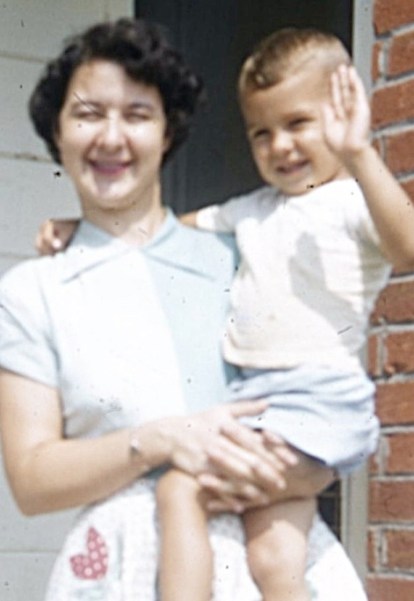
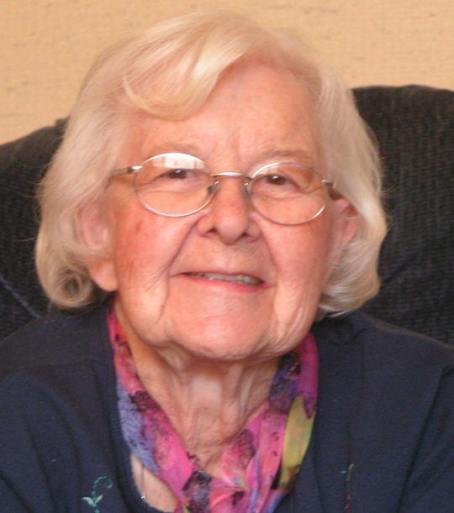
Mom through the years