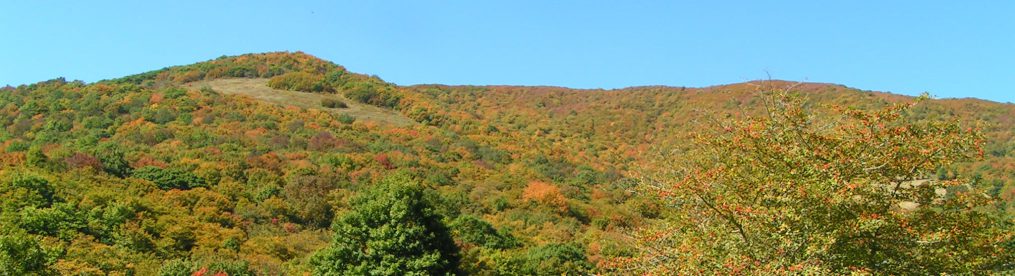
Yes, It Snows In North Carolina

Yes, It Snows in North Carolina   

(On the occasion of the twenty-fifth anniversary of the Blizzard of ’93)

When the Michigander I’d just met learned that our family lives in North Carolina, he said, “Well then, you don’t have to worry about snow.” It’s a comment I frequently hear from people who “aren’t from around here,” as if they think all Tar Heels live at the beach. Little do they know. In a state that stretches 600 miles inland, my home is on the same longitudinal plane as Cleveland, Ohio. The meridian actually skims Michigan’s mitten thumb and lines up with eastern Ontario. Pretty far inland.

At more than 4,000 feet in elevation, we’re also a bit higher than coastal areas. So, yes, we have some weather, and it’s not usually fit for swimsuits. Our thermometer has read as low as -32º. Our most wintry weather has a tendency to come after many folks have long since said goodbye to winter. During our first year here, we were surprised by several inches of snow on Memorial Day. Just a few years later, four-foot drifts covered our gravel road in the middle of April.
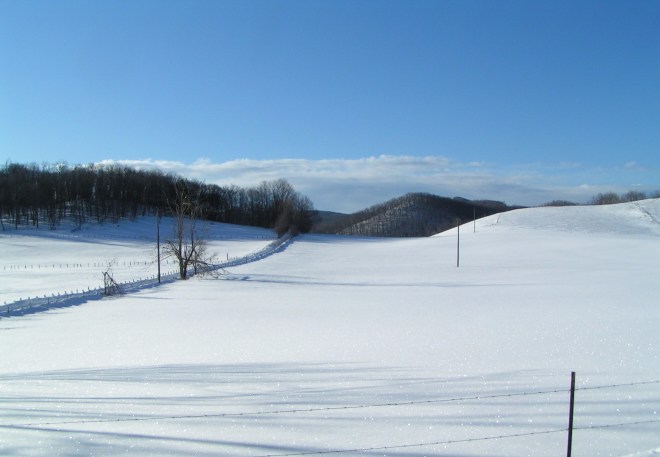
Snowfall near our house, 2010: everything is covered.

Then, there was that other time . . .

In mid-March, 1993, I had a business meeting a couple hours from here. I decided to add a quick overnight visit with my parents, who lived nearby. Snow was again in the forecast, but it wasn’t expected to begin falling until sometime the following day. I’d surely return home ahead of any significant precipitation.

Even so, I parked my little Geo Metro at the bottom of the mountain road that led to their home. Just in case. If the snow came earlier and/or heavier than expected, it would have been treacherous trying to drive out from my parents’ mountainside perch.

The next morning, we woke to a world of white outside and darkness indoors. The snow was deep and heavy. Power lines had snapped for miles around. Snow poured down for three days. Hundred-mile-an- hour winds created monstrous drifts. The governor issued a two-day long, twenty-four-hour curfew. Even wwhen the curfew was lifted, it was clear I wasn’t going anywhere.

Not only could I not retrieve my little car from the snowbank created by a snow plow—I couldn’t even see it under its huge snow mountain. My seventy-something-year-old father, who had suffered a massive heart attack several months prior, was in no shape to shovel snow. And I wasn’t willing to risk the same fate myself.

Back at home, the Gnome and our college-aged son who was getting ready to return to school after spring break were confronted by drifts up to four feet deep once the snow finally stopped falling. They were trapped, too. We usually hire someone to plow out our gravel road when it’s impassable, but no one could get up there. With school beckoning, they felt compelled to begin the daunting task of digging themselves out by hand.

Worried about not one but two potential heart attacks, I insisted on sworn promises that they’d take breaks a minimum of every two hours and call me on the nose at each break. I couldn’t get to them, but if I didn’t hear from them on time, I’d be calling 911 stat!

There was nothing more I could do except wait it out. My parents and I got by with a roaring fire in the fireplace and a lot of canned soups heated on a camp stove. We entertained ourselves with conversation and reading.

Enjoying my snow exile in a hammock

My mother had recently acquired a book published by the genealogical society of her home county. Residents had been invited to send in family stories and histories. Some were straightforward with lots of begats. Some people heaped praises on themselves—in the third person, clearly not realizing their own name would appear as author of their submission. Some were pious, some irreverent, some lavishly embellished.

Other entries were laugh-out-loud funny. Like the one about the grandpa who never cut his toenails and walked around his log cabin barefoot, his nails clicking loudly on the wood floor with each step. Or the one about the family whose children decided to outfit their mother with a football helmet and hang her upside down in a homemade traction device to cure her aching back. Or the story about the man who kept a skull in his closet. Then again, maybe we were just punch drunk. It was good medicine to read and share those stories while we were cooped up.

The book presented another opportunity, one to learn about my own family history. When I’d previously asked Mother how long her family had lived in her home county, she couldn’t tell me. She knew nothing about her family beyond her grandparents. Even then, the information was sometimes scanty.

Each article, it seemed, provided a clue about yet another previously unknown branch in my family tree, which in turn led me to still another and another. My paternal grandfather died years before my grandparents met. Mother knew hardly anything about him. With the help of the heritage book, I discovered that he had been in the Civil War, that my great-grandmother was thirty years his junior and was his second wife. I learned that my grandfather’s ancestors were some of the first European settlers in the area. My grandmother had deep local roots, too. I discovered that while most of my ancestors hailed from the British Isles, some came from Germany. It was fascinating stuff, even if not quite all of it was verifiable.

I was stuck in place for almost a week, much of it with my nose buried in the heritage book. By the time I finally left for home, I had a sheaf of papers summarizing family stories and diagramming potential genealogical connections for further research.

That week was the beginning of an enduring passion for family history, one that’s even led to a couple of books. All because of the Blizzard of ’93, otherwise known all along the East Coast as the Storm of the Century. On this occasion of the storm’s twenty-fifth anniversary, we’re in the midst of another great snowstorm. It’s not expected to be as big an event as the Blizzard of ’93, but then that one caught us off guard, too. 
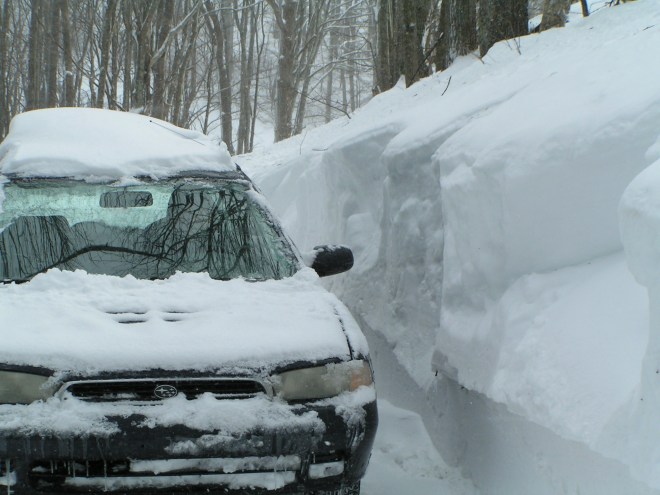
Taking a bite out of snow

For a recap of the Blizzard of 1993, click here:   https://www.wataugademocrat.com/watauga/the-blizzard-of/article_13899f70-3c38-5153-8e92-10c2da17e884.html

Hindsight

Hindsight

wrinkly skin thin as tissue paper
her shrunken skeleton icicle brittle
betraying
all her eighty-one years

yet between her thinning surface
and rickety bones
with all her hopes and imaginings
she is still eighteen

her blood flows just as warm
nerve fibers crackle
with the same electricity
as all those years ago

her brain just as alive
her soul just as eager
for adventure,
for love

in the mirror even her age reverses
whether on a slip of paper
or by visions reflected
from her cataract peepers

though now the dreams from long ago—
some realized, some not—
are the stuff of nostalgia
and sometimes bittersweet

for now she knows
some of those dreams
have lost their chance
to become real

and some
might better have been
unrealized
after all

what we wanted at eighteen
isn’t always what we’ll wish we’d had
when the years have vanished
before our rheumy eyes.


100th Blog Post

How time flies! The first anniversary of my blog flew past without my even noticing. Since I didn’t get to celebrate that milestone, how about this one—last week’s post was my 100th! Is it really possible that I’ve written a hundred blog posts in the last year (plus a couple of months)?

Well, I guess I have, and I’m thrilled to have had readers from across the globe—forty-three countries, to be exact. WOW!

Thank you, friends! You have been so kind. You can’t imagine how much I appreciate you. And here’s a big shout out to Leslie, my most frequent commenter. Thanks, Leslie!To celebrate, I’m sharing my readers’ all-time most popular post here. Second place was a tie: Best  Moment and Needles and Threads, Part I (but you should really read Parts II and III, also.)

My personal favorite? The answer to that question probably changes every day; today it’s this one, if only for sentimental reasons.

Won’t you celebrate with me? Pick one or more of the above and give it a read. And if you want to give me a very special gift in honor of the occasion, share one (or more) of my posts on your favorite social media site and invite your friends to follow along.

Thanks again! Keep on reading!


A Thing of Beauty Is a Joy Forever

For Valentine’s Day

John Keats wrote it as the opening line in his poem, Endymion. If you’re like me, you read Keats, along with his fellow second-generation British poets, Shelley and Byron, in your senior high school English class. How I loved them.

At sixteen, I was primed for their romanticism—the imagery, the sensuousness, the idealism, the pensiveness. I remember spending rainy days under one of our massive pecan trees (in the midst of thunderstorms, no less) mulling over their poetry. Their young deaths (Byron at thirty-six, Shelley at twenty-nine, and Keats at the tragically youthful age of twenty-five) added an extra touch of melancholy to my teen moods.

Endymion’s opening lines go like this:

A thing of beauty is a joy for ever:
Its loveliness increases; it will never
Pass into nothingness; but still will keep
A bower quiet for us, and a sleep
Full of sweet dreams, and health, and quiet breathing.

This verse conjures up something uniquely mine, but I’ll bet it invokes something uniquely yours, too. What follows came to me one day when, as usual, I was first to wake. As I lay in the quiet of early morning, I took a long look at the Gnome‘s face, oblivious and peaceful in sleep.

* * *

At twenty, the only “wrinkles” on his face were the crinkly corners of his always smiling eyes. At twenty, he had a full head of dark blond hair. At twenty, his body was taut and tanned.

The skin is looser now, and the golden hair that covered the top of his head is gone, replaced by a full beard of gray on his face. The wrinkles have spread both upward and downward.

I try to see him dispassionately, as a stranger might. But I cannot. When I contemplate his sleeping form, I only see the whole of him across all the years of knowing him. What I see is the kindness, the love, the mischievous curve of his lips.

The crinkles are still there, too, framing the ever-present dancing smile that lives in his eyes.

And suddenly he is twenty again, but with the added dimensions of experience, of a  shared life together, of wisdom. A thing of beauty. A joy forever.


Some of Her Dreams

SOME OF HER DREAMS   


At eight
her sibs dubbed her the pet—
she got
most everything she wanted.

At sixteen
she was valedictorian
voted
most likely to succeed.

At twenty-one
a wife;
at twenty-three a mother,
succeeding at what she wanted most.

At thirty-two
she learned to drive
in a ’47 black Mercury.
It never came easy.

At forty-six
she wiggled under
Jamaica’s limbo stick
to wild native applause.

At fifty
with children gone
she retired as
first-to-rise breakfast chef.

At sixty
she floated
with the clouds
in a beautiful balloon.

At seventy-three
she rafted the Colorado,
her guide shouting all the way,
“We’re all gonna die!”

At eighty-one
after sixty happy marriage years
and a passel of children, grands, and greats,
she found herself a widowwoman.

At ninety
she’d fractured a hip
lost her license
and downsized

to a single room.
That’s when she said,
“Some of my dreams
will never come true.”

Carole Coates

Photo courtesy of Wikimedia Commons (No machine-readable source available)


The Gift that Wouldn’t Die

The Gift that Wouldn’t Die

What do hair curlers, a canary funeral, and a burn pile have in common? They’re all connected to a childhood Christmas present.

My grandmother—my amazing, funny, creative, exuberant grandmother—sent a replica of an oak sugar bucket for Christmas when I was eight years old.

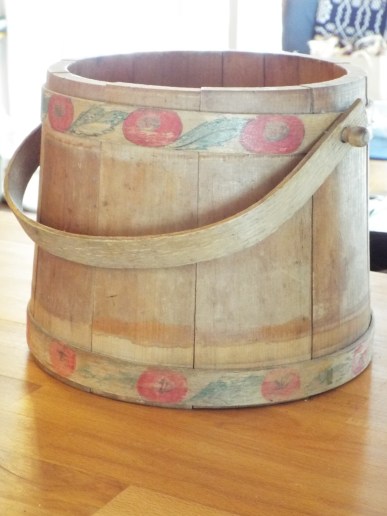
It was the same year a black cocker spaniel puppy quietly sat in a basket under the tree, waiting to be discovered and fussed over. But Blackie wasn’t the first thing I spotted. The sugar bucket was—a small wood-stave bucket, slightly smaller at the top than the bottom, held in place by two circular wooden bands, one near the bottom and one near the top. It had a wooden lid and a curved handle for carrying. To make it uniquely hers, Grandmother had added decorative touches with crayon.

As was typical, her designs didn’t match. On the lid, in all the primary colors, was a depiction of a female Mexican hat dancer, while red apples and green leaves ringed the bucket’s bands. A strange combination.

That was sixty-three years ago. As unlikely a gift as a wooden bucket is for an eight-year-old, I still have it. It’s traveled with me through childhood, adolescence, and adulthood in all its stages. It’s traveled from South Carolina to Kentucky to North Carolina. It’s been with me through teen angst, first love, first heartbreak, college, marriage, motherhood, and empty nest. It has seen me through girly girlhood to feminist maturity. It’ was part of my greatest life adventure—moving to a strange place and hand-building our home.

My bucket played a role in the funeral of our canary, Gene, who died unexpectedly not long after that Christmas. I’d had no experience with human death at that time, but Gene’s was the second pet death in my life; it was hard on me. I gathered my brothers and neighbors in our backyard where we dug a small hole. I placed Gene in an aluminum-foil-lined shoe box, and we lowered him into the ground with a eulogy, a hymn, and tears. But I didn’t have a monument. So, to memorialize Gene’s life and death, I wrote the details—name, dates, and how beloved he was—on the underside of my bucket’s lid.

For the most part, my bucket was where I stored my hair curlers, curlers that changed over the years as hairstyles and curling techniques evolved. First, there were small-diameter metal rods with attached clips, rubberized on the closure end. Those were followed by spongy, pink, foam curlers with matching attached plastic clips. At some point, self-gripping velcro curlers filled my bucket, as did snap-ons.

When bouffant hairstyles became all the rage, my old curlers were replaced with large, brown, mesh cylinders, supported by wire spirals and held in place with bobby pins, which were in turn succeeded by similar mesh curlers that surrounded hard, stiff bristles to lock the hair in place. Plastic “pins” were stuck through the curlers to hold them in place. Those curlers were painful to sleep in, and if you didn’t curl and uncurl just right, those curlers grabbed your hair and wouldn’t let go. Even more painful.

The way we were–a typical late night dorm party


Probably the last curlers to make my bucket their home were the so-called magnetic curlers. They were made of hard plastic punched with holes for air circulation and came in various pastel shades and multiple sizes from half-inch to two or three inches in diameter. Those were the days of serious hair teasing, gels, and sprays. Again, bobby pins held the curlers to my head.

Primping for the prom


Then, electricity entered the world of home hair care. Heated hard plastic electric hair rollers with nubs to catch hair, steam curlers using a combination of hot water and salt to create some kind of molecular curling magic, and ultimately curling and flat irons took the place of loose curlers. A mish-mash of curlers sat unused in my bucket—just in case they needed to be called into service.

When a more natural look came into style, curlers of any sort were irrelevant to my life. My bucket no longer served a practical purpose. But it was a gift of love from a person dear to my heart, so I kept it, as I do so many things. It became part of our eclectic “decor,” if you will, wherever we lived.

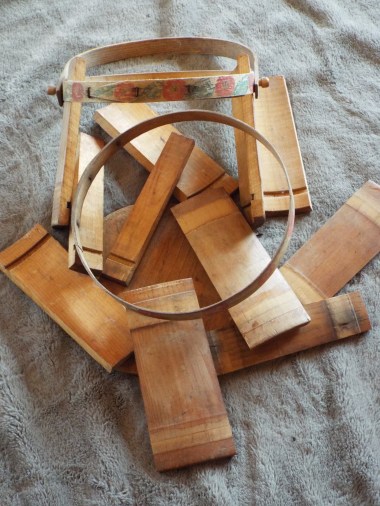
A few years ago, the Gnome and I were on yet another of our simplifying kicks. (They come upon us every now and again, only to be replaced by some other collecting kick.) I decided the time had finally come to say goodbye to my sugar bucket. The rim of the lid was broken and the lid wouldn’t stay in place. The bucket’s bands kept slipping off, turning the whole thing into little more than a pile of sticks. I’d gotten tired of piecing it back together every time something bumped into it.

But it was a conflicted moment. I had to thrash out my mixed emotions with my husband, hoping he’d weigh in and give me justification for either keeping or throwing. He wisely left the decision entirely in my hands. I threw the bucket on our burn pile. Sixty years seemed plenty long enough to hold onto a childhood gift, regardless of its source.

Some time later, suffering from tosser’s remorse, I couldn’t take it anymore. Wracked with guilt, I had to check on my bucket. Even though it had sat through weeks of sun, rain, and snow, the bucket was somehow still intact, not much the worse for wear. I retrieved it.

The lid was too far gone for reincarnation so I bid a final farewell to Gene’s memorial. But the bucket is safely back inside, where it sits as a fine memorial of its own—a lidless monument to perseverance, to my ultimate inability to simplify, and to my inimitable grandmother.

The sugar bucket in tatters

Reclaimed sugar bucket


Breakfast Traditions

BREAKFAST TRADITIONS (another in my Blowing on Embers series)

Breakfast: the most important meal of the day, they say.

Always the first one up in the mornings, Mother made sure we had a good breakfast to start our school days off right. In those days before frozen waffles, toaster pop-ups, or smoothies, breakfast was a pretty big deal. And we never rushed out of the house without it.

Our breakfasts were varied. There was that old standard: bacon, eggs, and toast or similar combinations of protein and carbohydrates. Sometimes we had oatmeal and cinnamon toast; other mornings it might be Cream of Wheat; occasionally pancakes or waffles were on the menu, though most likely on the weekends. And sometimes we went into the kitchen to nothing more than dry cereal and milk. I was never much fond of cereal days—those were the days when my stomach started growling by mid-morning.

By my calculation, while we children were living at home, Mother prepared nothing short of 10,000 breakfasts. When my youngest brother left the nest for good, Mother made an announcement to our father: she was retiring from breakfast duty. From that day forward, before he left for work, Daddy made his own breakfasts (willingly, I might add) before Mother gave a thought to getting out of bed. If not for the cat pawing at her face on the pillow every morning, Mother might have remained in bed for a sinfully, but well-deserved, long time.

But back to breakfast. In addition to all that typical morning fare, there were two dishes in our breakfast repertoire that were, I believe, unique.

One was reserved for one day and one day only each year—Christmas. No one was allowed in the living room where the tree and presents were until we’d all eaten breakfast, and that breakfast was always the same: strawberry shortcake. I loved strawberry shortcake as a dessert and thought it was even more special as Christmas breakfast. As I look back on it, I think there were two reasons we were served this delicacy on Christmas morning. The first, and maybe most important, was that it was quick and easy. For one day a year, Mother didn’t have to get up extra early to have breakfast on the table.

The second reason was perhaps a little more wily. What kid wouldn’t be thrilled to have dessert for breakfast? If we were just as eager (or almost) for breakfast as for presents, and if breakfast was just as much a part of our holiday tradition as the rest of that big day, then there wouldn’t be any peeking under the tree before the parents were ready. There wouldn’t be any whining (well, not much, anyway) for everyone to hurry up so we could finally open the door to the living room. Whatever the reason, that strawberry shortcake breakfast was always a success.

The other unusual breakfast we had on occasion had a regional basis. Mother grew up in the Great Smoky Mountains of southwestern North Carolina, a place where blackberries grow profusely on the mountainsides. Along with her mother and three sisters, she spent many afternoons picking blackberries, so many that they were able to can plenty of jars for use in the winter. And one of the ways blackberries were served in her home was stewed with a little sugar and poured over homemade buttered biscuits. It was a breakfast treat summer or winter.

Mother kept this breakfast tradition alive in our South Carolina home. We didn’t have access to fresh blackberries and frozen blackberries weren’t to be found in the freezer aisles in grocery stores, but stores did carry canned blackberries. Not the blackberries in gooey thick syrup for pies, but just plain old blackberries packed in water. All Mother had to do was put them in a pot on the stove, add a bit of sugar and a little more water, and heat them until the berries were warm and the sugar dissolved. In my opinion, there’s just nothing better than a plateful of biscuits, halved and buttered, smothered in blackberries, and swimming in that purple liquid. Mm-mmm good!

Needless to say, we’ve maintained both of these breakfast traditions in our home. And nothing has tickled me more than to discover that our now grown children have done the same in theirs. No doubt, one day some child in generations hence will look up to a parent and ask, “Why do we eat blackberries on biscuits?” or, “Why do we eat strawberry shortcake on Christmas morning?” and the parent will have no better answer than, “I don’t know. We just always have. It’s tradition.”

And that’s just fine with me.

Deep Freeze

Winter went into overdrive around here a couple of weeks ago. We live in the high mountains of western North Carolina so, even though we live in the south, we’re used to cold winters. It’s not unusual for temperatures to drop into the single digits or into negative territory. We experienced a frigid -32° one year—and, no, that wasn’t the wind chill factor. Almost always, though, those cold spells are short and interspersed with warmer temps.

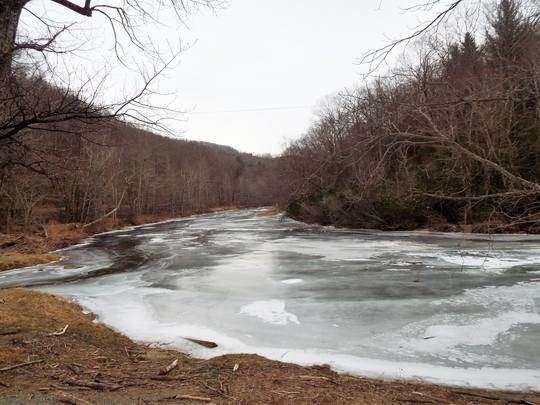
This time was a little different. The -5° to +5° days lasted far longer than usual. Long enough for mountain waterfalls to transform themselves into a paradise for ice climbers. (Tip: don’t try this at home, kids!) The damp seeping between rock-lined roadsides turned into massive icicle displays, and our fast-moving mountain streams and rivers froze solid. Nothing out of the ordinary for some parts of the globe, I know, but around here it was unusual enough for the Gnome and me to decide that, in spite of the cold, we wanted to get out there and see some solid water, camera in hand.

It was late afternoon when we left home so we didn’t get to check out as many streams as we’d hoped. Besides, we quickly got sidetracked. Still, it was a fun adventure and we did manage to get a few photos. It finally warmed up some and, with a few exceptions, most of our daylight hours have been above freezing for a while now. Colder weather will return soon enough. Who knows what photo ops we’ll find then. In the meantime, here are a few of the scenes we captured on our field trip.


We had to stop the car when we came upon this sight. If you look closely you’ll see a small stream of water shooting out of the icy sculpture created by the fountain (right). The high winds of a few days before had blown the water to the left to create another sculpture. Cool!

Rocky roadside cliffs have turned into giant icicle displays everywhere you turn.

We never pass up an opportunity to observe and photograph deer.

The trees obscure this scene, but we kept coming upon mountainsides covered in ice from peak to base where water had oozed from rock seams to create what looks like frozen waterfalls.


This great blue heron was clearly frustrated in its search for food on the frozen river. 

rsz_heron_wings_2

We’re not used to seeing dogs walk on top of rivers.

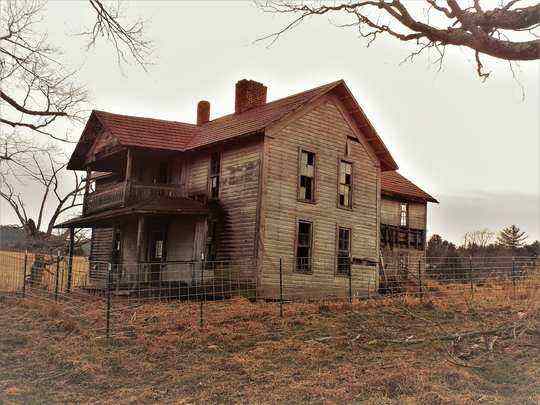
No ice here, but we can never resist the sight of old, abandoned houses. When we saw this one on a distant hillside, we were forced to take a detour. 


My Other Blog

If you’re a dedicated reader of Living on the Diagonal, you know I also began blogging for Mother Earth News a few months ago. Just thought I’d take today to remind you I have a site over there if you’d like to check it out. I Blog for Mother Earth News-1In fact, Mother Earth News is running a contest for its bloggers right now—to see how much traffic we’re getting for articles posted between December 1 and January 31. If you’d like to help me make a better showing, all you need to do is pop over there and click on each of the articles written since December 1st. (Even if it’s not your thing. Do it as a favor.) Simple as that. Thanks in advance.

(Sharing is helpful, too. Just click on your favorite social media icon(s) to the left of each article. Easy peasy.)

My most recent article tells about our early experiences gathering sap to make our own maple syrup. I’ll share more maple sugaring details next week. The week after, you can find my favorite chili recipe. It features sweet potatoes (or winter squash), and it’s delish!

Mother Earth News is where you’ll find other recipes, including my popular vegetarian quiche, my award-winning cornbread, my mom’s delicious pineapple-zucchini bread, and the world’s best kale salad (in my opinion, anyway).

I’ve written about how to make gardening easier with posts on making and using bean arches, growing in raised beds, and letting perennials and volunteers do your gardening work for you.

I’ve also posted a couple of articles telling about the Mother Earth News Fair, a unique sustainable living event that takes place in multiple venues across the country every year.

All that and more to come.  You can find all my Mother Earth News blog posts here.  Hope you’ll stop by for a visit.