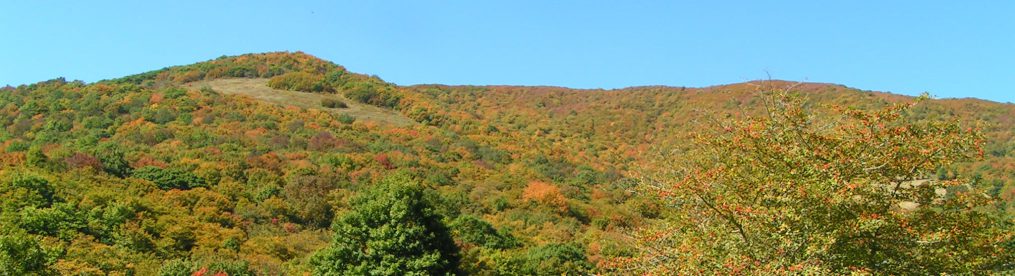
Real Family Values

Real Family Values

A few years back, my colleagues and I shared an offsite holiday potluck lunch and departmental meeting. The newest member of our team offered his home as our gathering spot. In addition to his work with us, he designed sustainable houses, his own among them, and he was as eager to show it off as we were to see it.

Clearly, our first order of business was to tour his lovely home. The last room we visited belonged to his pre-school-aged son. One of our group, the mother of a child just three years older, slowly looked around the room. She seemed puzzled, maybe even troubled.

We discovered the source of her distress when she said, “Where are his toys? Doesn’t he have any toys?” Indeed, the room was almost spartan. It held a few books, a clothes chest, and a junior bed complete with a large, lime-green, leaf shaped canopy that seemed to turn the bed into a sort of cocoon. Her entire house, on the other hand, was overflowing with toys from gift-happy aunts, uncles, and grandparents.

Our host explained that their previous home had been cluttered with both toys and other belongings. When they moved, they made a conscious decision to rid themselves of as many “things” as possible. With an impressionable young child to raise, they wanted to model a new ethic—one of simplicity, one of sustainability, one where experiential activities trumped sedentary ones. No more television, no more oversized, nonbiodegradable toys to trip over and litter the place. Instead, they had chosen to live a life where doing replaced being.

Not long after that day, my colleague told me that as the weekend neared, his little boy had come to him and eagerly asked, “What adventure are we going on Saturday, Daddy?” That’s the way he saw his life. It’s the way his parents had presented it: a life of adventure. He knew he could look forward to one every weekend.

Their adventures consisted of simple things—watching the university’s new wind turbine go up, checking out a crane at work during the construction of a classroom building, ambling through a street festival, spending a morning at a you-pick blueberry farm.

Over the years I’ve watched this family with appreciation and admiration. In the early years, I was privy to tales of weekend activities as soon as they’d occurred. In fact, I’d encountered the boy and his mother even before the father came to work with us. The Gnome and I were on a walking trail and she was with another mother, their children in tow. The son was only two at the time, but he was on a balance bike, a two-wheeled pedal-less bicycle. He was getting started early.

Now from afar, I usually get my accounts via social media. There were pizza-making sleepovers. There were kid-friendly street festivals. As the boy grew, so did the adventures. Snowy days meant not only sledding and snowball fights, but igloo building. The family built mini-bike trails on the back of their property for the boy to ride. They put in a kid-size zip line. They went backpacking. They engaged in cosplay—Halloween’s an adventure extraordinaire.

When the boy was old enough, he joined the Cub Scouts—they’re all about adventure. It wasn’t long before Dad became the group’s leader.

The boy is ten now. These days father and son can be found mountain biking. Mom joins in on scouting activities and weekend camping trips. They visit state and national parks. They go to the beach where they build complex castles and bury each other in the sand. They fly kites. They canoe. Evenings at home may find the three of them playing strategy games with friends.

It’s kind of funny when you think about it. This family is doing something revolutionary in the world of giant, expensive (though often cheaply made and short-lived) toys and games: they’ve gone old school. They’re doing it the way their grandparents and great-grandparents did it—making do with what they have, turning everyday things into exciting experiences. Finding fun in simple things. In the process, they’re teaching values, building a rich childhood, creating a close-knit family life.

And the thing is, it isn’t hard; it doesn’t have to take money. It may take a little imagination. It may take a few hard discussions with the grown-ups, mostly grandparents, who want to shower the kiddies with love via tangible gifts. It certainly takes time. But isn’t it worth it?
The List, Part III: The Bra and I

The List, Part III: The Bra and I

(If you’re just tuning in, you’ll want to catch up on Parts I and II of The List. You can find them here and here.)

Actually, I had written a hundred and one items on my hundred-things-I-want-to-do-when-I-retire list. One, though, was something I simply didn’t feel comfortable broadcasting to professional colleagues. Yet, if my list had been in priority order, this one item would have been at the very top. The number one thing I wanted to do when I retired was to take off my bra.

It was the number one thing I did, too. For a while. Then I remembered something Maya Angelou once said about her aging experience: “My breasts are in a race to see which one gets to my bellybutton first.” I’d seen that effect first hand at Asheville’s Go Topless Day, and I really didn’t want to speed things up for myself.

Funny thing about bras. Back in the sixth grade, we girls could barely wait to get our first bras, whether we needed them or not. (We didn’t.) We huddled together during recess whispering about them—who had one, who needed one, how embarrassing it would be wearing one to school for the first time. My two best friends and I coordinated our bra-buying plans so we’d arrive at school wearing our first bra on the same day. We reasoned we wouldn’t feel quite so conspicuous that way. Proud and conspiratorial, maybe, but inconspicuous.

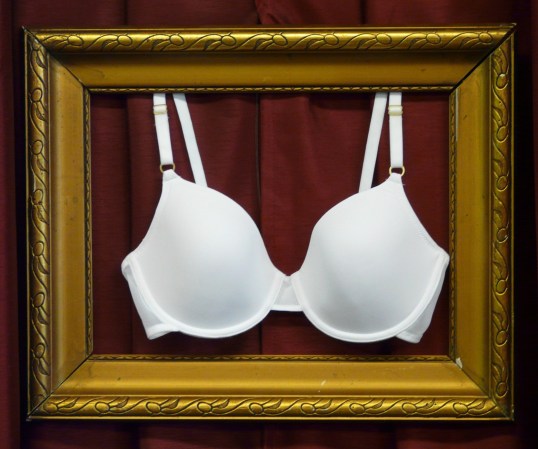
Pretty sure my first bra was this very style! (But smaller—much, much smaller) 


At a church youth retreat a few years later, my friend George said to a bunch of us girls that he couldn’t comprehend how we could bear to be so confined. He thought wearing a bra would feel incredibly constricting, like being in a straitjacket. We were a tad scandalized by his brazen discussion of such an intimate subject, but we tried not to show it. We assured him it wasn’t like that at all, that bras were perfectly comfortable. Frankly, we couldn’t imagine life without a bra.

It’s been a long time since I’ve been excited about a bra. The more I’ve needed one, the less comfortable I’ve been wearing one. George had it right, after all. Constricting is exactly the right word.

In the end, my bra and I came to a compromise. That is to say, I compromised. Pretty soon I started wearing my bra again. Still do. These days, I free my breasts from their bra prison a little earlier in the evenings, though, hoping my body doesn’t notice I’m cheating.

Bras—there’s the Double Support, the Sexy Plunge, the Elegant Lift, the Magic Lift, the Convertible, the Vacationer, the Glamorise, the Wonderwire. Seamed, seamless, lined, unlined, foam lined. Sheer, padded, molded. Strapless, t-strap, gel strap. Wirefree or underwire. Front closure, back closure, pullover. Leisure, sports, nursing, active lifestyle. Extra lift, minimizer, slimming, back smoothing. Push-up, shelf, bandeau, bustier, demi-cup, long line. Cotton, nylon, silk, microfiber, jersey knit, lace, satin.

The most common theme in bra advertising is comfort: original comfort, smooth comfort, pure comfort, moving comfort, 18-hour comfort, super cool comfort, comfort flex, comfort revolution, passion for comfort. HA!

I have a passion for comfort. It’s why I wanted to dispense with my bra in the first place. But gravity is a law. And I’m a law abider, so I’m sticking with my bra.

(Photo images in this post are public domain photos via Creative Commons.)

The List, Part II: Priorities

THE LIST, Part II: Priorities

(If you’re just tuning in, you’ll want to catch up. You can find Part I here.)

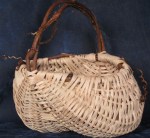
Right up near the top of my “One Hundred Things I Want to Do When I Retire” list was to make baskets. I had first learned how as a child from my maternal grandmother.

My grandmother: high school graduation photo

My grandparents, W. G. and Georgia Stillwell Dillard, on their fiftieth anniversary

Grandmother always had craft activities ready and waiting whenever we went for a visit, and she and I made baskets on more than one occasion. Basket making with Grandmother is one of my fondest memories.

An early basket weaving exercise under Grandmother’s tutelage

But I’d long since forgotten that skill. When I saw an ad for a basket-making class as part of Appalachian State University’s Craft Enrichment Program about three years before I retired, I jumped at it.

In those days I regularly worked until seven or eight o’clock at night and too often as late as ten or eleven. I took work home on the weekends. I dreamed about work. I woke up in a 3:00 a.m. work-related panic almost nightly. My job involved overnight travel, too, sometimes a couple of trips a week. I hadn’t had time for just-for-me activities for years. But I wasn’t about to let anything interfere with my basket-making sessions. In three years of classes, I missed only one because of work.

Making baskets was good for my spirit; it relaxed me; it gave my overworked mind a break from all the work-related issues that were swirling around in it. I really loved making those baskets, and I was eager to delve into my newfound hobby in a big way once I retired. In anticipation of that day, I bought my own basket-making supplies and four big boxes of reed and other materials.

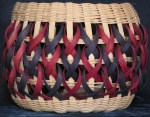
Just a few of the many baskets I made in my basket-making workshops

A few things happened to change all that. No studio space for making baskets magically appeared. Nor did our small house with its open design lend itself to leaving materials all over the place between sessions. Just pulling out all those boxes and supplies, then putting them all away and sweeping up the debris after a basket-making session was time-consuming, so much so that it was only worth doing if I was going to make a day of it. But a full day of hand weaving, of pushing and pulling, of holding ornery pieces in place with one hand while forcing a reed through a too-small space with the other is hard on fingers, especially arthritic ones.

And I was running out of ways to use those baskets. Our house was overrun with them, and I’d given away more than people really wanted to receive. My skill hadn’t developed enough to sell my baskets and I wasn’t really interested in marketing them, anyway—too much like work.

Most of all, I began to realize that baskets had been my very important respite from the daily grind of my work life but now things were different. My needs had changed. Basket-making, it turned out, had served its purpose.

Besides, other interests had begun to take on more importance, like gardening and food preservation. Both of these activities had been on my list, too. At the time, my goal was simply to re-learn those skills from my childhood. I wanted to be competent at them, enough so that if, say, climate change challenged our food distribution system (as it has now begun to do), I’d be able to take care of my own food needs. In other words, I wanted to move towards more self-reliance.

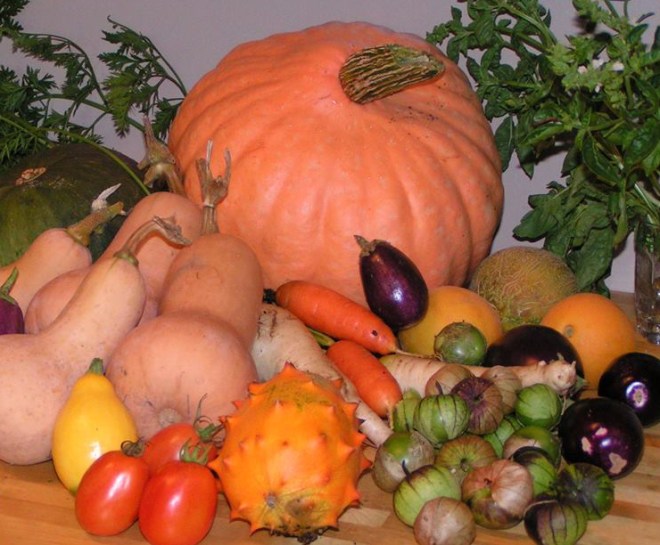
But even I had no idea how these two activities would begin to take over my life. I didn’t expect to get so passionate about them. Why, last year the Gnome and I grew more than twelve hundred pounds of vegetables in our garden, far more than enough for the annual food needs of two people.

One day’s harvest from our garden

I looked back at my list recently and discovered I’d made a pretty good dent in it. What I hadn’t expected though, was to discover a few more items that had lost their importance as new interests—gardening and food preservation, for instance—emerged to take their place. Interests that sometimes have taken me by complete surprise. Like writing. Writing didn’t earn a single mention on my list. Yet, here I am with two books to my name (and hopefully more on the way), a couple of blogs, daily dedicated writing time, and participation in various writers’ groups. Who saw that coming? Not I! That’s the way it is with plans. Priorities change.

It’s one of my favorite things about retirement. I can be flexible. And I don’t need to make any more lists. Which was, as it happens, item 100 on my list.

(Won’t you come back next week for Part III of The List?)

The List (in Three Parts)

THE LIST (in three parts)   

When I announced my decision to retire from a thirty-five+ year career in public service a few years ago, I got lots of questions about my future plans. Curiosity about how I would spend my retirement was so boundless that I decided to make a list for my inquirers: One Hundred Things I Want to Do When I Retire. For the most part my plans were simple: ditch the makeup and hairspray, make baskets, wear pj’s all day, donate about ninety percent of my clothing to Goodwill, take the back roads. So many things. I dashed off my list in a flash.

Part I: “What Will You Do?”

The question I was asked most often almost always came with its own answer attached: “What will you do in retirement—travel?” Most everyone, it seemed, assumed I’d become a full-time tourist. Apparently, that’s what people expect of retirees. Indeed, it’s what lots of Silvers do. I know folks who, in between their many domestic treks, make two, three, or more overseas trips each year.

But travel, outside of more frequent visits to our children and their families, was not on my agenda. My interests were much closer to home. Rather, they were at home.

Simplicity. In a world that was claiming too much of me, simple was all I wanted. I looked forward to not having an alarm clock blare me awake before daylight, to going barefoot all day, to reading in the hammock. I wanted to take things a bit more slowly and to live more simply. All these things were on my list, too.

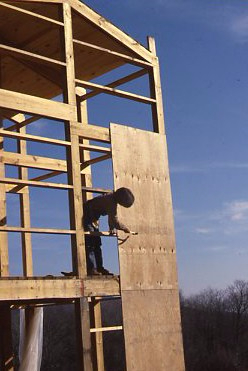
When a long-distance friend asked the inevitable question and I answered that I wanted to get back to the simple life we’d begun here so many years ago, I could hear her almost choking on her coffee as she spluttered, “I’ve heard about that life of yours, and it’s anything but simple!” She was right, of course. Hand building our house while we lived without running water, toilet facilities, kitchen appliances, or heat had been anything but simple, at least in the sense of being easy or even uncomplicated. But it was straightforward; it was a return to the basics. That’s what I meant.

Building our house all by ourselves

I wanted to learn some of the old ways, to learn or relearn some fundamental life skills, to feel real. I wanted to live more intentionally, to lead a more conscious life, to be under the influence of nature, to tread lightly. I wanted to live more sustainably and move more towards self-reliance. I wanted to know, for instance, that if I lost power for  six months, I’d be able to cope. I wanted to eat real food, food I grow and prepare myself rather than something that comes in a box.

A day’s garden haul

I wanted to live in the present. I wanted to unclench my jaws.

Simple? Maybe not. Basic? Real? Most definitely. Have I succeeded? Well, like most things, finding my way to a new lifestyle is a process. I think I’m well on my way and I feel more content every day.

Maybe it really is about traveling. Getting back to basics is a journey, after all.

(Stay tuned for Part II of The List next week.)

Best Moment

“What’s the best moment of your day?”

I had to think about this question for awhile. Not all days are the same, of course, and my answer on one day might be different from another. So, on the day this question was posed to me, I tried thinking on the events of that day, then the day before, and finally of a generic, “average” day. As I mulled over the question, I still couldn’t land on a single best moment. It’s a dilemma I’m happy to live with. Yet, I still wanted to attempt to answer the question. I decided to go the route of a more or less chronology-based stream of consciousness and this hodgepodge is what I came up with.

The best moment of my day is when . . .

a ray of sun shining onto my face wakes me and birdsongs welcome the day

I eat a breakfast of eggs from the happy chickens who live just down the road

the cacophonous chatter of crows during their morning “coffee klatch” interrupts the still of my morning

I sip a cup of honeyed herbal tea while I let my mind organize my day

on a summer morning, I check on the latest thing to pop up in the vegetable garden—or later in the season, when I harvest what I’ll eat that evening or preserve for a chilly winter day

a couple of hours of dedicated writing time come my way

the all-day deck antics of squirrels and chipmunks capture my attention as they battle each other’s wits over food intended for birds

in warm months, I take a twilight walk listening to the quiet, watching the synchronicity of fireflies as they light up our woods, and catching whiffs of honeysuckle, lemon balm, ferns, and freshly mowed grass

on a clear, crisp wintry evening, I gaze at the star-studded sky and maybe catch a meteor streaking across the sky

I spy mountain valleys shrouded by a sea of clouds

the nighttime calls of owls seep into my consciousness

the early springtime sounds of wood frogs and spring peepers shatter the otherwise quiet of my bedroom—all night long

that “clown of the forest,” the nuthatch, utters its almost cackling sound, strongest on an autumn day

I’m graced with the giggles and confidences of grandchildren

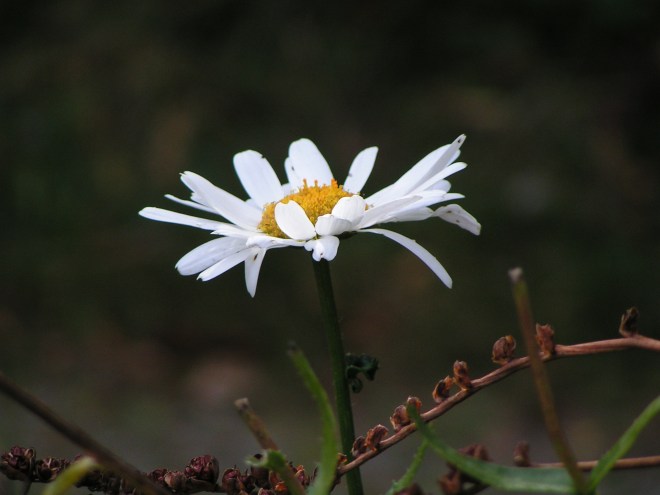
the season’s first wild daisy shows itself in our meadow  

the warmth and comfort of a snuggle under the covers overtake me upon waking and again as I fall asleep

And for all that, the truly sweetest moments of any day come from those spontaneous embraces anywhere, anytime as my sweetheart and I sway ever so slightly—almost the way young lovers move to a slow dance at the prom—for no particular reason and for minutes on end.

What a lucky duck I am! With all these best moments, I’m reminded of the lyrics from one of my favorite hymns, “How can I keep from singing?” Indeed!

What about you? Are there favorite moments in your days?

The Queen of Her Destiny

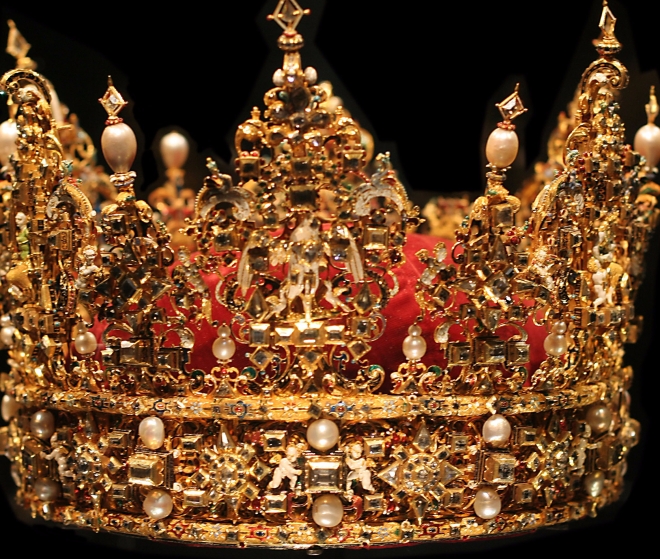
Queen of Her DestinyDenmark_crown

This meme popped up on my computer the other day: “One day she finally grasped that unexpected things were always going to happen in life. And with that, she realized the only control she had was how she chose to handle them. So, she made the decision to survive using courage, humor, and grace. She was the Queen of her own life and the choice was hers.”

It brought to mind a news feature I’d heard not long before: a discussion with a principal in a school full of students who have faced the kinds of challenges that might do most of us in. Unsurprisingly, some of those students are troubled. This wise principal takes those students in hand and tells them how sorry she is that they’ve had to deal with such horrible life circumstances.

Then she says, “I can’t do anything about that,” and goes on to challenge them to shift their focus from what has happened to them in the past—what they, too, can do nothing about. She tells them she’s there to help them figure out what they’re going to do about things now. And to stand alongside them to help them get where they want to go.

I think that’s so wise. I’ve seen far too many “Woe is me” people. Their obsession with the bad things that have come their way has paralyzed them to the point that they’re unable to make a single decision, to take one positive step forward.

I know it’s hard. I’m not here to suggest anything to the contrary. But what that principal says is true. What the meme says is true. Paying these words heed is the only way to crawl out of despair and into the future.

Seek the light and grab hold. Be the queen—or king—of your destiny.

Photo attribution: By Ikiwaner (Own work) [GFDL (http://www.gnu.org/copyleft/fdl.html) or CC-BY-SA-3.0 (http://creativecommons.org/licenses/by-sa/3.0/)%5D, via Wikimedia Commons

Little Deeds, Big Impact

Little Deeds, Big Impact

Some occupations will get you daily thanks for doing a good job. Many more rarely result in expressions of appreciation. Sanitation workers, for instance. Custodians. Government professionals who collect taxes, process unemployment benefits, and so on.

Teachers rarely get a “Thank you” from their students, either. And if they do, it may be years later. It’s hard to stay positive, to believe you’re accomplishing something important when it’s not acknowledged by the very people on whom you focus your professional passion.

But I’m here to tell you that your influence spreads like ripples in a pond when skipping stones. Whether it’s positive or negative. Whether it’s part of your job or a kindness to a stranger. It may be something truly magnanimous or seemingly insignificant. And it may make a difference in ways you’d never imagine. Let me give you some random (and in no way equal) real-life examples.

The first is a story about Fred. Fred came into our family by marriage to a cousin more than forty years ago. In all that time, I’d never met him. But I heard a lot about him over the years from my mom. She’d heard about him from her sister, his mother-in-law. Sometimes, she was in his presence and picked up a bit of his philosophy in person. A long time ago, she shared a tidbit with me. Fred held a strong position on the use of brand names as generic, she said. You know, the way people used to refer to all refrigerators as Frigidaires. Unless you’re of a certain age, you may not remember that example, but what about Kleenex for tissue?

It’s a real marketing coup when a brand becomes so iconic that it becomes part of the lexicon—you want a cola type soda and without thinking you ask  for a Coke, you’ll get a Coke instead of a Pepsi or an RC.

It’s not so great, though, if you’re a small business owner like Fred was. It’s hard enough to break into the public’s attention without having a built-in bias all because some multi-national corporation managed to hire a particularly clever PR person. Small businesses need a fair shot. So Fred thought people should say “tissue” or “cola” or “refrigerator.” Period.

Like I said, I’d never met the guy, but I took that lesson to heart. It made sense to me. Overnight, I changed my vocabulary. Never again did I use the word Kleenex unless I was talking specifically about that brand of tissue. I began asking  for “diet soda” in restaurants, which caused me no end of grief. Almost inevitably, my request got this response from the waitstaff: “Is diet Coke (or whatever brand they happened to sell) okay?” They just didn’t get it. But I persisted. When I had business lunches with colleagues, they learned to anticipate the scene and started chuckling at me before the word cola was out of my mouth. They thought I should just give up and go with the flow.

I finally met Fred. Thought I’d tell him how much he’d influenced me even though we’d never before laid eyes on each other. His response was a surprised, “I said that?”. It took his wife, her mother, and my mother simultaneously exclaiming things like, “You sure did,” or “Yes, there was a time . . . ”.

I thought it was hilarious. Decades ago, Fred expressed an opinion. Over the years, his memory of that principle dimmed to the point of nothingness. But someone—me—heard the message loud and clear (even though second-hand). And I not only put it into practice but passed on the sentiment with a kind of missionary zeal.

* * *

Kirk is a friend from way back in college days. After graduation, our families lived in the same town and socialized regularly. Then his family moved to another state. Fate brought us together sporadically and rarely after that. About five years ago, our paths crossed again. It had been more than thirty years since we’d last spent time together. Kirk told the Gnome and me that our names had come up in a sermon he’d recently preached. It had something to do with what he remembered as all our furniture-building back when we were newlyweds—the creativity, necessity mothering invention, that sort of thing.

The Gnome and I looked at each other in bewilderment. We’d sold weaving and macramé items at craft fairs and street festivals for a time in those days, but furniture-building? We were stumped. As we drove home, we puzzled over the discrepancy between Kirk’s memory and ours. Finally, we remembered that when we’d lived in a small World War II-era apartment with one lilliputian closet, we’d built a wardrobe of plywood with pine molding. We painted it a memorable aqua and yellow—it was psychedelic 1969, after all.

That must have been what Kirk remembered. But in his imagination, our one-time building experience had mushroomed. So much so that our “ingenuity” became the substance of a lesson used in a sermon more than four decades later.

* * *

Many years before either of these events, a different kind of moment occurred. I must have been in my early teens the day Mrs. Truluck, a volunteer youth leader in our church, stopped me in the aisle after one Sunday service to compliment me on something she had observed. I don’t remember what exactly, maybe for sitting next to another girl who might otherwise have been ignored. Whatever it was, I didn’t think it was a big deal. However, Mrs. Truluck taking about sixty seconds to tell me she’d noticed was a very big deal. A big deal that’s stayed with me for close to sixty years now.

Mrs. Truluck no doubt knew the importance of offering a pat of congratulations or a word of encouragement to young people. But I’ll bet she fairly quickly forgot that particular exchange. I never did. I learned two important lessons that day. One, that people notice what you do, even things that seem insignificant. I also learned how far a thoughtful comment can go. For the decades since that Sunday afternoon, I’ve tried to make it a point to let people know when I notice the nice things they do.

So, to all the Mrs. Trulucks out there, thank you—you make a difference.

And so do you.  

By Ashashyou (Own work) [CC BY-SA 4.0 (https://creativecommons.org/licenses/by-sa/4.0)%5D, via Wikimedia Commons


Coming ‘Round the Mountain

Coming ‘Round the Mountain

Coming ‘Round the Mountain (part of my Blowing on Embers series)

Public domain photos retrieved from Wikimedia Commons titled Winning horse and buggy with driver at the Wynnum Show, Brisbane

Is there anything quite like the sweet scent of a dew-kissed early morning—especially in our green southern mountains? Every time—every single time—I catch a whiff of it, I’m transported back to those too-rare childhood trips to visit my maternal grandparents.

It was an excruciatingly long drive from the South Carolina flatlands to North Carolina’s southwestern mountains, even longer for the three children relegated to the back seat.

We claimed our territory before the first hand ever touched a door handle. No one wanted to be stuck in the middle, surrounded by sibling arms, legs, and torsos. We knew we’d have to take turns, but hope sprang eternal.

The window-seat sitters were intolerant, and arguments began almost immediately: your feet are on my side . . . I don’t have anywhere to put them . . . keep ’em on the hump . . . Mama, he’s touching me. And so on.

Our trips usually began late on a Friday afternoon so Daddy could get in most of a day’s work and we’d still have all day Saturday for visiting—and resting up before we had to make our return trip on Sunday afternoon. In the days before interstate highways, the drive lasted more than six hours—an eternity to us children. A couple hours in and we were miserably fidgety. That’s when the questions began. When will we get there? How much longer? Are we there yet?

Mother tried diverting our attention with car games. We looked for license plates from other states; we searched for words on billboards that started with the next letter of the alphabet; we tried to be first to spot whatever animal or object one of our parents called out to us.

Once our brown, two-tone Ford Fairlane began climbing and winding, we knew we were getting close, which only made us more restless. That’s when Mother began leading us in all the verses of She’ll Be Coming ‘Round the Mountain, with its ever longer refrain. In my mind’s eye we were singing about Mother in an earlier era. I imagined her in a bonnet riding on the front seat of our song’s buggy, maybe even wearing scratchy red pajamas.

For Dad, navigating those ever steeper, narrow, curvy roads in the dark after an already long day at the office was harrowing enough without being distracted by the fussing and whining emanating from the back seat. No wonder Mother was so desperate to keep us occupied.

Everyone knew what was coming when we inevitably got on Dad’s last nerve, and we didn’t want to hear it any more than he wanted to say it: “Ask me that one more time, and I’ll turn this car around right here.” Not likely. Returning home would have made for an even longer trip, and no one wanted that. Occasionally, the threat was, “One more argument and I’ll stop this car and give everyone a spanking.” We rarely got spanked and never on a car trip, so why pull out that old chestnut? Sheer exhaustion, most likely.

Somehow, we always reached our destination in one piece and not too awfully frazzled. A few hugs, kisses, and a midnight snack later, we were hustled off to bed and bundled under the covers.

And then it was morning. This was the moment I’d been looking forward to since we first got in the car. I woke under a pile of Grandmother’s homemade quilts, fog drifting through the windows I’d opened the night before so I could feel the kiss of the deliciously crisp mountain air on my face.

Before anyone else stirred, even my early-rising grandfather, I stole outside to walk barefoot in the cool, damp grass. I breathed in the clean scent of a world washed in dew, nibbled on a green apple that had fallen from its tree, and slipped under the graceful, draping branches of the giant weeping willow on the edge of the yard—my sacred hideaway. It was the perfect spot for a little girl to daydream, think private thoughts, and grow.

And worth every minute I was stuck in the middle.


Any hour of the day, any season of the year, every time I see sights like these I know the mountains are my meant-to-be home.


School Field Trips

School Field Trips (part of my Blowing on Embers series)

When we moved up here on the diagonal, our children attended a school far out in the county. Field trip time rolled around, and I was surprised to overhear some of the students saying they were planning to “lay out” that day. A field trip to town not only held no interest for them; they were a little overwhelmed by it. For some, visits to downtown were rare and intimidating, it seemed.

Not for me. Back in my school days in Florence, South Carolina, everyone I knew shared my enthusiasm for our annual field trip. It took place in the spring and was the highlight of the school year. I think we may have seen it as a sort of rite of passage. We’d made it through (almost) another year in the classroom.

My first field trips occurred when I was a student at Briggs Elementary. Some school board shuffling meant I spent the fourth, fifth, and sixth grades at Tans Bay, so much further out in the county that I’d never heard of it. Field trips were a staple at both schools. When the big day came, the air was electric with anticipation.

Below are pictures taken of my third, fourth, and fifth grade field trips.

Notice anything?

3rd Grade field trip

Can you spot  me–or Teddy?

4th Grade field trip

5th grade field trip

That’s right! Every single field trip was exactly the same. Year in and year out.

It went like this:

  1. Put home-packed lunch (mine was always my mom’s terrific egg salad sandwich and a small bag of potato chips) in the large cooler filled with dry ice. Do not touch the ice!
  2. Tour Coble Dairy; select a half-pint carton of white or chocolate milk; return to bus.
  3. Tour Merita Bakery; pick up a cinnamon roll two-pack and a Pepsi; pose for official field trip photo on steps of bakery; return to bus.
  4. Hop off bus at Timrod Park; retrieve lunch from cooler, watching in fascination as the dry ice forms fog when it transforms from solid to gaseous state (remember not to touch!); eat lunch and play on playground; return to bus.
  5. Disembark charter bus back at school and board yellow school buses for home.
DSCF0320

The schoolhouse where 19th century poet Henry Timrod taught is a showpiece of Timrod Park.

For some reason I cannot fathom, we were always accompanied by a police officer—he was the same year after year, too. Our county was small and peaceful. We students were certainly not rabble rousers. Nonetheless, we had police protection. Not that we minded. We girls thought he was the cat’s pajamas. Tall, uniformed, dark wavy hair. He scared us a little, but we couldn’t help but flirt in our grade-school way. (You can see him sitting in the lower left of the middle picture with holster hanging from his hip, and standing, upper right, in third picture.)

Florence must not have been much of a happening place in the middle of the last century. But it sure seems like the school system could have come up with a little field trip variety.


Big Changes

Big Changes (part of my Blowing on Embers series)

My year in the yellow house was pretty eventful, but so was the next place we lived: Thrift Road in Charlotte, North Carolina. It was where my youngest brother was born, where I started school and learned to read—a lifetime passion.

The night before my first grade school picture was to be taken, I took a pair of scissors to my hair.

It was where our family listened to the 1952 presidential election results. “Who are we for, Mommy?” It was where I got my first pet, a blonde cocker spaniel-spitz mix we named Boots and where she died from injuries received when she was hit by a car a few months later.

It was where I went from measles to chickenpox in one fell swoop, missing an entire three weeks of school. (Remember, this was before today’s age of vaccines.) I was so sick! And it was where my across-the-road neighbor, Mary Ann, told me she was adopted and had me convinced I was, too, a conviction so powerful that it had me searching for proof among my parents’ papers for five years.

Charlotte was where I was terrorized by the hundreds—hundreds—of snakes that slithered out of a weedy field and across our driveway after a heavy summer rain with me in their midst. I’d never seen a snake, but I’d picked up from somewhere (certainly not from my wildlife-loving parents and not from TV—we didn’t have one of those) that snakes were to be feared more than death itself. I leapt onto the bottom rail of the chain link fence that enclosed our back yard, my tiny hands clutching the links for dear life, and screamed bloody murder till my parents came out to save me. My snakes turned out to be nothing more than slugs!

Thrift Road must have extended further then than it does now because I was able to walk to Thomasboro School, just a few blocks away. According to current maps, it’s much too far a distance for a first grader to walk. Today’s roads in that neighborhood (like Freedom Road and I-85) are also far too busy for children to walk them safely.

We had a school-wide assembly on my very first day where the principal, Mr. Curlee, announced that he had locked up all bicycles that had been improperly parked (whatever that meant). I thought that was so mean! Mr. Curlee terrified me.

I’d swear that my teacher, Mrs. Howie, was older than these mountains I live among today. For reasons I won’t go into, I thought she was mean, too. But she must have been an effective teacher. I started school at a distinct disadvantage: all my classmates had a year of kindergarten under their belts, but I’d just moved from South Carolina where there was no public kindergarten. As a result, everyone else in my first grade class was well ahead of me both academically and socially in the beginning. It must not have taken long for me to catch up, though, because my report card (yes, of course I still have it) was stellar in every way, even when I missed a full 30% of a grading period because of those childhood diseases.

My report card cover. How very Dick and Jane.

We lived in Charlotte a mere sixteen or seventeen months before returning to Florence. I’d been in second grade for just days when we made the move. When I walked into Briggs Elementary School, a few days into the South Carolina school year, as well, whose do you think was the first face I saw? Teddy’s! We were reunited! It was more than I’d ever dared hope for. I had long since resigned myself to the certainty that our paths would never again cross.

In my elation at this happy surprise, I told my newfound girlfriends that Teddy and I already knew each other, that he was, in fact, my long lost boyfriend. When they didn’t seem to believe me, I did what may have been—to this day—the boldest and most uncharacteristic thing of my entire life. I told them I’d prove it by kissing Teddy one hundred times! I had to chase him down at recess, but I did it.

We never spoke again.

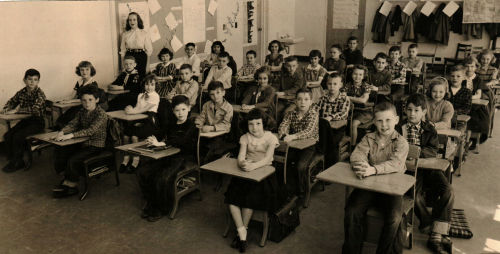
My third grade class. For some reason, I don’t have a second grade picture, but with the exception of the teacher, the cast is the same. (That’s me way back there in the last seat of the row next to the wall.)  Miss Milliken was our second grade teacher. Our exotic, red-headed third grade teacher was Miss Whitlock. I adored them both.