Fifty-Two Books in Fifty-Two Weeks

That’s right. I wanted to see if I could read as fast as my mom seems to, so as we rang in 2019, I began keeping a list. And I just counted them up. Fifty-two. I don’t mind telling you, I was a little impressed with myself (especially considering I was consumed with writing my own book throughout the entire year). Admittedly, some were children’s books—quick, easy reads. But I made up for that with some massive, heavy-duty tomes.

For the record, I don’t waste my time with bad writing. But my reading habits are a little out of the ordinary, so who knows if anyone else shares my eclectic reading preferences. I rarely read a best-seller, nor do I read hot-off-the-presses books. Those two facts alone mean I’m not your typical reader.

At bedtime, I read for fun—light stuff so I can sleep. I often read books recommended by writer friends whose tastes I trust. And I’ve read quite a few books as research for my writing—or others that the research led me to as I became obsessed with a particular area. This year I’ve also read several deeper books, volumes by wise women and men who write words that inspire and push me.

Here are my favorites of the year—the best of the best.

FICTION

Don’t you just love this cover?

My favorite fiction book of the year, for all kinds of reasons, was The Book Woman of Troublesome Creek.: iI’s about Kentucky, a state I think of as my second home; it’s about the magic of books; it’s a history and civics lesson about pack horse librarians, the Great Depression, and the blue-skinned people of Kentucky. Kim Michele Richardson, whose own story is compelling, dug deep in penning this book. She moves from fiction to fact and back again with such deftness you never notice the switch. And her love for her subject shines through every word. I cannot recommend this book highly enough. Hint: check out the pictures and information at the end of the book before you dig in to the story. I think it makes a difference to know a little about the actual history of the pack horse librarians. Rather than ruining the story for the reader, I believe this foreknowledge can only enhance your reading. Buy it or check it out from your local library—and if they don’t have it, ask them to order it. In spite of some hard truths, the story and Richardson’s telling of it are simply beautiful.

Two other favorite fiction reads of the year were Sonja Yoerg’s True Places and Bren McClain’s One Good Mama Bone (That one was a recommendation from Richardson—an excellent recommendation.) What I liked about both of these books is that the characters are believable and the reader learns from them. Yoerg’s career as a biological psychologist definitely influences her insight into the human condition. Like Richardson, she researched the Blue Ridge flora and fauna and incorporated facts with such skill you don’t notice it. While McClain’s protagonist is human, you will become deeply attached to the cow, Mama Red. In the end, McClain has written a love story to Mama Red. It’s well worth the read.

I couldn’t make myself read Cold Mountain, Charles Frazier’s breakout debut novel. But I was drawn to Thirteen Moons when I read that it was a fictional account of William Holland Thomas’s life. Thomas plays a minor role in my family’s genealogy. For reasons unknown, my great-grandfather was named for him And I recently discovered that Thomas married a distant relative—my second cousin three times removed. Those two facts were all it took to hook me. This book is decidedly not everyone’s cup of tea, but I was captivated. The story is episodic, almost diary-like. And there’s a reason for that. Frazier wrote that his protagonist, Will Cooper, is not Thomas, but that they share the same DNA. I’ll say. Frazier clearly read his way through Thomas’s prolific papers. There is definitely fiction here, but underlying it is far more biography and history. If you contemplate reading this book, be sure you read about the real Will first—his fascinating story as an orphan, lawyer, chief of the Eastern Band of Cherokee Indians, and colonel in the Civil War is larger than life, both heroic and tragic. Knowing it will deepen your appreciation for Frazier’s story.

FOOD

I read three books on the subject of food, though they come from distinctly different points of view. I would never had given Tommy Tomlinson’s The Elephant in the Room a thought except that I saw and heard the author on two occasions. I could tell his writing would be superb and bewitching, regardless of the subject per the subtitle: One Fat Man’s Quest to Get Smaller in a Growing America. With that bit of knowledge, you may have deduced the double meaning in the title. This book is brutally honest, funny, painful, and masterfully written. It’s worth the reader’s time regardless of your relationship to food, but especially worthwhile for anyone struggling with any kind of addiction or anyone who wants to gain a better understanding of that struggle. You might recognize Tomlinson’s name from ESPN, The Charlotte Observer, or WFAE Radio. No wonder he’s such a good writer.

Shawna Coronado’s Stacked With Flavor is both a cookbook and a guide to wellness, full of gleanings from her own experience and personal growth living with severe food allergies and osteoporosis. The recipes, though, are not just anti-inflammatory, dairy-free, grain-free and low-sugar, though they are all of these things. Her method—using herbs and spices to stack flavors—makes every dish endlessly versatile and delicious. That’s what caught my attention, and I haven’t been disappointed yet. Coronado did her own photography and it’s delicious, too.

Georgann Eubanks may be best known for her North Carolina Literary Trails series, but she’s branched out. The Month of Their Ripening takes the reader through a calendar year of foods that, while not necessarily unique to North Carolina, are among the state’s heritage foods. She features foods whose seasons are short and which are best eaten at the height of their season. Your mouth will water at Eubanks’s delicious writing as she travels through the state’s nooks and crannies in search of Tar Heel foodways via interviews with farmers, cooks, historians, and—best of all—taste tests.

CHILDREN’S BOOKS

I came to That Book Woman after reading Richardson’s tale. Both it and Ernestine’s Milky Way tell stories of rural life with stunning illustrations. I had to have them both to share with the grandkids. Both books are magical. With Ernestine, you’ll even learn how to make butter.

Rabbit Hill is an oldie, written in 1944. It’s worth reading just to see how children’s books have evolved. This one, full of sophisticated grown-up words, was clearly meant as a book to be read to children by adults who would use the story to teach vocabulary. It’s a lovely story that any animal lover has to appreciate.

Dr. Seuss’s Horse Museum was not written by the famous author, but uses a newly discovered manuscript and sketches by Seuss to create a playful art book for children and features a few classic Seuss characters to help tell the story. If you love Dr. Seuss, horses, or art, you’ll fall for this unique book. A terrific way to help children learn about great art.

POETRY

I’m not even going to try. Native Kentuckian Frank X. Walker’s small volume, Affrilachia, must be read and savored, one morsel at a time. Even if you’re not big into poetry, you can appreciate this one. Walker says he coined the word Affrilachia to make visible the black experience in the Appalachian South. And he succeeded

MEMOIR

If you value excellent writing, I believe you’ll love anything you read by Pulitzer prize-winning journalist Rick Bragg. I happened upon him quite by accident and have now read three of his books. I found Ava’s Man particularly compelling. He writes as only a Southern writer can and your jaw will drop at the sheer poetry of it. His books will make you laugh as hard as they will make you cry. And you’ll learn a few heart-breaking truths along the way.

Also see Leigh Ann Henion and Kate Bowler in the following category.

PERSONAL AND SPIRITUAL GROWTH/AGING

Not necessarily religious, these books are intellectually spiritual, some of them particularly relevant for those of us who now qualify as elders. Each one is intimate, honest, thought-provoking, vulnerable, and filled with deeply perceptive perspectives.

I’m way over my self-imposed word limit, so I’m just going to list them here with links. Sorry to give them short shrift, but perhaps it is enough to say I found each one enlightening. I’m not being hyperbolic when I say they were all seriously life-changing for me.

Leigh Ann Henion, Phenomenal (beguiling imagery; hauntingly beautiful)

Parker J. Palmer, On the Brink of Everything

Mary Pipher, Women Rowing North

Kate Bowler, Everything Happens for a Reason and Other Lies I’ve Loved

Happy Reading in 2020! (And I’d love to hear about some of your favorite books.)

Note: For simplicity and universality, I’ve linked to online sources. But may I gently encourage you to seek out your local independent bookseller (if you should be so lucky as to have one) or your public library if you’re interested in reading any of these books.

P.S.: I’m laughing at myself right now. Just counted up and realize I’ve included a whopping 30% (almost) of my year’s reading list as the best. I’d never succeed as judge of a writing contest. Told you I read nothing but the best!
 

Thanks Giving

“What is the best moment of your day?” she asked.

That turned out to be a question I couldn’t answer directly. Let me put it this way.

The best moment of my day is . . .

when a sun’s ray beams onto my face, wakes me, and bird songs welcome the day;

when I eat a breakfast of eggs from the happy chickens who live just down the road;

when the cacophonous chatter of crows having their morning “coffee klatch” interrupts the still of my morning;

when I sip a cup of honeyed herbal tea as my mind loosely organizes my day;

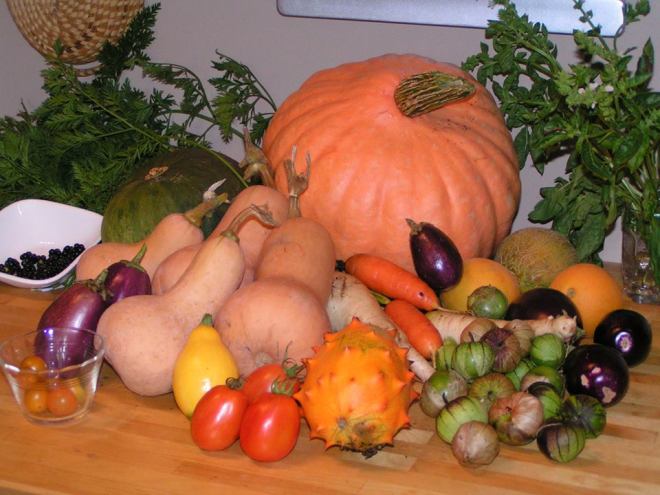
when I check on the latest thing to pop up in the vegetable garden on a sunny summer morning—or later in the season, when I harvest what I’ll eat that day and preserve more for chilly winter nights;

when the comfort of a snuggle under the covers overtakes me upon waking in the morning and again as I fall asleep each night;

when a few hours of dedicated writing time come my way;

The best part of my day is . . .

when the all-day antics of squirrels and chipmunks capture my attention as they battle each other’s wits over food intended for birds;

when I take a twilight summer stroll listening to the quiet, watching the synchronicity of fireflies light up our woods, and catching whiffs of honeysuckle;

when I gaze at the star-studded sky on a clear, crisp wintry night and maybe catch a meteor streaking through the atmosphere;

when I spy mountaintops peeking through a sea of clouds;

when the nighttime call of an owl seeps into my consciousness;

when the early springtime sounds of wood frogs and peepers shatter the otherwise quiet of my bedroom—all night long;

when I’m graced with the giggles and confidences of grandchildren;

when the season’s first wild daisy shows itself in our meadow.

The best—and sweetest—moment of my day is a spontaneous embrace anywhere, anytime as my sweetheart and I sway ever so slightly—the way young lovers move to a slow dance at the prom—for no particular reason and for minutes on end.

With all these best moments, I’m reminded of these words from an old hymn: “How can I keep from singing?”

And I give thanks.


Everyone Knows Someone

(If you’ve been reading my blog recently, you know why this issue is ever-present in my mind.)

I read this comment the other day: “Everyone knows someone who has had cancer.” Someone? As in one? Off the top of my head, I can name ninety people I’ve known personally who have had a cancer diagnosis. Ninety! Not ninety people I’ve heard of. Not celebrities or friends of friends. Ninety people whose hands have touched mine. People I love—family and friends, work colleagues, teachers, childhood play pals or schoolmates, and a few more distant acquaintances.
If I try making a list tomorrow, it will be different. I’ll remember new folks and inadvertently overlook some on today’s list. But today’s list looks like this: breast, 34 (!); prostate, 11; blood, 5; brain, 5; colon, 4; lung, 4, skin, 4; tongue, 2; cervical, 1; and others—those diseases whose names I don’t know or are too complicated to spell out here, 20. (btw, 34 related to me, 17 of them by blood)

And those are just the people I happen to know about (and that my brain recalls). There are friends and relatives I’ve lost contact with. I don’t know their stories. And some people are more private about personal issues. My best friend might have cancer and decided not to share, at least not yet.

Is this—ninety—is this normal? Seventeen blood kin? Is that the way it looks for others? Or am I the only one in touch with so many whose lives have been hijacked by this awful disease?

Now, I know cancer is an inclusive term for more than a hundred so-called different diseases, but they are a family, all identified by abnormal cell growth that spreads and crowds out healthy cells and interferes with necessary body functions and steals nutrients from tissues.

Cancer is a cruel disease, mean, vicious, painful. One whose treatments can be as bad or worse than the disease itself. It doesn’t matter how good you are, how old or young, what gifts you have for the world—cancer doesn’t care.

At least some people with cancer have found unexpected gifts along the way. Some of us know how to do that—to find some good, to learn something valuable, to grow, even in the most difficult of circumstances. But that doesn’t negate the atrocity of the disease itself.

For forty percent of the people on my list, cancer, or complications thereof, was their cause of death—mind you, some of those deaths are from as far back as the 1950s when early detection and advanced treatment technologies we have today simply didn’t exist. Others have almost sailed through treatment and are, at least at the moment, cancer-free. For still others, an uncertain prognosis hangs over them like the sword of Damocles. That sword actually hangs over everyone who has received a cancer diagnosis, whether they’ve been declared ‘cured’ or not, because those potentially deadly cells can hang around, unseen, for years. Every next check-up is a question mark.

People live with that question mark or that sword in different ways, but are rarely, if ever, unaware of it.

The same is true for those who love them.

Three Little Words

(I wrote the following a little more than two years ago, knowing it wasn’t yet time to post it. Now the time has come. It may be a little disjointed since it was more or less stream of consciousness. I thought it better to leave it as it was, only adding an update.)

Three little words. Thirteen letters. Words that will dramatically change your life.

You hope not to hear them. But you have that feeling in your gut. You wait for them.

He has your fate in his hands. Why is he keeping you waiting? Doesn’t he know you’re anxious?

Finally, you hear the light tap on the door before it opens and he walks in.

And there they are. Those three little words. Laid bare.

“You have cancer.”

You’re different now.

Except that you aren’t. The truth was already there. The cancer was already there. You are the same today as you were yesterday. Your fate wasn’t in the doctor’s hands. What he said didn’t change a single fact. It just changed what you know.

Today you know a thing you didn’t know yesterday, or even a moment ago. You suspected it. Maybe you feared it. But you didn’t know it. Yet, it was there.

You have cancer.

You had it yesterday.

You had it last week.

Nothing is different today except that you know it. And you’ll know it tomorrow. And the day after that. And the next day. Forever.

If you hadn’t made that appointment, you wouldn’t know it today, either. But you’d still have it. Nothing can change that truth.

* * * * *

For the few weeks we were waiting for the biopsy and then the results, we made a conscious decision: we weren’t going to worry about it. It either was or wasn’t. Nothing we could do, say, think, or get worked up about would change a thing. We could hope for the best and prepare for the worst, but nothing would change what was. We went on about our daily lives.

And now we know. The question now is what to do about it. Here’s what.

Get informed. Listen to the doc. Take notes; review them. Ask questions. Read the literature. Research.
Get a second opinion or consultation, if we want. (We didn’t. It was pretty straightforward.)
Make a treatment decision.
Tell the family.
Make plans.
Do what it takes: schedule surgery, get radiation, take meds—whatever the regimen is.

But most of all, meanwhile and forever, live life.

You can’t change what is, but you can decide to continue doing what matters. You can make the best of what you have. Cancer may change you. It may not. It may shorten your life or it may not. So may or may not any number of other things. With or without a cancer diagnosis, your decision should be the same: live whatever life you have the best you can. On your own terms.

I’ve heard it said everyone will get cancer if they live long enough. Some people get it sooner, but eventually, if something else doesn’t do you in first, it will be cancer. It is part of life itself. At a certain point, your body starts to turn on you. Metabolism slows. Bones get brittle. Joints creak. Age spots and wrinkles appear. Hair thins. Minds become less elastic, less quick. And maybe your cells get all out of whack. It is all part of the end. The end starts at the beginning.

We won’t forget those three words, those thirteen letters. Certainly not that one, loaded, six letter word. We’ll do what it takes. But we won’t stop living. Tonight we’ll sleep snuggled together (maybe a little closer). Tomorrow we’ll get up, dress, make and eat breakfast, check e-mail, harvest vegetables, mow the grass. We’ll plan our upcoming trip. We’ll laugh.

Cancer is now a part of us. But cancer will not define us. Cancer will not control us.

P.S. The cancer diagnosis was not for my body. It was for his. But it somehow feels the same. At least for me. He agrees, but there’s surely a difference when it’s actually your body. Nonetheless, from the first moment we heard the three word pronouncement, both of us have thought in terms of “we.” The surgery, the treatment, the decisions, the life we lead—they’re ours together. And we aim to make the best of it.

Update: The diagnosis was prostate cancer. For eighteen months after the surgery, there was no evidence any cancer cells remained. Then, just like that, it was back. (If you’re so inclined, you can read Ron’s version of this story and journey here and here.)

The very good news is there is no indication that it has spread beyond the prostate bed, and a combination of hormone and radiation therapy seems like a winning strategy. For now, we’re waiting for the radiation oncologist and his team to complete mapping a therapy plan so radiation treatments can begin.

Off and on, I’ll likely use this blog space to share more thoughts and experiences about how we’re navigating this new territory in our lives. Stay tuned.

Good Vibrations!

(Date stamp: late afternoon, August 3, 2019)

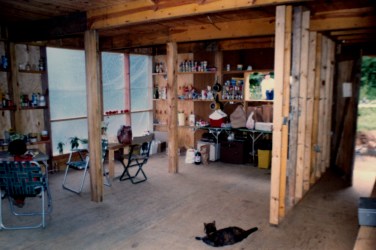
The Gnome and I don’t do all that much entertaining up here on the diagonal. That’s partly choice and partly circumstance. It’s funny, because as we were planning our open design floor plan all those years ago, we pictured lots of people milling about and even imagined having only giant floor pillows for seating so they could easily be shoved out of the way for more milling or even dancing.

I don’t know why we thought we’d be party-givers here—we hadn’t hosted many get-togethers back in Kentucky, either, though those few we did were always fun, whether is was sharing an evening of the Mille Bornes card game (with my French teacher colleague, of course) or hosting a Thanksgiving potluck with almost more people than could fit into our small suburban tract home.

Perhaps we had visions of showing off the fruits of our hand-building labor, but that was before the hustle-bustle of gymnastic lessons and competitions, track meets, and cross-country races. And it was before we realized we’d be living in a construction zone for years to come.

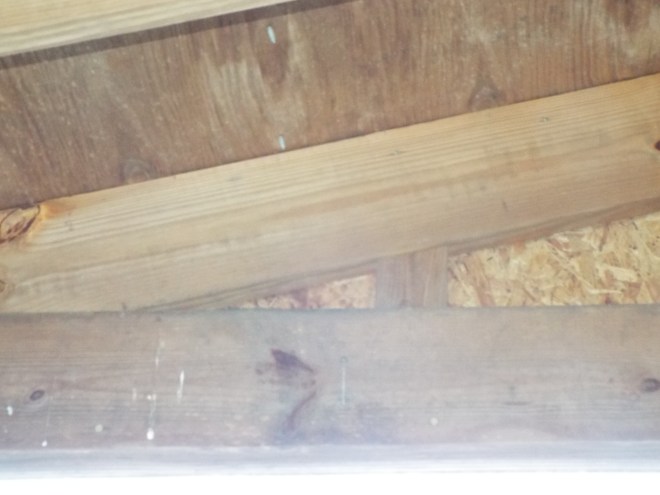
The way our forever home looked when we moved in–horizontal girts make perfect narrow shelves in our designated kitchen space.

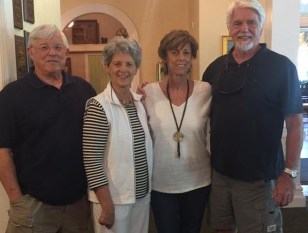
But today was one of our rare company occasions. It was an almost-last-minute, spur-of-the-moment event, which probably made our day all the more enjoyable. We just relaxed our way into it. Our guests included my college roommate, Jan, and her spouse. The four of us had shared several outings in our college days, but decades intervened before we found our way back to each other. Only three visits in the last couple of years, each one making us wonder why we wait so long.

The other couple we’d never met.

For a couple of introverts, that’s the kind of thing that could create a pile of anxiety. But Lyn and I serendipitously and inadvertently had gotten to know each other rather well on social media—through Jan. (They are in-laws.) We became instant pals, each intrigued by the other’s life experience and appreciative of our common values. With Jan’s help, we’ve been trying to get together for a while, so today was a very big day.

Lyn has been eager to see what our ‘modern homesteading’ life is all about. If she was disappointed to learn that we keep no animals and that our garden is at rest this year, she didn’t show it. Instead, she—and all our guests—wanted to know how and why we up and left a familiar life and tried our hands at hand-building a home in a strange place, pretty much away from everything.

Working from the second story

Well, they got answers—and how! The thing is, since the Gnome and I are sort of on the reclusive side, we don’t get a lot of opportunities to talk about this life we’ve chosen and the experiences we had living in a tent and then a barely less flimsy structure while clearing our land, leveling a hillside, and wielding hammer and saw as we also raised our family.

Our first ‘home’ on the diagonal

Oh, we were in our element, talking about those early days. Retelling our story today brought back so many memories—funny, daunting, and sometimes scary. It reminded us just how proud we are of the home and life we’ve built in this little slice of paradise. There are lots of other reasons our visit today was so special, but revisiting our early days on the diagonal warmed our souls.

So, thank you Lyn and Jan and Bob and Jim for rekindling old memories. I can guarantee we’ll go to sleep tonight with big smiles on our faces.

Friends, old and new

A Day in the Life

We could have been washing dishes. We could have been cleaning the bathroom. We could have been weeding in the garden or mowing the lawn or taking care of any of the other chores on our frighteningly long to-do list. But we didn’t do any of that.

Instead, we sat for more than an hour watching ‘our’ baby Carolina wrens. Sometimes, we stood—to get as close to the screen door as possible to watch the mesmerizing sight in front of us.

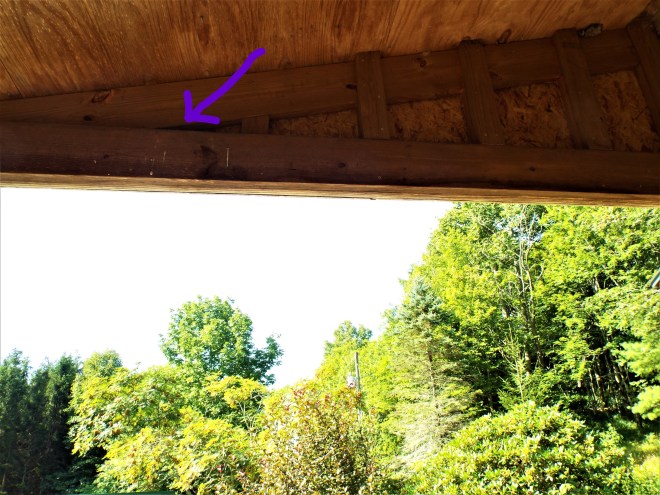
The parents showed up about two months ago, first razing their former home, presumably in anticipation of a major remodel. Sticks and leaves were strewn all over our deck floor. Ultimately, they chose an alternate site—on the opposite end of the deck, but in a similar location. They did well, choosing a crevice so tiny and well-hidden that their babes were almost sure to be safe.

The nest is in the cranny beyond where these two boards intersect. It’s only one and a half inches wide in there. How can a whole family of wrens plus a nest can fit into such a small cavity?

For two months we’ve watched the wrens bringing, first, sticks and grasses and other building material and, next, bits of food for the nester and then the chicks. We’ve listened to Mr. sing his beautifully melodic songs to Mrs. and, later, his babes. He has many songs, and they can be ear-piercing. How can so much sound come out of such a diminutive being? And for two months we’ve been loudly and soundly scolded whenever we dared to venture onto the deck. We know when Mama raccoon is around because she gets the same insistent scolding.

And for the last couple of weeks, we’ve heard the almost unceasing chirps of young wrens begging for their next meal. In the last few days, we’ve noticed a head or two peeking out from their refuge, too eager and curious to stay concealed.

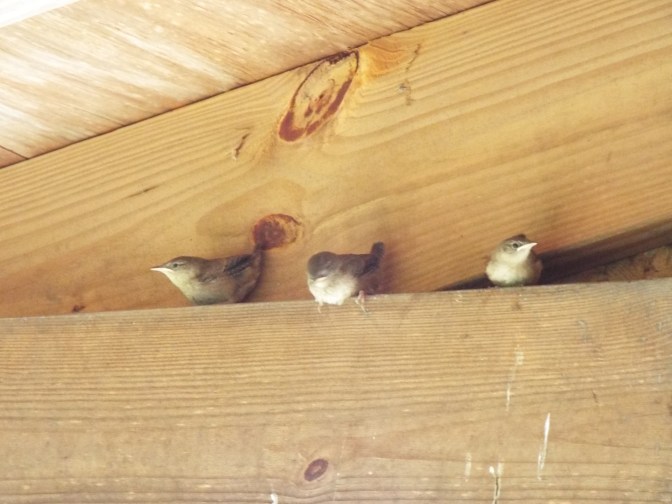
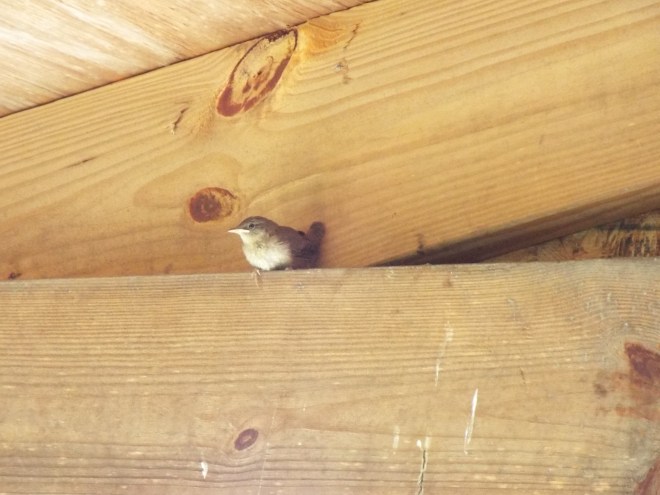
But today—today was different. First one, then a second, and—surprise—a third, slipped out into the open, standing on the wooden beam that supports their home. One ventured even further away from its protected nest. It tested its little wings. It slipped and almost fell, but clawed its way back up. One at a time, the birdlings peered over the edge into what must have seemed an abyss.

One soon-to-be fledgling eyes the horizon while the next investigates the gaping distance to the deck floor and the third lingers at the opening to its nest, ready to dart back in if danger appears.

We were sure this would be the day, the day they would fledge. As many birds as have nested near our home over the years, fledging is an activity I’ve never witnessed, and I didn’t plan to miss it. Not unless they dilly-dallied until we had to leave for an important appointment. I stayed glued to my seat. The Gnome had to go upstairs for a brief shower. “There are four of them!” I cried as another head popped out. “Five! “No, six!” He made it back downstairs in record time.

By the time the last two bashfuls made an appearance, the second bird had joined its sibling on the beam. Their four brothers and sisters, lined up like a chorus of dancers waiting for their cue, weren’t going to miss the big event any more than we were. Perhaps they were gathering courage.

The most adventurous, the first to slip out onto the ledge, finally made its leap of faith. It wasn’t a long flight—just a couple of feet, but it was a huge success, nevertheless.

The wren on the left has flown all the way over (barely down at all) to a cross beam and gives an encouraging look to the one still pondering its options.

Then off flew another, and another, until finally only the most timid little bird was left, alone and surely waffling between the desire to be brave and free and a wish to hold onto the security of home.

Clinging to the beam

Mama brought a last bite of nourishment. That was all it took. The last little bird took the longest flight of all.

We cheered. We hugged. We cried.

We’ve been reading North Carolina writer Leigh Ann Henion’s book, Phenomenal, for the last week. She traveled the globe to explore the world’s greatest natural wonders. It’s a breathtakingly beautiful tale, full of awe and wonder and great truths. I highly recommend it. Yet, today, we experienced our own exhilarating phenomenon. And we never left the living room.

And then there were none.  No more begging, no more scolding, and nearly a year’s wait for the gusty, mellifluous songs heralding that a new generation is on the way.


Celebration


Today marks a big anniversary in the Gnome and Crone’s household. Exactly forty years ago, our family began our biggest-ever family adventure when we came to this little corner of paradise to stay. Two thirty-something adults, two children only weeks away from their sixth and ninth birthdays, and two formerly housebound cats. We came with a suitcase each of clothes, a tent, and not much else except a whole lot of enthusiasm. Almost everything else—including jobs and any sense of financial security—we left behind.

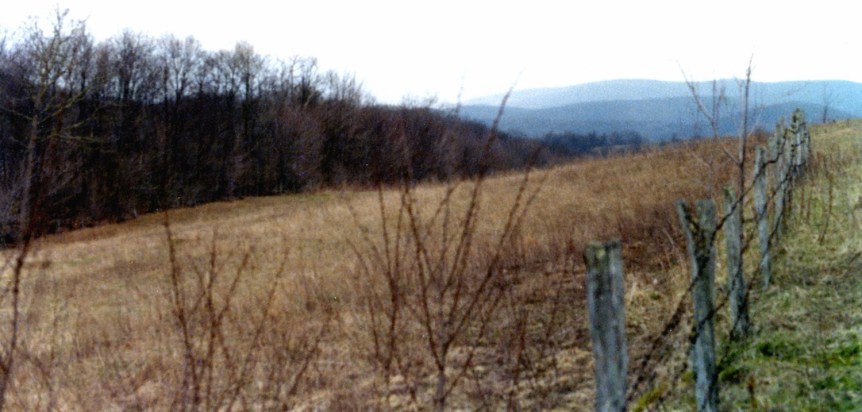
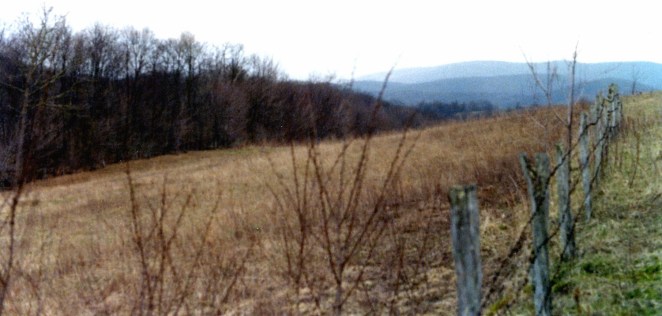
We’d seen our property twice before—once in early April when we signed the contract, and again in late May. There was no sign of spring on either of those visits.

We had expected our Memorial Day weekend trip to be filled with clearing debris. Wearing nothing more than shorts, tees, and flip flops, we were unprepared when we opened the tent flap the next morning to snow! Clearly, we had a lot to learn about living in the mountains.

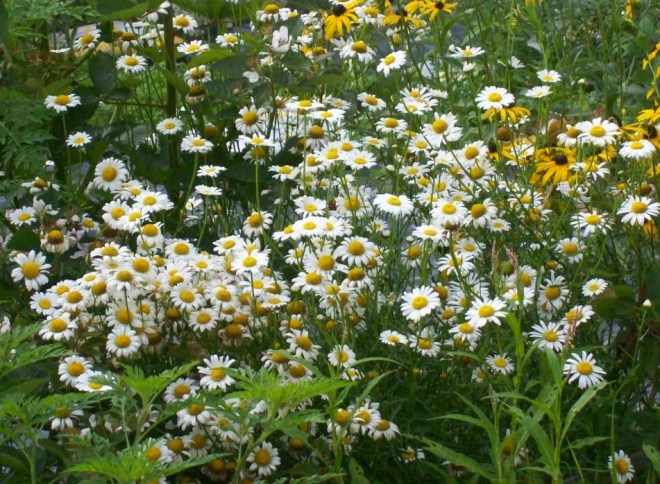
But this time was different. On July 2, 1979, summer was in full swing. No longer bare, the five acres of woods were lush with full-leafed maple, oak, beech, poplar, cherry, locust, and wild magnolia trees. The almost equally large section of open meadow was a massive sea of daisies, with the occasional black-eyed Susan thrown in for variety. It took my breath away.

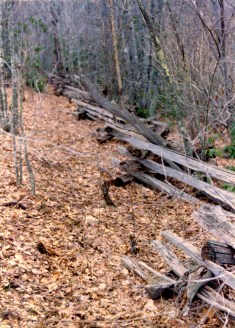
The first few days were for exploring. We discovered the delicate deliciousness of tiny wild strawberries growing everywhere; we visited our wooded mountain creek; we discovered an old locust fence in the edge of the woods along our east boundary line; we found twists of downed trees and ferns and mushrooms and wildflowers.

We found home.

Forty years later, things look a bit different around here. Most of the meadow is gone, thanks to trees sprouting up when mowers were out of order or when we were too busy with life to get around to mowing. We jumped on the Christmas-tree-growing bandwagon and planted a few hundred Fraser Fir and Norway Spruce seedlings. Those, too, got out of hand. Today, they are crowded evergreen giants making a home for birds and other wildlife. Most of the daisies have gotten crowded out.

Just the lower portion of a few overgrown Christmas trees

We got the house built—and decades later, rebuilt. All with our own hands. As dyed-in-the-wool do-it-yourselfers, we can’t bear to farm out any of the work on our place even if that means it gets left undone for far too long.

But we have done a lot. We cleared the land of some trees and over time planted more; we built our forever home with our four hands—as well as the help of four much smaller hands (setting out the building lines, foundation, plumbing, electrical, roofing—the whole bit); we built a spring house and pumped water up from the creek; we built a couple of outbuildings.

We started and abandoned one garden only to begin again a few decades later. This time we enclosed a 5400 square foot space, a space where many of those gorgeous daisies once lived, for vegetables and fruits—we’ve been working on that project for four or five years now, and we do a pretty good job of feeding ourselves from it throughout the year.


(It may not look like it, but that 5,400 sq ft of enclosed garden space (ready for planting) could hold six clones of our house with a decent amount of space left for landscaping. A couple days’ worth of harvest in pictures 2 and 3.)

Most of all, we raised a family. A family where our children learned the value of making do, of making their own fun, of how to do things with their hands, of learning by doing, and that it’s okay to take (certain) risks—to try new things with an entire world of unknowns in front of you.

(Hover over each photo for caption.)

And now, we have grandchildren to share it all with, too.

It’s been a good forty years. We are looking forward to many more.


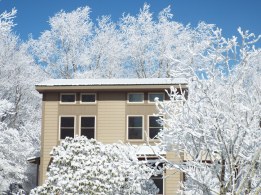
Same view (more or less) 1979 and 2019. Our road is under the snow.


Version 1.0 in need of serious rehab after 30 years vs. Version 2.0

If you want to learn more about our early homebuilding experience, you can start here.

Dancing Trees

DSCF7829

The Gnome has enjoyed playing a woodlands game with our grandchildren during their respective toddlerhoods. He’ll pick them up, hold them in his arms, and place their ears next to one of the large trees in our small forest. “Shh,” he’ll say, in his own hushed voice. “Listen.” After a few pregnant seconds, he asks if they can hear the tree.

Inevitably, they do. Is the unfettered imagination of childhood innocence at work, or are the sounds real? Whatever, watching a small child’s eyes light up, a grin spreading across a lollipop-cheeked face—such moments are pure magic.

On these spring days and nights when the wind skims across the peaks of our mountains in its furious attempt to get who-knows-where, it leaves a few things in its wake.

The crack of still-bare limbs clanging against each other as if they’re engaged in some ancient battle, wooden branches as swords, breaks the silence. Sometimes, one cuts the other to the quick, sending it crashing through other branches on the way to its final destination below.

The wind has an entirely different effect on other trees. Norway spruce and Fraser firs we once imagined growing into a profitable Christmas tree business overwhelmed us—and everything else around. Today, they are jolly evergreen giants, having grown to eighty feet or more, long branches drooping under their own verdant weight.

Wind bends, but never breaks, these resilient trees. Instead, they nod their heads to each other in rhythmic time, their outstretched branches bowing and swaying as if in some sort of complicated old folk dance. It seems they’re almost smiling, wordlessly saying, “It’s okay. I’ve got you covered.”

And they have, in a way. In such close proximity, each supports and shelters its neighbors from the wind’s potential danger. Even more, they create a haven for the wildlife that give us so much pleasure: deer, bears, the squirrels who race through branches in the height of their springtime romantic frenzies, hoppy rabbits, stripey skunks, and of course, the myriad songbirds who seek solace and grow little bird families in the protection of their branches.


The long, graceful, ballerina arms of our tallest neighbors wave at me through the glass door that defends me from wind’s ravages. They invite me to join their happy dance. And I do, if only with a smile as I wave back.

Nothin’ But a Hound Dog (Or a Hundred or So)

The Gnome and I took a day off last weekend. In theory, we can do that every day of the year now that we are repurposed. Reality is a bit different. We’re each working on major projects, and we push ourselves as if the world will end if we don’t finish sooner rather than later. Actually, that’s the truth—we have way more days behind us than we could ever hope to have in front of us. One day our time will run out and chances are we’ll still have more than a few unfinished projects lying about.

I think that’s the way I prefer it. Much better to be in the middle of something I care about, anticipating the results, than twiddling my thumbs feeling that there’s nothing left to do.

But back to our day off. We decided to visit a small, picturesque waterfall in the small county that borders ours. I’d never seen it, never in our almost forty years here even heard about it until a few months ago. In his work, the Gnome had driven past but, zipping by in a car, he hadn’t had a chance to stop and enjoy it, either.

Falls and a swallowtail at Newland’s Waterfalls Park (Photos by Ron Wynn)

After soaking in the beauty of the place for half an hour or so, we decided to continue on the same rural road to a popular general store, dipping and climbing on curvy mountain roads. Our route took us through the unincorporated community of Cranberry, population 500 or so. (Even before it was settled in 1850, Cranberry was known for having one of the largest veins of iron ore in the United States.)

We passed the grounds of the former high school, which is now being used for occasional community events. The place was crammed with cars and trucks, mostly trucks. A metal yard sign next to the road read, “Heritage Day.”

That sounded like fun. We whipped the car around and headed back. As we drove onto the property, our ears were assaulted with barking, howling, yelping,  baying. We found ourselves surrounded by dogs, dogs, and more dogs. More than a hundred, we were sure. Dogs with their wiggly noses sticking out of car windows, crated dogs in pickup truck beds, dogs pulling people on leashes, dogs tied to fence posts on the shaded lawn. They were not, not a one of them, sleepy yard dogs. These dogs were on the alert. They were, in the truest sense, rarin’ to go.

Hound dogs.

Have you ever heard a hundred hounds baying simultaneously? Well, let me tell you, it’s deafening, each dog with a distinctive and  urgent voice. We couldn’t help but smile.

This was a very particular breed of hound, a scent dog known as the Plott Hound. If you’re not a North Carolinian, maybe just a Western North Carolinian, you may not be familiar with this breed. The dogs were brought to North Carolina by Johannes Plott when he emigrated from Germany in the 1700s. In the early part of the next century, his son Henry moved with his family to the mountain range that bears the family name: the Plott Balsams in Jackson and Haywood Counties in the southwestern corner of the state. Henry continued to breed the dogs, mostly for bear and wild boar hunting. The Plott Hound was named the state dog of North Carolina in 1988.

As it turns out, my mother was born and raised in the shadow of the Plott Balsams, and I’m interested in anything related to that heritage.

plott balsams wikimedia commons

View of the Plott Balsams (courtesy of Wikipedia Commons (wikimedia.org/wikipedia/commons/7/70/Plott-balsams-pb-ll-nc1.jpg)

Somehow, we had landed in the middle of a Plott Hound barking competition. (Never heard of that before.) What a stroke of luck! We followed the dogs.

In the far corner of a temporarily fenced-in section of the school grounds stood a cage, ever so slightly camouflaged. Inside the cage was a bear. Not a real one, thank goodness. But it moved. And it growled. I’m willing to bet bear scent had been sprayed around the cage, too.

In the near corner, dog handlers were hanging on to the leashes of their dogs. From the looks of it, that was some kind of hard work. When the whistle blew, three dogs at a time were turned loose and inevitably flew straight to the cage where they positioned themselves, barked, repositioned, and barked some more, stopping only when the timer blew his whistle and the keepers releashed their dogs, leaving the arena for the next trio to advance.

We didn’t fully understand how the process worked and we left before trophies were awarded. But from what we observed and overheard, we gathered this much. The event is timed. There are three judges. The judges are looking for degree of aggression, number of barks, and focus.

We looked, but if there was anything to Heritage Day other than the dog competition, it was well hidden. Never mind. Listening to the baying of a hundred eager hounds left us buoyant.

We almost always manage to come across some bit of serendipity—chance magic—when we’re out and about. Maybe a four-leaf clover, a funky art gallery, or longhorn cows in a meadow of buttercups. What a treat to happen upon a Plott Hound barking competition.

Have you encountered a bit of serendipity this week?

(Take a listen to the Plott Hounds.)


Weeds Are Flowers, Too!

“Weeds are flowers too, once you get to know them.” ―A.A. Milne

I love this quote, and it’s so true. Another equally true saying is “Weeds are plants whose virtues we haven’t yet learned.” Many decades ago, The Gnome and I discovered that the hundreds of wild purple violets popping up in our back yard could be turned into jelly, as delicately eye-popping as it was tasty.

Dandelion is the bane of many a gardener and lawn-lover, but it is actually an herb worthy of respect—a cheery little plant with more uses than you can count on all your fingers, whether culinary, medicinal, or otherwise. You can use virtually all parts of the plant, though you’ll want to avoid the sticky stems.

Dandelions are packed with vitamins, minerals, and antioxidants. With the leaves, you can make everything from salad greens to classic Irish colconnon to quiche.

Did you know dandelions aren’t native to the U. S., but were imported by European immigrants for their culinary and medicinal uses?

Last year, we made the most exquisitely subtle syrup from the flowers. I’d have been hard pressed to tell it apart from honey. Dandelion tea and wine are other favorites. Dry the root for a coffee substitute. Fresh roots can be used instead of or alongside other root crops. Make a hand lotion or moisturizer from the flowers. Pollinators love dandelions.  And who can forget the sheer joy of blowing on a dandelion puff?

Lamb’s quarters fill the fields with buttery yellow blossoms in springtime. Just before they get to that stage, the stems can be harvested and eaten as a broccoli substitute. And the young leaves make an excellent addition to a green salad.

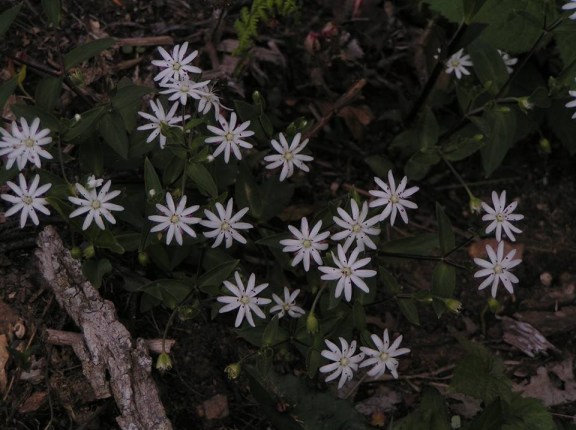
Chickweed, invasive as it can be, is another nutritious green. Add spinach-y chickweed stems, flowers, and leaves to salads or cook them up like other greens.

Star chickweed is only one of  twenty-five varieties of Stellaria, a member of the carnation family. All are edible and all except the mouse-eared variety can be eaten raw. 

By looking at so-called weeds through a different lens, we can find beauty, peace of mind, and functionality. Not to mention a veritable grocery store in our own back yards.

* If you’re thinking of joining the foraging movement, find yourself a good field guide that will also alert you to similar-looking but unfriendly plants. You’ll also want to (1) ask permission before foraging on private property; and (2) avoid areas that have been exposed to chemical pesticides or herbicides as well as roadsides. They retain automotive emissions you wouldn’t want to ingest.