Breakfast Traditions

BREAKFAST TRADITIONS (another in my Blowing on Embers series)

Breakfast: the most important meal of the day, they say.

Always the first one up in the mornings, Mother made sure we had a good breakfast to start our school days off right. In those days before frozen waffles, toaster pop-ups, or smoothies, breakfast was a pretty big deal. And we never rushed out of the house without it.

Our breakfasts were varied. There was that old standard: bacon, eggs, and toast or similar combinations of protein and carbohydrates. Sometimes we had oatmeal and cinnamon toast; other mornings it might be Cream of Wheat; occasionally pancakes or waffles were on the menu, though most likely on the weekends. And sometimes we went into the kitchen to nothing more than dry cereal and milk. I was never much fond of cereal days—those were the days when my stomach started growling by mid-morning.

By my calculation, while we children were living at home, Mother prepared nothing short of 10,000 breakfasts. When my youngest brother left the nest for good, Mother made an announcement to our father: she was retiring from breakfast duty. From that day forward, before he left for work, Daddy made his own breakfasts (willingly, I might add) before Mother gave a thought to getting out of bed. If not for the cat pawing at her face on the pillow every morning, Mother might have remained in bed for a sinfully, but well-deserved, long time.

But back to breakfast. In addition to all that typical morning fare, there were two dishes in our breakfast repertoire that were, I believe, unique.

One was reserved for one day and one day only each year—Christmas. No one was allowed in the living room where the tree and presents were until we’d all eaten breakfast, and that breakfast was always the same: strawberry shortcake. I loved strawberry shortcake as a dessert and thought it was even more special as Christmas breakfast. As I look back on it, I think there were two reasons we were served this delicacy on Christmas morning. The first, and maybe most important, was that it was quick and easy. For one day a year, Mother didn’t have to get up extra early to have breakfast on the table.

The second reason was perhaps a little more wily. What kid wouldn’t be thrilled to have dessert for breakfast? If we were just as eager (or almost) for breakfast as for presents, and if breakfast was just as much a part of our holiday tradition as the rest of that big day, then there wouldn’t be any peeking under the tree before the parents were ready. There wouldn’t be any whining (well, not much, anyway) for everyone to hurry up so we could finally open the door to the living room. Whatever the reason, that strawberry shortcake breakfast was always a success.

The other unusual breakfast we had on occasion had a regional basis. Mother grew up in the Great Smoky Mountains of southwestern North Carolina, a place where blackberries grow profusely on the mountainsides. Along with her mother and three sisters, she spent many afternoons picking blackberries, so many that they were able to can plenty of jars for use in the winter. And one of the ways blackberries were served in her home was stewed with a little sugar and poured over homemade buttered biscuits. It was a breakfast treat summer or winter.

Mother kept this breakfast tradition alive in our South Carolina home. We didn’t have access to fresh blackberries and frozen blackberries weren’t to be found in the freezer aisles in grocery stores, but stores did carry canned blackberries. Not the blackberries in gooey thick syrup for pies, but just plain old blackberries packed in water. All Mother had to do was put them in a pot on the stove, add a bit of sugar and a little more water, and heat them until the berries were warm and the sugar dissolved. In my opinion, there’s just nothing better than a plateful of biscuits, halved and buttered, smothered in blackberries, and swimming in that purple liquid. Mm-mmm good!

Needless to say, we’ve maintained both of these breakfast traditions in our home. And nothing has tickled me more than to discover that our now grown children have done the same in theirs. No doubt, one day some child in generations hence will look up to a parent and ask, “Why do we eat blackberries on biscuits?” or, “Why do we eat strawberry shortcake on Christmas morning?” and the parent will have no better answer than, “I don’t know. We just always have. It’s tradition.”

And that’s just fine with me.

Deep Freeze

Winter went into overdrive around here a couple of weeks ago. We live in the high mountains of western North Carolina so, even though we live in the south, we’re used to cold winters. It’s not unusual for temperatures to drop into the single digits or into negative territory. We experienced a frigid -32° one year—and, no, that wasn’t the wind chill factor. Almost always, though, those cold spells are short and interspersed with warmer temps.

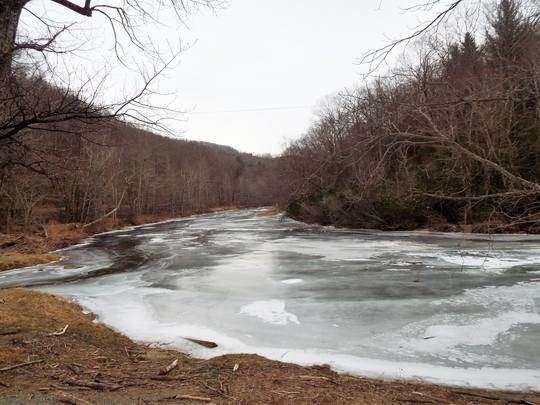
This time was a little different. The -5° to +5° days lasted far longer than usual. Long enough for mountain waterfalls to transform themselves into a paradise for ice climbers. (Tip: don’t try this at home, kids!) The damp seeping between rock-lined roadsides turned into massive icicle displays, and our fast-moving mountain streams and rivers froze solid. Nothing out of the ordinary for some parts of the globe, I know, but around here it was unusual enough for the Gnome and me to decide that, in spite of the cold, we wanted to get out there and see some solid water, camera in hand.

It was late afternoon when we left home so we didn’t get to check out as many streams as we’d hoped. Besides, we quickly got sidetracked. Still, it was a fun adventure and we did manage to get a few photos. It finally warmed up some and, with a few exceptions, most of our daylight hours have been above freezing for a while now. Colder weather will return soon enough. Who knows what photo ops we’ll find then. In the meantime, here are a few of the scenes we captured on our field trip.


We had to stop the car when we came upon this sight. If you look closely you’ll see a small stream of water shooting out of the icy sculpture created by the fountain (right). The high winds of a few days before had blown the water to the left to create another sculpture. Cool!

Rocky roadside cliffs have turned into giant icicle displays everywhere you turn.

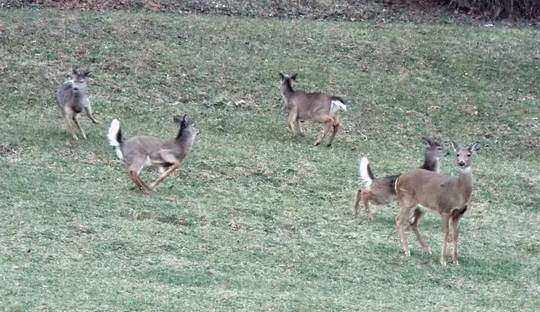
We never pass up an opportunity to observe and photograph deer.

The trees obscure this scene, but we kept coming upon mountainsides covered in ice from peak to base where water had oozed from rock seams to create what looks like frozen waterfalls.


This great blue heron was clearly frustrated in its search for food on the frozen river. 

rsz_heron_wings_2

We’re not used to seeing dogs walk on top of rivers.

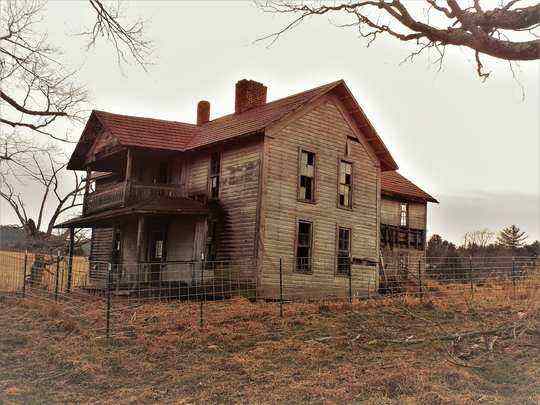
No ice here, but we can never resist the sight of old, abandoned houses. When we saw this one on a distant hillside, we were forced to take a detour. 


My Other Blog

If you’re a dedicated reader of Living on the Diagonal, you know I also began blogging for Mother Earth News a few months ago. Just thought I’d take today to remind you I have a site over there if you’d like to check it out. I Blog for Mother Earth News-1In fact, Mother Earth News is running a contest for its bloggers right now—to see how much traffic we’re getting for articles posted between December 1 and January 31. If you’d like to help me make a better showing, all you need to do is pop over there and click on each of the articles written since December 1st. (Even if it’s not your thing. Do it as a favor.) Simple as that. Thanks in advance.
(Sharing is helpful, too. Just click on your favorite social media icon(s) to the left of each article. Easy peasy.)

My most recent article tells about our early experiences gathering sap to make our own maple syrup. I’ll share more maple sugaring details next week. The week after, you can find my favorite chili recipe. It features sweet potatoes (or winter squash), and it’s delish!

Mother Earth News is where you’ll find other recipes, including my popular vegetarian quiche, my award-winning cornbread, my mom’s delicious pineapple-zucchini bread, and the world’s best kale salad (in my opinion, anyway).

I’ve written about how to make gardening easier with posts on making and using bean arches, growing in raised beds, and letting perennials and volunteers do your gardening work for you.

I’ve also posted a couple of articles telling about the Mother Earth News Fair, a unique sustainable living event that takes place in multiple venues across the country every year.

All that and more to come.  You can find all my Mother Earth News blog posts here.  Hope you’ll stop by for a visit.

Real Family Values

Real Family Values

A few years back, my colleagues and I shared an offsite holiday potluck lunch and departmental meeting. The newest member of our team offered his home as our gathering spot. In addition to his work with us, he designed sustainable houses, his own among them, and he was as eager to show it off as we were to see it.

Clearly, our first order of business was to tour his lovely home. The last room we visited belonged to his pre-school-aged son. One of our group, the mother of a child just three years older, slowly looked around the room. She seemed puzzled, maybe even troubled.

We discovered the source of her distress when she said, “Where are his toys? Doesn’t he have any toys?” Indeed, the room was almost spartan. It held a few books, a clothes chest, and a junior bed complete with a large, lime-green, leaf shaped canopy that seemed to turn the bed into a sort of cocoon. Her entire house, on the other hand, was overflowing with toys from gift-happy aunts, uncles, and grandparents.

Our host explained that their previous home had been cluttered with both toys and other belongings. When they moved, they made a conscious decision to rid themselves of as many “things” as possible. With an impressionable young child to raise, they wanted to model a new ethic—one of simplicity, one of sustainability, one where experiential activities trumped sedentary ones. No more television, no more oversized, nonbiodegradable toys to trip over and litter the place. Instead, they had chosen to live a life where doing replaced being.

Not long after that day, my colleague told me that as the weekend neared, his little boy had come to him and eagerly asked, “What adventure are we going on Saturday, Daddy?” That’s the way he saw his life. It’s the way his parents had presented it: a life of adventure. He knew he could look forward to one every weekend.

Their adventures consisted of simple things—watching the university’s new wind turbine go up, checking out a crane at work during the construction of a classroom building, ambling through a street festival, spending a morning at a you-pick blueberry farm.

Over the years I’ve watched this family with appreciation and admiration. In the early years, I was privy to tales of weekend activities as soon as they’d occurred. In fact, I’d encountered the boy and his mother even before the father came to work with us. The Gnome and I were on a walking trail and she was with another mother, their children in tow. The son was only two at the time, but he was on a balance bike, a two-wheeled pedal-less bicycle. He was getting started early.

Now from afar, I usually get my accounts via social media. There were pizza-making sleepovers. There were kid-friendly street festivals. As the boy grew, so did the adventures. Snowy days meant not only sledding and snowball fights, but igloo building. The family built mini-bike trails on the back of their property for the boy to ride. They put in a kid-size zip line. They went backpacking. They engaged in cosplay—Halloween’s an adventure extraordinaire.

When the boy was old enough, he joined the Cub Scouts—they’re all about adventure. It wasn’t long before Dad became the group’s leader.

The boy is ten now. These days father and son can be found mountain biking. Mom joins in on scouting activities and weekend camping trips. They visit state and national parks. They go to the beach where they build complex castles and bury each other in the sand. They fly kites. They canoe. Evenings at home may find the three of them playing strategy games with friends.

It’s kind of funny when you think about it. This family is doing something revolutionary in the world of giant, expensive (though often cheaply made and short-lived) toys and games: they’ve gone old school. They’re doing it the way their grandparents and great-grandparents did it—making do with what they have, turning everyday things into exciting experiences. Finding fun in simple things. In the process, they’re teaching values, building a rich childhood, creating a close-knit family life.

And the thing is, it isn’t hard; it doesn’t have to take money. It may take a little imagination. It may take a few hard discussions with the grown-ups, mostly grandparents, who want to shower the kiddies with love via tangible gifts. It certainly takes time. But isn’t it worth it?

A Holiday Gift for You: Winter Rain Surprise

Winter Rain Surprise

Morning rain
left droplets by the scores
hanging from branches
across today’s countryside.

The sun
peeks through cloudy skies
transforming water
into iridescent fairy lights
and tiny glass ornaments
to decorate all outdoors
for the holidays.

The List, Part III: The Bra and I

The List, Part III: The Bra and I

(If you’re just tuning in, you’ll want to catch up on Parts I and II of The List. You can find them here and here.)

Actually, I had written a hundred and one items on my hundred-things-I-want-to-do-when-I-retire list. One, though, was something I simply didn’t feel comfortable broadcasting to professional colleagues. Yet, if my list had been in priority order, this one item would have been at the very top. The number one thing I wanted to do when I retired was to take off my bra.

It was the number one thing I did, too. For a while. Then I remembered something Maya Angelou once said about her aging experience: “My breasts are in a race to see which one gets to my bellybutton first.” I’d seen that effect first hand at Asheville’s Go Topless Day, and I really didn’t want to speed things up for myself.

Funny thing about bras. Back in the sixth grade, we girls could barely wait to get our first bras, whether we needed them or not. (We didn’t.) We huddled together during recess whispering about them—who had one, who needed one, how embarrassing it would be wearing one to school for the first time. My two best friends and I coordinated our bra-buying plans so we’d arrive at school wearing our first bra on the same day. We reasoned we wouldn’t feel quite so conspicuous that way. Proud and conspiratorial, maybe, but inconspicuous.

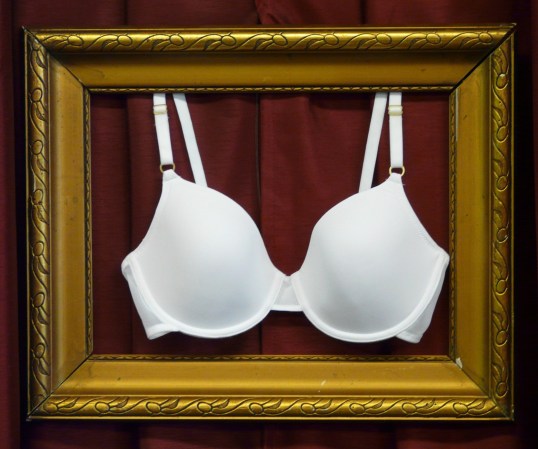
Pretty sure my first bra was this very style! (But smaller—much, much smaller) 


At a church youth retreat a few years later, my friend George said to a bunch of us girls that he couldn’t comprehend how we could bear to be so confined. He thought wearing a bra would feel incredibly constricting, like being in a straitjacket. We were a tad scandalized by his brazen discussion of such an intimate subject, but we tried not to show it. We assured him it wasn’t like that at all, that bras were perfectly comfortable. Frankly, we couldn’t imagine life without a bra.

It’s been a long time since I’ve been excited about a bra. The more I’ve needed one, the less comfortable I’ve been wearing one. George had it right, after all. Constricting is exactly the right word.

In the end, my bra and I came to a compromise. That is to say, I compromised. Pretty soon I started wearing my bra again. Still do. These days, I free my breasts from their bra prison a little earlier in the evenings, though, hoping my body doesn’t notice I’m cheating.

Bras—there’s the Double Support, the Sexy Plunge, the Elegant Lift, the Magic Lift, the Convertible, the Vacationer, the Glamorise, the Wonderwire. Seamed, seamless, lined, unlined, foam lined. Sheer, padded, molded. Strapless, t-strap, gel strap. Wirefree or underwire. Front closure, back closure, pullover. Leisure, sports, nursing, active lifestyle. Extra lift, minimizer, slimming, back smoothing. Push-up, shelf, bandeau, bustier, demi-cup, long line. Cotton, nylon, silk, microfiber, jersey knit, lace, satin.

The most common theme in bra advertising is comfort: original comfort, smooth comfort, pure comfort, moving comfort, 18-hour comfort, super cool comfort, comfort flex, comfort revolution, passion for comfort. HA!

I have a passion for comfort. It’s why I wanted to dispense with my bra in the first place. But gravity is a law. And I’m a law abider, so I’m sticking with my bra.

(Photo images in this post are public domain photos via Creative Commons.)

The List, Part II: Priorities

THE LIST, Part II: Priorities

(If you’re just tuning in, you’ll want to catch up. You can find Part I here.)

Right up near the top of my “One Hundred Things I Want to Do When I Retire” list was to make baskets. I had first learned how as a child from my maternal grandmother.

My grandmother: high school graduation photo

My grandparents, W. G. and Georgia Stillwell Dillard, on their fiftieth anniversary

Grandmother always had craft activities ready and waiting whenever we went for a visit, and she and I made baskets on more than one occasion. Basket making with Grandmother is one of my fondest memories.

An early basket weaving exercise under Grandmother’s tutelage

But I’d long since forgotten that skill. When I saw an ad for a basket-making class as part of Appalachian State University’s Craft Enrichment Program about three years before I retired, I jumped at it.

In those days I regularly worked until seven or eight o’clock at night and too often as late as ten or eleven. I took work home on the weekends. I dreamed about work. I woke up in a 3:00 a.m. work-related panic almost nightly. My job involved overnight travel, too, sometimes a couple of trips a week. I hadn’t had time for just-for-me activities for years. But I wasn’t about to let anything interfere with my basket-making sessions. In three years of classes, I missed only one because of work.

Making baskets was good for my spirit; it relaxed me; it gave my overworked mind a break from all the work-related issues that were swirling around in it. I really loved making those baskets, and I was eager to delve into my newfound hobby in a big way once I retired. In anticipation of that day, I bought my own basket-making supplies and four big boxes of reed and other materials.

Just a few of the many baskets I made in my basket-making workshops

A few things happened to change all that. No studio space for making baskets magically appeared. Nor did our small house with its open design lend itself to leaving materials all over the place between sessions. Just pulling out all those boxes and supplies, then putting them all away and sweeping up the debris after a basket-making session was time-consuming, so much so that it was only worth doing if I was going to make a day of it. But a full day of hand weaving, of pushing and pulling, of holding ornery pieces in place with one hand while forcing a reed through a too-small space with the other is hard on fingers, especially arthritic ones.

And I was running out of ways to use those baskets. Our house was overrun with them, and I’d given away more than people really wanted to receive. My skill hadn’t developed enough to sell my baskets and I wasn’t really interested in marketing them, anyway—too much like work.

Most of all, I began to realize that baskets had been my very important respite from the daily grind of my work life but now things were different. My needs had changed. Basket-making, it turned out, had served its purpose.

Besides, other interests had begun to take on more importance, like gardening and food preservation. Both of these activities had been on my list, too. At the time, my goal was simply to re-learn those skills from my childhood. I wanted to be competent at them, enough so that if, say, climate change challenged our food distribution system (as it has now begun to do), I’d be able to take care of my own food needs. In other words, I wanted to move towards more self-reliance.

But even I had no idea how these two activities would begin to take over my life. I didn’t expect to get so passionate about them. Why, last year the Gnome and I grew more than twelve hundred pounds of vegetables in our garden, far more than enough for the annual food needs of two people.

One day’s harvest from our garden

I looked back at my list recently and discovered I’d made a pretty good dent in it. What I hadn’t expected though, was to discover a few more items that had lost their importance as new interests—gardening and food preservation, for instance—emerged to take their place. Interests that sometimes have taken me by complete surprise. Like writing. Writing didn’t earn a single mention on my list. Yet, here I am with two books to my name (and hopefully more on the way), a couple of blogs, daily dedicated writing time, and participation in various writers’ groups. Who saw that coming? Not I! That’s the way it is with plans. Priorities change.

It’s one of my favorite things about retirement. I can be flexible. And I don’t need to make any more lists. Which was, as it happens, item 100 on my list.

(Won’t you come back next week for Part III of The List?)

The List (in Three Parts)

THE LIST (in three parts)   

When I announced my decision to retire from a thirty-five+ year career in public service a few years ago, I got lots of questions about my future plans. Curiosity about how I would spend my retirement was so boundless that I decided to make a list for my inquirers: One Hundred Things I Want to Do When I Retire. For the most part my plans were simple: ditch the makeup and hairspray, make baskets, wear pj’s all day, donate about ninety percent of my clothing to Goodwill, take the back roads. So many things. I dashed off my list in a flash.

Part I: “What Will You Do?”

The question I was asked most often almost always came with its own answer attached: “What will you do in retirement—travel?” Most everyone, it seemed, assumed I’d become a full-time tourist. Apparently, that’s what people expect of retirees. Indeed, it’s what lots of Silvers do. I know folks who, in between their many domestic treks, make two, three, or more overseas trips each year.

But travel, outside of more frequent visits to our children and their families, was not on my agenda. My interests were much closer to home. Rather, they were at home.

Simplicity. In a world that was claiming too much of me, simple was all I wanted. I looked forward to not having an alarm clock blare me awake before daylight, to going barefoot all day, to reading in the hammock. I wanted to take things a bit more slowly and to live more simply. All these things were on my list, too.

When a long-distance friend asked the inevitable question and I answered that I wanted to get back to the simple life we’d begun here so many years ago, I could hear her almost choking on her coffee as she spluttered, “I’ve heard about that life of yours, and it’s anything but simple!” She was right, of course. Hand building our house while we lived without running water, toilet facilities, kitchen appliances, or heat had been anything but simple, at least in the sense of being easy or even uncomplicated. But it was straightforward; it was a return to the basics. That’s what I meant.

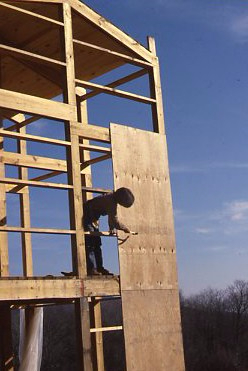
Building our house all by ourselves

I wanted to learn some of the old ways, to learn or relearn some fundamental life skills, to feel real. I wanted to live more intentionally, to lead a more conscious life, to be under the influence of nature, to tread lightly. I wanted to live more sustainably and move more towards self-reliance. I wanted to know, for instance, that if I lost power for  six months, I’d be able to cope. I wanted to eat real food, food I grow and prepare myself rather than something that comes in a box.

A day’s garden haul

I wanted to live in the present. I wanted to unclench my jaws.

Simple? Maybe not. Basic? Real? Most definitely. Have I succeeded? Well, like most things, finding my way to a new lifestyle is a process. I think I’m well on my way and I feel more content every day.

Maybe it really is about traveling. Getting back to basics is a journey, after all.

(Stay tuned for Part II of The List next week.)

Best Moment

“What’s the best moment of your day?”

I had to think about this question for awhile. Not all days are the same, of course, and my answer on one day might be different from another. So, on the day this question was posed to me, I tried thinking on the events of that day, then the day before, and finally of a generic, “average” day. As I mulled over the question, I still couldn’t land on a single best moment. It’s a dilemma I’m happy to live with. Yet, I still wanted to attempt to answer the question. I decided to go the route of a more or less chronology-based stream of consciousness and this hodgepodge is what I came up with.

The best moment of my day is when . . .

a ray of sun shining onto my face wakes me and birdsongs welcome the day

I eat a breakfast of eggs from the happy chickens who live just down the road

the cacophonous chatter of crows during their morning “coffee klatch” interrupts the still of my morning

I sip a cup of honeyed herbal tea while I let my mind organize my day

on a summer morning, I check on the latest thing to pop up in the vegetable garden—or later in the season, when I harvest what I’ll eat that evening or preserve for a chilly winter day

a couple of hours of dedicated writing time come my way

the all-day deck antics of squirrels and chipmunks capture my attention as they battle each other’s wits over food intended for birds

in warm months, I take a twilight walk listening to the quiet, watching the synchronicity of fireflies as they light up our woods, and catching whiffs of honeysuckle, lemon balm, ferns, and freshly mowed grass

on a clear, crisp wintry evening, I gaze at the star-studded sky and maybe catch a meteor streaking across the sky

I spy mountain valleys shrouded by a sea of clouds

the nighttime calls of owls seep into my consciousness

the early springtime sounds of wood frogs and spring peepers shatter the otherwise quiet of my bedroom—all night long

that “clown of the forest,” the nuthatch, utters its almost cackling sound, strongest on an autumn day

I’m graced with the giggles and confidences of grandchildren

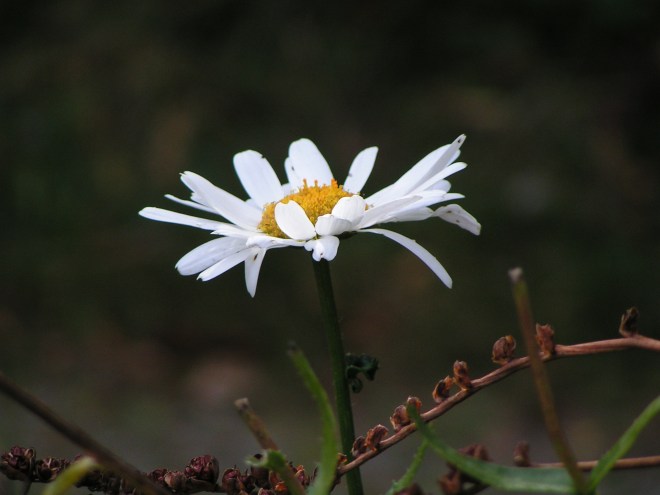
the season’s first wild daisy shows itself in our meadow  

the warmth and comfort of a snuggle under the covers overtake me upon waking and again as I fall asleep

And for all that, the truly sweetest moments of any day come from those spontaneous embraces anywhere, anytime as my sweetheart and I sway ever so slightly—almost the way young lovers move to a slow dance at the prom—for no particular reason and for minutes on end.

What a lucky duck I am! With all these best moments, I’m reminded of the lyrics from one of my favorite hymns, “How can I keep from singing?” Indeed!

What about you? Are there favorite moments in your days?

Mealtime Dilemma

In a poetry workshop last year, we were challenged to write a poem using the Triolet form: an eight line poem wherein the first line is repeated in lines four and seven, the second line is repeated in line eight, lines three and five rhyme with line one, and line six rhymes with line two. Got it?

You can guess what my inspiration was.

MEALTIME DILEMMA

How do you feed a grandchild

when you’re vegetarian and she’s not?

Try a new food and she goes wild–

how do you feed a grandchild?

My recipes are sorted and filed

but things she likes I’ve not got.

How do you feed a grandchild

when you’re vegetarian and she’s not?