Resilience and Grace

She never asked to be a widow—hoped not to be. Yet, she fully expected it. She was up on gender and life expectancies, so she knew the odds were strong that she’d outlive him by some years.

It wasn’t that she was happy about it, but I wanted to stamp my feet every time Mother made some comment about living longer than Dad. To me, it felt like a self-fulfilling prophecy, and one I didn’t want to think about. But Mother was simply being realistic.

And though she went straight from her parents’ home to sixty years with him, she somehow knew how to survive on her own when at eighty-one she found herself alone for the very first time in her life. They’d been married for sixty years.

A couple of years later when she broke her hip and had to spend more than two days in a hospital bed awaiting surgery, she found the tiniest movement excruciating. Yet, she was loath to press her buzzer regardless of her need—didn’t want to bother anyone. She couldn’t help emitting a groan, though a tiny and apologetic one, when it was time to change the sheets or reposition her. But instead of complaining and bemoaning her constant pain, she made it her purpose to bring laughter to the nurses, aides, and others who looked after her. One nurse aide regularly took refuge in Mother’s room because it was such a pleasant and safe place to be.

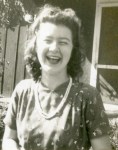
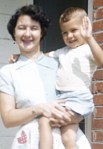
My mom has always looked life straight in the face and taken it on wholeheartedly. Tears are so rare I can count the times I’ve seen them on one hand and still have a finger left over. The first was when I was six years old; the last more than fifty years later when Dad’s ashes were delivered to her. Instead of focusing on what’s sad, she looks for things that bring delight—a sunset, a newly discovered flower, a snowfall. I remember her saying she couldn’t imagine anyone being unhappy—sad, occasionally, but not unhappy.

The last thing she ever wanted to do was leave her home for assisted living, but once the decision was made she never complained, never looked back. Again, she began looking around her to see which worker needed a smile or a word of encouragement. (Needless to say, she’s a staff favorite.)

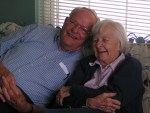
Once, on the phone from her one-room confines, she said to me, “I’ll bet there aren’t many ninety-two year-olds as lucky as I am,” reveling in the birds at her feeder, her books, her crossword puzzles, the cats who frequent her room, and memories of her family and happy marriage. She continues to offer similar sentiments two years later. If she’s ever had a regret, I don’t know about it.

Her job as a mother is never-ending. Though in many ways over the last few years our roles have reversed, she’s still teaching me, especially in the art of aging well and with joy. May I learn her lessons well.


REFLECTION

Creative Commons Introspective Chicken by Jonathan Lidbeck is licensed under CC BY 2.0

When I look in the mirror, I see
a much younger version of me–
not the face
that stares back from photographs,
so rudely honest
in their appraisals.

In truth, it’s not quite
the younger me I spy,
but the whole of myself–
the things a photo will never catch.

I see both youth and age,
twinkles and wrinkles;
I see emotion and belief,
passion and compassion;
I see history: life’s experience,
and expectation. Hope’s still there;
I see a life of love and, occasionally, hard knocks.

The whole of me
is much more interesting
than any Kodak moment
could ever be.

That’s not quite right;
the whole is what I see
each time my gaze lands
on anyone I love;

But in the mirror,
rather than a whole,
perhaps I see
just an edited me—
only what I want to see.

Mortality

January 27, 2011:

My cousin died today.

And so it begins. I’d already found myself wondering who among the twenty-two of us would be first. Figured it would be one us older ones. Hoped it wouldn’t be me.

Instead, it was one of the younger set—ten years my junior. Cancer’s what got him: unpredictable, ugly, indiscriminate disease. You never know about life’s twists and turns, how it will all end.  

Cousins 


March 20, 2016:

It’s happened again. This time on my mother’s side of the family. This time it was one of us older ones. Not oldest me but the next in line.

Life feels more precarious than it did yesterday. We’re all, we cousins, entering the danger zone, that time in life when a generation ago death was the norm at the age we are today. Now, we think we’re still too young. Clearly we’re not.

They say it’s when your last parent dies that you feel most vulnerable, when mortality becomes vividly real. But I’m not so sure. Cousins—we’re the same generation. We were toddlers together. We grew up together. We see ourselves in each other’s faces.

When it’s one of us, a different kind of light goes out.

Gender Bender (for Danielle)

What if humans . . .
were synchronous hermaphrodites
like earthworms
who, when two mate,
both become impregnated?

Now, that’s equality!

Or the banana slug,
able to mate with itself alone?
Uniparental reproduction
is what it’s called.

As much fun as with a partner?
More?
Simpler, for sure—
certain of being in the mood.

What if humans . . .
were parthenogenic
like the rock lizard?
Some turkeys do it, too—
going it alone
reproducing without fertilization,
making maleness irrelevant
for species survival,
making maleness obsolete?

If men were extraneous,
would we still
keep them around
just for the fun of it?

What if humans . . .
were like the blanket octopus,
she a hundred times his size
and he, wanting to mate,
breaks off his penis
and gives it to her
for keeps?

The ultimate romantic gesture?

What if humans . . .
were like seahorses
where the male
is the one
who gives birth?

Would we have any reproductive laws?

What if humans . . .
were like anemonefish
practicing dominance hierarchy?
Where the largest female rules
and upon her death
the favored male
gendermorphs to take her place,

where all develop
first as male; then mature
to female.

How would social conventions change?

What if humans . . .
were bidirectional
like hawkfish
able to change gender
at will
and back again
and again?

What would we learn
when we’ve lived both sides?
Where would we hang
our biases?

What if?

(First published in Branches Literary Journal in a slightly different form, 2017)

A Thing of Beauty Is a Joy Forever

For Valentine’s Day

John Keats wrote it as the opening line in his poem, Endymion. If you’re like me, you read Keats, along with his fellow second-generation British poets, Shelley and Byron, in your senior high school English class. How I loved them.

At sixteen, I was primed for their romanticism—the imagery, the sensuousness, the idealism, the pensiveness. I remember spending rainy days under one of our massive pecan trees (in the midst of thunderstorms, no less) mulling over their poetry. Their young deaths (Byron at thirty-six, Shelley at twenty-nine, and Keats at the tragically youthful age of twenty-five) added an extra touch of melancholy to my teen moods.

Endymion’s opening lines go like this:

A thing of beauty is a joy for ever:
Its loveliness increases; it will never
Pass into nothingness; but still will keep
A bower quiet for us, and a sleep
Full of sweet dreams, and health, and quiet breathing.

This verse conjures up something uniquely mine, but I’ll bet it invokes something uniquely yours, too. What follows came to me one day when, as usual, I was first to wake. As I lay in the quiet of early morning, I took a long look at the Gnome‘s face, oblivious and peaceful in sleep.

* * *

At twenty, the only “wrinkles” on his face were the crinkly corners of his always smiling eyes. At twenty, he had a full head of dark blond hair. At twenty, his body was taut and tanned.

The skin is looser now, and the golden hair that covered the top of his head is gone, replaced by a full beard of gray on his face. The wrinkles have spread both upward and downward.

I try to see him dispassionately, as a stranger might. But I cannot. When I contemplate his sleeping form, I only see the whole of him across all the years of knowing him. What I see is the kindness, the love, the mischievous curve of his lips.

The crinkles are still there, too, framing the ever-present dancing smile that lives in his eyes.

And suddenly he is twenty again, but with the added dimensions of experience, of a  shared life together, of wisdom. A thing of beauty. A joy forever.


A Holiday Gift for You: Winter Rain Surprise

Winter Rain Surprise

Morning rain
left droplets by the scores
hanging from branches
across today’s countryside.

The sun
peeks through cloudy skies
transforming water
into iridescent fairy lights
and tiny glass ornaments
to decorate all outdoors
for the holidays.

Best Moment

“What’s the best moment of your day?”

I had to think about this question for awhile. Not all days are the same, of course, and my answer on one day might be different from another. So, on the day this question was posed to me, I tried thinking on the events of that day, then the day before, and finally of a generic, “average” day. As I mulled over the question, I still couldn’t land on a single best moment. It’s a dilemma I’m happy to live with. Yet, I still wanted to attempt to answer the question. I decided to go the route of a more or less chronology-based stream of consciousness and this hodgepodge is what I came up with.

The best moment of my day is when . . .

a ray of sun shining onto my face wakes me and birdsongs welcome the day

I eat a breakfast of eggs from the happy chickens who live just down the road

the cacophonous chatter of crows during their morning “coffee klatch” interrupts the still of my morning

I sip a cup of honeyed herbal tea while I let my mind organize my day

on a summer morning, I check on the latest thing to pop up in the vegetable garden—or later in the season, when I harvest what I’ll eat that evening or preserve for a chilly winter day

a couple of hours of dedicated writing time come my way

the all-day deck antics of squirrels and chipmunks capture my attention as they battle each other’s wits over food intended for birds

in warm months, I take a twilight walk listening to the quiet, watching the synchronicity of fireflies as they light up our woods, and catching whiffs of honeysuckle, lemon balm, ferns, and freshly mowed grass

on a clear, crisp wintry evening, I gaze at the star-studded sky and maybe catch a meteor streaking across the sky

I spy mountain valleys shrouded by a sea of clouds

the nighttime calls of owls seep into my consciousness

the early springtime sounds of wood frogs and spring peepers shatter the otherwise quiet of my bedroom—all night long

that “clown of the forest,” the nuthatch, utters its almost cackling sound, strongest on an autumn day

I’m graced with the giggles and confidences of grandchildren

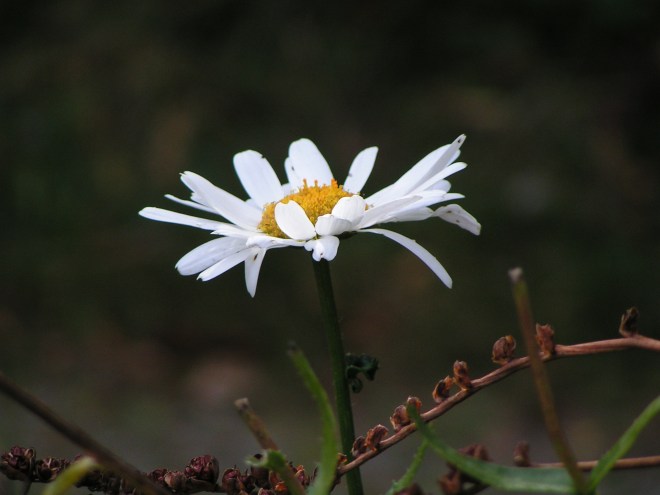
the season’s first wild daisy shows itself in our meadow  

the warmth and comfort of a snuggle under the covers overtake me upon waking and again as I fall asleep

And for all that, the truly sweetest moments of any day come from those spontaneous embraces anywhere, anytime as my sweetheart and I sway ever so slightly—almost the way young lovers move to a slow dance at the prom—for no particular reason and for minutes on end.

What a lucky duck I am! With all these best moments, I’m reminded of the lyrics from one of my favorite hymns, “How can I keep from singing?” Indeed!

What about you? Are there favorite moments in your days?

Little Deeds, Big Impact

Little Deeds, Big Impact

Some occupations will get you daily thanks for doing a good job. Many more rarely result in expressions of appreciation. Sanitation workers, for instance. Custodians. Government professionals who collect taxes, process unemployment benefits, and so on.

Teachers rarely get a “Thank you” from their students, either. And if they do, it may be years later. It’s hard to stay positive, to believe you’re accomplishing something important when it’s not acknowledged by the very people on whom you focus your professional passion.

But I’m here to tell you that your influence spreads like ripples in a pond when skipping stones. Whether it’s positive or negative. Whether it’s part of your job or a kindness to a stranger. It may be something truly magnanimous or seemingly insignificant. And it may make a difference in ways you’d never imagine. Let me give you some random (and in no way equal) real-life examples.

The first is a story about Fred. Fred came into our family by marriage to a cousin more than forty years ago. In all that time, I’d never met him. But I heard a lot about him over the years from my mom. She’d heard about him from her sister, his mother-in-law. Sometimes, she was in his presence and picked up a bit of his philosophy in person. A long time ago, she shared a tidbit with me. Fred held a strong position on the use of brand names as generic, she said. You know, the way people used to refer to all refrigerators as Frigidaires. Unless you’re of a certain age, you may not remember that example, but what about Kleenex for tissue?

It’s a real marketing coup when a brand becomes so iconic that it becomes part of the lexicon—you want a cola type soda and without thinking you ask  for a Coke, you’ll get a Coke instead of a Pepsi or an RC.

It’s not so great, though, if you’re a small business owner like Fred was. It’s hard enough to break into the public’s attention without having a built-in bias all because some multi-national corporation managed to hire a particularly clever PR person. Small businesses need a fair shot. So Fred thought people should say “tissue” or “cola” or “refrigerator.” Period.

Like I said, I’d never met the guy, but I took that lesson to heart. It made sense to me. Overnight, I changed my vocabulary. Never again did I use the word Kleenex unless I was talking specifically about that brand of tissue. I began asking  for “diet soda” in restaurants, which caused me no end of grief. Almost inevitably, my request got this response from the waitstaff: “Is diet Coke (or whatever brand they happened to sell) okay?” They just didn’t get it. But I persisted. When I had business lunches with colleagues, they learned to anticipate the scene and started chuckling at me before the word cola was out of my mouth. They thought I should just give up and go with the flow.

I finally met Fred. Thought I’d tell him how much he’d influenced me even though we’d never before laid eyes on each other. His response was a surprised, “I said that?”. It took his wife, her mother, and my mother simultaneously exclaiming things like, “You sure did,” or “Yes, there was a time . . . ”.

I thought it was hilarious. Decades ago, Fred expressed an opinion. Over the years, his memory of that principle dimmed to the point of nothingness. But someone—me—heard the message loud and clear (even though second-hand). And I not only put it into practice but passed on the sentiment with a kind of missionary zeal.

* * *

Kirk is a friend from way back in college days. After graduation, our families lived in the same town and socialized regularly. Then his family moved to another state. Fate brought us together sporadically and rarely after that. About five years ago, our paths crossed again. It had been more than thirty years since we’d last spent time together. Kirk told the Gnome and me that our names had come up in a sermon he’d recently preached. It had something to do with what he remembered as all our furniture-building back when we were newlyweds—the creativity, necessity mothering invention, that sort of thing.

The Gnome and I looked at each other in bewilderment. We’d sold weaving and macramé items at craft fairs and street festivals for a time in those days, but furniture-building? We were stumped. As we drove home, we puzzled over the discrepancy between Kirk’s memory and ours. Finally, we remembered that when we’d lived in a small World War II-era apartment with one lilliputian closet, we’d built a wardrobe of plywood with pine molding. We painted it a memorable aqua and yellow—it was psychedelic 1969, after all.

That must have been what Kirk remembered. But in his imagination, our one-time building experience had mushroomed. So much so that our “ingenuity” became the substance of a lesson used in a sermon more than four decades later.

* * *

Many years before either of these events, a different kind of moment occurred. I must have been in my early teens the day Mrs. Truluck, a volunteer youth leader in our church, stopped me in the aisle after one Sunday service to compliment me on something she had observed. I don’t remember what exactly, maybe for sitting next to another girl who might otherwise have been ignored. Whatever it was, I didn’t think it was a big deal. However, Mrs. Truluck taking about sixty seconds to tell me she’d noticed was a very big deal. A big deal that’s stayed with me for close to sixty years now.

Mrs. Truluck no doubt knew the importance of offering a pat of congratulations or a word of encouragement to young people. But I’ll bet she fairly quickly forgot that particular exchange. I never did. I learned two important lessons that day. One, that people notice what you do, even things that seem insignificant. I also learned how far a thoughtful comment can go. For the decades since that Sunday afternoon, I’ve tried to make it a point to let people know when I notice the nice things they do.

So, to all the Mrs. Trulucks out there, thank you—you make a difference.

And so do you.  

By Ashashyou (Own work) [CC BY-SA 4.0 (https://creativecommons.org/licenses/by-sa/4.0)%5D, via Wikimedia Commons


My Year in the Yellow House—Revisited

My Year in the Yellow House—Revisited (part of my Blowing on Embers series)

As I wrote “My Year in the Yellow House,” I wondered whether the story would have broad appeal since it didn’t have any overarching theme or message. Just random memories. Nothing much to see there.

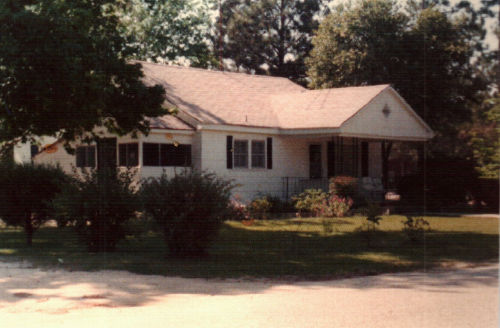
The yellow house many decades later—no longer yellow, but with the addition of front and side porches

I was suddenly taken aback at that notion. My essay was full of big deals. Unstated, but implied, was the fact that my youngest brother was conceived the year we lived in the yellow house, rounding out our family. How would my own life story be changed if that hadn’t happened? Most assuredly, he and his children think it was a pretty big deal.

Questions bubbled up.

For the family who lost their home and all their household belongings right down to their shoes and underwear, the blaze that destroyed their house was monumental. I wonder how it changed their lives. Did they have family nearby to put them up temporarily? Did they have a savings account in the bank to help get them back on their feet? Was their life savings, however large or small, stashed in a mattress that went up in flames? What happened to them, I wonder.

Was Glory’s tumor malignant? That’s what I always thought. If it was, did it go into spontaneous remission? Did her family’s faith cure her? How did she turn out? Or did the tumor kill her? When? How was her family—and their belief system—affected?

What about Carol’s family? Is there a more devastating blow than losing your young child? Did her family survive intact? Many don’t. And what did the world lose with no Carol to grow up in it? What about the family that never was? Would she have changed the world? Questions the answers to which no one will never know.

It was an eventful year on our small block. My own travails were pretty petty compared to what was happening all around me.

And yet, they weren’t. I heard something on the radio recently about how important it is to listen, really listen, to all the insignificant things your young child wants to tell you, no matter how busy you are with more important grown-up issues. The point was that if you don’t listen now, they’re unlikely to tell you the really important stuff later. But it was the next phrase that really struck me: “to them [the children] it’s all important.” Of course it is. It’s all they know.

To five-year-old me, it was all important. It would have been to any five-year-old.

My most potent memory from that year is the one where I was pushed into a tiny but formidable dark space, locked in, and forced to allow my most valuable possession to be desecrated in order to gain my freedom, having no confidence that the bargain would be honored, even then. My doll was my baby; it was an intolerable choice. And all because of someone’s inexplicable need to be cruel.

I don’t know all the ways the doll experience colored my life. Was that the moment the meek, compliant girl I grew into was forged? Was it what made me forever seek to avoid confrontation at almost any cost? Was Glory’s taunting what birthed my empathy for others? Or was it just a terrible moment with no particular future consequences other than a bad memory?

I don’t have the answers to any of these questions.

What about you? What questions still linger from your early years? Were there childhood moments—little or not so little— that changed your life?