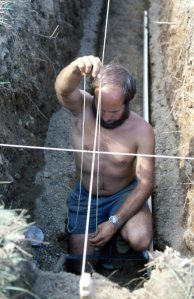
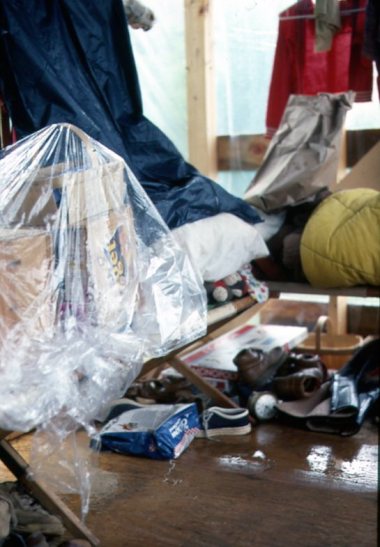
Best Moment

“What’s the best moment of your day?”

I had to think about this question for awhile. Not all days are the same, of course, and my answer on one day might be different from another. So, on the day this question was posed to me, I tried thinking on the events of that day, then the day before, and finally of a generic, “average” day. As I mulled over the question, I still couldn’t land on a single best moment. It’s a dilemma I’m happy to live with. Yet, I still wanted to attempt to answer the question. I decided to go the route of a more or less chronology-based stream of consciousness and this hodgepodge is what I came up with.

The best moment of my day is when . . .

a ray of sun shining onto my face wakes me and birdsongs welcome the day

I eat a breakfast of eggs from the happy chickens who live just down the road

the cacophonous chatter of crows during their morning “coffee klatch” interrupts the still of my morning

I sip a cup of honeyed herbal tea while I let my mind organize my day

on a summer morning, I check on the latest thing to pop up in the vegetable garden—or later in the season, when I harvest what I’ll eat that evening or preserve for a chilly winter day

a couple of hours of dedicated writing time come my way

the all-day deck antics of squirrels and chipmunks capture my attention as they battle each other’s wits over food intended for birds

in warm months, I take a twilight walk listening to the quiet, watching the synchronicity of fireflies as they light up our woods, and catching whiffs of honeysuckle, lemon balm, ferns, and freshly mowed grass

on a clear, crisp wintry evening, I gaze at the star-studded sky and maybe catch a meteor streaking across the sky

I spy mountain valleys shrouded by a sea of clouds

the nighttime calls of owls seep into my consciousness

the early springtime sounds of wood frogs and spring peepers shatter the otherwise quiet of my bedroom—all night long

that “clown of the forest,” the nuthatch, utters its almost cackling sound, strongest on an autumn day

I’m graced with the giggles and confidences of grandchildren

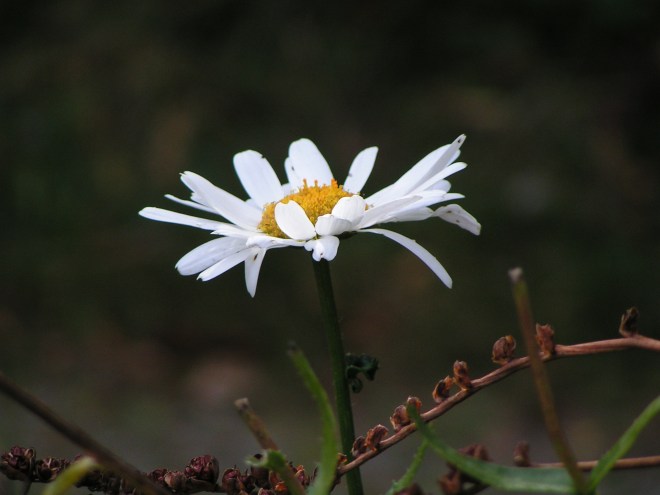
the season’s first wild daisy shows itself in our meadow  

the warmth and comfort of a snuggle under the covers overtake me upon waking and again as I fall asleep

And for all that, the truly sweetest moments of any day come from those spontaneous embraces anywhere, anytime as my sweetheart and I sway ever so slightly—almost the way young lovers move to a slow dance at the prom—for no particular reason and for minutes on end.

What a lucky duck I am! With all these best moments, I’m reminded of the lyrics from one of my favorite hymns, “How can I keep from singing?” Indeed!

What about you? Are there favorite moments in your days?

Summer’s Slow Slide into Fall

Summer’s Slow Slide into Fall (written in mid-August)

First day of summer: words that conjure up notions of vacations, suntans, freedom from homework. Thoughts of fun in the sun with summer reads, picnics, hikes, swimming, tennis, softball and baseball, bike rides, day trips. All those traditional outdoor activities mean summer’s here.

In truth, when the first official day of summer rolls around, fall is already lurking in the shadows. The first sign, of course, is day length. Summer means longer days, right? But summer officially begins with the summer solstice—the year’s longest day. The very next day—officially the first full day of summer—will be a little shorter, as will the day after that, and the next, and the next. Every day for the next six months.

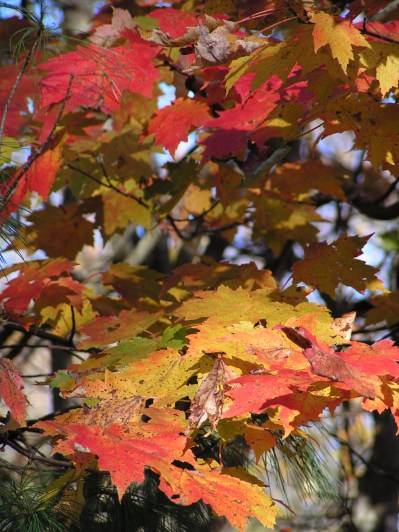
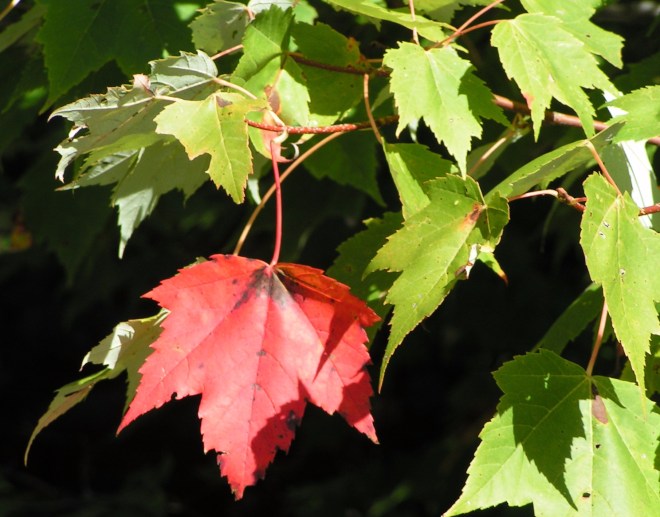
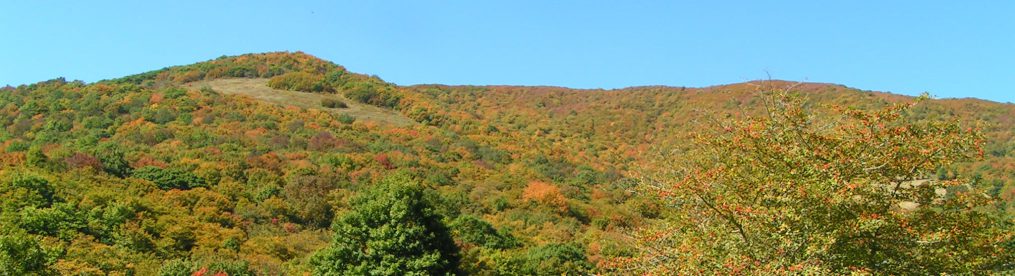
It’s about the time of the summer solstice that I inevitably spot a tree with that one red or yellow leaf. I’m a big fan of autumn, but I also prefer to live one day at a time, and that leaf sits there taunting me, reminding me that fall is inching its way into my life. To the astute observer, other signs of autumn’s sure return are all around. Those lime-green spring leaflets that sprouted on trees (wasn’t that just yesterday?) have been growing both larger and darker. Before they put on their showy fall display, they will continue to darken until, in the distance, they’re such a deep green they look almost black.

As spring wildflowers transform into summer ones, so summer’s blooms have now, almost imperceptibly, given way to those of fall. Daisies are replaced by Queen Anne’s lace; black-eyed Susans seem to morph into yellow coneflowers, Jerusalem artichokes, and sunflowers. Floral hues become both more muted and more rich. The buttery yellows of summer’s evening primrose make way for the more mellow tones of fall’s goldenrod. There’s the rusty shade of spotted touch-me-nots in lieu of daylilies’ brighter tints. In the wild, pinks virtually disappear as summer subsides, and lavenders transmute into the subtler mauves of milkweed and Joe-pye weed and the rich purple of ironweed. In front yards, gardeners discard summer’s petunia palette in favor of the earth tones of chrysanthemums. Berries appear. Fruits ripen.


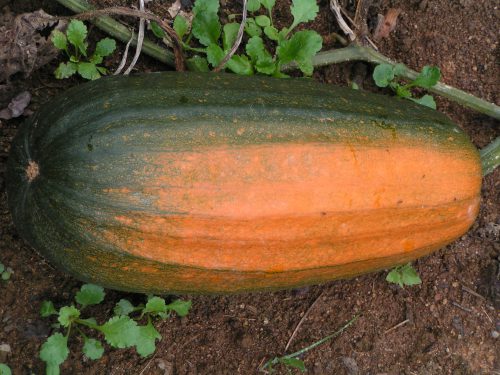
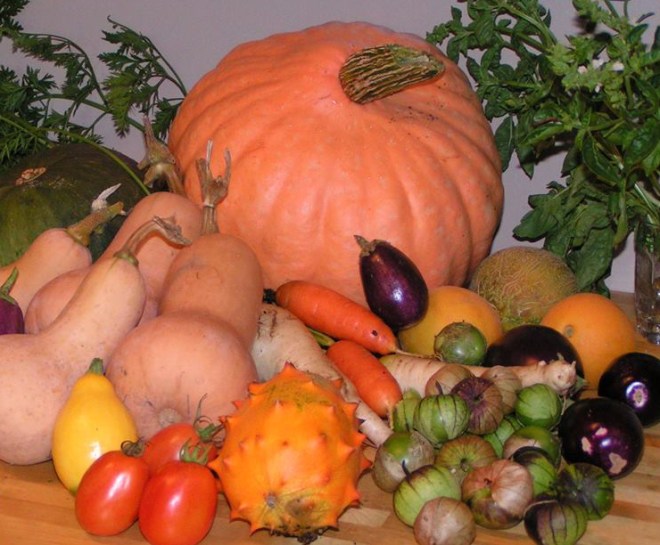
Birds’ feathers become a little less brilliant. Grasses develop gracefully drooping seed heads. Little by little, vegetable gardens show signs of wear as growth slows, pumpkins turn from green to orange, and early veggie plants dry up or go to seed.

dscf9200.jpg

The sun itself gets in on the action. Ever since summer’s solstice, its arc becomes a little more southerly, a little lower as it moves across the sky.

As I write this piece at the beginning of the third week of August, my calendar tells me we are just past summer’s midpoint. To be precise, sixty percent of our summer days have passed. Sitting outside in the afternoon, I hear a distinctive sound unique to this time of year—the thump of acorns and hickory nuts as they hit the ground in the woods. It’s not a safe time to be standing under a nut tree!

Then comes an evening’s after-supper walk when I unexpectedly sense another change. The days may still be warm and humid, but I feel the barest hint of chill in the night air. Sometimes, I even catch a slight change in nighttime scents—a little less floral, a little more spice. My ears notice the ever-increasing cacophony of crickets and katydids doing their late-summer thing. Their sounds also pierce the otherwise country quiet during the day, but at night the music is almost deafening, yet soothing in its own way and one more sign that fall is closing in.

Fall has always been my favorite season, so I welcome its coming. Still, it’s a little curious that just as we’re getting into the full swing of summer, autumn has already begun its birthing process. I guess that’s the way of things. The peak signals certain ending, but an ending accompanied by new beginnings—caterpillar to chrysalis to butterfly, seed to tree and back to seed again, adolescence to adulthood, retirement to a new life chapter,  the whole of life itself.


Our Grand Road Trip: National Parks (and more)

In my previous blog posts about our big road trip last fall (start here to catch up), I focused mainly on the unexpected things that happened-. They came upon us with such frequency and regularity that they became the grand theme of our grand trip. But—and this is a big but—we’d incorporated a lot of standard vacationey activities into our travels, and they were grand, too.

We visited four national parks and found ourselves in the midst of several national forests and other national landmarks, especially fitting since 2016 was the 150th anniversary of the National Park System. Each one was spectacular and not one of our visits was long enough to properly take in the splendor. Even so, we were fully engulfed in the joy of the experience, and now we know where we want to spend more time in the future.

I’ve already written about—and posted lots of photos of—The  Badlands. Our reluctance at leaving there was matched only by our anticipation of visiting The Black Hills National Forest, just a couple of hours away. The Black Hills are full of tourist opportunities, including Wind Cave National Park and Jewel Cave National Monument. Unfortunately, we couldn’t figure out a way to make room in our tight schedule for either of those sites. (But as I’ve written before, we’ll be back!)

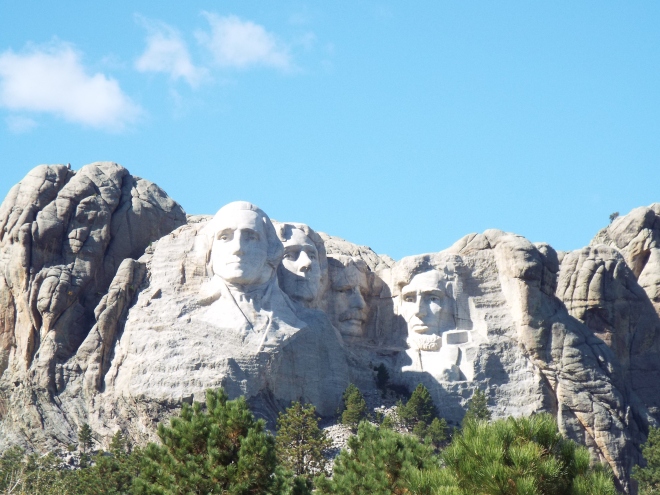
Mt. Rushmore National Memorial is clearly the most iconic and recognizable tourist site in the the Black Hills. Its size alone is dramatic. The mountain’s presidential stone-carved faces can be seen from miles away and from many different perspectives, but to really get a sense of the size of the thing, you may want to visit the memorial itself, which also has a number of ranger talks. Entry and ranger talks are free, but there’s a $10 parking fee ($5 for seniors).
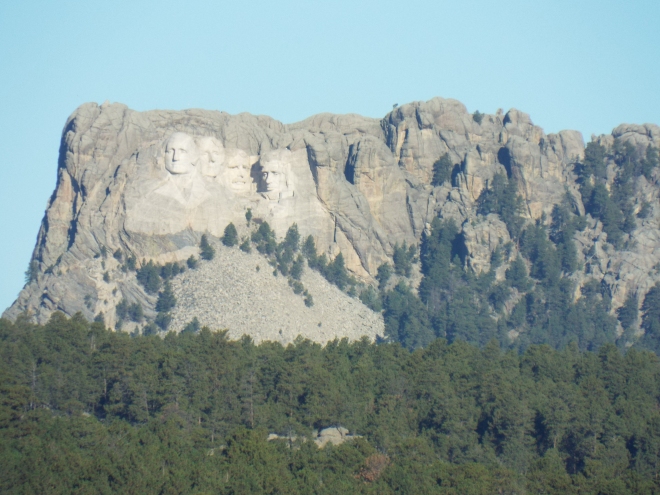
DSCF1705

From a distance

DSCF2096

Closer

DSCF1684

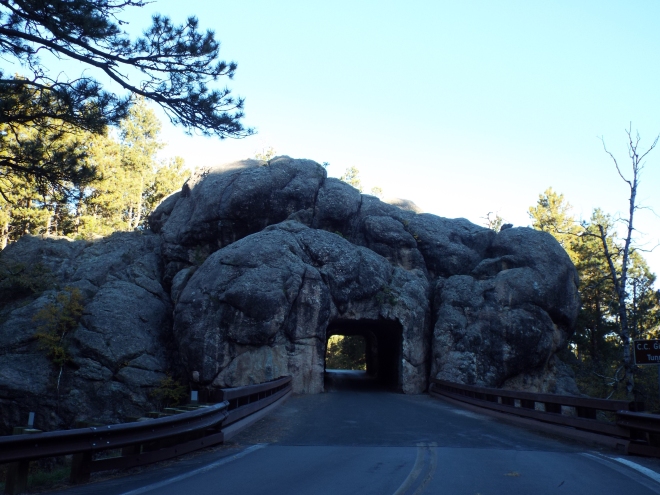
One of the most striking views of Mt. Rushmore came unexpectedly as we were emerging from one of these wee tunnels, the edges of the tunnel acting as a frame for a magnificent portrait.

The forest shares a border with Custer State Park, a unique experience all its own. It’s a fairly long drive from Keystone, the nearest town, to get to the park. Though the scenery along the way is fantastic, the park proper is where the fun really begins. Next time, we’ll plan on renting a cabin inside the park boundaries—and taking all our food and necessary supplies. That way we won’t waste precious time getting to and from. In the park is the eighteen-mile Wildlife Loop Road you can drive in hopes of close-up encounters with wildlife like bison, donkeys, prairie dogs, and big horned sheep, as well as the the fourteen-mile Needles Highway. I promise, you don’t want to miss either of these spectacular drives.

Between the Badlands and the Black Hills, there’s enough to keep you gobsmacked for a full two-week vacation, even without stopping at the many commercial tourist attractions along the way, though you can certainly check those out, too.

(You can see more Black Hills and Custer pictures here.

Our next National Park visit was to Glacier. We were so busy taking pictures of gorgeous scenery along the way that all we had time for once we were in the park was the two-hour drive up Going-to-the-Sun Road to Logan’s Pass (6646 ft.) and back down again. Better go soon if you want to see any glaciers. They’re melting fast. The 150 glaciers that inhabited the park in 1850 have now shrunk to a mere 25, and all of those are slated to disappear in the next few decades. The park will have to be renamed, perhaps to Glacier Memorial National Park in honor of the glaciers that once were.

Our first peek at a Glacier NP peak

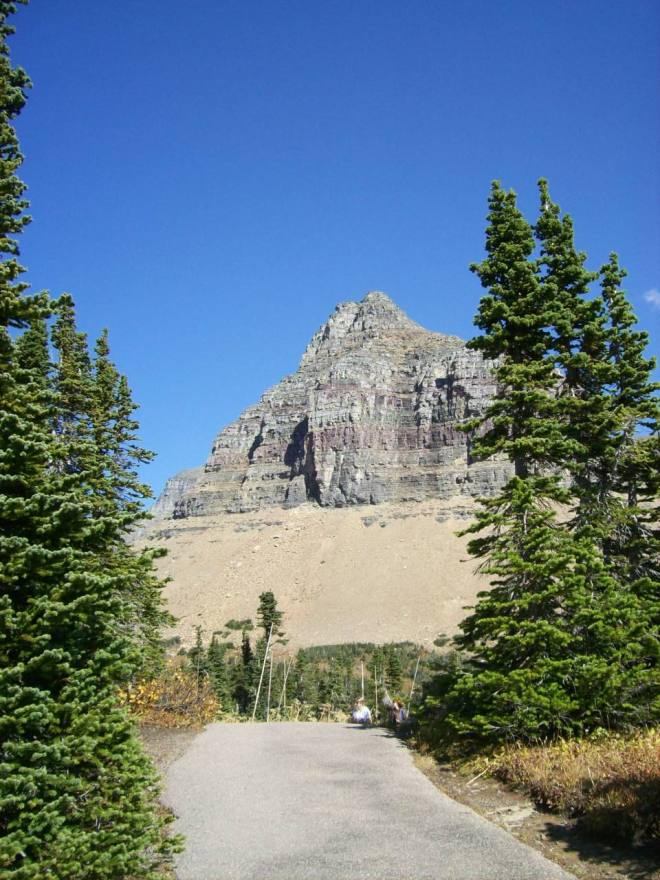
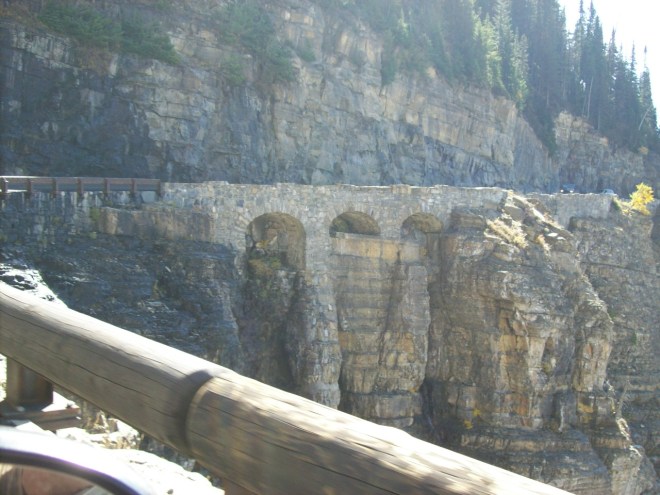
What an engineering feat it must have been to build the fifty-mile-long Going-to-the-Sun Road in the early 1900s.

We traveled through a portion of the Grand Tetons on our way to Yellowstone. It was a cloudy, foggy, misty day so the view was a little different than it would be on sunny days, but still stunning in its own way.
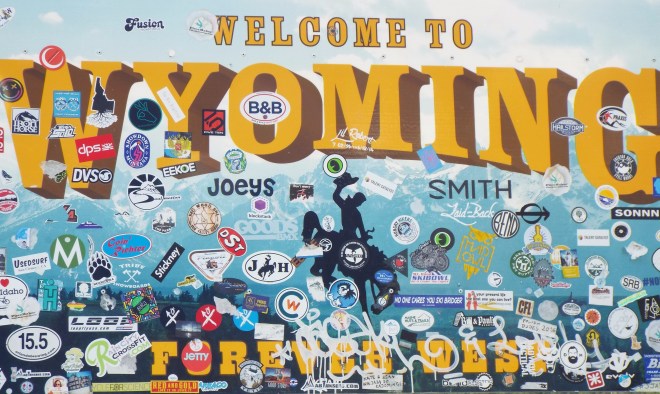
We were welcomed to Wyoming with this billboard and vistas of Grand Teton NP.
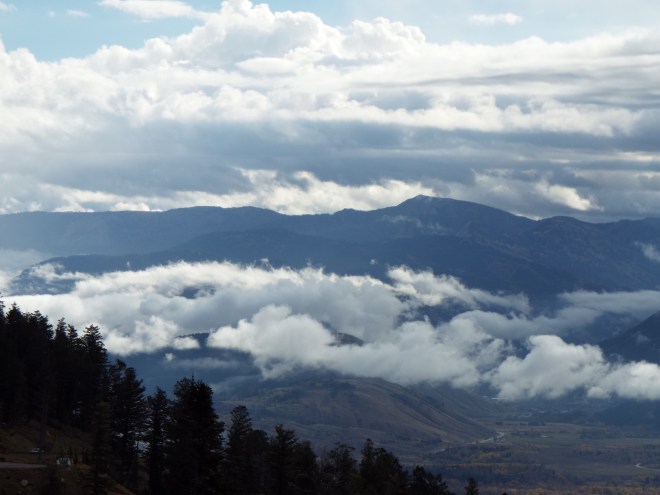
We didn’t get to see much of the Grand Teton mountain or her two sister peaks on this cloudy day. Controversy surrounds their naming. By far the most colorful explanation is that early French Canadian explorers from the Northwest Company, upon seeing the three peaks of the range, called them “Les Trois Tetons,” or “The Three Breasts.”

I can’t remember a time in my life when I didn’t long to visit Yellowstone National Park. Back in the sixth grade, when one of my schoolmates returned from summer vacation bragging about her Yellowstone trip, I was too jealous for words. So no way were we traveling to Montana and Wyoming and miss out on my big dream.

Yellowstone. Yes, we knew it was big. But you cannot begin to comprehend its size until you’re right there in the thick of it. To put things in perspective, a friend told me that after her family had entered the park, it was another fifty miles to their campsite. You could spend weeks in Yellowstone and not begin to see it all. (And we just had an afternoon!)

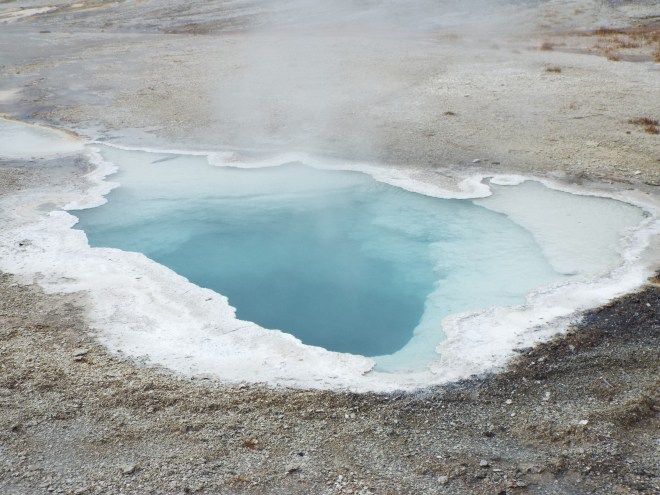
It took us a while to figure out that all those white wisps we were seeing off in the distance weren’t fog, but geysers. I’d forgotten that Old Faithful wasn’t the only one. There are actually 500 geysers and 10,000 thermal features in all. In other words, they’re everywhere!

A cluster of steamy spots

We arrived at Old Faithful just as its display was ending. That was a good thing—the wait for the next show meant we could stroll the boardwalk and see many more geysers as well as mud pots, fumaroles, and hot springs. We might have passed them up otherwise, and that would have been a real shame.
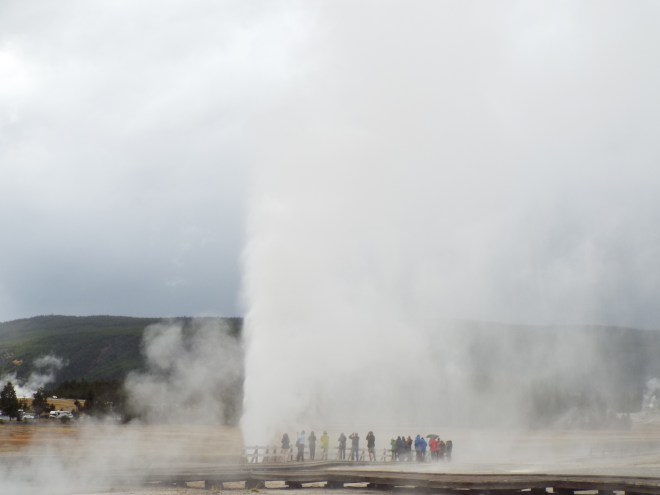
No, this isn’t Old Faithful, but Beehive Geyser, which shoots steam 200 feet into the air, more than 50 feet higher than its more famous sibling’s average. We lucked out—it can be days between eruptions.
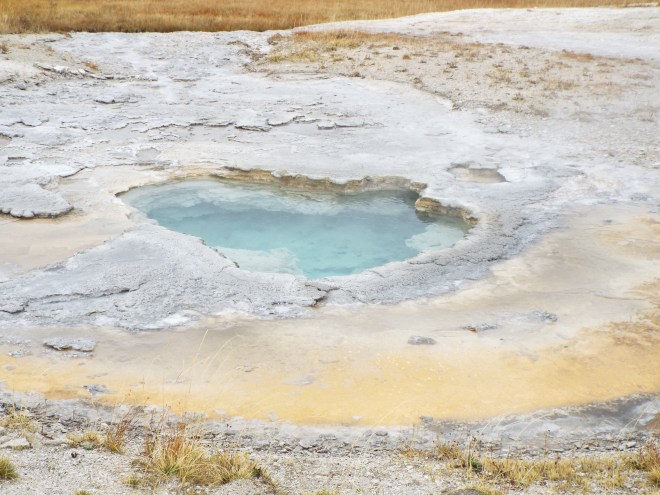
One of Yellowstone’s 300 waterfalls

There are nine lakes in the park. At 136 square miles, Yellowstone Lake is the largest.

Our national parks, forests, monuments, memorials, trails, historic sites, and landmarks are indeed treasures. They are our heritage and our future. It takes only a visit to understand beyond measure that we must preserve and protect them for all to enjoy—today and all our tomorrows.


Images Etched in Time

Images Etched in Time

(Note: at a recent writing workshop, I was challenged to quickly bring to life on paper ten memories, incorporating as much colorful description as possible—we had 20-30 minutes, I think. I’m sharing the results here to challenge you to try this exercise yourself. The lightning speed of the assignment created energy-filled pictures in my mind and the result gave me a bunch of ideas for more in-depth stories from the past to pass along to my family.)

Two rain-drenched brother-twins sidestepping puddles in the brick-red dirt road, holding two-year-old me tight under a single umbrella hurrying to the paved road in hopes of hailing a midnight rider for an emergency run to the hospital

Mother clutching her pink bathrobe over white and blue print pajamas as she stormed out the kitchen door, across our yard, and over a barbed wire fence into the landlord-neighbor’s pasture to turn off the water filling the cow trough so it would instead run into into our kitchen faucet and she could make Daddy’s morning coffee

The small, yellow, frame house in a grass-starved yard where shoes filled with sand from our play on the unpaved road and our clothes were stained with the red clay from our play deep in the catty corner excavation site

The dank underbelly of the brick-pillared house where Daddy and I twirled clotheshanger-thin sticks into holes surrounded by sandy funnels chanting, “Doodlebug, doodlebug, come out of your hole. Your house is on fire and your children will burn”

Six silly seven-year-olds hiding in the blackened airlock-style entry to the girls’ bathroom shushing each other over our giggles as we lay in wait for the next unsuspecting victim to walk through the door to our screams of “Boo,” except that person turned out to be our teacher

Waking under blue, yellow, and red handmade quilts in my grandparents’ still-sleepy house as fog drifted through the opened windows urging me to slip outside into the dew-kissed grass in my bare feet to nibble on a green apple and daydream among the enveloping branches of their ancient weeping willow tree

The home-made cotton-candy-pink shirtwaist dress with rose-embroidered edge stitching I was wearing the day my family of five and suitcases with all my clothes were crammed into our two-tone brown Ford Fairlane at the moment I saw the sign pointing the way to my soon-to-be college home and the butterflies in my stomach turned into cannonballs

The sunshiny July day we arrived on our mountain to a sea of wild daisies, their white and yellow faces bobbing in the gentle breeze to welcome us to our forever home

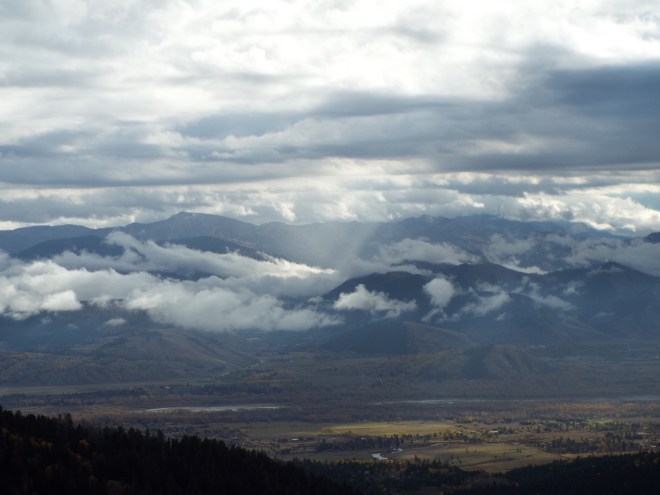
My throbbing heart the first time I saw valley fog from above with the tops of purple-green mountains peeking through the massive cloud like little volcanic islands rising above an ocean of white foam

The day I walked out of my just-at-that-moment former workplace with the white-hot sun beating down on my face, my shoulders now lighter than air, and stepped into my future

The Grand Road Trip, Part I: Kentucky to South Dakota

The Grand Road Trip, Part I: Kentucky to South Dakota

The Gnome and I have never been big travelers. It’s not that we don’t enjoy seeing more of the world—it’s just that we’re always so busy with can’t-wait projects around here. (Not to mention the many years when money for travel was an extravagance we couldn’t consider.)

The past year has been a rare exception. Not only have we traveled more, but circumstances conspired in such a way that we took two major trips in just six months’ time. As I wrote here and here, we recently returned from visiting long-time friends in California. It was quite the trip. But last fall, we headed out on an even bigger journey, a 24-day road trip of more than 6,000 miles (and 4,000 photos—really!)—another long-promised trip both to ourselves and to close-in-heart but far flung cousins and other family.

That trip, too, took us through previously unexplored territory. On our travels, we wound through fifteen states, seven of them new to us. We got to spend time (oh, so little) in Glacier, Grand Teton, Yellowstone, and Badlands National Parks and too many national forests to count.

Of course, the best parts of the trip were the good times we spent with our relatives—not to mention the gourmet meals they prepared for us! They treated us like royalty. But that was family time, private time, so it won’t get any further mention here. But the incredible scenery and the history we encountered along the way was pretty phenomenal too. That I do want to share with the world. And there was so much of it, I realize this story has to be serialized.

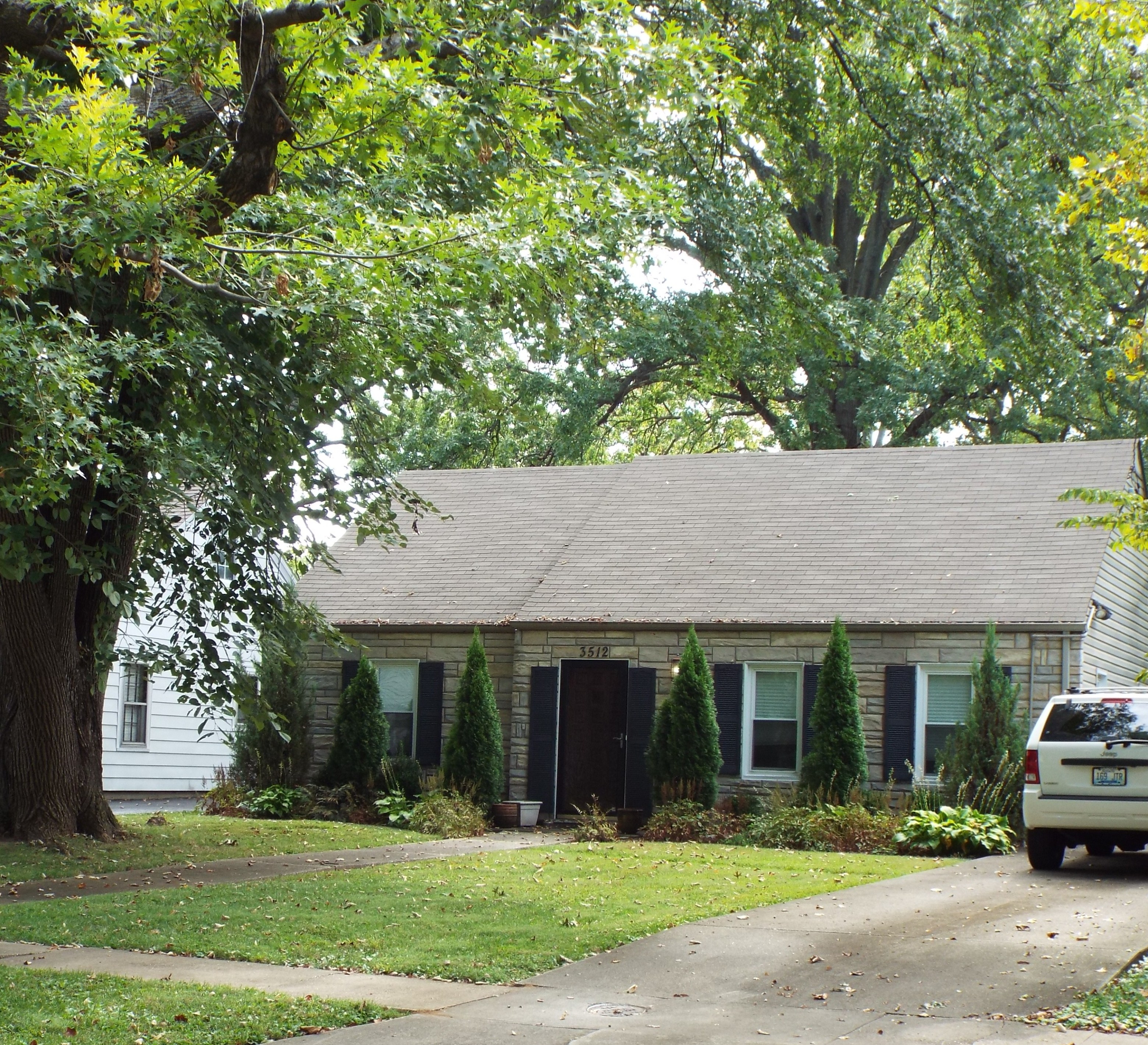
First things first. Our driving on Day One ended in Louisville, Kentucky. Louisville will always hold a special place in our hearts. It’s where we moved following our wedding and honeymoon, and we stayed for twelve years. Both of our children were born there. Except for the humid summer heat, we loved everything about Louisville and nothing—except wanting a mountain home nearer our families could have driven us away.

It’s been years since we’d been back, and while much is the same, lots of changes have come to River City since we left, too. Sometimes it was hard to get our bearings, but we had to check out a few of our favorite old haunts. Our first home-of-our-own is still there (minus a couple of special dogwoods), but barely. A church parking lot expansion has taken all but a few houses on that block.We sat on the banks of the Ohio munching on Kingfish Restaurant’s onion rings while the Belle of Louisville graced us with her presence.And then there’s Plehn’s Bakery—A Louisville staple for almost a hundred years and one of our favorite weekend destinations back in the day. We couldn’t say goodbye to Louisville without dropping in for our favorite butter kuchen. I wish they shipped!
We didn’t have time to take in any of Louisville’s many tourist and cultural venues, but it’s chock full of them, from Churchill Downs to the Muhammed Ali Center to Actor’s Theatre. I highly recommend Louisville as a vacation destination. You’d never get bored.

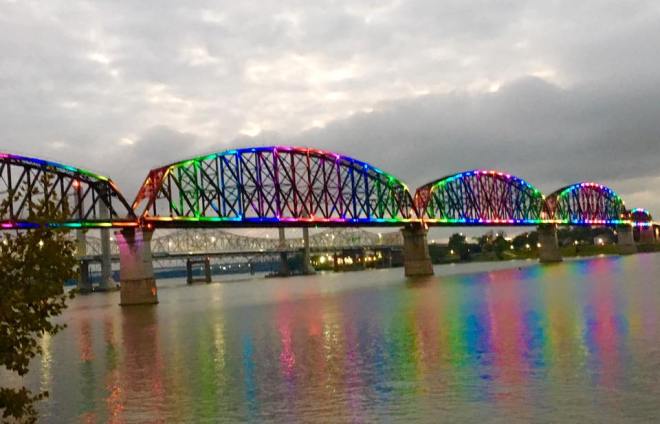
Louisville already had a phenomenal park system (eighteen parks and six parkways designed by the father of American landscape design, Frederick Law Olmstead). Now, the city has added 85 acres of waterfront green space and walking paths. A great place for family frolicking. The mighty Ohio itself has become a haven for paddlers. We were delighted to discover that the old Big Four railroad bridge has been transformed into a walking bridge that will take you across the state line into Indiana. It’s clearly a popular walking and cycling spot. Lit up at night, it’s all about romance. We had a terrific view of the bridge from our riverside restaurant terrace. I could have stayed for hours.

Time has been good to Louisville.From Louisville we traveled across Indiana and up to northwestern Illinois. We know this route, but the dramatic change from flat plains to rolling hills always catches us off guard. When we visited the museum in charming Galena, we learned a little more about the landscape and its history. The Driftless, an area encompassing parts of Wisconsin, Minnesota, Iowa, and Illinois, escaped the flattening effect of glacial ice fields way back when. As a result, the region is graced with millions of bluffs and valleys with elevation changes of up to 1100 feet. Right in America’s heartland. Driving through the pastoral Driftless is not only beautiful, it’s calming. Good for what ails you.Something we hadn’t seen before in our travels through this area was the silver glint of massive wind farms. Wind turbines filled nearby fields and faded into the distance. Far too many to count. Farther than the eye could see. Watching the blades turn while listening to a classical piece on the car radio nearly put me into a hypnotic trance.DSCF1271Of course, we drove past miles and miles of corn. It was higher than the proverbial elephant’s eye. I wondered if any of it was being grown for human consumption.
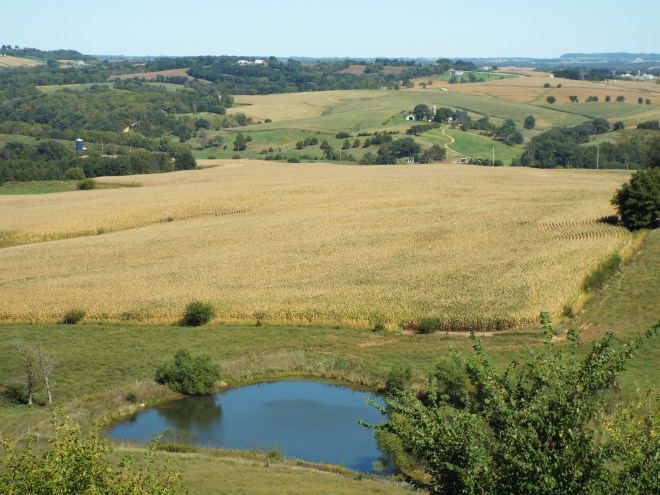
Not a cloud in the sky

After a couple of days in southeastern Minnesota, we traveled across that state on our way to South Dakota and then Montana, passing even more massive wind farms and even more corn. I know people make jokes about how boring the flat landscape of the plains states is, but we found it to be soothing. Three (big) states’ worth of soothing. The thing is that with all that flatness—and fewer and fewer trees along the way—the sky seems to grow ever larger. So much space. So blue. So cloudless. Honestly, we hardly ever saw even the smallest trace of a cloud all the way across those three states.  And the landscape is ever-changing.  I was afraid to blink for fear of missing something. But I’m getting ahead of myself.

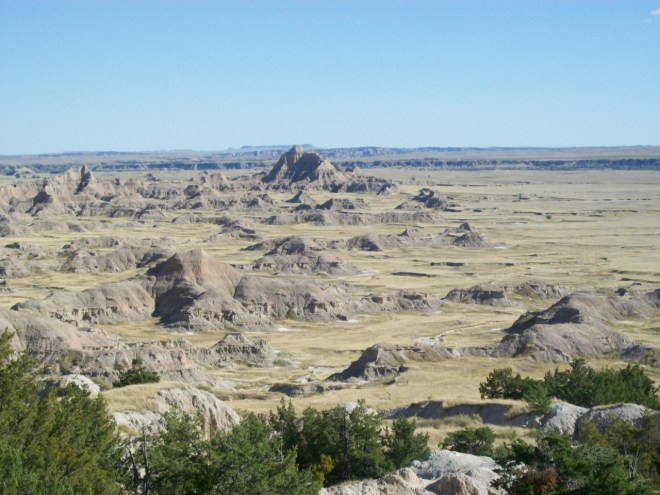
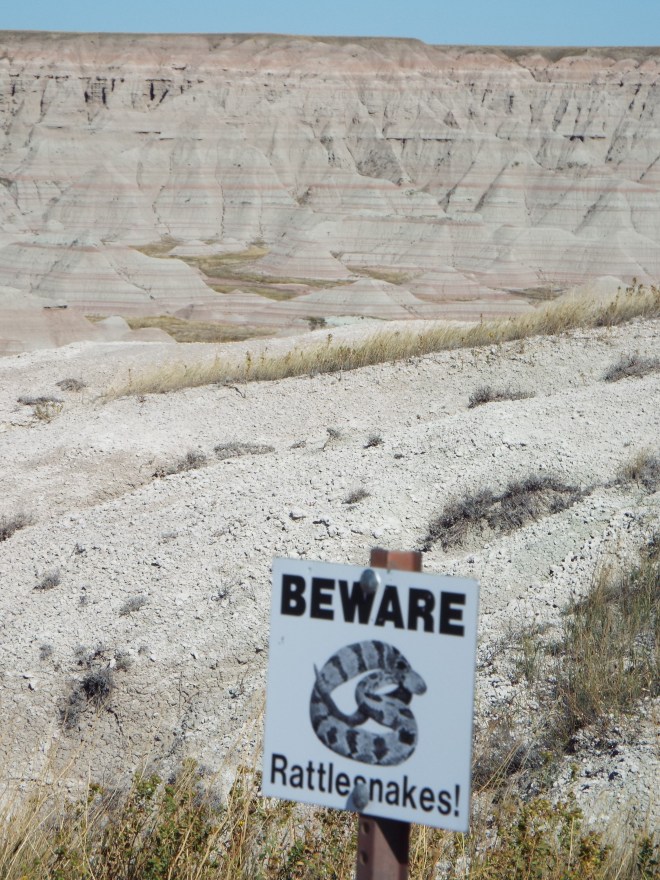
Back to South Dakota—-we had only given ourselves a few hours to spend in the Badlands, but every minute was magnificent, and it took no time for us to know for certain that we’ll be coming back here for an extended stay. We could barely stand upright against the strong wind gusts, and the glaringly bright sun made it impossible to catch the nuanced but striking shades of color in the rock.

Looking out across the canyons and the vast expanse of land with buttes rising from the plains, we were transported to the movie and TV westerns of our youth, imagining the black-hatted bad guys firing off shots from behind some unknown rock deep in a canyon. It was hard to believe we were looking at something real.This sign kept us on our toes—especially me with my sandal-exposed tootsies.
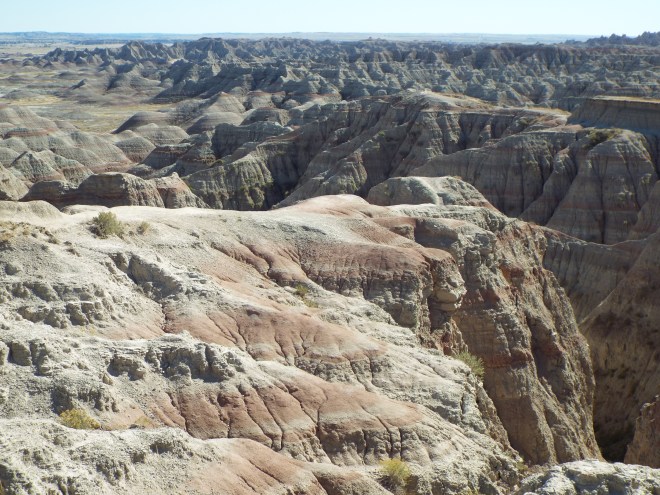
Again, no clouds. Not anywhere.

And our trip was just beginning.

(Stay tuned for Part II of The Grand Road Trip, full of unexpected discoveries. Coming soon.)
California Dreamin’ – Continued

California Dreamin’ – Continued

Last Tuesday’s post tells a bit about our recent trip to California. I won’t repeat it here. Just wanted to share some more photos as promised. (Some pix by the Gnome; some by me–can’t remember whose is whose anymore.)

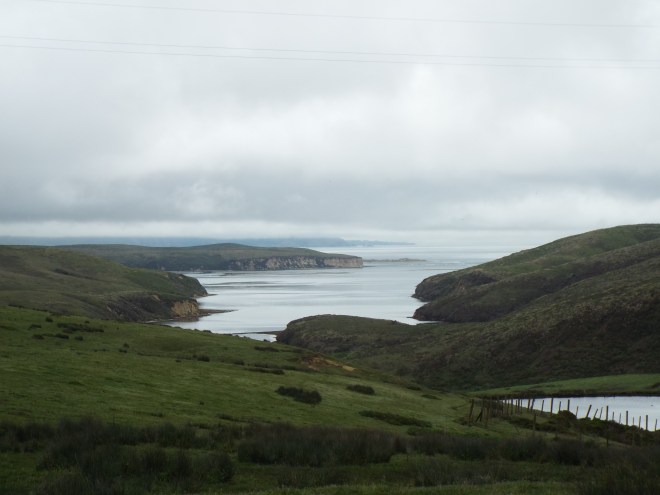
Leaving Pt. Reyes

Pride of Madeira


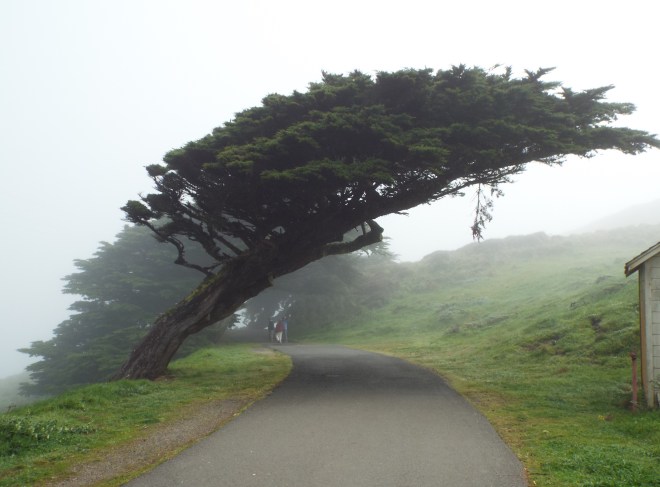
Windblown

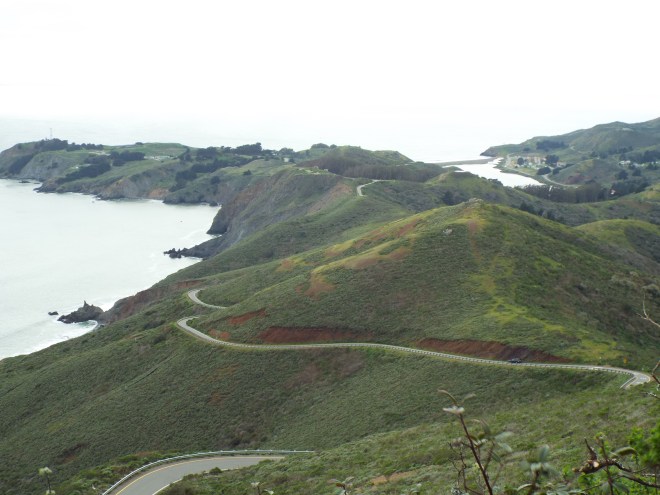
Point Bonita, across the bay from San Francisco

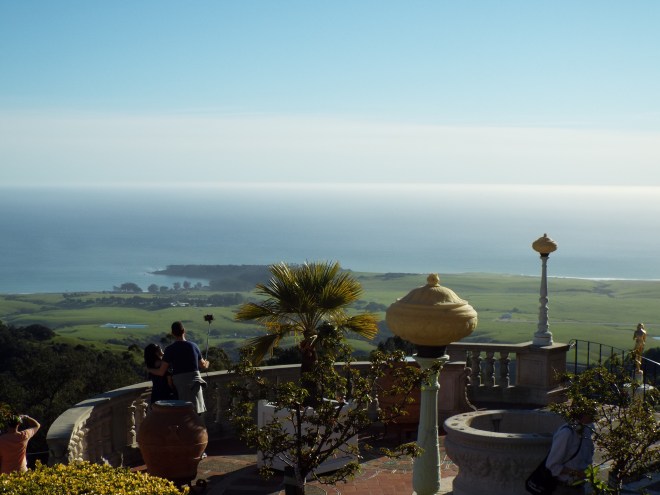
Scene 1 from the Hearst Castle

Scene 2 from the Hearst Castle–the man knew how to find a heck of a view.

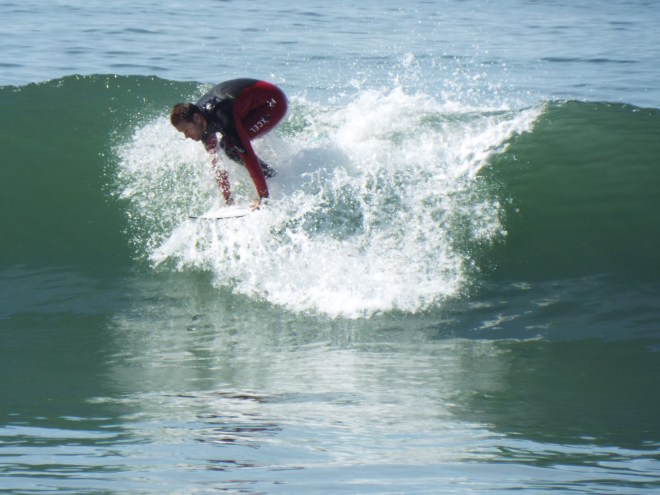
Surfin’

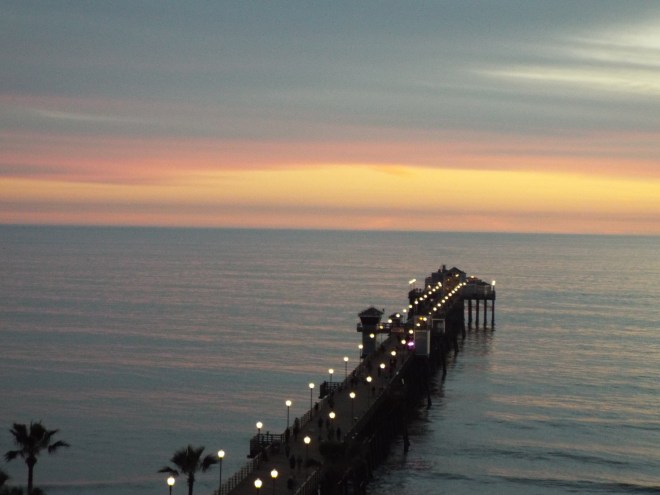
Oceanside Pier at twilight

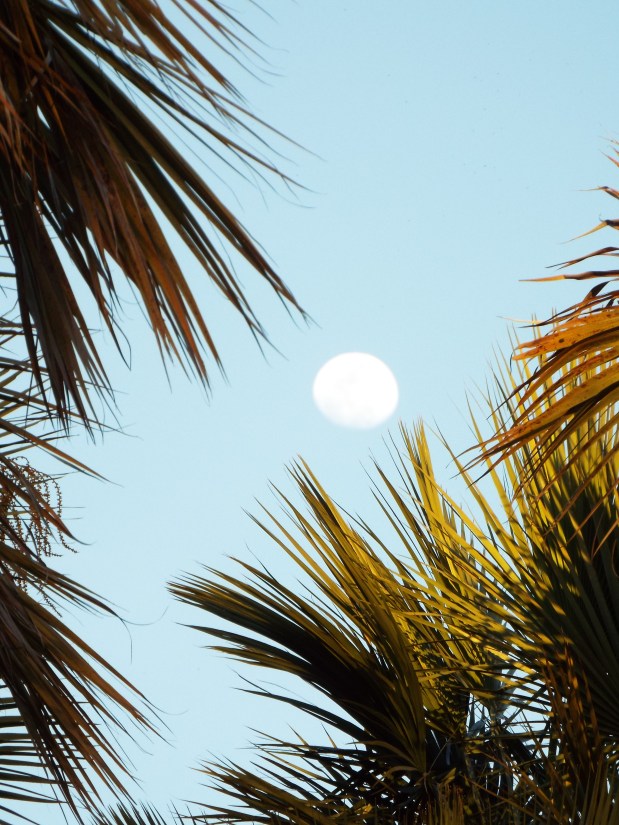
Nearly full moon


So many orange, lemon, and quince trees. How I wanted to reach up and snatch a juicy one.

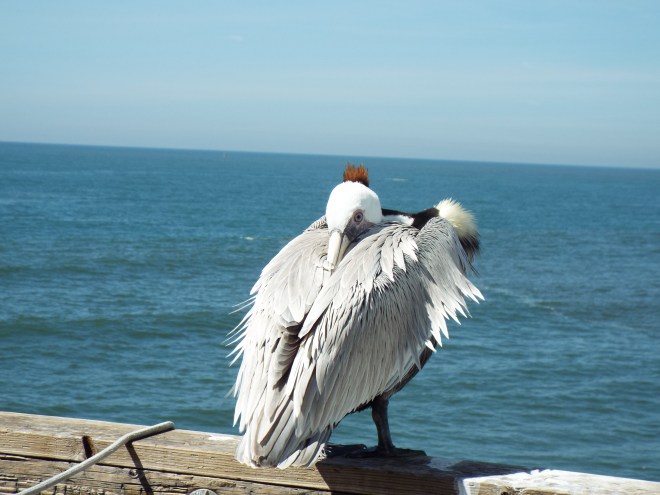
This guy was a real showoff.

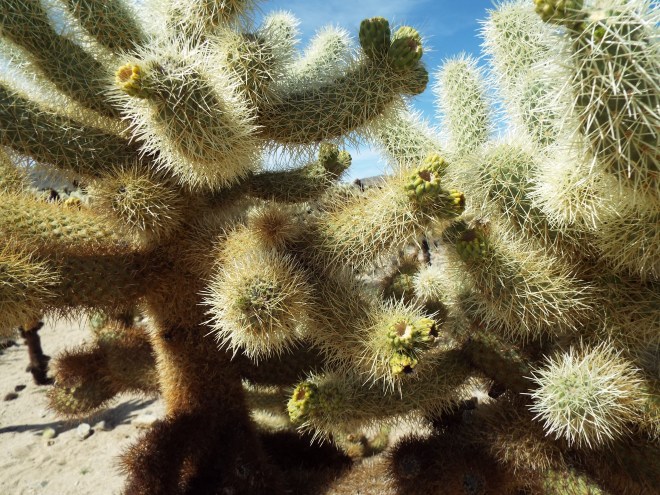
Don’t let this soft-looking Teddy Bear cactus fool you . . .

their spikes can cause serious injury.

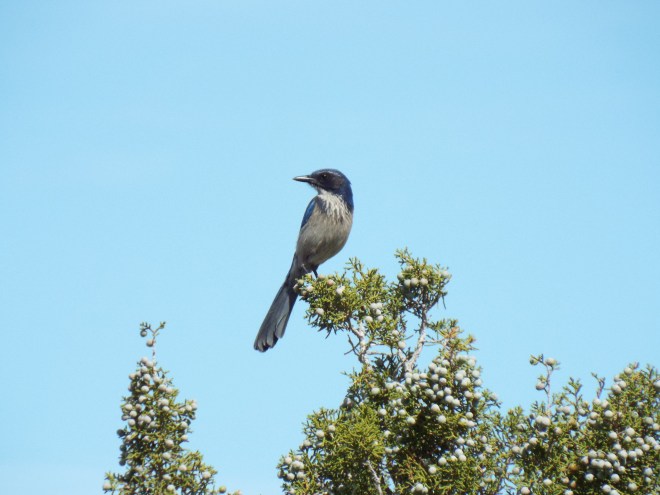
Western jay

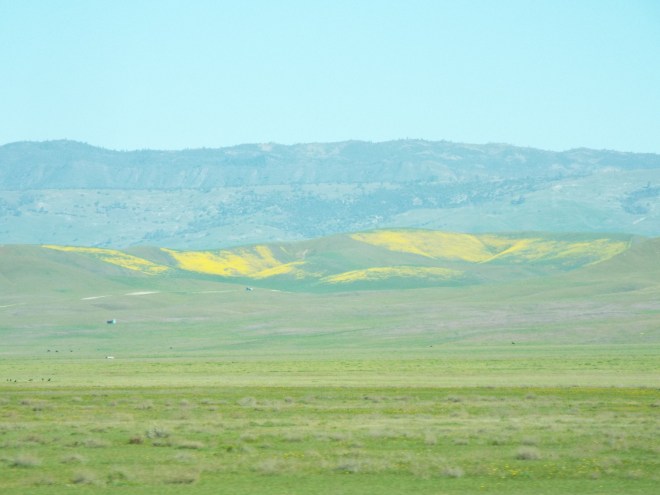
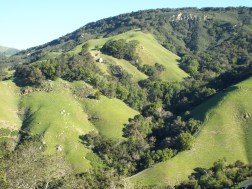
See those big patches of yellow? California’s wildflowers were just beginning to put on their display while we were there, working their way up the mountainsides.


Lizard


San Simeon

California Dreamin’

California Dreamin’

The Gnome and I recently returned from our very first trip to California, where we were guests of dear, decades-old friends. It was phenomenal, and the best part is that even after being in each other’s pockets for nearly every waking hour of our two-week visit, we’re still tight (I hope!).

We visited the south, the north, and in between; we saw the coast and the desert; we went to Indio, Oceanside, San Diego’s Balboa Park, San Simeon, Chico, San Francisco, and Berkeley. We saw three amazing plays, toured museums, rode the cable cars, and spent a few hours at Fisherman’s Wharf. We explored a national park, a national seashore, a national maritime historic park, and a national monument. We marveled at the cacti, animals, palm trees—lots and lots of palm trees, snow-capped mountains, and wildflowers.

We listened to the the sea lions and roamed around Hearst Castle. We drove past hundreds of wind turbines and miles and miles of almond trees; we hiked into a canyon and up a mountain, around a lake, and through the woods; we played Phase 10 and Pandemic (now, that’s a brain strainer). We traveled to Point Reyes (the only foggy day of our journey, so we could barely see its lighthouse), and we stood in hushed awe among the mighty redwoods in Muir Woods.

We had good times with our friends’ very grown up children and their fine partners. We bought groceries together, we cooked together, we ate great food and drank fine wine together, and we shared hours of light banter and deep conversation.

It was a busy couple of weeks. Words can’t do it justice. Neither can photos, but I can’t resist the urge to share. There are far too many to put up on one post, so I’m planning a follow-up in a week or two. (Except for sunsets, photos courtesy of the Gnome)

Juxtaposition

Looking up down in Palm Canyon

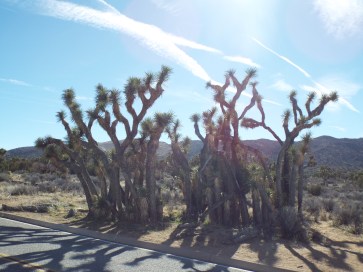
Joshua trees in Joshua Tree National Park

Joshua tree in bloom

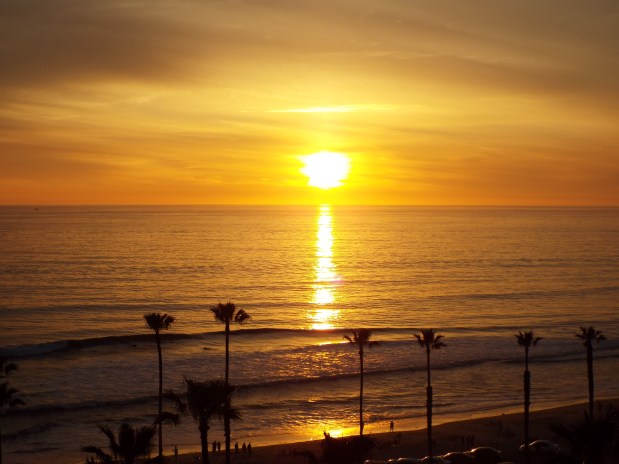
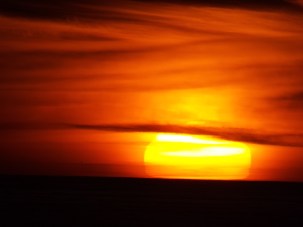
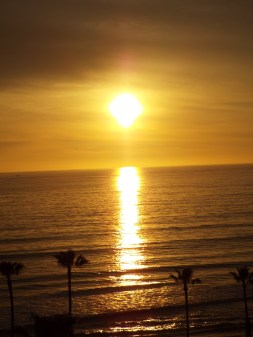
I’ve seen sunrises over the Atlantic, but this was my first Pacific sunset. It did not disappoint!

Another Pacific sunset

Around San Simeon

Pt. Reyes National Seashore on a foggy day

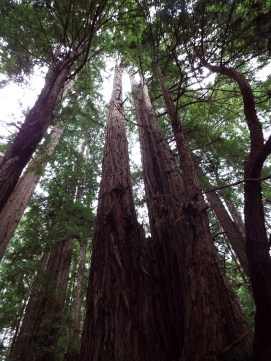
Redwoods at Muir Woods National Monument

Redwoods at Muir Woods National Monument

Golden Gate Bridge

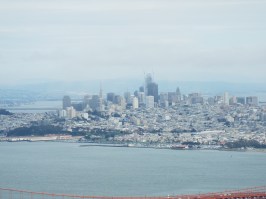
San Francisco from across the bay

Grabbing some rays

Moon jellies, Aquarium by the Bay

California poppies were popping up everywhere.

It was a kick watching the cable car turntables and the grip operator at work. We were lucky to snag outside seats. We held on tight!


Electricity and Wind: Early Days on the Diagonal, Part 6

Electricity and Wind: Early Days on the Diagonal, Part 6

(This is the sixth in an eight-part series. If you haven’t been following the journey, you may want to start back at the beginning and work your way forward.)

As idyllic as our wild life can be, we welcome the August arrival of electricity. The electric cooperative has to run power up the mountain to put in our temporary pole. We can only operate one or two items at a time, but that’s a big improvement over hand saws and drills.

img020

We have a road put in, a necessity for getting deliveries of building materials, our water reservoir and septic tank. An added bonus—no more walking in and out with groceries, laundry, and those heavy five-gallon water containers.

pict0062

Building the road is one of the few things we don’t do ourselves.


Summertime’s a damp season up here, but this year it’s been extreme, raining nearly every day. We need it relatively dry to finish digging these trenches or the walls could fall in. There’s nothing to do but wait—impatiently—for things to dry up.

Out of the blue, we experience David, our first hurricane in the mountains. The Gnome and I lie awake all night listening to the wind blow across the mountains. Each time it does, we hear it roaring through the trees for at least five minutes before it finally reaches us. When it does hit, it hits with a fury, tearing at our plastic walls. They weren’t meant for this kind of abuse. When we’re not making a futile effort at sleep, we’re outside in the driving rain and wind furiously nailing up strips of scrap lumber to try to hold whatever remains of the plastic in place.


At about 5:00 am we’re too exhausted to care much anymore—which is just as well since the plastic roof caves in. The kiddles slept through it all.

img014

After a nightlong battering, our black plastic “roof” caves in, dousing everything.

After the kids leave for school, we buy supplies and put on a real roof with plywood and asphalt rolls. Within days we get reports that a second hurricane is following David’s path. We rush into town for blackboard to replace the plastic walls.

In retrospect, 2017: Well, obviously, we should have invested more into this structure.  It would have come in handy later, too, as an outbuilding.

Other than to adhere the first course of concrete block to the footings, we forego the traditional mortar in favor of fiberglass reinforced bonding cement. The snow-white mixture with its shard-like fibers bears a remarkable resemblance to shredded coconut and has us craving for macaroons.


We have to keep our heads covered while we’re mixing so our hair doesn’t bond to our scalps. As usual, we improvise, using old t-shirts as makeshift hats.

Building the foundation has been nervewracking. For all the how-to books on home construction, we’ve been able to find absolutely no guidance on this critical first step. Even the extensive building code offers no direction. We have a great reference book titled From the Ground Up. We wish in vain for a From the Ground Down manual.

In retrospect, 2017: We did okay—the house is still standing.


                                      The kids like to help when they get home from school.

(Stay tuned for Part 7 of Early Days on the Diagonal.).

Daily Life: Early Days on the Diagonal, Part 5

Daily Life: Early Days on the Diagonal, Part 5

(If this is your first time visiting the Early Days series, may I suggest you start here and work your way forward?)

Everyday life is a wee bit different when you have neither electricity nor running water, but we’re finding our way. To get water for our daily needs, we fill two five-gallon containers every couple of days from an enclosed spring with an overflow spout by the side of the state maintained road about three-quarters of a mile away.

Sometimes, we take sponge baths, and sometimes we take advantage of the almost daily rain for a brief shower. (Brr-r-r!) When we feel especially in need of a good cleansing, we trek deep into the woods for an exhilarating 40-degree creek bath. Our secret site is decorated with rhododendron flowers and boasts a convenient mountain laurel towel rack. We always leave with a strange sensation of lightheadedness, especially when we wash our hair in that cold, cold water.


On occasion, we take a trip to town for a dip in the county pool preceded by a real shower with hot, running water. It’s the only time we feel really and truly clean. Eventually, these trips become a twice-weekly routine that provides us with a time for family play as well as some good exercise. Not that we don’t get plenty with all the digging and tree-cutting, but this feels different—and a lot more fun.

We spend evenings and rainy afternoons (plenty of those) reading stories aloud from our stash of books from the county library. We especially enjoy Ramona and Clifford the Big Red Dog books. Other favorites are That Quail, Robert and the iconic raccoon tale, Rascal. We’re also fascinated by Eric Sloane’s Diary of an Early American Farm Boy, a pioneer-days real-life story that seems to parallel our own experiences at the moment. When we’re not reading, we pass the time creating themed crossword puzzles for each other to complete.

One of the joys of building our house ourselves is getting to be out in nature and getting to know our little corner of paradise on an intimate basis. As we dig, we find all sorts of interesting creatures: a golden-eyed spade-footed toad, black and red salamanders, and shrews that can’t seem to stay out of the holes.

Each morning brings an untold number and variety of spiderwebs, with dewdrops making them sparkle in the sun. The geometric masterpieces can be found on fences, in trees, and just about anywhere else one can imagine. I stalk these works of natural art with camera poised.


Now that we’re out here in the country so far away from city lights, we can really appreciate the night sky. In August, we ‘re treated to the Perseid meteor showers. We’ve never seen anything like it.

Mid-August heralds the beginning of the school year, which always coincides with the blooming of the touch-me-nots (or jewelweed) that line the long gravel drive to our house. Afternoon walks from the bus stop are always slow because our children can’t resist stopping to pop every seed pod they spy.

What a delightful surprise it is to discover wild blueberry and blackberry plants on our land. It’s a charmed life we’re living.

(More of the Early Days on the Diagonal series coming next week. Stay tuned.)