Holy Words

Lately, I’ve found myself deeply touched by the words of others. Yes, mere words have lifted me up and given me new hope. There is something of the holy* in their wisdom. (*Etymology lesson of the day: the English word ‘holy’ comes from the Old English word hālig, meaning “whole” as in sound, healthy, complete.Wise words, coming from lessons well-learned, have the potential to make us whole. 

My young friend Emma recently had the opportunity to immerse herself in the life and culture of the Philippines. She came away with this insight: “I am beyond grateful for my life and being able to have the opportunity to come and visit this amazing country, where they are grateful every night for simple things such as a glass of water.”

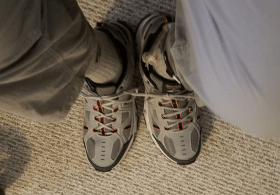
A cousin who recently suffered a stroke and has a long recovery road ahead of him is taking on the challenge with great determination. He reminds us that “the simplest tasks are the hardest;” he takes pride in every inch of progress including his first day moving to and from his wheelchair with no falls, noting, “You have to learn to appreciate the simple things in life . . . and be glad to have lived through yet another day!!!” He has the saving grace of a sense of humor. After the hard work of putting on and tying his shoes, he realized he’d gotten them on the wrong feet. “You have to learn to laugh a lot,” he said. 

A special friend living with a serious illness said something along these lines: “There have been unexpected blessings on this journey,” as she expounded on the kindnesses of others and a hyperawareness of beauty and truth.

Each of these perceptive people has learned big lessons. Each is a little different, and each one is important. May we all be blessed with the empathy to see and appreciate the daily struggles of others. May we all develop the ability to look around us and honor the unearned bounty that surrounds us. May we learn to laugh at ourselves and to honor our baby steps; they have the potential to turn into giant leaps. And may we recognize and be strengthened by the blessings bestowed by good people, be they professionals, family, neighbors, or strangers.

Whether we want to believe it or not, there is a whole heck of a lot we can’t control in life. But we can learn from it. These inspiring people in my life have learned important life lessons, and they inherently understand the value of passing them on. May we be good students of them and their kind. Be whole.

Good Vibrations!

(Date stamp: late afternoon, August 3, 2019)

The Gnome and I don’t do all that much entertaining up here on the diagonal. That’s partly choice and partly circumstance. It’s funny, because as we were planning our open design floor plan all those years ago, we pictured lots of people milling about and even imagined having only giant floor pillows for seating so they could easily be shoved out of the way for more milling or even dancing.

I don’t know why we thought we’d be party-givers here—we hadn’t hosted many get-togethers back in Kentucky, either, though those few we did were always fun, whether is was sharing an evening of the Mille Bornes card game (with my French teacher colleague, of course) or hosting a Thanksgiving potluck with almost more people than could fit into our small suburban tract home.

Perhaps we had visions of showing off the fruits of our hand-building labor, but that was before the hustle-bustle of gymnastic lessons and competitions, track meets, and cross-country races. And it was before we realized we’d be living in a construction zone for years to come.

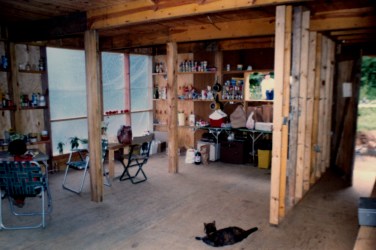
The way our forever home looked when we moved in–horizontal girts make perfect narrow shelves in our designated kitchen space.

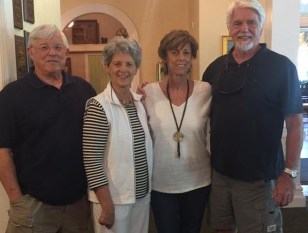
But today was one of our rare company occasions. It was an almost-last-minute, spur-of-the-moment event, which probably made our day all the more enjoyable. We just relaxed our way into it. Our guests included my college roommate, Jan, and her spouse. The four of us had shared several outings in our college days, but decades intervened before we found our way back to each other. Only three visits in the last couple of years, each one making us wonder why we wait so long.

The other couple we’d never met.

For a couple of introverts, that’s the kind of thing that could create a pile of anxiety. But Lyn and I serendipitously and inadvertently had gotten to know each other rather well on social media—through Jan. (They are in-laws.) We became instant pals, each intrigued by the other’s life experience and appreciative of our common values. With Jan’s help, we’ve been trying to get together for a while, so today was a very big day.

Lyn has been eager to see what our ‘modern homesteading’ life is all about. If she was disappointed to learn that we keep no animals and that our garden is at rest this year, she didn’t show it. Instead, she—and all our guests—wanted to know how and why we up and left a familiar life and tried our hands at hand-building a home in a strange place, pretty much away from everything.

Working from the second story

Well, they got answers—and how! The thing is, since the Gnome and I are sort of on the reclusive side, we don’t get a lot of opportunities to talk about this life we’ve chosen and the experiences we had living in a tent and then a barely less flimsy structure while clearing our land, leveling a hillside, and wielding hammer and saw as we also raised our family.

Our first ‘home’ on the diagonal

Oh, we were in our element, talking about those early days. Retelling our story today brought back so many memories—funny, daunting, and sometimes scary. It reminded us just how proud we are of the home and life we’ve built in this little slice of paradise. There are lots of other reasons our visit today was so special, but revisiting our early days on the diagonal warmed our souls.

So, thank you Lyn and Jan and Bob and Jim for rekindling old memories. I can guarantee we’ll go to sleep tonight with big smiles on our faces.

Friends, old and new

Those Lazy-Hazy-Crazy Days of Summer

They call them the dog days of summer, these days of July and August, usually the hottest and most humid of the year (for those of us in the northern hemisphere). But I can already feel fall. The air has grown slightly less moist, hinting at autumn’s dry coolness, even when the thermometer doesn’t agree.

I hear it in the sounds of insects—different from early summer bug buzzes and chirps. And I hear the occasional thump when a premature nut hits the ground.

I see it in the trees. Their leaves grow simultaneously darker and paler, and occasional ones waft to the ground. I see it in the flowers, too, whose colors have changed from bright summery hues to the softer mauves, lavenders, and golds of fall.

Yes, we may still officially be in summer’s dog days, but fall is in the air. There’s something slightly wistful about these times when the old begins to fade and the new is just beyond the horizon. We become nostalgic for something not yet gone. While some of us bemoan the loss of barefoot days, summer picnics, tubing down a river, others are perking up at the prospect of football, fall foliage, apple cider, and hayrides.

By the way, do you know where the term ‘dog days of summer’ comes from? I always thought it had to do with the way lethargic dogs laze on country roads or under porches during our annual heat waves. I guess in a roundabout way that’s not far off. In fact, the ancient Romans called the hottest, most humid days of summer ‘dog days’ because they associated them with the star Sirius, the dog star. Our most sultry days coincide, more or less, with the time each year when Sirius, the brightest star in the night sky, appears to rise just before the sun.

At this time in my life, the change of seasons brings a question to mind. It looms larger with each cycle—what changes lie in store with the next season? But, whatever is in my own future, my head knows that each season brings its own gifts. My challenge is to embrace them while they are here in all their fullness and, when the time comes, to let them go lightly so I can do the same when the next one rolls around.


Family Ties

Last year, I participated in a genealogy challenge on social media called Fifty-two Ancestors in Fifty-Two Weeks. You never know where delving into family history will lead you. You end up learning about people you’d never even heard of. It’s not about attaching yourself to fame and glory, at least not for me. But it does remind me that I’m connected to the history I learned about (and didn’t learn about) in school. It brings history to life. Being conscious of that history is not only interesting, but creates connectivity to others. It can teach important life lessons. And were it not for them—all of them—I wouldn’t be here.

For one weekly genealogy challenge, I wrote about my great-grandmother, Sarah Elizabeth Creech Smith. Somehow, that post popped up on a Creech family page, and next thing I knew I’d been invited to a Creech reunion. Of course, I had to go.

Columbus and Elizabeth Creech Smith

My curiosity about family and family history far outweighed my strong introvert credentials. I’d never met a Creech, probably because my grandmother died four years before I was born. That, and the fact that I was not born and raised in Johnston County, North Carolina, home to many a Creech and the location of the reunion.

I was anxious about being a stranger in the crowd, anxiety that was much alleviated by the Gnome’s presence at my side. (He’s as interested in my family history as I am.) But there was no need to worry. As the newcomer, I wasn’t only welcomed; I was practically rushed by my previously unknown cousins of various degrees.

What a welcoming crowd! Many of us appeared to be from the same generation, all descended from various of Martha Hare and Worley Creech’s nine children. If I’ve got it right, I’m third cousin to most of the kind folks I met that day.
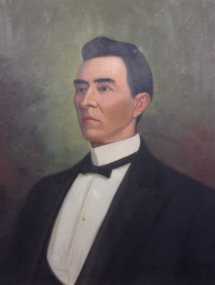
Worley Creech, our common ancestor
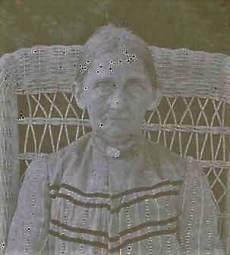
Martha Hare Creech, our common ancestor

I gathered a few interesting facts about my ancestry. For one thing, the Creeches are a seriously musical bunch with a long heritage of vocal and instrumental talent. They played and sang for more than an hour, and it was beautiful. So that’s where my dad and his brothers and so many of my cousins got lots of their melodic genes!

My ‘new’ cousin Charles remembered being in the house where Worley (second-great-grandfather, if you’re keeping up) grew up. Worley’s youngest son, Carmel, lived and died in that house. Charles, just a kid at the time, remembered when Carmel’s body was brought back to the house. While the children played outside, the adults gathered around to watch over the body and to sing hymns, accompanied by the pump organ that had belonged to Carmel. The worn-out skeleton of the house still stands, hidden by a mass of pine trees and overgrown weeds. It remains in family hands.

Unfortunately, stroke has also played an outsized role in the Creech family for generations. My great-grandmother was a stroke victim. According to one of my uncles, “Grandma Creech was bed-ridden for as long as I can remember.” And my grandmother, Lula, died as the result of her second stroke. That’s why I never got a chance to know her. Not such a good sign—though stroke has not claimed anyone in my direct line since.

In addition to Charles, I met cousins Vicki (reunion host), Genie, Jody, Brenda, Steve, Sharon, Susan, Katherine, Shirley, Tap, and too many more to keep all the names straight—sorry.

A highlight of the day was being in the presence of the family’s matriarch—my second cousin once removed. But eighty-nine-year-old Sarah and I are much closer than that. She knew my dad! And remembered most of his brothers. She knew my great-grandparents! I could have jumped out of my skin. She remembered my great-grandfather, Columbus (Uncle Lumbus, she called him), from Creech reunions way back. And she told me a story about my great-grandmother, Sarah Elizabeth. It went something like this.

“There was this corner store our family went to. One day, I was in the buggy with Mother and we stopped at the store where Mother bought a bag of candies. Oh, how I wanted some of that candy! When we came out of the store and got back in the buggy, she said, ‘I want to tell you something. We’re going to see this lady who’s sick [that would be Elizabeth—Sarah’s mother was her niece], and this candy is for her. Now, she’s going to offer you a piece, because that’s what people do. But you are not to accept it.’

“And sure enough, that’s just what she did. And even though I really wanted a piece of that candy, I did just what my mother said, because that’s what people did.”

At the age of seventy-three I sat in the presence, held hands with, a woman who had been in the presence of, and probably held hands with, my great-grandmother. How about that!
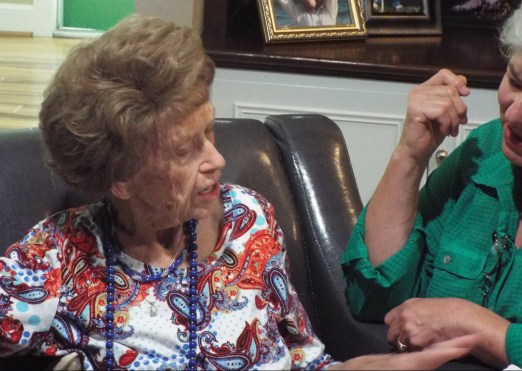
Sarah fills me in. (Sarah was also  pianist for all the fine singing.)

I wouldn’t take anything for that reunion day.

(If you care about things like family degrees of separation, you can learn more here.)
A Day in the Life

We could have been washing dishes. We could have been cleaning the bathroom. We could have been weeding in the garden or mowing the lawn or taking care of any of the other chores on our frighteningly long to-do list. But we didn’t do any of that.

Instead, we sat for more than an hour watching ‘our’ baby Carolina wrens. Sometimes, we stood—to get as close to the screen door as possible to watch the mesmerizing sight in front of us.

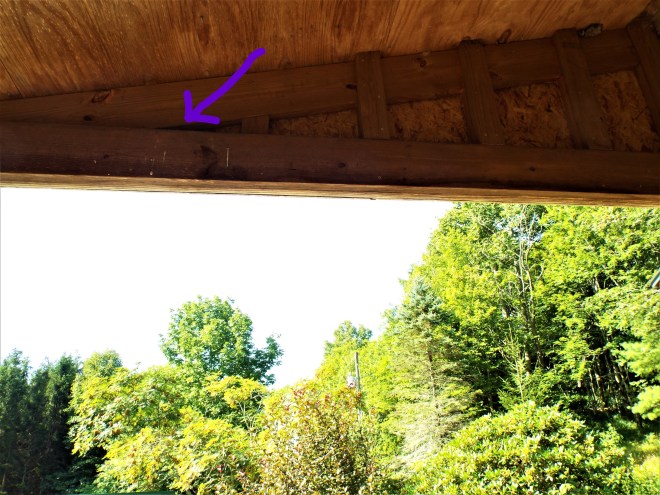
The parents showed up about two months ago, first razing their former home, presumably in anticipation of a major remodel. Sticks and leaves were strewn all over our deck floor. Ultimately, they chose an alternate site—on the opposite end of the deck, but in a similar location. They did well, choosing a crevice so tiny and well-hidden that their babes were almost sure to be safe.

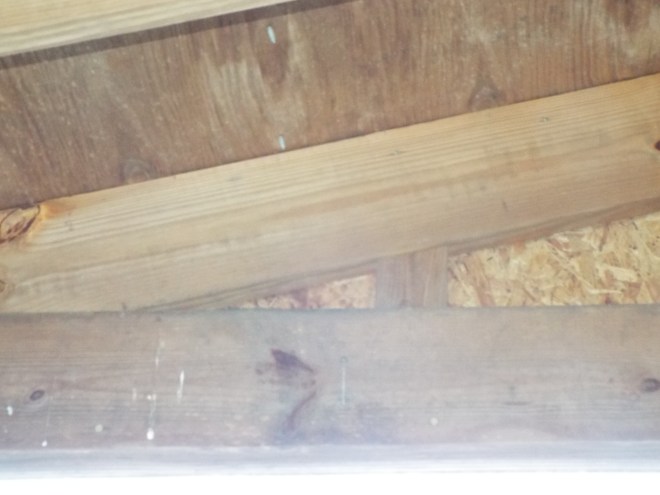
The nest is in the cranny beyond where these two boards intersect. It’s only one and a half inches wide in there. How can a whole family of wrens plus a nest can fit into such a small cavity?

For two months we’ve watched the wrens bringing, first, sticks and grasses and other building material and, next, bits of food for the nester and then the chicks. We’ve listened to Mr. sing his beautifully melodic songs to Mrs. and, later, his babes. He has many songs, and they can be ear-piercing. How can so much sound come out of such a diminutive being? And for two months we’ve been loudly and soundly scolded whenever we dared to venture onto the deck. We know when Mama raccoon is around because she gets the same insistent scolding.

And for the last couple of weeks, we’ve heard the almost unceasing chirps of young wrens begging for their next meal. In the last few days, we’ve noticed a head or two peeking out from their refuge, too eager and curious to stay concealed.

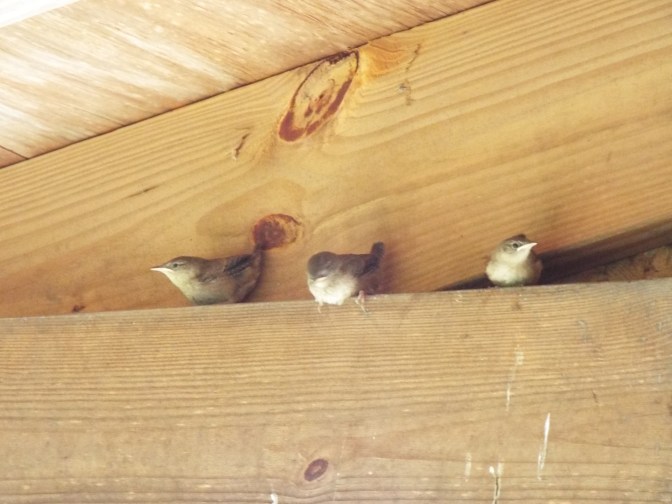
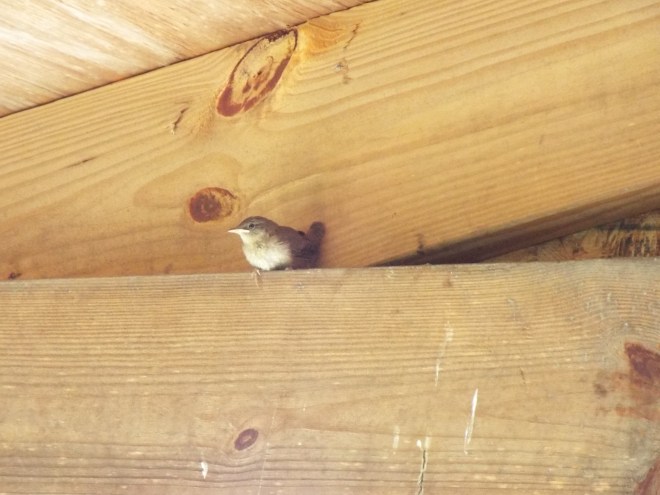
But today—today was different. First one, then a second, and—surprise—a third, slipped out into the open, standing on the wooden beam that supports their home. One ventured even further away from its protected nest. It tested its little wings. It slipped and almost fell, but clawed its way back up. One at a time, the birdlings peered over the edge into what must have seemed an abyss.

One soon-to-be fledgling eyes the horizon while the next investigates the gaping distance to the deck floor and the third lingers at the opening to its nest, ready to dart back in if danger appears.

We were sure this would be the day, the day they would fledge. As many birds as have nested near our home over the years, fledging is an activity I’ve never witnessed, and I didn’t plan to miss it. Not unless they dilly-dallied until we had to leave for an important appointment. I stayed glued to my seat. The Gnome had to go upstairs for a brief shower. “There are four of them!” I cried as another head popped out. “Five! “No, six!” He made it back downstairs in record time.

By the time the last two bashfuls made an appearance, the second bird had joined its sibling on the beam. Their four brothers and sisters, lined up like a chorus of dancers waiting for their cue, weren’t going to miss the big event any more than we were. Perhaps they were gathering courage.

The most adventurous, the first to slip out onto the ledge, finally made its leap of faith. It wasn’t a long flight—just a couple of feet, but it was a huge success, nevertheless.

The wren on the left has flown all the way over (barely down at all) to a cross beam and gives an encouraging look to the one still pondering its options.

Then off flew another, and another, until finally only the most timid little bird was left, alone and surely waffling between the desire to be brave and free and a wish to hold onto the security of home.

Clinging to the beam

Mama brought a last bite of nourishment. That was all it took. The last little bird took the longest flight of all.

We cheered. We hugged. We cried.

We’ve been reading North Carolina writer Leigh Ann Henion’s book, Phenomenal, for the last week. She traveled the globe to explore the world’s greatest natural wonders. It’s a breathtakingly beautiful tale, full of awe and wonder and great truths. I highly recommend it. Yet, today, we experienced our own exhilarating phenomenon. And we never left the living room.

And then there were none.  No more begging, no more scolding, and nearly a year’s wait for the gusty, mellifluous songs heralding that a new generation is on the way.


Spring Time

(Note: In one of my delightful writing groups, we were challenged to write on the theme of spring. These prompts are much more wide open than they might appear at first glance. This was my offering. It’s a true story.)

Daddy grew up in the poorhouse.

It’s probably not what you think.


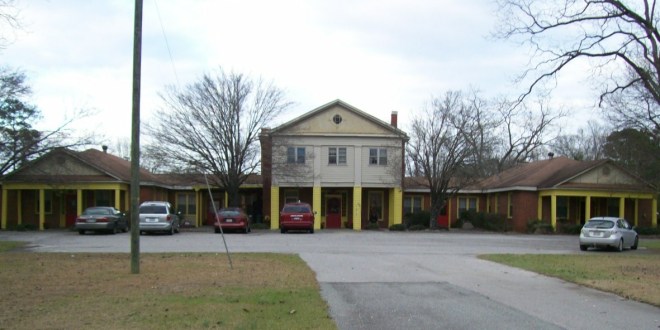
The former Johnston County (NC) poorhouse , aka County Farm and Home, is a private nursing home. The building stands as it did when it was first built in the early 1920s.


His father was hired to oversee the place during the years of the Great Depression, and the entire family of nine got to live and eat there, cost-free. Not that they weren’t owed that. Grampa’s salary was paltry to begin with and got cut as the Depression worsened. Not to mention that Gramma was expected to oversee the cooking, the laundry, the cleaning, and the nursing of the county home’s residents for no salary whatsoever.

Daddy said there was a lot of sickness at the poorhouse—and a lot of dying, too, what with the inmates, as they were called, being frail and elderly, developmentally disabled, or previously homeless—sometimes all of those things simultaneously.

Most people, Daddy said, when they came to live at the poorhouse, they also came to die there. And when that happened, unless a family member came to claim the body—and usually no one did, Grampa held a simple service, then the unembalmed body was placed in a plain pine casket and lowered into an unmarked grave which had been dug by Grampa, his sons, and the fittest of the inmates earlier in the day. It was a real potters’ field.

Well, with death always lurking around the corner, Grampa stored truckloads of pine boxes in a room of one of the old outbuildings on the property, where they sat waiting for the next person to die. Daddy and his brothers knew the darkened space as the coffin room.

It was one of their favorite play places.

It was where they hid when they thought a chore was about to be assigned, and it was a fine destination during a neighborhood game of hide and seek.

And Daddy, who once fancied he’d grow up to be a preacher, picked the coffin room to practice his oratory. For some reason, there was an old bed stored in the coffin room, too, and it was a springy thing. Daddy used the bed as his ‘pulpit.’

During his sermon sessions, he jumped up and down on that old bed. With its iron springs, it acted kind of like a pogo stick. Now, Daddy was a fiery orator, and as his fervor increased, so did his bouncing. He’d spring higher and higher until both he and his message finally fizzled out.

Well, Daddy never did get that call to be a minister. He reckoned the world just wasn’t ready for a preacher with so much spring in his step.

(P. S. You can find more stories about Daddy’s youth in my book, Boyhood Daze and Other Stories: Growing Up Happy During the Great Depression.)


Garland

Note: I am not a writer of fiction. But when faced with a writing workshop challenge to compose a fiction piece from someone else’s perspective, what was I to do? Since I was in the midst of writing a true-story book chapter featuring my grandfather, I called upon a few real-life details to evoke this bit of fantasy. I didn’t even bother to change the names, but you can believe me when I say it is a fictional piece. The thoughts I’ve put in his head came from mine, not his. Besides, my grandfather may have been taciturn, but he was never at a loss for words. Trust me. (And I adored him!)

GARLAND

Born in 1886, Garland grew up with mostly brothers. For three years straight during his twenties, he made the seven-mile walk to Cullowhee Normal School every Monday morning and then back again every Friday afternoon with his younger brother, Odell. During the week, they shared a boardinghouse room.

Garland was used to male company.

When he began teaching school, Garland was surrounded by children. His only adult companionship, such as it was, was with the other teacher in the two-room schoolhouse. She, however, was not male. At night, he went home to his new bride, Georgia. He was all asea in this new world devoid of men.

Ten years later, his family had increased by five—four girls, one boy. One boy, Billy, who turned out to be too much like his father—too smart, too stubborn, too pig-headed—to be much company, even in adulthood. They kept their distance.

The rest of the household hummed with activity: the whir of the treadle sewing machine; the never-ending yackety-yak of Georgia and her quilting friends; sisters playing house or school; the string of neighbor women dropping in to borrow the phone. Why, oh why, had they ever had it put in? And all that girl-crying—was it the answer to everything? The cacophony was a constant cricket chirp in Garland’s ears. Other times, it sounded like fingernails scraping against his schoolroom blackboard.

That’s about the time he gave up teaching in favor of running the little country store just down the road apiece. Once the high schoolers waiting near the door boarded their school bus each morning, it was reassuringly quiet around the place. As the day wore on and morning farm chores completed, farmers began trickling in to pick up their mail, restock their feed supply, or scrounge for a piece of hardware for this or that equipment repair.

They were in no hurry. Whatever emergency awaited them back at the farm wasn’t going anywhere. It would still be there when they returned to their chores. That’s one thing they could count on. There was always time to sit on one of the ladder back chairs or three-legged stools arranged around the pot-belled stove sitting in the middle of the room.

Garland savored those moments. Here, he was in his element. In the company of men. He was never too busy for a bit of fat-chewing with his comrades.

He knew that sooner or later the talk would turn from the weather and the price of cattle to the hot topic of politics. And he knew his face would get as red as the blistering coals in the stove soon as some rube aligned himself with Hoover and his cronies. It was bound to happen. Still, he’d rather engage in a battle of wits with someone in overalls than listen to the incessant yackety-yack of the women who came in to trade their eggs and butter or buy a bolt of fabric.

Retail trade, though, in the midst of the Great Depression, was an even less reliable way to put food on the table than a teacher’s paltry salary. Garland returned to his school room.

Five days a week, nothing but children and women, women and children. Schoolchild rowdiness, sister chatter, housewife gossip, Georgia’s nagging. He retreated into a shell of taciturnity, lonely in places bursting with people. At home, he often slipped off to the barn to get away from it all.

Saturdays, though. Saturdays were his escape. He woke early as usual, dressed, fed the animals and milked the cows like always, then ambled the two miles to town where he could be found standing in the midst of a small clutch of his fellow men, each as anxious as he to escape the drudgery of home life and the grip of their womenfolk.

The man who had nothing to say all week, who felt so out of place on his own property, found a new home on the sidewalks of Sylva. Once again in the company of men, words tumbled from Garland’s mouth as fast and furious as the torrents plunged over the boulders of Black Rock Mountain above his house on their way to Scotts Creek below.

No matter that not one of those men was as whip smart as Garland. No matter that all of them were rock sure they were. No matter that their politics were wrong-headed or that they could argue as long and loud and red-faced as he, as sure of their rightness as he was of his. He had found his place, and for a few hours each week, he was comfortable in his own skin.

The real Garland and Georgia, 50th wedding anniversary. Probably not so comfortable in his own skin at this moment.

Favor

Mother, Daddy, and me when it was just the three of us

When I asked my dad which of our parents he thought each of us children most favored, he went for the obvious answer. I, of course, was much more like Mother, and my brothers like him, he ventured. He couldn’t give me a single reason for his rationale—other than gender. I think it’s a lot more tangled than that.

My mother and I were practically inseparable during my youth. But not in a we’re-like-sisters kind of way. She taught me to sew, to cook, to can and freeze our garden harvest. Working alongside each other for hours each day made for easy conversation. As the oldest of three children and the only girl, I was her designated assistant when it came to cleaning, grocery shopping, or any other domestic chore. She was the adult leader for my 4-H club. She ferried me from one extracurricular activity to another.

Our interests were similar, no doubt in part because she guided me toward hers. So, the casual observer could hardly be blamed for assuming we were kindred spirits. At times, I probably did, too. She’s quieter, though, softer, always happy and optimistic, always a smile for anyone lucky enough to cross her path. I’m a little grainier.

In temperament, personality, and general approach to life, I think I was always much more like my father. Driven Type A personalities, we were achievers, always searching for new and better ways, ready to be called upon, eager to be recognized for our efforts. We were equal parts shyness and show-off. Both vocalists, we shared many a car ride to choir practices or music lessons.

His jokes were corny and he regularly embarrassed me in front of my friends, but I was secretly glad he was a presence at our church’s youth activities. Just his being there made me feel ‘chosen’ in some way.

While I was more likely to confide in Mother or ask her more of life’s impenetrable questions—after all, we were in each other’s company much more often, it’s Dad’s example I always looked to for guidance as I navigated the world of work and other aspects of adult life. He had a way of using diplomacy to make his point, keeping potential foes on his side—or at least off their guard. “Make ‘em love you,” he said. I tried, but I didn’t have his panache.

Maybe it’s a toss-up and I’m more or less equal parts him and her. That’s fine by me. I have been so very lucky to have two truly awesome parents to lead me through life’s thorns and thickets and guide me towards fulfillment and satisfaction. Their stars will always shine bright.

What about you? Do you more strongly favor one parent? What makes it so?

Celebration


Today marks a big anniversary in the Gnome and Crone’s household. Exactly forty years ago, our family began our biggest-ever family adventure when we came to this little corner of paradise to stay. Two thirty-something adults, two children only weeks away from their sixth and ninth birthdays, and two formerly housebound cats. We came with a suitcase each of clothes, a tent, and not much else except a whole lot of enthusiasm. Almost everything else—including jobs and any sense of financial security—we left behind.

We’d seen our property twice before—once in early April when we signed the contract, and again in late May. There was no sign of spring on either of those visits.

We had expected our Memorial Day weekend trip to be filled with clearing debris. Wearing nothing more than shorts, tees, and flip flops, we were unprepared when we opened the tent flap the next morning to snow! Clearly, we had a lot to learn about living in the mountains.

But this time was different. On July 2, 1979, summer was in full swing. No longer bare, the five acres of woods were lush with full-leafed maple, oak, beech, poplar, cherry, locust, and wild magnolia trees. The almost equally large section of open meadow was a massive sea of daisies, with the occasional black-eyed Susan thrown in for variety. It took my breath away.

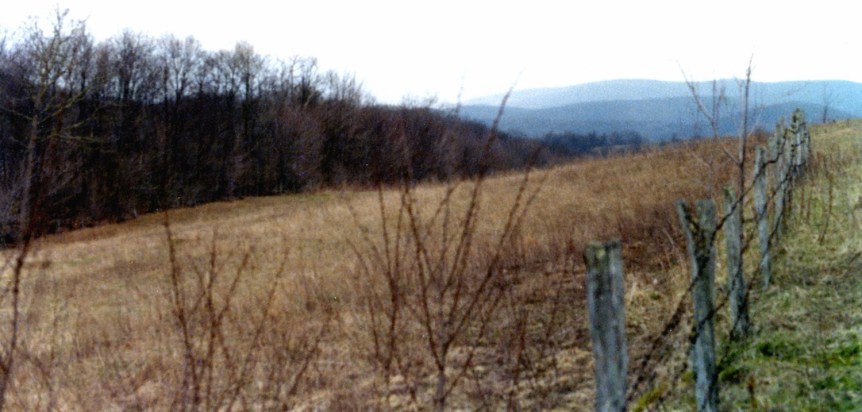
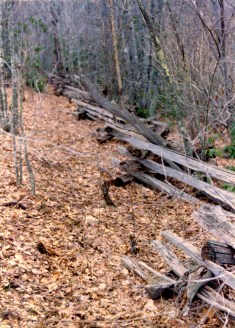
The first few days were for exploring. We discovered the delicate deliciousness of tiny wild strawberries growing everywhere; we visited our wooded mountain creek; we discovered an old locust fence in the edge of the woods along our east boundary line; we found twists of downed trees and ferns and mushrooms and wildflowers.

We found home.

Forty years later, things look a bit different around here. Most of the meadow is gone, thanks to trees sprouting up when mowers were out of order or when we were too busy with life to get around to mowing. We jumped on the Christmas-tree-growing bandwagon and planted a few hundred Fraser Fir and Norway Spruce seedlings. Those, too, got out of hand. Today, they are crowded evergreen giants making a home for birds and other wildlife. Most of the daisies have gotten crowded out.

Just the lower portion of a few overgrown Christmas trees

We got the house built—and decades later, rebuilt. All with our own hands. As dyed-in-the-wool do-it-yourselfers, we can’t bear to farm out any of the work on our place even if that means it gets left undone for far too long.

But we have done a lot. We cleared the land of some trees and over time planted more; we built our forever home with our four hands—as well as the help of four much smaller hands (setting out the building lines, foundation, plumbing, electrical, roofing—the whole bit); we built a spring house and pumped water up from the creek; we built a couple of outbuildings.

We started and abandoned one garden only to begin again a few decades later. This time we enclosed a 5400 square foot space, a space where many of those gorgeous daisies once lived, for vegetables and fruits—we’ve been working on that project for four or five years now, and we do a pretty good job of feeding ourselves from it throughout the year.


(It may not look like it, but that 5,400 sq ft of enclosed garden space (ready for planting) could hold six clones of our house with a decent amount of space left for landscaping. A couple days’ worth of harvest in pictures 2 and 3.)

Most of all, we raised a family. A family where our children learned the value of making do, of making their own fun, of how to do things with their hands, of learning by doing, and that it’s okay to take (certain) risks—to try new things with an entire world of unknowns in front of you.

(Hover over each photo for caption.)

And now, we have grandchildren to share it all with, too.

It’s been a good forty years. We are looking forward to many more.


Same view (more or less) 1979 and 2019. Our road is under the snow.


Version 1.0 in need of serious rehab after 30 years vs. Version 2.0

If you want to learn more about our early homebuilding experience, you can start here.

Honoring the Dead

A while back I wrote a social media post for the “52 Ancestors in 52 Weeks” genealogy challenge. The week’s prompt was Oldest, and I wrote about the oldest cousin on my mom’s side of the family.

Little Bill died in a tragic vehicle accident at the age of seven, leaving me as heir to the title of oldest. His siblings thanked me for memorializing someone whose life was too short to leave much of a legacy of his own.  

A friend of mine shared that the oldest child in her family had been a ‘blue baby,’ living only nine weeks. When her parents moved nearby in their later years, she learned more about the brother she never knew. She learned about her parents’ abiding love for him. She discovered he was always alive in their hearts. Now that her parents have died, too, she feels called upon to keep his memory alive. That need fuels a deep connection to this person who had never been much more than a myth to her.

I’m currently working on a book about my mother’s life and times. That means her siblings, her parents, her grandparents, too. Almost all of them are long gone from this world, so part of my process involves calling up memories, begging them to awaken from their slumber deep in the recesses of my mind, sometimes birthing random mental snapshots into full-blown narratives.

I was having trouble getting my grandparents’ story to make much sense on paper. I found myself fervently wishing they were still here for a face-to-face. (Actually, this is something I regularly wish for.)

Sometimes, it feels as if they have heard me. My eyes wander beyond the keyboard and I see their ethereal presence. It’s not my imagination; they’re there. Side by side they stand, he in his dark brown dress trousers, their legs as wide at the bottom as at the top, the way they were back in the ’50s. She’s wearing her usual fare: a cotton shirtwaist dress, small brown print on a beige background, her stockings rolled tightly an inch or two above her knees just the way I remember.

I only see my grandparents from mid-thigh down. But I feel them standing together, their arms touching, their eyes boring into the top of my head. They don’t answer my questions. But their presence is powerful. They are urging me on, assuring me if I keep at it, I’ll figure it out. But reminding me it’s all up to me now. They can only cheerlead. And they do. Silently, but hard.

I don’t dare look up. I’m so afraid the gossamer thread that binds us in this moment will drift off, my grandparents with it, and I want them to stay.


I, too, feel a deep and abiding connection to these people who no longer walk among us. They continue to have much to offer. I want to be the keeper of their flames.